
Maintaining stable tuning on a bass guitar in the Philippines presents unique challenges. The combination of high tropical humidity, seasonal temperature shifts, and the immense physical tension exerted by heavy-gauge bass strings can easily cause substandard hardware to slip. When your bass constantly goes flat during a gig or a recording session, the culprit is often a set of low-quality or worn-out tuning pegs. Upgrading to reliable bass guitar tuning pegs is one of the most effective ways to ensure your instrument stays in pitch, but finding the right set requires a clear understanding of mechanical specifications, material durability, and physical compatibility.
Evaluate Gear Ratios and Build Materials for Stability
To understand how tuning pegs maintain pitch, you must first look at the gear ratio. The gear ratio determines how many times you must turn the tuning key to rotate the string post one full time. For example, a 20:1 gear ratio means twenty full turns of the button result in one revolution of the post. Higher gear ratios provide much finer control over your tuning, allowing you to make micro-adjustments to reach perfect pitch. This precision is especially critical for bass guitars, where the thick strings require immense tension, and even a tiny fraction of a post rotation can significantly alter the note. Lower gear ratios, such as 14:1, allow for faster string changes but make precise tuning more difficult to achieve and maintain under heavy playing styles.
The materials used to construct the internal gears are equally important for long-term stability. Premium tuning pegs utilize high-grade brass or steel for the internal worm and gear mechanisms. Brass is naturally durable, resistant to wear, and possesses self-lubricating properties that ensure smooth operation over years of use. In contrast, budget tuning pegs often use softer zinc alloys or “pot metal” for their internal components. Under the constant, heavy pull of bass strings, these softer metals can deform, strip, or develop flat spots on the gear teeth. Once a gear is compromised, the string tension will cause the post to slip backward, resulting in sudden and frustrating drops in pitch.
Products mentioned in this guide
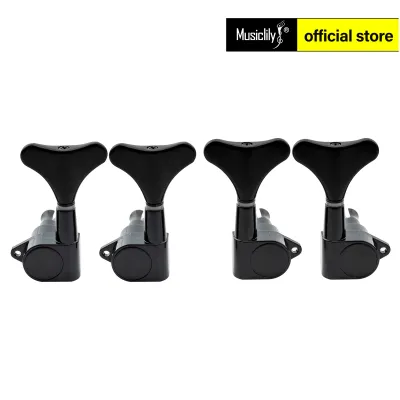
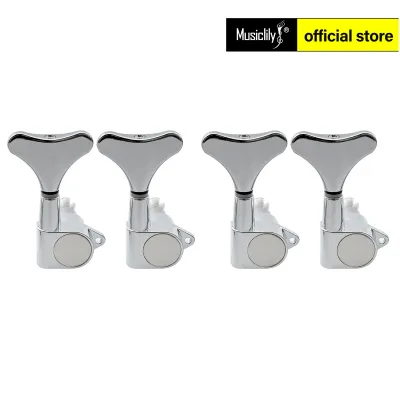

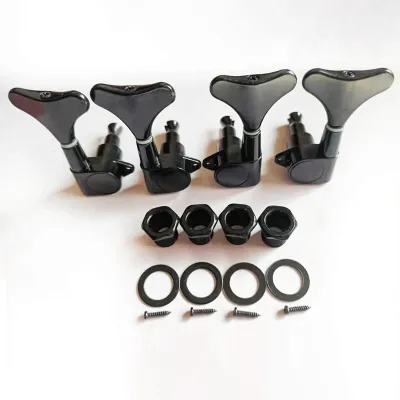
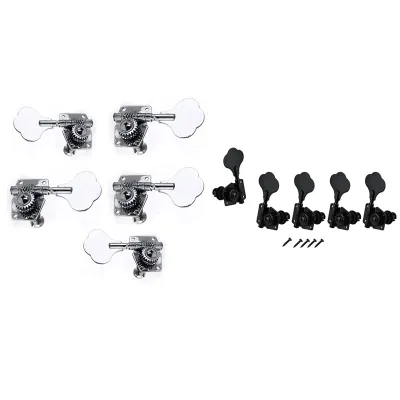
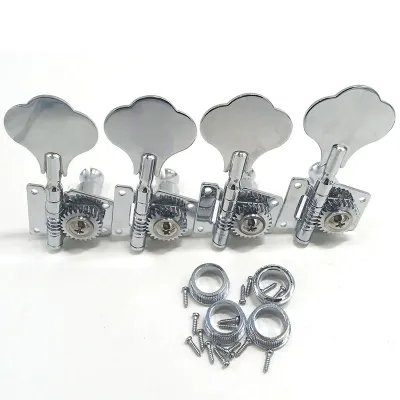
![[ammoon]1PCS Right Bass Tuner Peg Guitar Tuning Pegs](https://img.lazcdn.com/g/p/3bf44b85b8511ec3e424c52e96082248.jpg_400x400q80.jpg_.webp)
Prices are valid at publication and may change. Please refer to the product page for the latest price.
Physical play and rattling within the tuning mechanism can also ruin your tuning stability. This is where bushing types and shaft tolerances come into play. Press-fit bushings rely solely on friction to stay in place within the headstock hole, which can loosen over time as the wood expands and contracts. Threaded hex bushings, however, screw directly into the tuner collar from the front of the headstock. This design clamps the tuner securely to the wood, eliminating any physical play or wobble in the shaft. Tight manufacturing tolerances ensure that the tuner shaft remains perfectly perpendicular to the headstock, even when subjected to more than one hundred pounds of cumulative string tension.
In the tropical climate of the Philippines, environmental factors heavily influence hardware performance. High relative humidity and salty coastal air accelerate the oxidation of exposed metal parts. Open-gear tuners, while aesthetically classic and lighter in weight, expose their moving parts to moisture, dust, and sweat. Over time, this exposure can lead to rust and abrasive grinding between the gears. Sealed-gear tuners house the worm and gear inside a lubricated, airtight chamber. This protective enclosure keeps moisture out and preserves the internal lubricant, making sealed designs highly reliable for players performing in humid outdoor venues or non-air-conditioned rehearsal spaces.
Choose Between Locking and Standard Machine Heads
When selecting replacement hardware, you must decide between standard and locking machine heads. Standard tuning pegs require you to manually wrap the bass string around the post multiple times during installation. While this traditional method is highly effective when done correctly, it introduces several variables that can compromise tuning stability. If the string wraps are overlapping, loose, or unevenly spaced, they will gradually settle and stretch as you play. This settling process causes the string to lose tension, leading to flat notes during a performance.

Locking tuning pegs simplify the restringing process and eliminate post-wrap slippage entirely. These mechanisms feature an internal clamp—usually controlled by a thumbwheel on the back of the tuner body—that securely grips the core of the bass string inside the post hole. Because the string is locked in place, you only need to pull it taut, tighten the clamp, and turn the key a fraction of a turn to bring it to pitch. With virtually zero wraps around the post, there is no excess string slack to stretch or settle, resulting in immediate tuning stability right after a string change.
Despite their convenience, locking tuners have a notable drawback: weight. The addition of internal clamping pins, heavy-duty thumbwheels, and reinforced housings makes locking machine heads significantly heavier than standard models. Because the headstock sits at the very end of a long neck, even a small increase in weight can alter the instrument’s center of gravity. This often results in “neck dive,” a frustrating ergonomic issue where the headstock pulls downward, forcing you to constantly support the neck with your fretting hand. This extra physical strain can lead to shoulder and wrist fatigue during long sets.
To make the right choice, match the mechanism to your specific playing environment and physical comfort. If you are a session musician or a frequent gigger who needs to change broken strings rapidly on stage, the speed and immediate stability of locking tuners are invaluable. However, if you play a bass that is already prone to neck dive, or if you prefer a lightweight, balanced instrument for long practice sessions, high-quality standard tuners with lightweight aluminum chassis are often the better option.
Verify Physical Compatibility With Your Bass Guitar
Before purchasing any replacement hardware, you must verify that the new tuning pegs are physically compatible with your bass guitar’s headstock. Installing replacement tuners should ideally be a drop-in process that requires no woodworking. To ensure a perfect fit, use a digital caliper to measure the diameter of the existing tuner holes in your headstock. Bass tuners generally fall into two main size categories: vintage-style tuners that require smaller holes (often around 14mm or 9/16 inch) and modern sealed tuners that require larger holes (typically 17mm or 11/16 inch). Attempting to force a large tuner shaft into a small hole can crack the headstock wood, while installing a small shaft in a large hole without proper support will cause the tuner to lean and slip.
You must also examine the mounting screw configuration on the back of your headstock. Tuning pegs are secured to the wood by small wood screws to prevent the entire tuner body from rotating under string tension. Common configurations include a single screw offset at a 45-degree angle, a single screw aligned at 90 degrees, or a dual-screw pattern. Some modern tuners use hidden alignment pins instead of screws, requiring small holes to be drilled into the back of the headstock. Matching the screw pattern of your new tuners to the existing holes prevents you from having to drill new holes and leave old, unsightly holes exposed on your headstock.
The layout of your headstock dictates the specific configuration of tuners you need to buy. A standard four-string bass might feature a “4-in-line” layout, where all four tuners are mounted on the left side of the headstock (for a right-handed instrument). Other designs use a “2×2” split layout, with two tuners on each side. Five-string and six-string basses introduce even more variations, such as “3×2” or “4×2” configurations. Because left-side and right-side tuners are mirrored mechanically, you cannot use a left-side tuner on the right side of the headstock without the key turning in the opposite direction. Always double-check that the set you are purchasing matches your exact headstock layout.
If you find a set of high-quality tuners that you love but the shafts are too small for your headstock’s existing holes, you can resolve this issue using adapter bushings. These metal sleeves fit snugly into the oversized headstock holes, reducing the inner diameter to perfectly match the smaller tuner shafts. Using adapter bushings allows you to preserve the original wood of your instrument, which is highly recommended to maintain the structural integrity and resale value of the bass. Avoid any modifications that involve drilling or reaming the headstock unless you have the proper woodworking tools and experience, as a single slip can split the wood along the grain line.
Secure Authentic Parts From Local and Online Retailers
Sourcing authentic bass guitar tuning pegs in the Philippines requires caution, as counterfeit guitar hardware is highly prevalent on major online marketplaces. Counterfeit tuners are often designed to look identical to premium, high-end brands, complete with copied logos and packaging. However, these fake parts are manufactured using cheap, brittle metals and loose tolerances. Once installed, they quickly fail under the high tension of bass strings, leading to immediate tuning instability and stripped gears.
To ensure you are purchasing genuine hardware, always buy from authorized brick-and-mortar music stores or official brand flagship stores on reputable e-commerce platforms. Authorized dealers receive their stock directly from the manufacturers, ensuring that you get genuine parts made from high-grade materials. When shopping online, look for verified seller badges, high store ratings, and detailed customer reviews that confirm the authenticity of the packaging and hardware. Genuine tuning pegs will always arrive in official, sealed retail packaging and will include all necessary mounting hardware, such as high-quality wood screws, washers, and threaded bushings.
Be sure to inspect the physical product immediately upon delivery. Check the weight of the tuners; authentic high-quality tuners feel solid and substantial, whereas counterfeits often feel surprisingly light due to the use of cheap pot metals. Turn the tuning keys by hand before installing them; the rotation should feel smooth, consistent, and free of any grinding, catching, or loose play. If you detect any physical defects or if the packaging appears tampered with, contact the seller immediately to initiate a return.
Before finalizing your purchase, carefully review the retailer’s return and warranty policies. Because physical compatibility can sometimes be difficult to gauge despite careful measurements, having a flexible return policy is essential. Ensure the seller allows returns or exchanges for unused parts in their original packaging. Additionally, authentic hardware typically comes backed by a manufacturer’s warranty against defects in materials and workmanship, providing you with long-term peace of mind for your investment.
Frequently Asked Questions (FAQ)
Do heavier tuning pegs affect bass guitar balance?
Yes, installing heavier tuning pegs can significantly alter the balance of your bass guitar, potentially causing a condition known as neck dive. Because the headstock is located at the far end of the neck, any added weight there acts as a lever, pulling the neck downward when you play standing up. To determine if your bass is sensitive to weight changes, attach your usual strap and let go of the neck while standing; if the headstock immediately dips toward the floor, your bass is already prone to neck dive. If you need to upgrade a neck-heavy bass, look for lightweight tuning pegs made with aluminum or composite-alloy chassis, which can reduce headstock weight by up to fifty percent compared to traditional brass or steel models.
Can I install new tuning pegs myself?
Yes, installing new tuning pegs is a highly manageable do-it-yourself project if the replacement parts are a direct drop-in match for your existing headstock holes and screw patterns. You will only need basic hand tools, such as a screwdriver that perfectly fits the mounting screws, a small wrench or socket for the hex bushings, and a caliper for verification. However, if the new tuners require you to enlarge the headstock holes or drill new mounting screw holes, the risk of damaging your instrument increases. Wood screws can easily snap if forced into hard maple without a proper pilot hole, and drilling can split the headstock wood. If any woodworking or reaming is required, it is highly recommended to take your bass to a professional luthier to ensure a safe and clean installation.
How often should I lubricate bass tuning machines?
The frequency and method of lubrication depend entirely on whether you have sealed or open-gear tuning machines. Sealed tuning pegs are lubricated for life during the manufacturing process and are completely maintenance-free; you should never attempt to open or inject lubricants into a sealed gearbox, as this can ruin the internal seals and attract dirt. Open-gear tuning machines, on the other hand, benefit from occasional maintenance to ensure smooth operation and prevent wear. If you notice physical signs of friction, such as stiffness, grinding noises, or a jerky motion when turning the key, it may be time to clean and lubricate the gears. Always check the manufacturer’s specific care instructions first. If lubrication is recommended, apply a tiny drop of a non-corrosive, dry-film lubricant directly to the gear teeth, and wipe away any excess to prevent dust from sticking to the mechanism.
Community discussion
Share your experience or ask a question. Comments are reviewed before publication.