
Selecting the right drum toy for a boy in the Philippines requires balancing his developmental stage with the realities of local living conditions. In many Filipino households, music is a central part of daily life, making percussion toys a popular choice for encouraging creativity and motor skills. However, a toy that is too complex can frustrate a toddler, while a model that is too simple will quickly lose the interest of an older child. Furthermore, factors like neighborhood density, typical home sizes in urban areas, and the tropical climate must influence your choice. By matching the toy’s complexity to the child’s age and physical capabilities, you can foster a lifelong love for rhythm while maintaining harmony in your home.
Why Motor Skills and Age Dictate the Right Drum Toy
A child’s physical and cognitive development determines how they interact with musical instruments. Striking a drum may seem like a simple action, but it requires a sophisticated combination of gross and fine motor skills. Gross motor skills are utilized when a child swings their arms to strike a drumhead, while fine motor skills are developed as they learn to grip drumsticks or mallets correctly. In the early stages of development, children rely on large, sweeping movements. As they grow, their coordination refines, allowing for precise, controlled strikes that are necessary for maintaining a steady tempo.
Cognitive readiness is equally important when transitioning from simple play to structured music-making. Younger children view drum toys as cause-and-effect tools—they strike a surface and are rewarded with an immediate sound. This basic interaction teaches them that their actions have direct consequences. As cognitive abilities mature, children begin to recognize patterns, understand tempo, and coordinate multiple limbs simultaneously. A toddler might happily beat a single drum at random, but a school-age child has the mental capacity to coordinate their hands and feet to play a basic rock beat on a multi-piece kit. Introducing a complex multi-piece set too early can lead to frustration, whereas introducing a simple toy to an older child can lead to immediate boredom.
Products mentioned in this guide
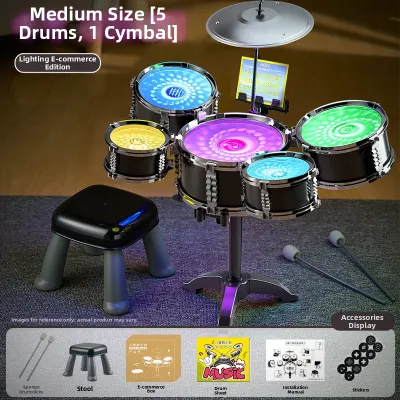
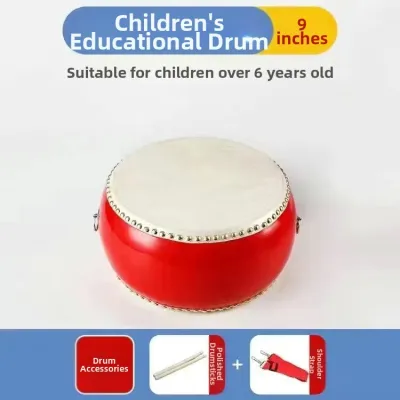
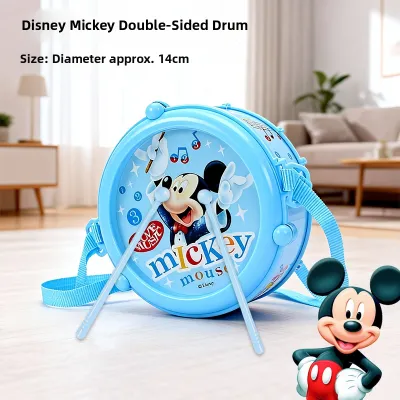
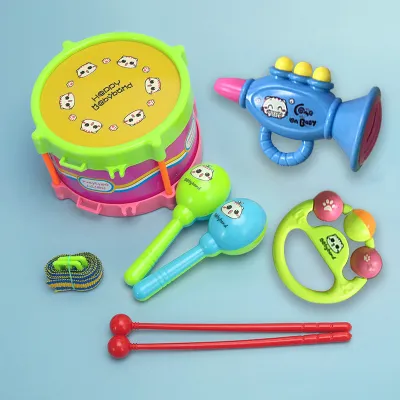
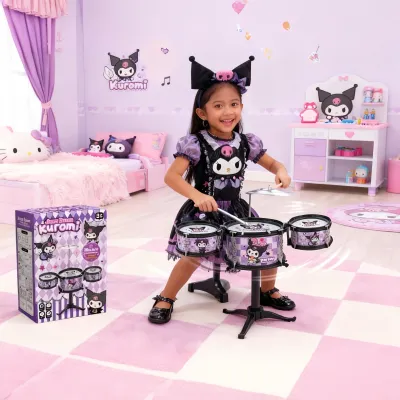
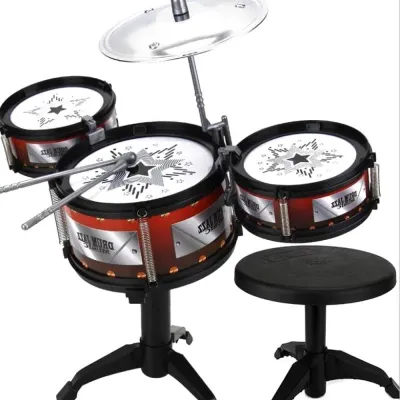
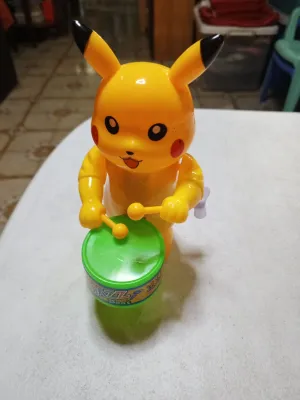
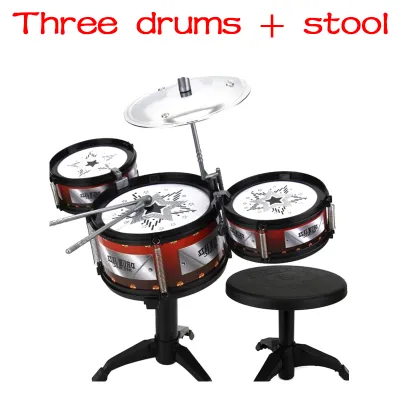
Prices are valid at publication and may change. Please refer to the product page for the latest price.
Toddler Stage (Ages 1–3): Sensory and Motor Skill Builders
For toddlers between the ages of one and three, drum toys should focus primarily on sensory exploration and basic motor skill development. At this stage, children are still refining their hand-eye coordination and are highly responsive to tactile, visual, and auditory feedback. When choosing a drum toy for this age group, safety is the absolute priority. Look for toys made from durable, non-toxic materials with rounded edges to prevent accidental injuries during enthusiastic play sessions.

Mallets and drumsticks pose specific safety challenges for toddlers. To prevent choking hazards and accidental self-injury, select drum toys that feature permanently attached mallets or those designed to be played directly with the hands, such as bongo-style hand drums. If the toy does include separate mallets, they must be thick, lightweight, and feature large, rounded tips that cannot be swallowed or easily wedged into mouths. Avoid any toys with small, detachable parts or loose tension rods that could become loose over time.
In the tropical climate of the Philippines, high humidity can affect natural materials like untreated wood or animal-skin drumheads, which may warp or lose their tension. For toddlers, high-quality, BPA-free ABS plastic is often the most practical choice. It is easy to sanitize, highly durable, and resistant to moisture. Look for simple cause-and-effect features, such as drumheads that light up when tapped or play pleasant, pre-recorded melodies. These interactive elements reward the child’s curiosity and encourage them to keep practicing their grip and arm movements. Always verify that the toy carries appropriate safety certifications for children under three years old before making a purchase.
Preschool Stage (Ages 4–6): Rhythm and Coordination Sets
As children enter the preschool years, their motor skills become more refined, and they begin to develop a basic understanding of rhythm and timing. Boys in this age group are ready to transition from single-surface tapping to multi-drum setups. Small tabletop drum sets, featuring two or three small tom-toms or bongo-style configurations, are excellent for teaching hand independence. Playing on multiple surfaces forces the child to cross their midline and coordinate different movements with their left and right hands.
Interactive features become highly beneficial at this stage. Many preschool drum toys include guided play modes, where lights flash on specific drumheads to guide the child through a simple rhythm pattern. This helps build memory, concentration, and spatial awareness. Playing along with built-in backing tracks or metronome beats also teaches children how to adapt their speed to match an external tempo, laying the groundwork for future musical training.
Because preschool-aged children can strike drums with significant force, noise management becomes an important consideration for parents. Look for toys that feature physical volume control buttons or adjustable sensitivity settings. An automatic shut-off feature is also highly desirable, as it preserves battery life when the child inevitably walks away from the toy without turning it off. Choosing models with durable rubber or soft silicone striking pads can also help dampen the physical impact sound while still providing a satisfying rebound for the child.
School-Age Stage (Ages 7–12): Junior Kits and Electronic Options
By the time a boy reaches school age, his physical coordination, attention span, and cognitive capacity are developed enough to handle actual drumming techniques. At this stage, the transition from a toy to a beginner instrument begins. Parents must decide between electronic options and junior acoustic drum kits, taking into account their living space, budget, and the child’s commitment level.
Electronic roll-up drum pads and tabletop electronic drum controllers are outstanding options for modern households, particularly in densely populated urban areas where noise can easily disturb neighbors or family members. These devices consist of flat, flexible silicone mats or compact plastic frames equipped with velocity-sensitive pads that mimic the layout of a full drum kit. The primary advantage of electronic pads is their noise-control capability; they can be played silently using headphones, allowing the child to practice at any time of day without causing a disturbance. Additionally, they take up virtually no floor space and can be easily rolled up and stored in a drawer or closet when not in use.
For families with dedicated space and a high tolerance for noise, a junior acoustic drum kit offers an unmatched tactile experience. These kits are scaled-down versions of adult drum sets, typically featuring a bass drum, a snare drum, one or two tom-toms, a cymbal, and a hi-hat. Acoustic kits provide a realistic stick rebound and allow the child to learn the physical dynamics of drum strikes, which is difficult to replicate fully on electronic pads. However, they require a permanent footprint in a room and can be extremely loud. If you choose an acoustic kit, ensure it includes essential accessories designed for growing bodies, such as an adjustable drum throne to support proper posture, a functioning bass drum pedal, and lightweight, standard-sized wooden drumsticks that are easier for smaller hands to control.
Pre-Purchase Checklist: Safety, Noise, and Durability
Before finalizing your purchase of a drum toy or beginner percussion set, use this practical checklist to ensure the product is safe, durable, and compatible with your household:
- Volume Control and Connectivity: For any electronic or amplified drum toy, verify the presence of physical volume controls. For older children, prioritize models that feature a standard 3.5mm headphone jack, allowing for silent practice sessions.
- Material and Build Quality: Inspect the construction of the drum shells and stands. For acoustic or semi-acoustic models, look for sturdy metal hardware, secure tension rods, and robust plastic or wooden shells. Avoid models with flimsy plastic stands that can easily tip over during energetic play.
- Non-Toxic Finishes: Ensure that all paints, varnishes, and plastics used on the toy are certified non-toxic and lead-free, especially for younger children who may still put drumsticks or toy parts in their mouths.
- Stability and Slip Resistance: Check that tabletop models or floor stands have rubberized, non-slip feet to prevent the drums from sliding across tiled or wooden floors during use.
- E-Commerce Verification: When shopping on online marketplaces or ecommerce platforms, carefully review seller ratings and customer feedback. Compare prices in Philippine Pesos (₱) to ensure you are getting a fair deal, and check the seller's return and warranty policies in case the product arrives damaged or missing parts.
Frequently Asked Questions (FAQ)
At what age can a boy start learning on a real drum kit?
Most children develop the physical size, limb independence, and attention span required for a real junior drum kit around the age of six to eight. At this stage, their legs are long enough to reach the bass drum and hi-hat pedals while sitting on an adjustable throne, and their hands can grip standard drumsticks comfortably. It is crucial to use adjustable hardware so that the height of the snare, tom-toms, and cymbals can be customized to support proper posture and prevent muscle strain as the child grows.
How can I protect my child's hearing while playing drum toys?
To protect your child’s developing hearing, look for electronic drum toys that feature built-in volume limiters or parental control locks that prevent the volume from being turned up to unsafe levels. For acoustic drum kits or unamplified practice sessions, invest in a pair of high-quality, child-sized hearing protection muffs. These muffs reduce the decibel level of the drum strikes to a safe range while still allowing the child to hear the rhythm and tones they are producing.
Are electronic drum mats a good alternative to acoustic toys?
Yes, electronic roll-up drum mats are an excellent, space-saving alternative to traditional acoustic drum toys. They offer high portability, built-in metronomes, multiple drum kit sound profiles, and headphone compatibility for silent practice. However, they do have limitations. Because they are flat and made of silicone, they do not provide the realistic stick rebound or tactile feedback of a physical drumhead, which can make transitioning to a real acoustic drum kit slightly more challenging later on.
Community discussion
Share your experience or ask a question. Comments are reviewed before publication.