
Choosing the right drum set for a child is not just about finding a smaller version of an adult instrument. It requires matching the kit’s physical dimensions to the child’s developmental stage, height, and motor skills. A child’s musical journey typically begins with simple rhythm toys for toddlers, progresses to scaled-down junior kits for early elementary years, and eventually transitions to standard-sized beginner setups as they approach their pre-teen years. Ensuring the correct fit prevents physical strain, fosters proper technique, and keeps the learning process engaging and fun.
Why Age and Ergonomics Matter for Young Drummers
Drumming is a highly physical, full-body activity requiring coordinated movement of all four limbs. When a child plays on a kit that is too large, they must overextend their arms to reach the cymbals or strain their legs to press the pedals. This overextension leads to rapid fatigue, poor posture, and potentially chronic muscle strain.
To establish a healthy setup, the drum throne serves as the foundation. A child’s thighs should be slightly angled downward, roughly 90 to 100 degrees relative to their calves, with their feet resting flat on the pedals or floor. If the throne is too high or too low, the child will struggle to maintain balance, forcing them to hunch over the snare drum or strain their lower back.
Products mentioned in this guide
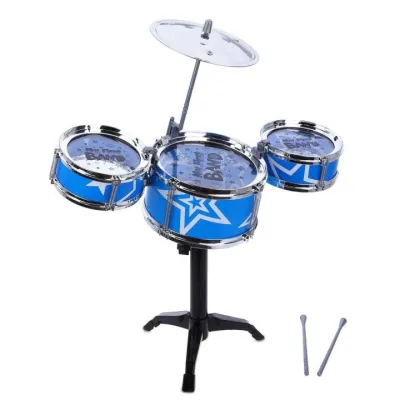
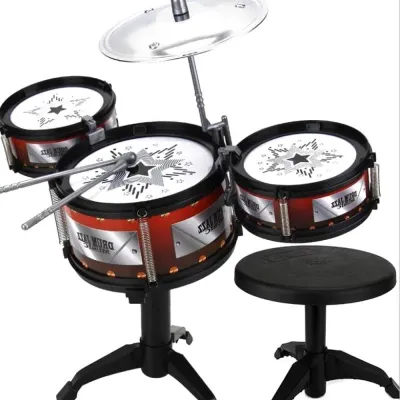
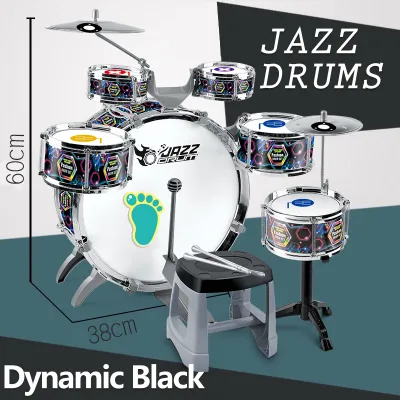
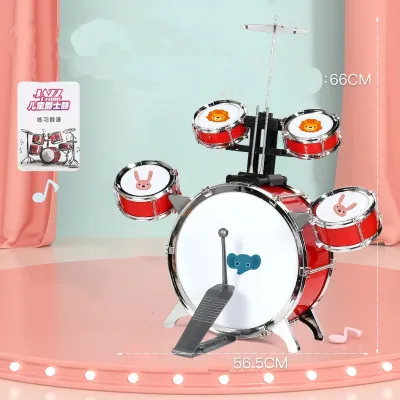

Prices are valid at publication and may change. Please refer to the product page for the latest price.
Arm reach is equally critical. The snare drum and tom-toms must be positioned within a comfortable arc where the child can strike the center of each drumhead without leaning forward or stretching their shoulders. Cymbals should be set low enough that the child does not have to reach above shoulder height, which can cause shoulder discomfort over long practice sessions.
Cognitive and motor skill development also dictates the complexity of the drum kit. Younger children are still developing bilateral coordination—the ability to use both sides of the body together in a controlled manner. Introducing a complex 5-piece kit with multiple pedals too early can overwhelm a child, leading to frustration rather than musical enjoyment. Starting with a simplified setup allows them to master basic rhythms before adding more components.
Drum Set Types and Age Group Guidelines
Navigating the transition from playful noise-making to structured musical practice requires understanding the different categories of drum sets available. Drum kits for young players generally fall into three categories: toy rhythm instruments, junior drum sets, and full-sized or compact beginner kits. Each category corresponds to specific physical heights and developmental milestones.

As children grow rapidly, investing in a kit with highly adjustable hardware is essential. Look for drum stands, tom mounts, and thrones that offer a wide range of height and angle adjustments. This flexibility ensures that the instrument can grow alongside the child, extending the lifespan of the investment and maintaining proper ergonomic alignment over several years.
Toddlers and Preschoolers (Ages 2–4)
For toddlers and preschoolers, the primary goal of drumming is sensory exploration and basic rhythm awareness. At this stage, children are learning to grasp objects and mimic steady beats, making formal drum kits impractical and physically demanding. Instead, parents should look for durable, non-toxic toy drums, hand-played bongo sets, or simple tabletop electronic tap pads.
Safety is the paramount consideration for this age group. Ensure that any percussion toy is free from small, detachable parts that could pose a choking hazard. The construction should feature rounded edges, lightweight materials, and secure assembly without sharp metal tension rods or heavy, unsecured cymbals that could fall and cause injury.
At ages two to four, formal stick grip and foot pedal techniques are not developmentally appropriate. Children at this stage typically use their hands or thick, lightweight plastic mallets to strike surfaces. The focus should remain entirely on play-based learning, allowing them to discover cause and effect through sound without the pressure of rigid physical posture or complex coordination.
Early Elementary (Ages 5–8)
By age five, many children have developed the motor skills and attention span necessary to begin learning basic stick coordination and simple drum patterns. This is the ideal window for a dedicated junior drum set. Junior kits are specifically engineered with scaled-down proportions, typically featuring a 16-inch bass drum, shallower tom-toms, and a low-profile snare stand to accommodate shorter torsos and limbs.
A proper setup for this age group requires specialized accessories. Standard adult drumsticks are too long and heavy for small hands, which can lead to wrist strain; instead, look for shorter, lighter sticks designed specifically for children, often labeled as junior sticks or 7A sizes. Additionally, a lightweight, highly adjustable drum throne is crucial to ensure their feet can comfortably reach the bass drum and hi-hat pedals while keeping their spine straight.
Parents must choose between a simplified acoustic junior kit and a compact electronic drum set with mesh-head pads. Acoustic junior kits offer an authentic physical response and help children learn natural stick rebound, but they can be loud and require regular tuning. Electronic kits with mesh heads allow for quiet practice with headphones and often feature built-in metronomes and coaching functions, making them highly suitable for modern households, though they require access to a power outlet and a dedicated speaker or headphones.
Older Children and Pre-Teens (Ages 9–12)
As children approach their pre-teen years, their physical proportions begin to align more closely with those of adults. Around ages 9 to 12, most kids outgrow junior kits and are ready to transition to standard-sized beginner drum sets. A standard 5-piece kit—consisting of a bass drum, snare drum, two rack toms, and a floor tom—provides the full range of sounds and configurations used in professional music.
Transitioning to a standard kit requires careful ergonomic adjustment. Standard bass drum pedals and hi-hat stands have heavier action and longer physical travel than junior models. Parents should ensure that the tension on these pedals can be adjusted to a lighter setting, allowing younger muscles to operate them smoothly without straining the ankles or calves.
Before purchasing a standard-sized kit, it is vital to measure the child’s inseam and arm span. The child must be able to sit on the throne with their feet flat on both the bass drum pedal and the hi-hat pedal simultaneously, without their knees hitting the underside of the snare drum. If their arm span does not allow them to reach the furthest crash or ride cymbal without leaning their entire torso sideways, the cymbals must be brought closer using boom arms, or a slightly more compact “fusion” sized kit featuring a 20-inch bass drum should be considered.
Acoustic vs. Electronic Drum Sets for Kids
Deciding between an acoustic and an electronic drum set is one of the most significant choices a parent will make. This decision often depends more on household living conditions, space constraints, and noise tolerance than on the child’s musical preferences.
Acoustic drum sets are inherently loud, often producing sound levels that can exceed 100 decibels. In a typical residential neighborhood or apartment building in the Philippines, where homes are often built close together, this volume can easily disturb family members and neighbors. Electronic drum sets solve this issue by allowing the player to wear headphones, reducing the external sound to the quiet “thump” of rubber or mesh pads. However, parents should note that electronic kits require a dedicated amplifier if the child wants to perform for others, whereas acoustic kits are naturally performance-ready.
The tactile experience of playing also differs significantly between the two formats. Acoustic drums use tensioned drumheads that provide a natural, organic stick rebound that teaches players how to control their dynamics and accent notes. Electronic kits use either rubber pads or mesh heads. Rubber pads are highly durable but can feel stiff and unforgiving on a child’s wrists. Mesh heads, which can be tensioned with a drum key, offer a feel that closely mimics acoustic drumheads and are generally preferred for developing proper stick technique.
Maintenance is another key differentiator. Acoustic drums require regular tuning to keep them sounding pleasant, and the drumheads will eventually wear out and need replacement. They are also sensitive to environmental factors; high humidity levels, common in tropical climates, can affect the wood shells and metal hardware, potentially causing rust or warping if not kept in a dry room. Electronic drums do not require tuning, but they do require managing cables, power adapters, and digital modules. Over time, cable connections may loosen, and trigger pads may require adjustment within the module settings to maintain accurate sensitivity.
Essential Features and Accessories to Check Before Buying
Before finalizing any drum set purchase, parents should carefully inspect the hardware and structural components of the kit. Drumming involves repetitive, high-impact forces, meaning that low-quality hardware will quickly slip, rattle, or break under regular use.
Ensure that all cymbal stands, tom mounts, and snare stands feature robust, secure locking mechanisms, such as memory locks or heavy-duty wing nuts. The legs of the stands should be double-braced for stability and equipped with thick rubber feet to prevent the kit from sliding across the floor during play. On hard tile or wooden floors, placing a non-slip rug or carpet under the entire drum set is highly recommended to keep the components locked in place.
Pay close attention to the included accessories, particularly the drum throne. Many entry-level and junior drum kits bundle a very basic, thin throne that offers minimal padding and poor height adjustment. Upgrading to a sturdy, well-padded throne with a secure spindle or bolt-lock adjustment is often a necessary secondary purchase to protect your child’s developing spine and ensure comfortable practice sessions.
Budgeting for a child’s drum set involves looking beyond the initial price tag of the kit itself. In the local market, a decent junior acoustic kit or entry-level electronic set typically ranges from ₱8,000 to ₱25,000. Parents should also allocate funds for essential add-ons, such as high-quality hearing protection (earmuffs or earplugs for acoustic kits), a drum rug, spare drumsticks, and potentially a drum key for tuning.
Finally, review the manufacturer’s warranty terms and the availability of replacement parts. Drumheads, cymbal felts, and tension rods are consumable items that will eventually need replacement. Choosing a brand with local distribution makes it much easier to source compatible spare parts when components inevitably wear out, ensuring the kit remains playable for years to come.
Frequently Asked Questions (FAQ)
At what age should a child start taking formal drum lessons?
Most music educators suggest that ages 6 to 8 represent the ideal window to begin formal, structured drum lessons. At this stage, children have developed the necessary physical coordination, hand-eye control, and attention span to focus during a 30-minute lesson and commit to regular home practice. Before this age, children benefit most from informal music exploration, such as clapping games, hand percussion, and play-based rhythm classes that build a foundation of timing without the pressure of strict technical exercises.
Do I need to buy a separate drum throne for a junior kit?
While many junior drum kits come bundled with a throne, these included seats are often of lower quality, featuring thin padding and limited height adjustment options. If the bundled throne does not allow your child to sit with their thighs parallel to the floor or slightly angled down, or if it wobbles during play, you should purchase a separate, high-quality junior-sized or highly adjustable standard throne. A stable, comfortable seat is the single most important factor in preventing poor posture and fatigue.
How can I reduce the noise of an acoustic drum set at home?
To manage the volume of an acoustic drum set in a shared household, you can install rubber drum mutes or neoprene pads directly onto the drumheads and cymbals, which significantly dampens the sound. Another highly effective option is replacing standard drumheads with mesh practice heads and using specialized low-volume cymbals, which reduce acoustic volume by up to 80 percent while preserving natural stick rebound. Additionally, placing a thick rug or interlocking foam mats under the kit helps absorb low-frequency vibrations that travel through the floor.
Community discussion
Share your experience or ask a question. Comments are reviewed before publication.