
Selecting the right Catholic Bible for daily reading in the Philippines requires balancing translation accuracy, language preference, and physical durability. To establish a meaningful daily reading habit, you need an edition that speaks clearly to your heart while meeting the liturgical and doctrinal standards of the Church. A complete Catholic Bible must contain all 73 books of the biblical canon—including the seven Deuterocanonical books—and carry an official ecclesiastical approval. Whether you prefer a formal English translation for deep study, a contemporary dynamic version for personal reflection, or a local language edition like the Tagalog “ang bible” (such as Ang Biblia or Magandang Balita Biblia), understanding how to evaluate these options ensures your chosen edition supports your spiritual journey for years to come.
Quick Guide to Choosing Your Daily Catholic Bible
When shopping for a daily reading Bible, the first and most critical step is verifying its completeness. Unlike standard Protestant Bibles, which contain 66 books, a Catholic Bible includes 73 books. The additional seven books—Tobit, Judith, 1 and 2 Maccabees, Wisdom, Sirach, and Baruch, along with specific portions of Esther and Daniel—are known as the Deuterocanon. Reading a version without these books means missing integral parts of the Old Testament used in Catholic liturgy and tradition.
To guarantee that a translation is accurate and free from doctrinal error, look for two Latin terms on the copyright page: Nihil Obstat and Imprimatur. The Nihil Obstat (“nothing hinders”) indicates that a diocesan censor has reviewed the text and found no moral or theological errors. The Imprimatur (“let it be printed”) is the official endorsement of a bishop, authorizing the publication for Catholic use.
Products mentioned in this guide
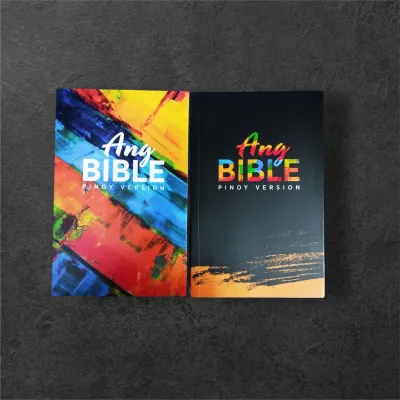
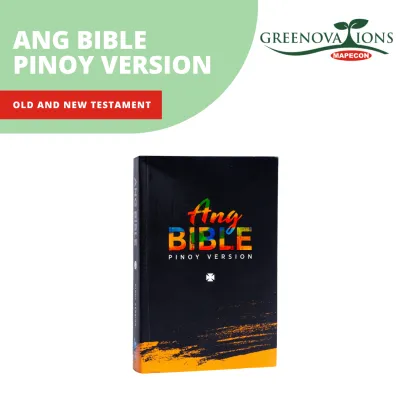
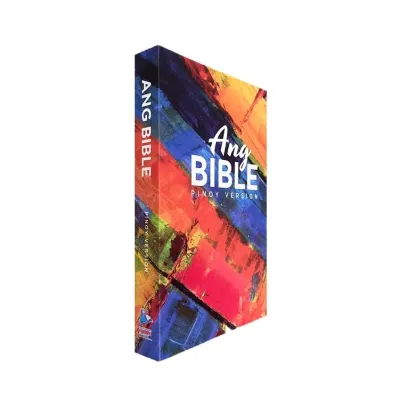
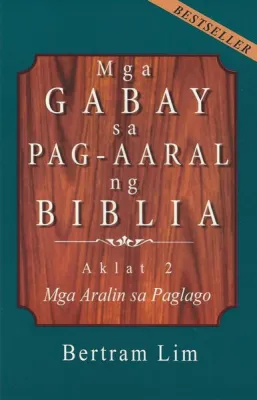
Prices are valid at publication and may change. Please refer to the product page for the latest price.
Your next decision is language. In the Philippines, readers typically choose between English translations and local languages. English editions are widely used in schools, parishes, and personal study. However, local language editions, often searched for or referred to as “ang bible” in Tagalog, offer a deeply personal connection to the text. Choosing between these depends on which language allows you to pray and reflect most naturally.
Navigating Catholic Bible Translations Available in the Philippines
Bible translations generally fall along a spectrum between formal equivalence and dynamic equivalence. Understanding where a translation sits on this spectrum helps you choose one that matches your reading style.

Formal equivalence, or “word-for-word” translation, prioritizes literal accuracy and preserves the original sentence structures of Hebrew, Aramaic, and Greek as closely as possible. Popular English examples include the Revised Standard Version Second Catholic Edition (RSV-2CE) and the English Standard Version Catholic Edition (ESV-CE). These translations are highly regarded for serious theological study, apologetics, and memorization because they minimize interpretive license. Because they align closely with liturgical texts, they are excellent for preparing for Sunday Mass.
Dynamic equivalence, or “thought-for-thought” translation, focuses on rendering the original meaning into natural, modern English or local languages. The New American Bible Revised Edition (NABRE) balances both approaches and serves as the basis for liturgical readings in many English-speaking regions. For an even more accessible reading experience, the Good News Translation (GNT), also known as the Today’s English Version, uses simple, direct language that is ideal for beginners, children, or quick daily devotionals.
For local language options in the Philippines, the choice often centers on Tagalog translations. The term “ang bible” is frequently associated with Ang Biblia, a historic translation first published in the early 20th century. While highly respected for its formal, classical tone, older editions of Ang Biblia may feel archaic to modern readers. To address this, updated ecumenical and Catholic editions have been published.
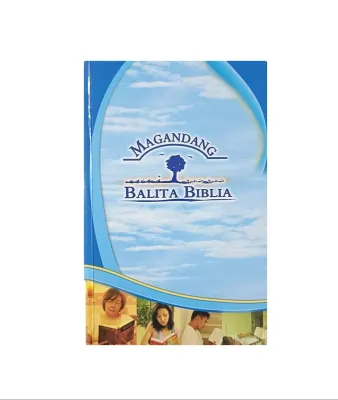
A highly popular alternative is the Magandang Balita Biblia (MBB), a dynamic equivalence translation that uses contemporary, natural Tagalog. The MBB is widely used in parishes across the country for Tagalog Masses, making it an excellent companion for daily reading if you want the text to mirror what you hear in church. When selecting a Tagalog edition, always verify that the publisher has included the Deuterocanonical books, as both Ang Biblia and Magandang Balita Biblia are printed in Protestant-only formats as well as Catholic formats (often labeled “with Deuterocanonicals” or “may Deuterocanonico”).
Before purchasing any translation, take a moment to research the translation committee and the publication year. Language evolves, and newer revisions often benefit from updated manuscript discoveries and contemporary linguistic scholarship. Checking these details ensures your daily Bible remains a reliable tool for personal growth.
Essential Physical and Formatting Features for Daily Use
A Bible that is physically uncomfortable to read will eventually gather dust on a shelf. To build a sustainable daily habit, pay close attention to the typography and layout of the edition you choose.
Font size is a primary consideration. Standard compact Bibles often use tiny 6-point or 7-point fonts to keep the book portable, which can quickly cause eye strain during extended reading sessions. For comfortable daily reading, look for a “comfort print” or a font size of at least 9-point or 10-point. Additionally, check if the publisher uses line matching. This printing technique aligns the lines of text on the front and back of a single page, minimizing the “ghosting” effect where text from the reverse side bleeds through thin Bible paper. High paper opacity also prevents this distraction, allowing your eyes to focus entirely on the words.
The binding and cover materials dictate how well your Bible will withstand daily handling, especially in the humid, tropical climate of the Philippines. Cheap paperbacks and glued bindings tend to crack, lose pages, or warp over time when exposed to high humidity. For longevity, look for a Smyth-sewn binding. Sewn bindings allow the Bible to lay completely flat on a desk or lap without the spine breaking, making reading and note-taking much easier.
For cover materials, genuine leather (such as goatskin or calfskin) offers excellent durability but comes at a premium price. High-quality synthetic covers, often marketed as “leatherlike,” “softtone,” or “DuoTone,” offer an excellent, cost-effective alternative. These polyurethane covers are highly flexible, pleasant to hold, and resist moisture and peeling better than cheap bonded leather, which is made of glued leather scraps and prone to flaking in humid weather.
Finally, consider how you plan to use the Bible geographically. If you intend to read primarily at a desk, altar, or bedside table, a larger wide-margin edition is ideal. These editions provide extra space on the outer edges of the pages for writing personal reflections, prayers, or study notes. If you commute daily on public transit or travel frequently, a compact or “thinline” edition is much more practical, fitting easily into a backpack or handbag without adding excessive weight.
Aligning Your Edition with Your Spiritual and Study Goals
Your primary method of engaging with Scripture should guide the specific format of the Bible you select. Different layouts serve different spiritual disciplines.
If your goal is contemplative prayer, such as Lectio Divina (divine reading), look for a plain-text or reader’s edition. These formats minimize distractions by removing extensive footnotes, cross-references, and sometimes even verse numbers. This clean layout allows you to immerse yourself in the narrative or poetic flow of the text, facilitating a quiet, meditative dialogue with God without the constant interruption of academic commentary.
Conversely, if you are focusing on in-depth theological study, apologetics, or preparing to lead a parish Bible study, you will require a study Bible. These editions are packed with supplementary materials, including cross-references that link related passages across the Old and New Testaments, comprehensive footnotes explaining historical and cultural contexts, and detailed maps of biblical lands. Study Bibles help you understand the deeper theological meanings and historical settings behind the text, though they are physically heavier and have busier page layouts.
For those who enjoy active reflection, a journaling Bible is an excellent choice. These editions feature wide, lined margins specifically designed for writing down insights, prayers, or even creating illustrative art. If you struggle with consistency, look for an edition that includes a built-in daily reading plan. Many Catholic Bibles feature reading plans that guide you through the entire Scripture in one or two years, or plans that align with the Church’s daily liturgical readings, helping you stay connected to the universal Church’s daily prayer cycle.
Verifying Authenticity and Sourcing Your Bible
With numerous editions available online and in physical stores, ensuring you purchase an authentic, complete Catholic Bible requires careful verification.
Always start by checking the copyright page for the Imprimatur and Nihil Obstat. Additionally, count or verify the table of contents to ensure all 73 books are present. Be cautious of editions labeled simply as “The Bible” or “Holy Bible” without explicit mention of Catholic contents, as these are frequently standard 66-book Protestant editions. While these translations are valuable, they lack the complete Old Testament canon used in Catholic liturgy and personal devotion.
To avoid counterfeit prints or incomplete editions, source your Bible from authorized channels. In the Philippines, established Catholic publishers and diocesan bookstores are highly reliable sources. Organizations such as Paulines Publishing House, St. Pauls, Claretian Communications Foundation, and Word & Life Publications operate physical bookstores across the country and maintain official online storefronts on major ecommerce platforms. Purchasing directly from these official stores ensures you receive a high-quality, authorized print while supporting local Catholic ministries.
Be highly skeptical of extremely cheap listings on online marketplaces or unauthorized digital downloads. These products often suffer from poor print quality, missing pages, or unauthorized translations that lack ecclesiastical approval. Investing in a verified edition from a reputable publisher guarantees that the text you read daily is accurate, complete, and fully aligned with Catholic teaching.
Frequently Asked Questions (FAQ)
Do I need a specific Catholic edition if I already own a standard Bible?
Yes, if you wish to read the complete scriptures recognized by the Catholic Church. A standard Protestant Bible contains 66 books, omitting the seven Deuterocanonical books (such as Tobit, Judith, and Wisdom) that have been part of the Catholic biblical canon since the early Church. Furthermore, a Catholic edition carries the Imprimatur, which verifies that the translation and accompanying notes have been reviewed for doctrinal accuracy. Using a Catholic edition ensures your personal reading aligns with the readings, teachings, and liturgical life of the Church.
How should I care for my Bible in a humid climate?
To protect your Bible from the high humidity of the Philippines, store it in a dry, well-ventilated area away from direct sunlight and damp walls. Avoid storing it in airtight plastic bags or tight plastic wraps, as these can trap moisture and encourage mold growth. Instead, use a breathable fabric or canvas Bible cover to shield it from dust. Periodically open the Bible and gently fan the pages to let air circulate, and avoid leaving paper bookmarks or organic materials inside the pages for long periods, as they can attract moisture and pests.
Community discussion
Share your experience or ask a question. Comments are reviewed before publication.