
Reading The Psychology of Money by Morgan Housel often marks a turning point in how you view your bank account. Instead of treating personal finance as a cold, mathematical science filled with complex spreadsheets, Housel reveals that doing well with money is actually a soft skill—one where your behavior is far more important than your technical knowledge. Once you grasp the fundamental truth that your financial decisions are driven by emotion, history, and personal pride rather than pure logic, the natural next step is to figure out how to manage those behavioral patterns. To truly deepen your financial mindset, you must transition from understanding your psychological biases to actively shaping your daily habits, investment strategies, and long-term life goals.
Quick Picks for Your Next Financial Read
If you are eager to dive into your next read immediately, several outstanding titles build directly on the behavioral and strategic foundations laid by Housel. For those who want to focus on the daily routines that drive financial success, James Clear’s Atomic Habits offers a practical blueprint for automating positive behaviors. If you are ready to transition from psychology to structured investing, The Simple Path to Wealth by JL Collins provides a straightforward, low-stress framework for long-term wealth accumulation. For a deeper, more philosophical exploration of what wealth actually means, Your Money or Your Life by Vicki Robin and Joe Dominguez challenges you to evaluate your spending in terms of your limited life energy. Finally, The Millionaire Next Door by Thomas J. Stanley and William D. Danko offers an eye-opening, data-driven look at the quiet habits of real-world wealth. These highly recommended titles are widely available to readers in the Philippines across various formats, including physical paperbacks, digital e-books, and audiobooks, allowing you to choose the medium that best fits your daily routine.
How to Choose Your Next Financial Psychology Book
Selecting your next financial book should not be a random choice; instead, it should target your specific financial pain points and personal growth goals. If you find yourself earning a decent income but wondering why your savings account never seems to grow, your primary bottleneck is likely habit formation and behavioral consistency. On the other hand, if you have successfully built up an emergency fund but feel paralyzed by the fear of stock market volatility, you need a book that demystifies long-term investing psychology and risk management. If you struggle with chronic financial anxiety or feel like no amount of money will ever bring you peace of mind, your challenge is philosophical, requiring a guide that helps you define your personal concept of “enough.”
Products mentioned in this guide
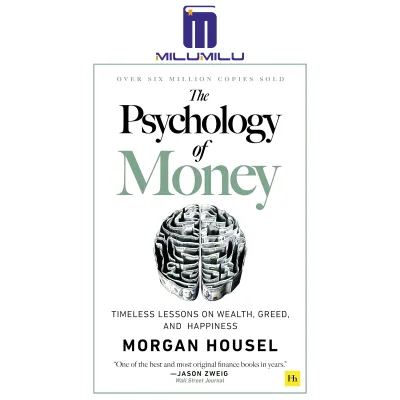
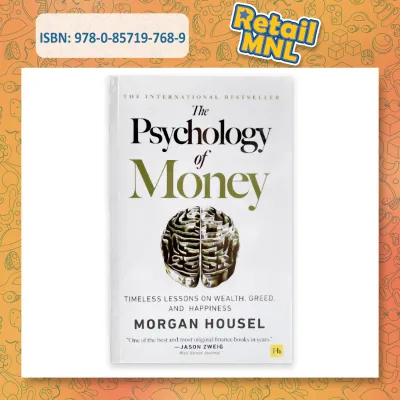
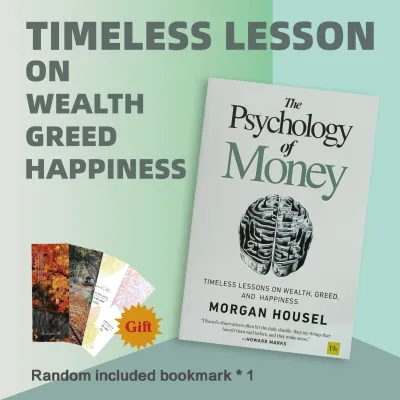
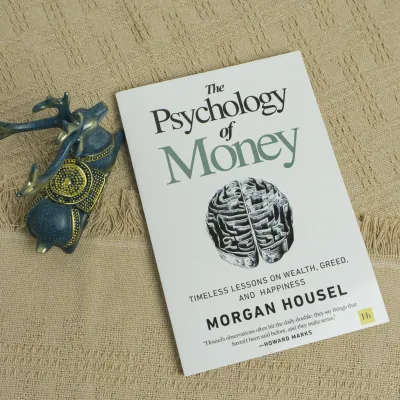
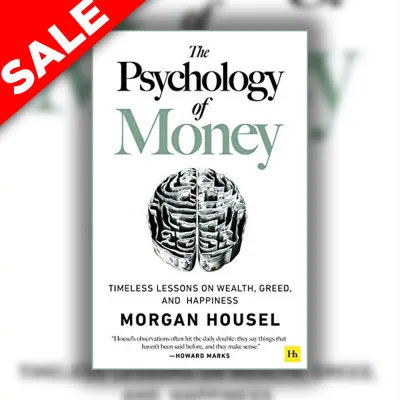
![[BUNDLE PROMO] THE PSYCHOLOGY OF MONEY PLUS ONE MOTIVATIONAL OR FICTION BOOK](https://img.lazcdn.com/g/p/d843b799ba73bf1db10b218285481ac7.jpg_400x400q80.jpg_.webp)
Prices are valid at publication and may change. Please refer to the product page for the latest price.

Understanding the distinction between different financial genres will help you navigate your reading journey more effectively. Behavioral finance books examine the cognitive biases and evolutionary traits that influence our financial choices, helping you recognize why you make impulsive decisions. Practical wealth-building guides provide the structural frameworks, asset allocation strategies, and systematic approaches needed to grow your assets over time. Philosophical mindset books focus on the emotional relationship you have with wealth, helping you align your financial resources with your core values and long-term happiness.
Additionally, consider your preferred learning format and the depth of material you enjoy. Some readers find inspiration in narrative-driven self-help books that use engaging stories to illustrate key concepts, while others prefer academic research packed with historical data and empirical evidence. Matching the book’s tone and complexity to your current reading stamina ensures that you will actually finish the book and apply its lessons to your life.
Top Book Recommendations to Build on Financial Psychology
To help you navigate these diverse paths, we have curated a list of exceptional books categorized by the specific financial mindset they help develop. As you explore these recommendations, remember to verify the current editions, translations, and regional availability with authorized distributors to ensure you get the most accurate and complete content.
Books for Mastering Behavioral Finance and Habits
To bridge the gap between understanding your financial psychology and changing your actual behavior, you must focus on the mechanics of habit formation. James Clear’s Atomic Habits is an indispensable companion to The Psychology of Money because it explains how tiny, incremental changes in your daily routine compound into massive financial results over time. Clear details the four-step habit loop—cue, craving, response, and reward—and demonstrates how you can redesign your environment to make saving money effortless and spending money difficult. By automating your financial decisions and aligning your habits with your identity, you stop relying on fleeting willpower to build wealth.
Another powerful read in this category is Nudge by Richard H. Thaler and Cass R. Sunstein, which explores how subtle changes in choice architecture can dramatically influence human behavior. This book explains how default options, such as automatic enrollment in retirement savings plans, can bypass our natural tendency to procrastinate. It builds directly on Housel’s behavioral concepts by showing how easily our minds are influenced by how choices are presented to us.
These titles are ideal for readers who fully comprehend the psychological “why” behind their financial struggles but find themselves stumbling when it comes to the tactical “how.” If you know you need to save more but find yourself constantly tempted by online shopping notifications or social pressure, mastering behavioral habits will give you the practical tools to regain control over your cash flow.
Books for Wealth Building and Long-Term Strategy
Once you have established consistent financial habits, the next step is to transition from psychological awareness to systematic, long-term investing. The Simple Path to Wealth by JL Collins is widely regarded as one of the most accessible guides for building a robust investment portfolio. Collins demystifies the stock market, advocating for a simple, low-cost index fund strategy that aligns perfectly with Housel’s philosophy of patience and long-term thinking. The book teaches you how to view market downturns not as terrifying crises, but as opportunities to buy assets at a discount, helping you build the emotional resilience needed to stay invested.
To deepen your understanding of this systematic approach, The Little Book of Common Sense Investing by John C. Bogle offers a timeless defense of index investing from the founder of Vanguard. Bogle explains the mathematical reality that trying to beat the market through active trading or stock picking almost always results in lower returns over time due to high fees and emotional decision-making. This book provides a solid strategic framework and mental models that help you accept average market returns to achieve superior, compounding wealth over decades.
It is crucial to understand that these books do not offer speculative stock tips, trendy cryptocurrency advice, or guarantees of overnight riches. Instead, they provide enduring frameworks that shift your focus from emotional, short-term speculation to systematic, long-term wealth accumulation. They teach you how to manage risk, understand historical market cycles, and build a portfolio that works quietly in the background of your life.
Books for Mindset Shifts and Emotional Wealth
True financial freedom is not just about the number in your bank account; it is about how that money serves your life. Your Money or Your Life by Vicki Robin and Joe Dominguez is a transformative guide that forces you to redefine your relationship with material possessions and employment. The authors introduce the concept of “life energy,” prompting you to calculate how many hours of your life you must trade to pay for your purchases. This simple mental shift reframes spending from a simple transaction into a direct trade-off with your limited time on earth, helping you naturally curb consumerism and focus on what truly matters.
Another modern classic that challenges conventional financial wisdom is Die with Zero by Bill Perkins. While traditional personal finance books emphasize endless accumulation and saving for a distant retirement, Perkins argues for optimizing your life experiences across different age phases. He encourages readers to deliberately distribute their wealth while they still have the health and energy to enjoy it, offering a fresh perspective on how to balance saving for the future with living fully in the present.
These reflective books are essential for preventing the trap of the moving goalpost—a psychological phenomenon Housel warns against, where your desires constantly outpace your earnings. By exploring emotional wealth and financial independence, you learn to align your financial goals with your personal values, ensuring that your pursuit of money ultimately leads to genuine happiness and peace of mind.
How to Get the Most Out of Your Financial Reading List
To prevent your reading list from becoming mere passive entertainment, you must actively apply these concepts to your daily life. One of the most effective ways to do this is by keeping a dedicated financial journal. Whenever you make a significant purchase, experience anxiety during a market dip, or feel the urge to spend impulsively, write down your emotional state and the underlying triggers. Over time, this practice will help you identify your personal cognitive biases and recognize the specific patterns that lead to financial self-sabotage.
Additionally, commit to implementing at least one small, measurable behavioral change immediately after finishing each book. Do not overwhelm yourself by trying to restructure your entire financial life in a single day. If a book teaches you about choice architecture, take ten minutes to set up an automatic transfer of ₱500 to a high-yield digital savings account or an investment fund on every payday. By breaking down large financial concepts into tiny, actionable steps, you build momentum and turn theoretical knowledge into permanent habits.
Finally, always cross-reference the general concepts you read with the local financial landscape in the Philippines. International personal finance books frequently refer to US-specific tax codes, retirement accounts like 401ks or IRAs, and specific foreign brokerage platforms. To make these lessons practical, translate them into local equivalents. For example, you can apply the principles of low-cost index investing by exploring local equity index mutual funds, Unit Investment Trust Funds (UITFs), or the Pag-IBIG MP2 program. Understanding how local inflation, interest rates, and tax structures impact your purchasing power will ensure that your global financial education remains highly relevant to your local reality.
Frequently Asked Questions (FAQ)
Should I read these books in a specific order?
While most personal finance and financial psychology books are designed to be read independently, following a structured progression can help you absorb and apply the concepts more effectively. A highly recommended path is to start with behavioral habits by reading Atomic Habits, which establishes the daily discipline and routines needed to manage your money. Once you have control over your cash flow, transition to strategic wealth-building guides like The Simple Path to Wealth to build a solid foundation in long-term investing and risk management. Finally, explore philosophical works like Your Money or Your Life to align your growing wealth with your personal values and long-term happiness. This logical progression ensures that you build practical skills before tackling complex investment strategies, ultimately culminating in a holistic and balanced financial mindset.
Are these financial psychology books available in bookstores in the Philippines?
Yes, major international personal finance and self-help titles are widely available across the Philippines. You can typically find physical copies of these books in prominent local bookstore chains, such as Fully Booked and National Book Store, as well as their official storefronts on major online marketplaces and ecommerce platforms. Because of the high demand for financial literacy resources, some popular titles may occasionally be out of stock in physical stores. In such cases, digital platforms like Kindle, Kobo, or Apple Books, along with audiobook services like Audible, offer immediate and authorized access to these texts. When purchasing physical copies online, always verify that you are buying from official publishers or authorized distributors to ensure you receive complete, high-quality, and legitimate editions of the books.
Community discussion
Share your experience or ask a question. Comments are reviewed before publication.