
Choosing between a Betsy piano and a Yamaha keyboard for a beginner in the Philippines depends on your budget, long-term musical goals, and how much you value physical key realism. Yamaha is a globally established brand known for standardized key actions, realistic sound engines, and long-term durability, making it ideal for serious learners who plan to transition to acoustic pianos. Betsy serves as an entry-level, highly budget-friendly alternative found on online marketplaces, suitable for casual hobbyists or those testing their interest without a major upfront financial commitment.
In the tropical climate of the Philippines, high humidity and dust can affect the longevity of electronic components and key sensors. Therefore, understanding the build quality, warranty support, and technical specifications of your first instrument is just as important as the brand name on the chassis. Beginners must carefully evaluate how each brand aligns with their learning path before making a purchase.
Brand Positioning: Betsy vs Yamaha in the Local Market
Yamaha holds a dominant position in the global and local music industry, with a history of manufacturing acoustic and digital instruments spanning over a century. In the Philippines, Yamaha keyboards are the standard choice for many music schools, classical academies, and professional studios. This widespread presence means that local music teachers are highly familiar with Yamaha’s layout, and finding replacement parts or authorized service centers is relatively straightforward.
Products mentioned in this guide
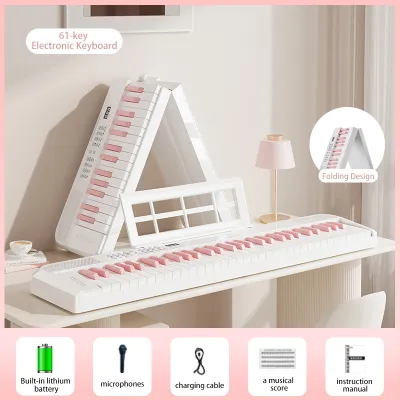
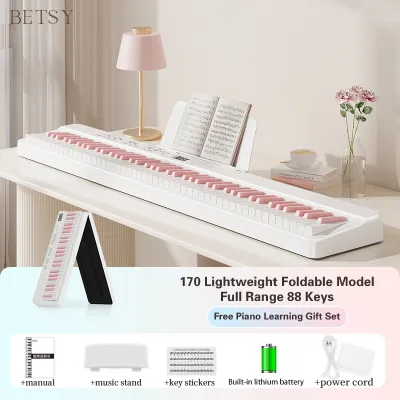
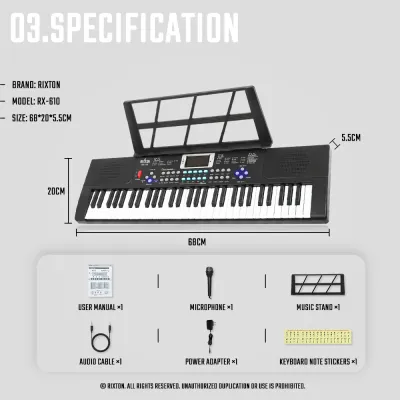
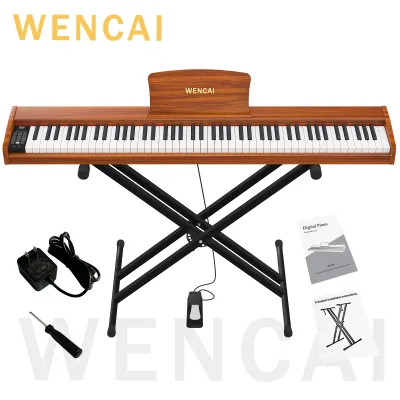
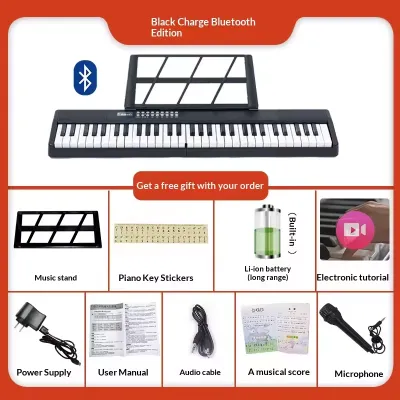
Prices are valid at publication and may change. Please refer to the product page for the latest price.
Betsy is positioned as a budget-friendly, entry-level alternative that has gained popularity primarily through general e-commerce platforms and online marketplaces. Unlike legacy music brands, Betsy focuses on providing full-sized keyboards and digital pianos at a fraction of the cost of established competitors. This makes the brand highly attractive to Filipino families who want to introduce their children to music without committing to a significant financial investment.
When purchasing either brand in the local market, verifying authorized dealers and official stores is critical to avoiding counterfeit or gray-market units. Gray-market instruments, even from reputable brands like Yamaha, often lack local warranty coverage, leaving buyers responsible for expensive repairs if the unit suffers damage from humidity or power fluctuations. For budget brands like Betsy, buying from verified online mall sellers ensures that the product received matches the advertised specifications and includes basic buyer protection.
Core Features That Matter for Beginner Pianists
To make an informed decision, beginners must look past marketing slogans and focus on the physical and digital specifications that directly impact the learning experience. The three main technical pillars to evaluate are key action, sound engine quality, and digital connectivity.

Rather than relying on third-party listing titles on online marketplaces, which often use confusing or misleading terminology, buyers should cross-reference official manufacturer spec sheets. This ensures that the model you choose actually possesses the features required for your specific learning goals.
Key Action and Touch Sensitivity
Key action refers to the physical mechanism beneath the keys that simulates the feel of an acoustic piano. Unweighted keys are light and spring-loaded, offering little to no resistance, which is common in basic electronic keyboards. Semi-weighted keys provide a moderate level of resistance, while fully weighted hammer action keys mimic the physical hammer mechanism of an acoustic piano, which is essential for building finger strength and proper technique.
Buyers must check the specific model’s spec sheet, as both Betsy and Yamaha offer multiple tiers of key actions across their product lines. For example, Yamaha’s entry-level portable keyboards typically feature unweighted keys, while their digital pianos utilize Graded Hammer Standard (GHS) actions to simulate the heavier feel of lower bass keys and lighter treble keys. Betsy models also vary widely, with some budget options featuring semi-weighted keys and others offering fully weighted actions at a lower price point than legacy brands.
Touch sensitivity, also known as velocity response, is a non-negotiable minimum requirement for any beginner keyboard. This feature ensures that the instrument produces a louder sound when a key is struck firmly and a softer sound when pressed gently. Without touch sensitivity, a student cannot develop musical expression, dynamics, or the proper finger control needed to play classical or contemporary piano pieces effectively.
Sound Quality and Polyphony
The quality of a keyboard’s sound engine determines how realistic the instrument sounds when played. Yamaha utilizes proprietary sampling technology, such as Advanced Wave Memory (AWM) Stereo Sampling, which records actual acoustic grand pianos at various dynamic levels to create a rich, natural tone. Budget brands like Betsy often use generic synthesized wave tables, which may sound more electronic or artificial, especially in the higher and lower registers.
Polyphony is another critical specification, representing the maximum number of individual notes or voices the keyboard can produce simultaneously. When a beginner plays complex chords while holding down the sustain pedal, the instrument quickly consumes its available polyphony. A low polyphony limit, such as 32 notes, can cause older notes to cut off abruptly, whereas a minimum threshold of 64 or 128 notes ensures a smooth, continuous sound during sustained passages.
Because ambient noise from electric fans, street traffic, or air conditioners is common in many Philippine households, testing the built-in speakers is highly recommended. If a physical test is not possible, check the speaker wattage on the specification sheet; higher wattage generally indicates clearer sound at higher volumes. Additionally, using a quality pair of over-ear headphones can bypass weak built-in speakers and provide a much more accurate representation of the keyboard’s actual sound engine.
Learning Tools and Connectivity
Modern digital keyboards offer a variety of built-in tools designed to assist self-study and daily practice. Essential features to look for include a built-in metronome for rhythm training, a dual-mode for layering two different instrument sounds, and a split function. The split function is particularly useful for lessons, as it divides the keyboard into two identical octave ranges, allowing a teacher and student to play the same passage side by side.
Digital connectivity is equally important for integrating the keyboard with modern learning software. Buyers should verify the presence of a USB-to-Host or MIDI port, which allows the keyboard to connect to a tablet, smartphone, or computer. This connection enables the use of interactive educational apps, sheet music readers, and digital audio workstations (DAWs) for basic music production.
Finally, ensure the keyboard has a dedicated headphone jack, which is standard on almost all Yamaha and Betsy models. In shared living spaces or compact homes, the ability to practice silently with headphones is invaluable. It allows the beginner to practice at any hour of the day or night without disturbing family members or neighbors, fostering more consistent practice habits.
Pricing, Warranties, and Where to Buy
The financial investment required for a beginner keyboard varies significantly depending on the brand, key action, and included accessories. In the Philippines, entry-level keyboards generally fall into three distinct price brackets:
- Under ₱5,000: This tier consists primarily of 61-key unweighted electronic keyboards. These are suitable for young children, casual hobbyists, or those who want to learn basic music theory without a significant financial commitment.
- ₱5,000 to ₱15,000: In this mid-range bracket, buyers can find semi-weighted 61-key or 88-key models, as well as entry-level weighted keyboards. Many of Betsy's full-sized digital pianos sit in this range, offering weighted keys at a price point where legacy brands typically only offer unweighted portable keyboards.
- Over ₱15,000: This premium beginner tier includes fully weighted 88-key digital pianos from established brands like Yamaha (such as the entry-level P-series). These instruments are designed to last for several years of serious study and offer the closest approximation to an acoustic piano.
When weighing these price points, buyers must consider local warranty coverage and the availability of authorized service centers in the Philippines. Yamaha’s official distribution network provides robust warranty support, with physical service centers in major metropolitan areas that can source genuine replacement parts. Betsy units, which are often imported directly by online sellers, may carry limited seller-specific warranties that require shipping the heavy instrument back to the seller at the buyer’s expense, making repairs highly impractical.
To ensure a safe purchase, avoid unauthorized online sellers who offer prices that seem too good to be true. When shopping on e-commerce platforms, verify the seller’s credentials by checking for official mall badges, reading customer reviews specifically regarding packaging quality, and confirming that the seller offers a clear return policy for transit damage.
Decision Framework: Which Keyboard Should You Buy?
To choose the right keyboard, you must align your purchase with your specific musical goals, budget constraints, and level of commitment.
Choose a Yamaha keyboard or digital piano if your primary goal is long-term classical training, a seamless transition to an acoustic piano, or if you want an instrument with a high resale value. Yamaha’s standardized key actions and reliable sound engines ensure that the habits you develop during practice will translate accurately to any acoustic piano. Furthermore, if you decide to upgrade or stop playing later, Yamaha instruments retain a significant portion of their value on the local second-hand market.
Choose a Betsy keyboard or digital piano if your budget is highly constrained, you are exploring piano playing as a casual hobby, or you primarily need a full-sized MIDI controller for basic digital music production. Betsy offers an affordable entry point that allows you to experience a full 88-key layout without a major financial risk. This is particularly suitable for students who are still testing their long-term interest in the instrument.
If you decide to purchase a second-hand unit or buy from an unauthorized online seller to save money, perform a thorough physical inspection before finalizing the transaction. Test every single key individually to check for physical wear, sticky mechanisms, or uneven key heights. Plug in headphones to verify that both the left and right audio channels work without static, and ensure that the power port and USB ports are physically stable and functioning correctly.
Frequently Asked Questions (FAQ)
Can I upgrade from a Betsy keyboard to a Yamaha later without relearning?
Yes, you can transition from a Betsy keyboard to a Yamaha later without having to relearn the fundamentals of music. Basic note reading, fingerings, scales, and music theory are identical across all standard keyboard layouts, regardless of the brand.
However, if your initial keyboard has unweighted or semi-weighted keys, you will experience a physical adaptation period when upgrading to a Yamaha with fully weighted hammer action keys. Your fingers will need to build up the strength and control required to play the heavier keys effectively. To minimize this adjustment period, it is highly recommended to test the target upgrade model in a local showroom to familiarize yourself with the difference in key resistance before making the purchase.
Do I need an 88-key keyboard as a beginner?
Whether you need an 88-key keyboard depends on the style of music you intend to play and your available living space. A 61-key keyboard is often sufficient for early pop music, casual hobby playing, learning basic chords, and studying music theory. It is also more portable and easier to store in compact living spaces.
For students pursuing classical piano repertoire, an 88-key keyboard is mandatory, as classical pieces frequently utilize the full range of the instrument. Having a full-sized keyboard also helps develop proper spatial orientation and arm movement. Before ordering an 88-key unit, be sure to measure your available desk or stand space, as these instruments are significantly wider and heavier than their 61-key counterparts.
Community discussion
Share your experience or ask a question. Comments are reviewed before publication.