
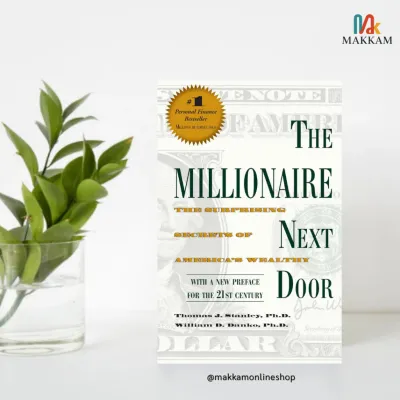
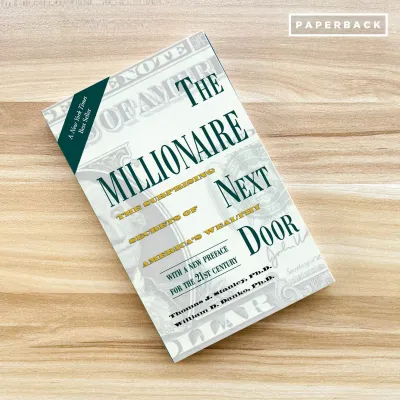
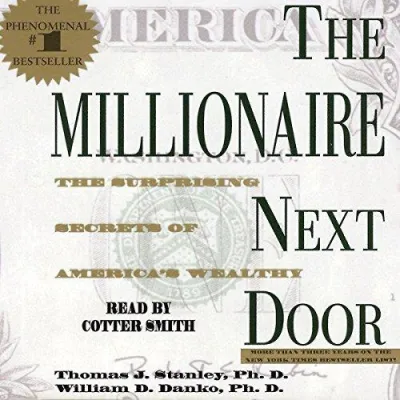
Reading The Millionaire Next Door by Thomas J. Stanley and William D. Danko often serves as a profound financial awakening. It dismantles the flashy, high-consumption myth of wealth, proving that true financial independence is built on frugality, systematic saving, and living well below your means. However, once you have embraced the mindset of the quiet, budget-conscious accumulator of wealth, you may find yourself asking what comes next. Frugality alone is a defensive strategy; to fully secure your financial future, you must learn how to play offense through investing, psychological mastery, and income expansion.
The purpose of this guide is to help you select your next personal finance book based on your specific wealth-building goals. Rather than presenting a definitive, ranked list, we will explore widely recognized classics as non-exhaustive examples of where to take your financial education next. By understanding how to apply these global concepts to your daily life, you can build a personalized reading roadmap that aligns with your financial journey.
How to Choose Your Next Financial Book
To avoid analysis paralysis or reading books that do not align with your current financial stage, you must first diagnose your primary bottleneck. Are you struggling to grow your savings because your salary is low? Or do you have a healthy surplus every month but feel terrified of putting it into the stock market? Identifying whether your immediate hurdle is investment execution, psychological discipline, or primary income generation will point you toward the right literature.
Products mentioned in this guide




Prices are valid at publication and may change. Please refer to the product page for the latest price.
Another critical factor is geographic translation. Most global personal finance bestsellers are written from a Western perspective, referencing specific tax codes, retirement accounts, and investment platforms. When selecting a book, you must evaluate how easily its core strategies can be adapted to the financial landscape of the Philippines. A strategy that relies heavily on specific foreign tax shelters will require you to find local functional equivalents, such as the Personal Equity and Retirement Account (PERA) or unit investment trust funds (UITFs).
Finally, pay close attention to book formats and publication editions. Financial markets evolve, and a book written before major global economic shifts may contain outdated advice on interest rates or platform recommendations. Look for revised editions that address modern digital investment tools, and choose formats—whether physical paperbacks, digital e-books, or audiobooks—that fit your daily routine and learning style.
Books for Mastering Investment Mechanics
Once you have mastered the art of spending less than you earn, the next logical step is learning how to put that surplus to work. Transitioning from a simple saver to an active investor requires a solid understanding of investment mechanics. This phase of your financial education should focus on the mathematical realities of compound interest, the importance of asset allocation, and the efficiency of low-cost index fund investing.

A widely recognized classic in this category is The Simple Path to Wealth by JL Collins. This book demystifies the complex world of stock market investing by advocating for a highly simplified, long-term approach centered on broad-market index funds. It teaches readers that trying to beat the market through active stock picking is generally a losing game for individual investors, and that buying and holding the entire market is a more reliable path to wealth.
However, as a reader in the Philippines, you cannot copy these steps blindly. When a foreign text discusses investing through a specific brokerage or utilizing tax-advantaged accounts like a 401(k) or a Roth IRA, you must translate these concepts. In the local context, your equivalent tools might include the Pag-IBIG Voluntary Savings Program (MP2), which offers tax-free dividend earnings, or PERA, which provides tax incentives for retirement savings. You can also look into local index funds or UITFs offered by major Philippine banks to replicate the broad-market exposure recommended in global investment literature.
Before committing your hard-earned money, make it a habit to verify the mechanics of any local investment vehicle. Check the management fees, historical performance, and withdrawal terms of local funds. Whether you are starting with ₱1,000 or ₱100,000, understanding the local equivalent of index investing ensures that the principles of compound interest work in your favor without being eroded by high local administrative costs.
Essential Reads for Behavioral Finance and Mindset
Even the most mathematically sound investment strategy will fail if you lack the emotional discipline to stick to it during a market downturn. Wealth accumulation is as much a psychological challenge as it is a technical one. To protect your growing portfolio from your own impulses, you must study behavioral finance, which explores how human emotions, cognitive biases, and social pressures influence financial decisions.
A foundational text for this stage is The Psychology of Money by Morgan Housel. Rather than focusing on spreadsheets and formulas, this book illustrates how doing well with money is less about what you know and more about how you behave. It teaches readers how to manage risk, navigate market volatility, and resist the constant temptation of lifestyle creep—the tendency to increase spending as income rises.
For readers in the Philippines, adapting these behavioral lessons requires navigating unique cultural dynamics. Local financial decisions are often deeply intertwined with family obligations, the cultural expectation of supporting extended relatives, and social pressures like hosting lavish celebrations or purchasing gifts. Reading behavioral finance books can help you establish healthy personal boundaries, allowing you to build a secure financial foundation while still honorably supporting your loved ones without jeopardizing your long-term stability.
Understanding your personal risk tolerance is another critical takeaway from behavioral finance. When local markets experience volatility, a disciplined investor avoids panic-selling. By studying the psychological aspects of money, you learn to view market downturns as temporary fluctuations rather than permanent losses, allowing you to maintain a long-term perspective even when local economic conditions feel uncertain.
Strategies for Income Growth and Entrepreneurship
Frugality has a natural floor; you can only cut your expenses down to zero. Your earning potential, on the other hand, is theoretically unlimited. If your primary financial hurdle is not your spending habit but a low baseline income, your reading list should pivot toward career development, skill acquisition, and entrepreneurship.
Books in this category focus on building career capital, launching scalable side ventures, and understanding the mechanics of business. They encourage readers to transition from selling their time for a fixed wage to creating systems and assets that generate leverage. These texts help you identify high-value skills that are in demand globally and locally, enabling you to command higher fees or salaries.
When reading foreign-authored business and entrepreneurship books, it is vital to extract the underlying principles rather than attempting to replicate exact step-by-step blueprints. Foreign business models often rely on infrastructure, payment gateways, and regulatory frameworks that may not exist or operate differently in the local market. Focus instead on universal business truths: solving customer pain points, managing cash flow, marketing effectively, and building strong operational systems that can survive local economic fluctuations.
Additionally, consider how local market conditions affect business viability. High humidity, tropical weather patterns, and local logistics infrastructure can impact physical product businesses in ways that foreign authors might not anticipate. By focusing on the core principles of value creation and adapting them to local realities, you can build sustainable income streams that fuel your wealth-building engine.
How to Source and Verify Authentic Editions Locally
As you curate your post-Millionaire Next Door reading list, ensuring you obtain authentic, high-quality copies of these books is essential. The local market has seen a rise in unauthorized reprints and pirated digital copies, which often suffer from missing chapters, illegible text, and poor formatting that can ruin the learning experience.
To secure legitimate copies, prioritize purchasing from authorized physical bookstores or the official flagship stores of established booksellers on major e-commerce platforms. When shopping online, look for official verification badges and read customer reviews carefully to confirm the physical quality of the book. Authentic editions ensure that you are reading the complete, unaltered text as intended by the author.
Additionally, always verify the publication date and edition of the book before purchasing. Financial landscapes change rapidly, and buying an outdated edition might mean missing crucial updates regarding modern digital assets, updated tax laws, or contemporary market realities. Investing in authentic, up-to-date editions is your first step toward making sound, well-informed financial decisions.
Be cautious of digital downloads offered on unauthorized websites or social media groups. These files often bypass copyright protections and may contain malware or incomplete drafts. By supporting authorized publishers and distributors, you guarantee that you are receiving accurate, high-quality financial education that serves as a reliable foundation for your wealth-building journey.
Frequently Asked Questions (FAQ)
Do I need to read these follow-up books in a specific order?
There is no single correct order, as the ideal sequence depends entirely on your current financial situation. If you have high-interest debt or struggle with impulsive spending, start with behavioral finance books to master your mindset. If you have stable savings but do not know how to grow them, move directly to investment mechanics. If your savings are minimal because of a low salary, prioritize books on income growth and entrepreneurship first.
Are US-centric finance books applicable in the Philippines?
Yes, the core principles of wealth building—such as living below your means, understanding compound interest, managing risk, and staying disciplined during market fluctuations—are universal. However, the specific execution tools, such as tax-advantaged accounts, retirement programs, and brokerage platforms, must be adapted. Always research local equivalents like PERA, Pag-IBIG MP2, and local bank UITFs to apply these global lessons effectively within the local regulatory environment.
Community discussion
Share your experience or ask a question. Comments are reviewed before publication.