
When searching for modern wealth-building strategies, many young professionals look up terms like “silicone valley” finance guides to find books that break away from traditional, slow-paced saving advice. The entrepreneurial ecosystem of Northern California has pioneered a distinct approach to money—one centered on high leverage, digital scalability, behavioral mastery, and early financial independence. For young beginners in the Philippines, these concepts offer a powerful alternative to conventional career paths, providing the mental frameworks needed to navigate the rapidly growing digital economy.
This curated selection of literature does not merely teach you how to balance a budget or cut back on daily expenses. Instead, it introduces you to the mechanics of modern wealth creation, helping you understand how to make your mind, your assets, and your career work in unison. By studying these philosophies, early-career professionals, freelancers, and university students can learn to build scalable income streams and invest with long-term confidence.
What Defines a Silicon Valley-Inspired Finance Book for Beginners?
Traditional personal finance literature often focuses heavily on frugality, manual budgeting, and slow capital accumulation over forty to fifty years. In contrast, a Silicon Valley-inspired finance book shifts the focus toward leverage, scalability, and optimization. This philosophy views money not just as a tool for security, but as a resource to be deployed for ultimate personal freedom. It draws heavily from the roots of the FIRE (Financial Independence, Retire Early) movement, which gained massive traction among tech workers who sought to maximize their savings rates and invest aggressively in low-cost index funds to buy back their time.
Products mentioned in this guide
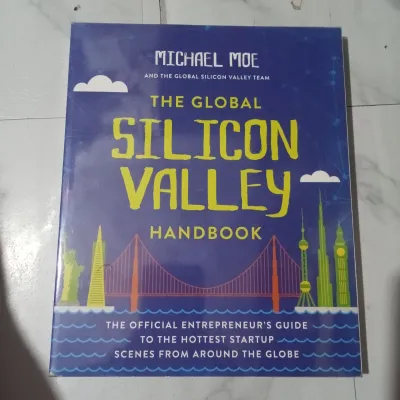
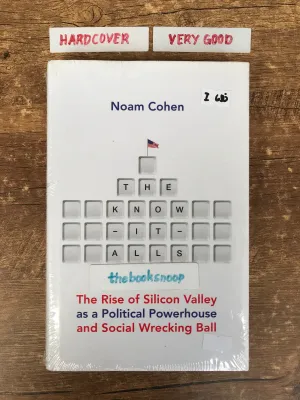
Prices are valid at publication and may change. Please refer to the product page for the latest price.
For a finance book to be highly valuable to a young beginner, it must meet specific criteria. First, the core concepts must be accessible, avoiding overly dense corporate jargon or complex mathematical models that require an accounting degree to understand. Second, the lessons must be highly relevant to the modern digital economy, offering insights that can be applied to side hustles, remote freelancing, or tech-enabled businesses. Finally, the book must provide actionable behavioral or strategic takeaways rather than abstract economic theories.
This modern financial mindset is particularly powerful for young professionals, university students, and early-career individuals in the Philippines. As the local market experiences a surge in digital services, remote work opportunities, and global outsourcing, traditional career paths are no longer the sole route to financial security. By adopting a tech-era financial mindset, young Filipinos can learn how to leverage international income streams, manage their cash flow effectively, and build long-term wealth from their laptops.
Top Silicon Valley-Inspired Finance Books for Young Readers
The Almanack of Naval Ravikant by Eric Jorgenson
Core Philosophy: This book compiles the wisdom of Naval Ravikant, a prominent Silicon Valley angel investor and philosopher. His central thesis is that modern wealth creation is not about trading time for money. Instead, true wealth is built by earning with your mind, utilizing specific knowledge, and employing permissionless leverage—such as code, media, and content—which works for you even while you sleep.

Local Relevance: This philosophy is incredibly empowering for young Filipinos navigating the digital gig economy. Whether you are a software developer, a graphic designer, or a virtual assistant, the book teaches you to transition from hourly freelancing to building digital assets. It encourages you to package your unique skills into scalable digital products, online courses, or content platforms that can reach a global audience without requiring your constant physical presence.
Limitations: The book is highly philosophical and conceptual. It does not provide step-by-step instructions on how to set up a local savings account, create a monthly budget, or navigate Philippine tax compliance and investment vehicles.
Best For: Readers who want a profound mindset shift regarding how wealth is generated in the digital age, particularly those interested in digital entrepreneurship and content creation.
The Psychology of Money by Morgan Housel
Core Philosophy: Morgan Housel argues that doing well with money is not necessarily about what you know; it is about how you behave. Financial success is a soft skill driven by patience, emotional control, and a realistic understanding of risk, rather than complex mathematical formulas or high academic intelligence.
Local Relevance: This behavioral approach directly addresses the cultural and social pressures faced by many young Filipino professionals. From the temptation of lifestyle inflation after receiving a promotion to navigating family financial expectations and the cultural obligations of being a breadwinner, managing money is deeply emotional. Housel’s timeless lessons on humility, saving for the unexpected, and defining what “enough” means help readers build a healthy relationship with money amid societal pressures.
Limitations: The book does not offer specific stock recommendations, technical trading strategies, or direct guidance on local market indices like the Philippine Stock Exchange Index (PSEi).
Best For: Beginners who want to master their financial habits, understand their personal risk tolerance, and conquer the emotional biases that lead to poor investment decisions.
The Simple Path to Wealth by JL Collins
Core Philosophy: Originating from letters written to the author’s daughter, this book serves as a foundational text for the FIRE movement. It advocates for an incredibly simple, low-maintenance, and highly effective investing strategy: putting your savings into low-cost, broad-market index funds, avoiding debt, and building “F-You Money” to secure complete career and life flexibility.
Local Relevance: For busy young professionals in Manila, Cebu, or Davao who do not have the time or desire to day-trade or analyze individual corporate balance sheets, this book demystifies the stock market. It champions a hands-off, long-term approach that allows your capital to compound quietly in the background while you focus on excelling in your primary career or building your business.
Limitations: The book is heavily tailored to the United States financial system, focusing on specific American investment vehicles like the 401(k) and Roth IRA. Filipino readers must translate these concepts by utilizing locally available equivalents or global investment platforms.
Best For: Beginners looking for a straightforward, historically proven, and low-stress strategy for long-term investing.
Zero to One by Peter Thiel
Core Philosophy: Written by PayPal co-founder and venture capitalist Peter Thiel, this book explores how to build businesses that create entirely new value. Thiel argues that true progress and wealth generation come from going from “0 to 1″—creating a monopoly through unique innovation—rather than going from “1 to n,” which merely copies existing models and competes in crowded, low-margin markets.
Local Relevance: This book inspires local freelancers, agency owners, and aspiring startup founders to elevate their offerings. Instead of competing in saturated, low-cost local gig markets by undercutting prices, Thiel’s work challenges you to develop highly specialized skills, unique digital services, or proprietary software solutions that command premium pricing and establish a distinct market position.
Limitations: The text is focused on macro-level business strategy, venture capital dynamics, and startup scaling. It does not cover personal budgeting, debt management, or individual asset allocation.
Best For: Aspiring entrepreneurs, freelancers, and tech-sector workers who want to understand how high-value, scalable businesses are built from the ground up.
How to Choose the Right Format and Verify Editions Before Buying
Selecting the right format for your finance library involves balancing practical convenience with the environmental realities of living in a tropical country. Physical books, such as paperbacks and hardcovers, offer a tactile reading experience and make excellent additions to a home bookshelf. However, the high humidity and seasonal moisture in the Philippines can cause paperbacks to warp, yellow, or develop foxing (brown spots caused by mold) over time. If you prefer physical books, storing them in a well-ventilated area away from direct sunlight, or opting for sturdier hardcover editions, can help preserve their condition.
E-books present a highly durable and cost-effective alternative. Digital formats like EPUB or PDF can be read on dedicated e-readers, tablets, or smartphones, completely eliminating the risk of physical deterioration from humidity. They also provide the convenience of instant delivery without shipping fees. Audiobooks are another excellent option, particularly for busy professionals who want to consume financial wisdom during long daily commutes or while multitasking. When purchasing audiobooks, ensure the narration is clear and check if the platform offers accompanying PDF resources for any visual charts or summaries mentioned in the text.
Before finalizing any purchase, it is crucial to verify that you are buying an official, complete, and unabridged edition. Online marketplaces are often flooded with cheap, unauthorized summaries, poorly translated bootlegs, or AI-generated study guides that omit critical chapters and contain factual errors. Always check the publisher details, read customer reviews carefully, and verify the page count against official listings to ensure you are receiving the author’s authentic work.
To guarantee content integrity and support the creators, purchase your books from authorized local bookstores, such as Fully Booked or National Book Store, or their official flagship stores on major e-commerce platforms. For digital editions, stick to verified global platforms such as official e-book stores or authorized audiobook services. Additionally, always confirm device compatibility, region locks, and Digital Rights Management (DRM) restrictions before buying digital media to ensure the files will open seamlessly on your preferred reading devices.
Frequently Asked Questions (FAQ)
Can I apply the index fund strategies from these books in the Philippines?
Yes, the core principles of low-cost, diversified index investing are universal, even though the specific accounts mentioned in US-centric books (like the 401k or Roth IRA) do not exist in the Philippines. To apply these strategies locally, you can invest in local equivalents such as Unit Investment Trust Funds (UITFs) or Mutual Funds that track the Philippine Stock Exchange Index (PSEi). Alternatively, you can open an account with a global brokerage platform accessible to Filipino residents to invest directly in low-cost, US-based or global Exchange-Traded Funds (ETFs) like those tracking the S&P 500.
Are e-book versions of these finance books cheaper than physical copies?
Generally, yes. E-books are typically priced lower than their physical counterparts because they do not incur printing, warehousing, or international shipping costs. They also offer the benefit of instant digital delivery. However, to protect your personal data and ensure a high-quality reading experience, always purchase e-books from authorized digital retailers. Avoid downloading free or incredibly cheap files from unverified online sellers, as these are often pirated, incomplete, or bundled with malicious software that can compromise your devices.
Do I need a business background to understand Silicon Valley finance books?
No, you do not need a background in business, finance, or computer science to fully comprehend these books. While they are inspired by the high-growth tech sector, they are written for general audiences and focus primarily on mindset, behavioral psychology, and broad strategic frameworks. The concepts are explained using relatable real-world analogies rather than dense mathematical formulas or advanced accounting principles, making them highly accessible to absolute beginners.
Community discussion
Share your experience or ask a question. Comments are reviewed before publication.