
When looking for a transformative power book to guide your personal development, the most impactful choices are those that balance global strategies for personal agency with the unique social dynamics of Philippine culture. Personal power is not about dominating others; it is about cultivating the agency, resilience, and clarity needed to navigate life’s challenges. In a society where family ties, community harmony, and social expectations are deeply woven into daily life, personal growth cannot happen in a vacuum. The best books on personal power help you find your voice and build your path while maintaining respect for the relationships that define you.
By exploring globally recognized texts through a local lens, you can discover how to assert yourself without disrupting community cohesion, and how to build resilient habits amidst a busy, multi-tasking lifestyle. Whether you are looking to navigate corporate politics, overcome a fear of judgment, or establish daily systems for success, selecting the right reading material is a crucial first step on your journey toward self-actualization.
How to Choose the Right Power Book for Your Empowerment Journey
To embark on a successful self-improvement journey, you must first clarify what personal power means to you at this specific stage of your life. Personal power generally falls into two distinct categories: external strategic power and internal emotional empowerment. External power focuses on strategic positioning, career advancement, negotiation, and understanding organizational hierarchies. Internal empowerment, on the other hand, centers on self-efficacy, overcoming deep-seated self-doubt, setting healthy boundaries, and building emotional resilience. Understanding which area you need to develop will help you narrow down your choices.
Products mentioned in this guide






Prices are valid at publication and may change. Please refer to the product page for the latest price.
In the Philippines, the pursuit of personal power is uniquely shaped by cultural values such as family solidarity, respect for authority, and the preservation of social harmony. A Western guide that advocates for absolute individualism or aggressive self-promotion might cause severe friction in a local household or workplace. Therefore, when evaluating a potential read, you must look beyond global bestseller lists and assess how its core philosophy integrates with your cultural reality.
A reliable framework for choosing your next book involves evaluating three key dimensions:
- Author Credibility: Look for authors with solid research backgrounds, historical expertise, or proven practical experience rather than self-proclaimed gurus making grand promises.
- Practical Applicability: Check if the text contains structured exercises, journaling prompts, or daily habits that you can easily implement in your current environment.
- Value Alignment: Ensure the book's definition of success aligns with your personal values. If a book prioritizes corporate dominance or material wealth over mental peace and healthy relationships, it may not lead to genuine, long-term empowerment.
Top Self-Help Books for Personal Power and Empowerment
Selecting the right book depends on your personal goals, your current life stage, and the specific challenges you face. The following curated titles address different dimensions of personal power, offering valuable frameworks that can be adapted to the daily realities of life in the Philippines.

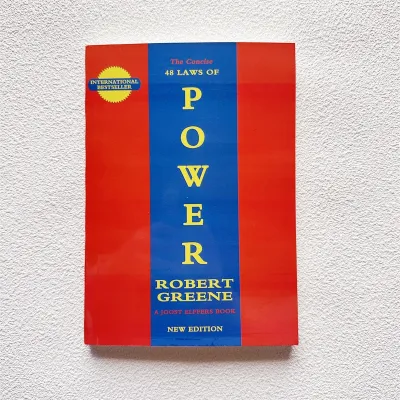
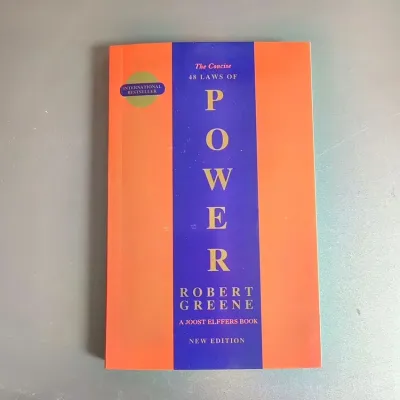
The 48 Laws of Power by Robert Greene (Navigating Strategic Power)
Robert Greene’s classic work is a comprehensive study of historical power dynamics, drawing on the strategies of famous statesmen, military leaders, and historical figures. The book outlines 48 distinct laws designed to help individuals acquire power, defend against manipulation, and navigate competitive landscapes. Rather than offering gentle encouragement, Greene provides a pragmatic, sometimes cold analysis of how human social structures operate, emphasizing self-preservation and strategic foresight.
This text is highly suited for professionals navigating complex corporate environments, entrepreneurs establishing new ventures, or anyone who feels vulnerable to office politics and manipulative personalities. It serves as an eye-opening guide to the subtle power plays that occur in competitive organizations, giving you the tools to read between the lines of professional interactions.
However, applying these laws in the Philippines requires a nuanced approach due to the cultural value of pakikisama (the practice of maintaining smooth interpersonal relations and yielding to the group). Some of Greene’s laws, such as keeping others in suspended terror or concealing your intentions, can directly undermine the trust and collective spirit valued in local communities. To reconcile this tension, you should read this text not as a manual for manipulation, but as a defensive shield. By understanding these strategic dynamics, you can recognize when others are playing political games, allowing you to establish firm boundaries and protect your career without actively disrupting the harmony of your team.
Daring Greatly by Brené Brown (Redefining Power Through Vulnerability)
Based on twelve years of pioneering research, Brené Brown’s work challenges the conventional belief that vulnerability is a sign of weakness. Instead, she argues that vulnerability—the willingness to show up and be seen when you cannot control the outcome—is the ultimate measure of courage and the birthplace of authentic power, innovation, and connection. The book explores how the fear of not being “enough” holds us back and offers a guide to living a wholehearted life.
This book is ideal for individuals who struggle with chronic perfectionism, a persistent fear of judgment, or people-pleasing behaviors that leave them feeling powerless and exhausted. It is a comforting yet challenging read for anyone who feels that they must always project a flawless image to be worthy of respect.
For Filipino readers, Brown’s insights are incredibly relevant when addressing the cultural concept of hiya (shame or loss of face). In the Philippines, hiya is often used as a social tool to enforce conformity, which can lead individuals to suppress their true thoughts, talents, or needs to avoid criticism. By embracing vulnerability, you can dismantle the paralyzing effects of hiya. The book teaches you to separate your self-worth from external validation, empowering you to speak your truth, share your creative ideas, and build authentic relationships in both your family and professional life.
Mindset: The New Psychology of Success by Carol S. Dweck (Building Resilient Power)
Stanford University psychologist Carol S. Dweck introduces the groundbreaking concept of the mindset, demonstrating how our beliefs about our capabilities dictate our success. She contrasts the “fixed mindset”—the belief that our intelligence, creative ability, and character are static givens—with the “growth mindset”—the belief that these qualities can be developed through dedication, hard work, and learning from failure. This simple shift in perspective can completely transform your approach to challenges.
This book is highly recommended for students facing intense academic pressure, career-shifters navigating unfamiliar professional territories, or anyone recovering from a personal or financial setback. It provides a highly encouraging framework for rebuilding self-efficacy and agency when life does not go according to plan.
In the local context, adopting a growth mindset offers a powerful counterweight to the passive aspects of bahala na (a phrase meaning “come what may,” which can reflect beautiful resilience but also fatalistic resignation). While bahala na can help you cope with uncontrollable circumstances, relying on it too heavily can lead to a passive acceptance of poor situations. Dweck’s work empowers you to transform this mindset into a proactive stance. Instead of viewing failures as a permanent verdict on your abilities, you learn to see them as temporary setbacks and opportunities to learn, prompting you to take active control of your path.
Atomic Habits by James Clear (Empowerment Through Daily Systems)
James Clear presents a highly practical guide to personal empowerment through the science of tiny, incremental changes. He argues that your outcomes are a lagging measure of your habits, and that relying on willpower or motivation is a losing strategy. Instead, Clear focuses on system design, showing how making a 1% improvement every day can lead to massive long-term transformations. The book provides a clear four-step framework to build good habits and break bad ones.
This book is perfect for busy professionals, working parents, or anyone who feels overwhelmed by large, intimidating goals and struggles to maintain consistency in their daily routine. It breaks down the mechanics of behavior change into actionable, bite-sized steps that anyone can follow.
Applying these strategies in the Philippines requires adapting to a high-distraction, multi-tasking environment. Long daily commutes, unpredictable schedules, and close-knit household living arrangements can easily disrupt your routines. Clear’s concept of “habit stacking” (pairing a new habit with an existing one) and environment design can be highly effective here. For instance, you can use a long bus or train commute to read a chapter of a book, or design a tiny, dedicated corner of your home to signal to your family that you are focusing on personal study, helping you maintain consistency despite external interruptions.
Applying Global Empowerment Concepts in the Philippine Context
Reading global self-help literature is only the first step; the true challenge lies in translating these concepts into daily life in a way that respects your cultural background. In the Philippines, personal growth must navigate a complex web of familial duties and social expectations. To achieve true personal power without causing unnecessary social friction, you must learn to integrate these ideas thoughtfully.
Setting Boundaries vs. Utang na Loob (Debt of Gratitude)
Utang na loob is a foundational cultural value that fosters deep gratitude and mutual support within families and communities. However, when boundaries are absent, this debt of gratitude can sometimes be leveraged to demand endless financial or emotional support, leading to burnout and resentment. Setting boundaries does not mean rejecting your gratitude or abandoning your family. Rather, it is about preserving your well-being so that you can continue to support others sustainably. When establishing boundaries, communicate with compassion and clarity; frame your limits not as a rejection, but as a necessary step to secure your financial or mental stability, which ultimately benefits the entire family unit.
Assertiveness vs. Pakikisama (Harmony)
In many local workplaces and social circles, assertiveness can be misinterpreted as arrogance, disrespect, or a threat to pakikisama. However, suppressing your opinions or needs to maintain a superficial peace can lead to professional stagnation and internal frustration. You can practice “respectful assertiveness” by using collaborative language. Frame your ideas around collective benefits and use “I” statements to express your perspective without sounding confrontational. This approach allows you to advocate for your professional growth and set clear limits while maintaining the respect and harmony of your group.
Redefining the "Breadwinner" Burden
Many professionals carry the heavy responsibility of being the primary financial support for their extended families. This pressure can make personal empowerment feel like an unattainable luxury, as career decisions are often dictated by immediate financial needs rather than long-term growth. To reclaim your personal power, you must separate your intrinsic self-worth from your financial contributions. Empower yourself by initiating open, honest conversations about money with your family, establishing realistic expectations, and encouraging other family members to contribute. Investing in your own education and career advancement is not selfish; it is a strategic step that creates a stronger, more sustainable foundation for everyone.
Where to Buy and Verify Authentic Books in the Philippines
When purchasing a book or any self-help literature, ensuring you receive an authentic copy is crucial for a high-quality reading experience. The market is unfortunately flooded with counterfeit and pirated editions, which not only violate copyright laws but also offer a highly frustrating reading experience. To guarantee authenticity, buy your books from established national physical bookstore chains, official publisher storefronts, or verified official sellers on authorized online marketplaces.
To protect yourself from pirated copies, use this physical inspection checklist when evaluating a book:
- Print Quality: Check the text on the pages; pirated books often feature blurred, smudged, or unevenly inked lettering. The cover art on counterfeits is frequently pixelated, faded, or printed on low-grade cardstock.
- Paper and Binding: Authentic books use consistent, high-quality paper stock and feature clean, durable bindings. Pirated editions often use cheap, thin newsprint that yellows rapidly and has a strong chemical odor. The binding on fake copies is often poorly glued, causing pages to fall out easily after a single reading.
- Layout and Completeness: Counterfeit books frequently suffer from formatting errors, including missing pages, upside-down chapters, incorrect margins, or random font changes throughout the text.
Before finalizing your purchase, always verify the specific edition, language, medium, and format (such as paperback, hardcover, or digital EPUB) to ensure it matches your preferences and device compatibility. Supporting genuine publications ensures that authors are fairly compensated for their work, allowing them to continue producing valuable content that empowers readers worldwide.
Frequently Asked Questions (FAQ)
Are audiobooks as effective as physical books for personal empowerment?
Audiobooks are an excellent, highly convenient format for passive learning and can be easily integrated into a busy schedule. They are particularly useful for maximizing productivity during long, exhausting commutes in heavy traffic or while performing household chores. However, physical books or e-readers with robust highlighting and note-taking features are generally more effective for deep reflection and behavioral change. Because self-help books often require you to complete exercises, write down personal reflections, and revisit key concepts, having a physical copy makes active study much easier. A hybrid approach—listening to the audiobook first for inspiration and then using a physical copy to study and implement the concepts—is often the most effective method.
How long does it take to see real changes after reading a power book?
Reading a book provides you with valuable awareness, but translating that awareness into real, lasting change is a gradual process that requires consistent daily effort. You may experience immediate shifts in your mindset or perspective, but forming new habits and dismantling long-standing behavioral patterns typically takes several weeks to months of deliberate practice. To avoid feeling overwhelmed, focus on applying just one core concept or habit from your chosen book at a time. True personal empowerment is built through small, compound actions rather than rushing through multiple titles without applying any of the lessons.
Community discussion
Share your experience or ask a question. Comments are reviewed before publication.