
Developing long-term resilience is a deeply personal journey, especially when navigating the unique professional and academic landscapes of the Philippines. Whether you are facing career plateaus, preparing for major board exams, or managing the daily grind of a long commute, finding the right literature can provide the mental scaffolding needed to persevere. The most effective self-help books on grit do not offer superficial shortcuts; instead, they deliver structured, evidence-based frameworks and philosophical tools that help readers transform their relationship with adversity.
To build lasting endurance, readers often benefit from anchoring their study with foundational texts like Angela Duckworth’s Grit, which explores the empirical science of sustained effort. Complementing this core concept with books that address mindset, philosophical reframing, and existential purpose allows for a well-rounded approach to personal growth. By understanding the distinct methodologies of these authors, you can select the specific guide that aligns with your current life stage and personal challenges.
How to Choose a Book on Grit and Resilience
Selecting the right book requires identifying the specific type of perseverance framework that matches your current career or personal challenges. Not all books on resilience are written from the same perspective, and choosing a style that resonates with your learning preferences is key to successfully applying its concepts.
Products mentioned in this guide
Prices are valid at publication and may change. Please refer to the product page for the latest price.
First, distinguish between psychological research, philosophical approaches, and memoir-based resilience frameworks. Psychological research books rely on empirical data, clinical studies, and structured assessments to explain human behavior. Philosophical guides often draw on historical schools of thought, such as Stoicism, to offer practical mental models for daily challenges. Memoir-based frameworks focus on lived experience and existential reflection, helping readers find deep, underlying purpose during times of profound crisis.
Second, consider your reading format preferences and lifestyle. In the Philippines, tropical conditions and high humidity mean physical paperbacks require careful storage to prevent page yellowing and mold. If you have a long daily commute on public transit, digital formats like e-books or audiobooks may be more practical and easier to carry. Audiobooks, in particular, allow you to absorb complex concepts during transit without needing physical reading space.
Finally, evaluate the author’s background and the practical applicability of their exercises. An academic researcher will provide a highly theoretical foundation, which is excellent for understanding the “why” behind human behavior. However, if you require immediate, daily routines, look for books that include actionable workbooks, self-assessment scales, or reflective journaling prompts that you can easily integrate into your morning or evening routines.
Curated Self-Help Books on Grit and Perseverance
The following curated selection features foundational books that address different dimensions of resilience, cognitive framing, and long-term goal pursuit. These titles have been selected based on their established frameworks and their relevance to readers navigating career transitions, academic hurdles, and personal adversity.

When reading these books, it is important to set realistic expectations. These texts offer cognitive tools, mental models, and reflective exercises designed to reshape your thinking over time, rather than instant solutions or overnight success.
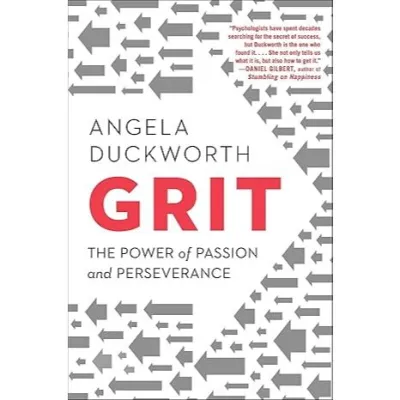
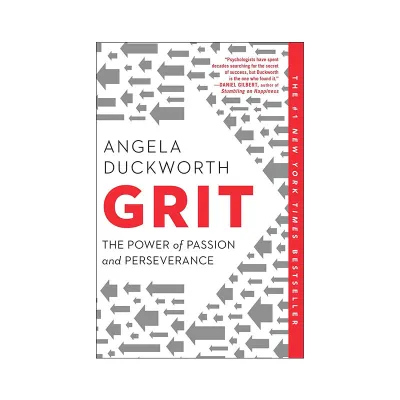
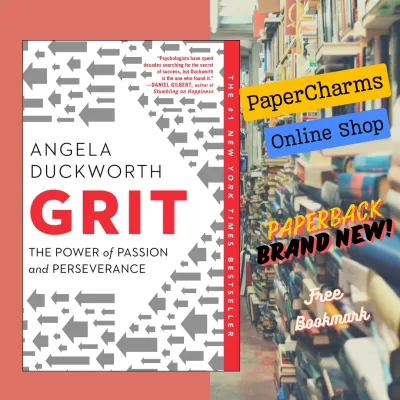
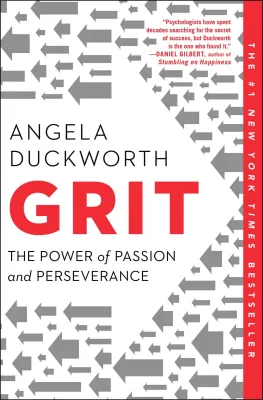
Grit: The Power of Passion and Perseverance by Angela Duckworth
In this foundational text, psychologist Angela Duckworth explores the premise that the secret to outstanding achievement is not innate talent, but a special blend of passion and long-term persistence called “grit.” Drawing on her extensive empirical research, Duckworth explains how individuals can cultivate grit from within themselves and encourage it in others.
The core concept of the book revolves around the Grit Scale and the formula that effort counts twice in the journey toward achievement. Duckworth argues that while talent determines how quickly your skills improve when you invest effort, achievement only occurs when you take those acquired skills and apply effort once again. This framework is highly valuable for individuals who feel discouraged by a perceived lack of natural talent in their chosen fields.
This book is ideal for readers seeking a research-backed, scientific understanding of why sustained effort matters more than raw intelligence or privilege. It provides a clear, empirical argument that consistency over time is the ultimate driver of success.
However, the book has its limitations. Because it is heavily grounded in academic studies and psychological research, readers looking for quick, daily habit checklists or immediate step-by-step workbooks may find the text highly theoretical. To get the most out of Duckworth’s concepts, readers may need to pair the book with supplementary journaling or external goal-tracking tools.
Mindset: The New Psychology of Success by Carol S. Dweck
Carol S. Dweck’s groundbreaking work introduces the concept of the growth mindset—the belief that our basic abilities are not fixed traits, but can be developed through dedication, hard work, and mentorship. This psychological foundation is essential for anyone looking to build long-term grit and resilience.
The core concept contrasts the “fixed mindset” with the “growth mindset.” Individuals with a fixed mindset believe their intelligence and talents are static, leading them to avoid challenges and fear failure as a negative judgment on their worth. Conversely, those with a growth mindset view failures as opportunities for learning and development, making them far more resilient when facing setbacks.
This book is highly recommended for professionals, students, and creatives facing career plateaus, imposter syndrome, or a paralyzing fear of failure. It provides the cognitive framing necessary to view professional challenges not as dead ends, but as essential steps in the learning process.
A key limitation of the book is its primary focus on cognitive framing rather than practical, daily routines. While Dweck masterfully explains the psychology of belief, the text does not provide a highly structured, step-by-step program for daily habit formation. Readers must take the initiative to translate these psychological insights into concrete actions.
The Obstacle Is the Way by Ryan Holiday
For readers who prefer philosophical reframing over clinical psychology, Ryan Holiday’s modern classic offers a practical guide based on the ancient Greek philosophy of Stoicism. The book focuses on the art of turning career and personal adversity into strategic advantages.
The core concept is structured around three critical disciplines: perception, action, and will. Holiday explains that while we cannot control the external events that happen to us, we have total control over how we perceive those events, how we choose to react to them, and how we maintain our inner resolve. By systematically applying these disciplines, readers can learn to view obstacles as raw material for growth.
This book is ideal for readers who appreciate historical examples, concise writing, and direct, pragmatic advice. Holiday uses numerous historical profiles of leaders, artists, and entrepreneurs to demonstrate how Stoic principles can be applied to modern professional struggles.
The primary limitation of this approach is that it is largely anecdotal and philosophical. It lacks empirical scientific data, clinical trials, or structured psychological assessments. Readers who prefer evidence-based research or scientific validation may find the philosophical arguments less persuasive than those found in academic texts.
Man’s Search for Meaning by Viktor E. Frankl
Viktor Frankl’s profound memoir and psychological treatise explores how finding personal meaning can sustain human resilience through the most extreme hardships imaginable. Written by a psychiatrist who survived Nazi concentration camps, the book introduces logotherapy, a school of psychotherapy focused on the search for meaning.
The core concept of logotherapy is that the primary human drive is not pleasure or power, but the pursuit of what we find meaningful. Frankl argues that even in the most painful and unavoidable situations, we retain the ultimate human freedom: the ability to choose our attitude in any given set of circumstances. This perspective provides an incredibly powerful foundation for enduring long-term difficulties.
This book is ideal for readers navigating deep personal transitions, severe professional burnout, or those seeking a foundational sense of life purpose. It offers a perspective shift that transcends typical self-help advice, making it highly valuable for long-term mental endurance.
However, this is not a traditional step-by-step self-help guide. It does not contain practical exercises, goal-setting templates, or productivity hacks. It requires a reflective, emotionally mature reader who is willing to engage with heavy, existential themes and apply the philosophical lessons to their own life.
Comparing Frameworks for Perseverance
To help you quickly match your current life situation with the most suitable book’s approach, the following comparison matrix evaluates each title by its primary focus, target reader profile, and reading complexity.
| Book Title | Primary Focus | Target Reader Profile | Reading Complexity | Supplementary Materials |
|---|---|---|---|---|
| Grit by Angela Duckworth | Empirical & Scientific | Professionals and students seeking research-backed strategies | Moderate | Grit Scale self-assessment included |
| Mindset by Carol S. Dweck | Cognitive & Psychological | Individuals facing imposter syndrome or fear of failure | Moderate | Discussion guides and updated chapters |
| The Obstacle Is the Way by Ryan Holiday | Philosophical & Stoic | Readers who prefer historical anecdotes and direct advice | Accessible | Companion journals available separately |
| Man's Search for Meaning by Viktor Frankl | Existential & Memoir | Readers experiencing burnout or seeking deep life purpose | High | Reflective reading guides available |
Buying Guide and Edition Checks for Readers in the Philippines
When purchasing self-help books in the Philippines, taking a few precautionary steps ensures you receive authentic, high-quality editions that will last. With various formats and editions available, making an informed decision helps maximize your reading investment.
First, check for updated editions before making a purchase. Authors frequently revise their work to include new research, updated case studies, or additional chapters. For example, Carol Dweck’s Mindset has updated editions that address the concept of a “false growth mindset,” which is crucial for understanding how to properly apply her theories. Always verify the publication date and edition details on the copyright page or product description.
Second, verify the language and translation quality if you are purchasing localized versions. While the original English editions are widely available in major local bookstores, some international titles may have regional translations. Ensure the translation is authorized and maintains the author’s original tone and scientific accuracy.
Third, purchase exclusively through established local bookstores or authorized online marketplaces. The local market often sees an influx of unauthorized, poorly printed bootleg copies. These pirated editions frequently suffer from missing pages, illegible text, and low-quality binding that falls apart quickly, especially when exposed to the high humidity of a tropical climate. Supporting authorized sellers guarantees a complete, readable text and respects the intellectual property of the authors.
Finally, compare physical, e-book, and audiobook prices in ₱ to find the format that best fits your budget and daily routine. Physical paperbacks are excellent for home libraries but require proper storage in dry, well-ventilated areas to prevent mold. E-books and audiobooks offer excellent portability for long commutes, do not degrade in humid weather, and often provide a more cost-effective option for budget-conscious readers.
Frequently Asked Questions (FAQ)
Can reading a grit book actually change my career trajectory?
Reading a book on grit provides valuable cognitive frameworks and mental models, but reading alone will not change your career trajectory. Real behavioral change requires consistent, active application of these concepts in your daily professional life. To turn these insights into tangible career results, consider pairing your reading with active journaling, setting measurable long-term goals, tracking your daily habits, or seeking professional mentorship.
Are there local Filipino authors who write about resilience?
Yes, while this curated list focuses on globally recognized, foundational texts on grit, many local Filipino authors, business leaders, and essayists write extensively about resilience. Local literature often explores these universal concepts through specific cultural lenses, such as the concept of pagpupursigi (perseverance) and navigating local socio-economic realities. When visiting established local bookstores, look for local memoirs, business guides, and essay collections that complement these international frameworks with familiar cultural contexts.
Community discussion
Share your experience or ask a question. Comments are reviewed before publication.