
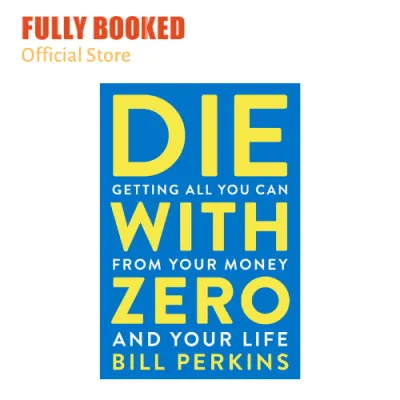
If you have read Bill Perkins’ Die With Zero, you have likely experienced a profound shift in how you view the relationship between time, youth, and wealth. The book’s core message—that we should focus on maximizing our life experiences and collecting “memory dividends” rather than mindlessly hoarding cash for a late-stage retirement we may be too frail to enjoy—resonates deeply in a world obsessed with constant hustle. However, implementing this philosophy requires a delicate balance, especially when navigating the economic realities of the Philippines, where financial safety nets are often self-built.
To help you apply, balance, and expand upon these concepts, several outstanding self-help and personal finance books offer complementary perspectives. Whether you want to overcome the deep-seated guilt of spending your hard-earned pesos, build a reliable investment foundation to fund your adventures, or philosophically accept the finite nature of your time, these titles provide the practical and psychological tools you need to optimize your life path.
Core Themes to Look for in 'Die With Zero' Alternatives
To find books that capture the spirit of Die With Zero, it is essential to understand the philosophical pillars of Bill Perkins’ work. At its heart, the book is not an argument for reckless spending or financial irresponsibility. Instead, it is a systematic approach to life optimization. It challenges the traditional narrative of working tirelessly until age 60 or 65, only to realize that your physical health no longer permits you to enjoy the wealth you accumulated. Perkins introduces concepts like “memory dividends”—the ongoing mental and emotional returns you get from experiences enjoyed early in life—and the “survival threshold,” which is the actual amount of money required to secure your basic needs during your elder years.
Products mentioned in this guide
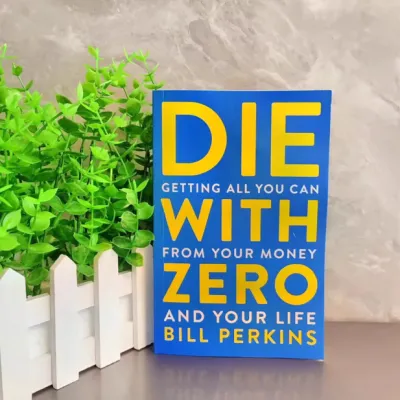
Prices are valid at publication and may change. Please refer to the product page for the latest price.
When evaluating alternatives, look for books that focus on three specific dimensions. First, they should help you transition from a mindset of pure wealth accumulation to one of time and energy optimization. Second, they must offer frameworks for redefining what retirement actually means to you, moving away from a fixed age and toward a state of personal freedom. Finally, they should guide you in aligning your daily spending with your deepest personal values, ensuring that every peso spent active contributes to your overall life satisfaction.
These recommended titles do not simply repeat Perkins’ advice; rather, they offer a mix of practical financial strategies, behavioral psychology, and time-management philosophies. Some will reinforce his ideas by showing you how to build the financial engine necessary to fund your experiences, while others will challenge you to confront the emotional biases that keep you trapped on the corporate treadmill. Together, they form a comprehensive toolkit for anyone looking to live a rich, intentional life.
Top Books for Experience Maximization and Rethinking Retirement
The Psychology of Money by Morgan Housel
Morgan Housel’s The Psychology of Money is an indispensable read for anyone trying to understand why we behave the way we do around wealth. While many personal finance books focus on mathematical formulas, interest rates, and portfolio allocation, Housel argues that doing well with money has little to do with how smart you are and a lot to do with how you behave. The book is structured as a series of short, highly engaging stories that explore the emotional, psychological, and historical factors that drive our financial decisions.

This perspective directly complements Die With Zero by addressing the psychological barriers to spending and saving. One of Housel’s most powerful concepts is that “wealth is what you don’t see”—it is the cars not purchased, the diamonds not bought, and the first-class tickets skipped. True wealth, in his view, is the flexibility and control it gives you over your daily life. Having money in the bank offers the freedom to change careers, take a sabbatical, or spend time with family without financial panic. This aligns perfectly with Perkins’ idea of using money as a tool to buy back your time and fund meaningful life experiences.
This book is highly recommended for readers who find themselves constantly checking their bank balances but still feeling a persistent sense of financial anxiety. It is particularly useful if you want to identify your own financial biases—such as an irrational fear of scarcity—before you attempt to optimize your spending. By understanding your relationship with risk and security, you can make more rational decisions about when to save and when to spend on life-defining moments.
However, readers should note that The Psychology of Money is primarily a book about behavioral philosophy. It does not provide a step-by-step guide on how to draw down your assets or calculate your net worth. It is best read as a diagnostic tool for your financial mindset rather than a tactical manual for estate planning.
Your Money or Your Life by Vicki Robin and Joe Dominguez
Widely considered the foundational text of the Financial Independence, Retire Early (FIRE) movement, Your Money or Your Life offers a radical re-evaluation of our relationship with work and consumerism. The authors introduce a simple yet profound premise: money is something you trade your life energy for. When you buy a physical item or pay for a service, you are not just spending pesos; you are spending the hours of your life that you sacrificed to earn that money.
This concept of “life energy” serves as a brilliant companion to Die With Zero. While Perkins focuses on spending money to maximize experiences, Vicki Robin and Joe Dominguez provide the analytical framework to determine if those experiences—and the work required to fund them—are truly worth the trade-off. The book guides you through calculating your “real hourly wage” by factoring in all the hidden costs of your employment, such as commuting, work clothes, stress relief, and convenience meals. By doing so, you can identify your personal “enough” point—the level of consumption that brings maximum fulfillment without tipping over into waste or clutter.
For readers who appreciate actionable steps, the book outlines a rigorous nine-step program for tracking every single cent that enters and leaves your life. This hands-on approach helps you align your daily financial choices with your core values, preventing you from falling into the trap of mindless consumerism that delays your financial freedom.
One limitation to keep in mind is that the original tracking methods, which rely heavily on manual ledger entries and physical charts, can feel somewhat tedious and outdated for modern readers who prefer digital budgeting apps. Additionally, when sourcing this book, ensure you look for the updated 2018 edition, which contains revised financial contexts and modern digital tools, making the advice far more applicable to today’s economy.
Four Thousand Weeks by Oliver Burkeman
If Die With Zero is the financial argument for living in the present, Oliver Burkeman’s Four Thousand Weeks: Time Management for Mortals is the philosophical foundation. The title refers to the sobering reality that if you live to be 80 years old, you will have approximately four thousand weeks on this earth. Burkeman argues that modern productivity culture has sold us a lie: the idea that if we just work harder, organize better, and use the right apps, we can eventually “get everything done” and achieve a state of stress-free control over our lives.
Burkeman advocates for the opposite approach: accepting our extreme limitations. Because our time is incredibly finite, we will never have time for every potential career path, travel destination, or creative project. Therefore, the key to a meaningful life is not to optimize our schedules to fit more work in, but to make conscious, active choices about what to ignore. This directly echoes Perkins’ emphasis on the urgency of experiencing life now, rather than putting off our dreams for a hypothetical future when our physical health may have deteriorated.
This book is an essential read for high-achievers, perfectionists, and workaholics who struggle to step away from their desks. If you find yourself constantly postponing vacations, family gatherings, or creative pursuits because “now is not a good time at work,” Burkeman’s writing will help you confront the discomfort of missing out and encourage you to prioritize the experiences that truly matter.
It is important to understand that Four Thousand Weeks is not a personal finance book. It contains no investment advice, budgeting tips, or asset allocation models. Instead, it is a philosophical critique of modern time-management culture that will help you build the mental resilience required to actually execute the lifestyle changes advocated in Die With Zero.
Happy Money by Ken Honda
In Happy Money: The Japanese Art of Making Peace with Your Money, Ken Honda explores the emotional energy that flows through our financial transactions. Honda divides money into two categories: “Happy Money” and “Unhappy Money.” Happy Money is money that is given and received with feelings of love, gratitude, and joy—such as buying a thoughtful gift for a friend, paying a fair wage to a local worker, or investing in a memorable family trip. Unhappy Money is money that circulates with feelings of anger, resentment, fear, and sadness—such as paying bills with bitterness or hoarding cash out of a deep-seated fear of poverty.
Honda’s philosophy is incredibly valuable for readers trying to implement the Die With Zero framework but finding themselves paralyzed by the fear of spending. Perkins notes that many people accumulate far more wealth than they need because they cannot overcome the psychological habit of saving. Happy Money addresses this exact pain point by teaching you how to shift from a scarcity mindset to an abundance mindset. By cultivating gratitude for the money that flows into and out of your life, you can learn to spend money on experiences without feeling a lingering sense of guilt or anxiety.
This book is ideal for individuals who have achieved a level of financial stability but still experience a sense of dread whenever they have to make a significant purchase. It helps you transition from viewing money as a shield against potential disasters to viewing it as a tool for creating joy and connection.
However, readers looking for concrete financial strategies, market analysis, or mathematical models will not find them here. Honda’s approach is highly emotional, intuitive, and spiritual. If you prefer hard data and analytical frameworks, you may find the concepts a bit too abstract, and you should pair this book with a more structured financial text.
The Simple Path to Wealth by JL Collins
While Die With Zero focuses heavily on how to spend down your assets and enjoy your life, you cannot safely execute a decumulation strategy without first building a solid financial foundation. This is where JL Collins’ The Simple Path to Wealth becomes essential. Originally written as a series of letters to his daughter, Collins’ book demystifies the complex world of investing and provides a straightforward, low-stress roadmap to achieving financial independence.
Collins advocates for a highly simplified investment strategy centered on low-cost broad-market index funds. He introduces the concept of “F-You Money”—a financial cushion that gives you the power to walk away from toxic jobs, bad relationships, or unfulfilling situations. This book serves as the practical, wealth-building engine that makes the experiential lifestyle of Die With Zero possible. To confidently spend your money on travel, hobbies, and family experiences while you are young, you need to know that your remaining capital is working quietly and efficiently in the background to secure your future.
Collins’ writing style is conversational, reassuring, and completely free of confusing financial jargon. He explains how the stock market works, why trying to time the market is a losing game, and how to maintain a long-term perspective during economic downturns. This makes it an incredibly accessible guide for beginners who feel overwhelmed by the sheer volume of investment options available.
Keep in mind that The Simple Path to Wealth is heavily focused on the accumulation phase of your financial journey. It assumes a traditional long-term investment horizon and emphasizes the power of compound interest over decades. Because of this, you will need to actively combine Collins’ practical wealth-building steps with Perkins’ spending and decumulation principles to ensure you do not end up over-saving and missing out on your peak physical years.
How to Match a Book to Your Current Financial and Life Philosophy
Choosing the right book to read next depends heavily on your current life stage, financial situation, and personal struggles. Rather than reading these books at random, you can achieve better results by matching them to the specific challenges you are currently facing.
- If you struggle with the guilt of spending money on yourself: Start with Happy Money by Ken Honda. This book will help you unpack the emotional baggage you carry around wealth and teach you how to view spending as an act of gratitude and joy rather than a source of anxiety.
- If you are constantly overworking and neglecting your personal life: Read Four Thousand Weeks by Oliver Burkeman. It will provide a much-needed reality check regarding your limited time on earth and help you let go of the unrealistic expectation that you can do everything.
- If you want to understand your relationship with risk and financial security: Pick up The Psychology of Money by Morgan Housel. It offers a gentle, narrative-driven exploration of human behavior that will help you make more rational decisions about your financial future.
- If you need a clear, step-by-step system to build your wealth from scratch: Read The Simple Path to Wealth by JL Collins. It will give you the confidence to invest your money safely and simply, freeing up your mental energy to focus on living your life.
- If you want to calculate the exact trade-off between your time and your consumption: Dive into Your Money or Your Life by Vicki Robin and Joe Dominguez. This book will help you establish your personal "enough" point so you can stop running on the corporate treadmill.
For a highly effective reading sequence, consider starting with The Simple Path to Wealth to establish your basic financial literacy and investment strategy. Once your wealth-building engine is running, read The Psychology of Money and Your Money or Your Life to refine your values and understand your behavioral biases. Finally, use Die With Zero and Four Thousand Weeks as your strategic guides to plan your spending, maximize your experiences, and make the most of your finite time.
When applying these frameworks, always take a moment to evaluate your unique circumstances. If you are in the early stages of your career in the Philippines, building a robust emergency fund and securing basic health coverage should take priority before you begin aggressively funding high-cost experiences. Your local career trajectory, family responsibilities, and risk tolerance should always guide how aggressively you implement these philosophies.
Where to Source These Books in the Philippines
Acquiring these titles in the Philippines is relatively straightforward, though it requires some attention to detail to ensure you get high-quality, authorized editions. Major physical bookstore chains, such as Fully Booked and National Book Store, are excellent starting points. These retailers frequently stock international bestsellers in their self-help, business, and personal finance sections. If a specific title is not on the shelves, you can often request the store branch to check their system-wide inventory or place a special order for you.
If you prefer shopping online, major e-commerce platforms and online marketplaces offer a wide selection of these books. However, because popular self-help titles are frequently targeted by counterfeit printers, you must exercise caution. To avoid low-quality bootlegs—which often suffer from missing pages, smudged ink, and poor binding—always verify the seller’s ratings, read customer reviews, and look for official, authorized bookstore storefronts on these platforms.
For immediate access or to avoid local shipping delays, digital formats are highly convenient. E-books can be purchased and downloaded instantly through global platforms like the Amazon Kindle Store, Kobo, or Google Play Books. These digital editions are often more cost-effective and eliminate the risk of physical damage from the high humidity of the tropical Philippine climate.
When purchasing older titles, such as Your Money or Your Life, always pay close attention to the specific edition you are buying. Publishers frequently release updated or anniversary editions that contain revised financial data, modern examples, and updated resources. Verifying the publication date and edition details before you complete your purchase ensures that the advice you are reading remains highly relevant to today’s digital economy.
Frequently Asked Questions (FAQ)
Is 'Die With Zero' available in local Philippine bookstores?
Yes, Die With Zero by Bill Perkins is a mainstream international bestseller and is regularly stocked by major physical bookstore chains in the Philippines, as well as their official online storefronts. Because demand for personal development and finance books remains high, stock levels can fluctuate. It is always a good idea to call your local branch ahead of time or check their online inventory before making a physical trip.
Should I read 'Die With Zero' before reading these alternatives?
While it is not strictly necessary to read Die With Zero first, doing so can provide a helpful philosophical anchor. Perkins’ book establishes a clear, provocative thesis about maximizing life experiences over wealth accumulation. Reading the other books with this thesis in mind allows you to see how they either support his ideas—such as providing the practical investment tools to fund your freedom—or offer valuable counter-perspectives on financial security.
Are there audiobook versions available for these recommendations?
Yes, all of the recommended titles are widely available as audiobooks on major global digital audio platforms. Listening to audiobooks can be an excellent option for busy professionals who want to utilize their daily commute or workout time. Narrative-driven books like The Psychology of Money and Four Thousand Weeks are particularly well-suited for the audiobook format, as their storytelling style translates beautifully to spoken audio.
Community discussion
Share your experience or ask a question. Comments are reviewed before publication.