
Developing strong social skills is essential in the Philippines, where personal and professional success is deeply intertwined with interpersonal relationships, community cohesion, and the cultural value of pakikisama (harmonious relationships). While some individuals seem to navigate social settings effortlessly, effective communication is not an innate trait; it is a learned skill that can be systematically studied and refined. Reading the right literature offers a structured way to understand human behavior, build rapport, and navigate complex social dynamics with confidence.
For readers in the Philippines looking to expand their professional networks, overcome social anxiety, or cultivate deeper personal connections, the self-help market offers a wealth of resources. Classic guides like Dale Carnegie’s How to Win Friends and Influence People continue to serve as foundational texts, while modern behavioral science books offer data-driven strategies for the contemporary digital age. This guide explores the most effective books for improving social skills and building lasting relationships, helping you identify the right material for your specific goals.
How to Choose the Right Social Skills Book for Your Goals
Selecting the right book requires a clear understanding of your current communication challenges and what you hope to achieve. Not all social skills books serve the same purpose; some focus on high-level networking and professional advancement, while others dive into deep emotional healing, conflict resolution, or the mechanics of casual conversation. Before purchasing a book, take a moment to define whether you need immediate, practical scripts for everyday small talk or a deeper psychological framework to understand complex group dynamics.
Products mentioned in this guide
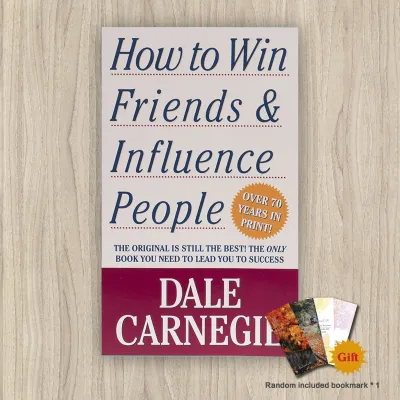

![HOW TO WIN FRIENDS AND INFLUENCE PEOPLE [AUTHENTIC]](https://img.lazcdn.com/g/ff/kf/S9a1ce2e6cf114178bf8ef14f03331c21f.jpg_400x400q80.jpg_.webp)

Prices are valid at publication and may change. Please refer to the product page for the latest price.
Evaluating the author’s background is another crucial step in finding a book that resonates with your learning style. Authors generally fall into three categories: clinical psychologists, behavioral researchers, or experienced communication coaches. If you prefer scientific validation, peer-reviewed studies, and data-driven insights, books written by researchers will suit you best. If you prefer highly practical, step-by-step instructions, real-world anecdotes, and actionable exercises, a book written by a professional coach or consultant may be more accessible.
Your daily routine and reading habits should dictate the format you choose. For professionals enduring long daily commutes in Metro Manila or other urban centers, audiobooks can transform idle travel time into productive learning sessions. E-books offer convenience and portability, allowing you to carry an entire library on your phone or e-reader. However, if you are someone who benefits from active study practices—such as highlighting key passages, writing notes in the margins, and easily flipping back to reference specific frameworks—a physical paperback or hardcover remains the most practical choice.
It is vital to maintain realistic expectations about what a self-help book can accomplish. Reading a guide on interpersonal communication provides you with cognitive knowledge, but it does not automatically translate into behavioral change. True social competence requires you to treat the book as a manual, actively practicing the concepts in real-world scenarios, experiencing occasional awkward moments, and gradually building your social confidence through consistent, hands-on application.
Top Picks for Making Friends and Influencing People
If your primary goal is to initiate connections, understand social cues, and expand your personal or professional circle, you need books that focus on the fundamentals of human interaction. These selections cover everything from timeless principles of empathy to modern, research-backed social strategies.

How to Win Friends and Influence People by Dale Carnegie
First published in 1936, Dale Carnegie’s masterpiece remains the definitive text on interpersonal relations and is widely available in Philippine bookstores. The book operates on a simple yet profound premise: the most effective way to connect with others is to shift your focus away from yourself and genuinely show interest in them. Carnegie outlines fundamental techniques for handling people, making a lasting first impression, and winning others over to your way of thinking without causing resentment.
Core Principles and Frameworks
- Genuine Appreciation: Distinguishing between sincere appreciation and hollow flattery to build trust.
- Active Listening: Encouraging others to talk about themselves and their achievements.
- Empathy First: Looking at situations from the other person’s perspective before reacting.
- The Power of a Name: Remembering and using a person’s name to show respect and build instant rapport.
This book is highly recommended for beginners in self-improvement, sales professionals, team leaders, and anyone looking to build basic conversational goodwill. However, modern readers should note that some of Carnegie’s historical examples—drawn from early 20th-century American business and politics—can feel dated. Despite this, the underlying psychology remains incredibly accurate and highly applicable to the warm, relational nature of Philippine society.
Captivate: The Science of Succeeding with People by Vanessa Van Edwards
For readers who find traditional self-help advice too vague or anecdotal, Vanessa Van Edwards offers a refreshing, scientific alternative. As a behavioral researcher, Van Edwards uses her book to decode the hidden forces that govern human behavior. She provides readers with concrete “shortcuts” or behavioral hacks to master first impressions, read body language, and navigate social events with structured confidence.
Core Principles and Frameworks
- The Triple Threat: Optimizing your first impression through specific hand gestures, posture, and eye contact within the first few seconds of meeting.
- The Decode Matrix: Using the "Big Five" personality traits (Openness, Conscientiousness, Extroversion, Agreeableness, and Neuroticism) to quickly assess and adapt to another person’s communication style.
- Conversational Sparks: Replacing boring, standard questions with engaging prompts that trigger dopamine in the listener’s brain.
Captivate is ideal for analytical thinkers, introverts, and professionals who prefer structured systems over intuitive socializing. The reading level is highly accessible, though it requires a willingness to study human behavior like a science. It differs significantly from traditional advice by focusing heavily on physiological cues, micro-expressions, and measurable behavioral patterns.
The Fine Art of Small Talk by Debra Fine
Many people dread networking events, family gatherings, or casual workplace interactions because they fear the awkward silence that often follows initial introductions. Debra Fine, a former engineer who transitioned into a communication expert, addresses this specific pain point directly. Her book serves as a practical, highly tactical manual for initiating conversations, keeping them flowing naturally, and exiting them gracefully.
Core Principles and Frameworks
- The Free Information Technique: Paying close attention to verbal and visual cues to find natural transition points for follow-up questions.
- Icebreaker Scripts: Utilizing specific, low-risk questions to start conversations in various settings, from corporate seminars to casual parties.
- The Elegant Exit: Leaving a conversation politely without making the other person feel abandoned or dismissed.
This book is an excellent resource for introverts, career transitioners, and anyone who experiences anxiety when approaching strangers. Fine’s focus is entirely on the mechanics of the first five to ten minutes of an interaction. While it does not dive deep into long-term relationship building, it provides the exact tools needed to get past the initial barrier of unfamiliarity.
Surrounded by Idiots by Thomas Erikson
Thomas Erikson’s international bestseller tackles the common frustration of feeling like you are speaking a completely different language than the people around you. Erikson utilizes an adapted version of the DISC behavioral model to categorize human personalities into four distinct color profiles: Red, Yellow, Green, and Blue. By understanding these profiles, readers can identify their own communication tendencies and learn how to adapt their style to match the person they are speaking with.
Core Principles and Frameworks
- Red Personalities: Dominant, driving, and direct individuals who value efficiency and results.
- Yellow Personalities: Inspiring, creative, and enthusiastic individuals who thrive on social connection and optimism.
- Green Personalities: Stable, patient, and supportive individuals who value consistency, security, and collaboration.
- Blue Personalities: Analytical, detail-oriented, and structured individuals who prioritize accuracy, logic, and order.
This book is incredibly valuable for navigating workplace dynamics, managing diverse teams, and reducing friction in personal relationships. However, readers should keep in mind its limitations: human psychology is highly complex, and categorizing people into four rigid color groups is a helpful simplification rather than an absolute scientific truth. It should be used as a practical starting point for understanding behavioral differences rather than a definitive diagnostic tool.
Best Reads for Deepening Relationships and Resolving Conflict
Once you have mastered the basics of making connections, the next step is learning how to maintain those relationships through periods of stress, disagreement, and emotional vulnerability. These books focus on building deep empathy, establishing psychological safety, and resolving conflicts constructively.
Crucial Conversations by Kerry Patterson, Joseph Grenny, Ron McMillan, and Al Switzler
A crucial conversation is defined as a discussion where stakes are high, opinions vary, and emotions run strong. Whether you are discussing a salary promotion with your manager, addressing a sensitive family issue, or navigating a major life decision with your partner, this book provides a highly structured, repeatable framework to prevent these discussions from devolving into arguments.
Core Principles and Frameworks
- The Pool of Shared Meaning: Ensuring that all parties feel safe enough to share their true thoughts, feelings, and ideas without fear of retaliation.
- Spotting Safety Risks: Recognizing when a conversation is turning dangerous because someone has resorted to silence (withdrawing, masking) or violence (controlling, attacking).
- Contrast Statements: Using a specific communication formula to clarify what you do and do not mean, helping to prevent misunderstandings and defensiveness.
- Establishing Mutual Purpose: Finding a common goal that unites both parties, even when their initial positions seem entirely incompatible.
This book is indispensable for corporate managers, team leaders, married couples, and anyone who struggles with confrontation. The practical application steps require discipline and self-awareness, but mastering them allows you to address highly sensitive topics while maintaining, and even strengthening, the underlying relationship.
Nonviolent Communication by Marshall B. Rosenberg
Marshall B. Rosenberg’s Nonviolent Communication (NVC) offers a profound, empathy-driven approach to human connection. Rosenberg argues that much of our daily language contains subtle forms of judgment, blame, and criticism that trigger defensiveness in others. By shifting to a communication style rooted in objective observation and the expression of core human needs, we can foster deep compassion and resolve long-standing conflicts.
Core Principles and Frameworks
- Observation without Evaluation: Describing concrete actions you observe without adding personal judgments, labels, or diagnoses.
- Identifying Feelings: Expressing specific emotions (e.g., hurt, anxious, relieved) rather than thoughts disguised as feelings.
- Connecting Feelings to Needs: Recognizing that our emotions stem from met or unmet universal human needs (e.g., safety, connection, autonomy).
- Making Concrete Requests: Asking for specific, actionable, and positive behaviors rather than making vague demands or complaints.
This book is highly recommended for parents, romantic partners, educators, and community leaders who want to build deep, emotionally secure bonds. The primary challenge of NVC is its steep learning curve; adopting the specific vocabulary and mindset can feel unnatural at first. However, committing to the practice can fundamentally transform how you handle emotional vulnerability and interpersonal conflict.
Quick Comparison of Recommended Social Skills Books
To help you quickly identify which book matches your current learning goals, the table below summarizes the key focus areas, target audiences, and recommended formats for each of our top picks.
| Book Title | Best For (Target Audience) | Core Focus | Recommended Format |
|---|---|---|---|
| How to Win Friends and Influence People | Beginners, sales professionals, and managers | Timeless principles of empathy, active listening, and rapport | Paperback or Hardcover (for study and notation) |
| Captivate | Analytical thinkers, introverts, and professionals | Behavioral science, micro-expressions, and social hacks | Paperback or E-book (for visual diagrams) |
| The Fine Art of Small Talk | Introverts and professional networkers | Practical scripts, icebreakers, and conversation exits | Audiobook (to hear conversational pacing) |
| Surrounded by Idiots | Team leaders, colleagues, and families | Understanding behavioral styles using the DISC model | Paperback or E-book |
| Crucial Conversations | Couples, managers, and conflict-averse individuals | Navigating high-stakes, emotional discussions safely | Paperback (for referencing conflict frameworks) |
| Nonviolent Communication | Parents, partners, and community leaders | Empathy, emotional expression, and compassionate dialogue | Paperback or Audiobook |
Where to Buy and What to Check Before Purchasing in the Philippines
When purchasing self-help books in the Philippines, it is important to ensure you are buying authentic, high-quality copies. The local market has seen a significant influx of counterfeit and pirated books, particularly on popular online marketplaces and e-commerce platforms. While these unauthorized copies are often priced attractively low, they frequently suffer from severe quality issues, including missing chapters, out-of-order pages, heavily smudged ink, and fragile bindings that fall apart after a single reading.
To guarantee authenticity, purchase your books from established local physical bookstores, such as Fully Booked or National Book Store, or visit their official online storefronts. When shopping on major e-commerce platforms, always look for the official mall or preferred merchant badges, and take the time to read customer reviews. Be highly suspicious of listings offering popular paperbacks for under ₱150, as these are almost always low-quality, pirated reprints.
Before finalizing your purchase, verify the specific edition and language of the book. Some classics have various editions, including abridged versions, study guides, or localized translations. If you are purchasing a translated work, check the publisher details to ensure the translation is authorized and well-regarded by readers. Additionally, double-check the book format; make sure you are not accidentally purchasing an e-book file if you intended to buy a physical copy.
If you prefer digital formats, pay close attention to device compatibility and regional restrictions. E-books purchased through international platforms may require specific reading applications or dedicated e-reader devices, and some titles may be region-locked to specific countries. For audiobooks, verify that your preferred listening app is fully supported in the Philippines and that your subscription or purchase allows for offline downloading, which is incredibly useful when traveling through areas with spotty mobile data coverage.
Frequently Asked Questions (FAQ)
Are audiobooks as effective as physical books for learning social skills?
Audiobooks can be exceptionally effective for learning social skills because they allow you to hear the author’s or narrator’s actual tone of voice, inflection, and conversational pacing. This auditory context is incredibly valuable when learning how to deliver icebreakers, tell stories, or handle delicate conflict scenarios. However, the drawback of audiobooks is that they make it difficult to highlight key passages, take detailed notes, or quickly flip back to reference a specific framework or table. If you choose an audiobook, consider keeping a digital notepad handy to jot down actionable steps, or opt for a physical copy of books that contain complex structural models.
How can I practice the skills from these books in real life?
To transition from passive reading to active skill acquisition, start by practicing in low-stakes environments where the fear of failure is minimal. You can practice active listening or simple icebreakers during brief interactions with service staff, such as baristas, cashiers, or ride-sharing drivers. Set specific, measurable micro-goals for yourself each week, such as asking one open-ended question during a workplace meeting or practicing an elegant exit strategy at a social gathering. After each interaction, take a few minutes to reflect on what went well and what felt awkward, adjusting your approach based on real-world feedback rather than striving for immediate perfection.
Community discussion
Share your experience or ask a question. Comments are reviewed before publication.