
Finding a reliable science reviewer in a digital format is a critical step for Filipino students aiming to excel in their academic coursework or secure admission to top-tier educational institutions. As traditional print media increasingly gives way to digital learning, an eBook version of a science reviewer offers exceptional portability, instant accessibility, and interactive features that physical textbooks simply cannot match. However, selecting the right digital resource requires careful consideration. A generic international study guide will rarely suffice when preparing for highly localized examinations or specific national curricula.
To make an informed decision, you must evaluate how well a digital reviewer aligns with local educational standards, the credibility of its authors, and the technical compatibility of the file format with your study devices. Whether you are a Grade 6 student preparing for the rigorous Philippine Science High School National Competitive Examination, a senior high school student gearing up for university entrance tests, or a junior high schooler looking to boost your quarterly grades, choosing the right digital science reviewer can significantly impact your academic success.
How to Choose the Right Science Reviewer eBook
Selecting a digital study guide is more than just finding a downloadable file with a matching title. To ensure your study sessions are productive, you must evaluate several critical dimensions before making a purchase.
Products mentioned in this guide
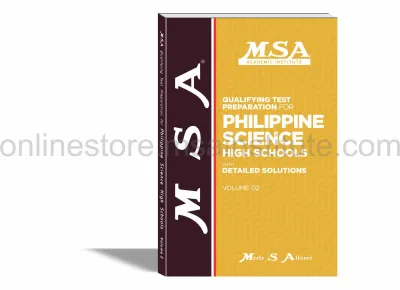
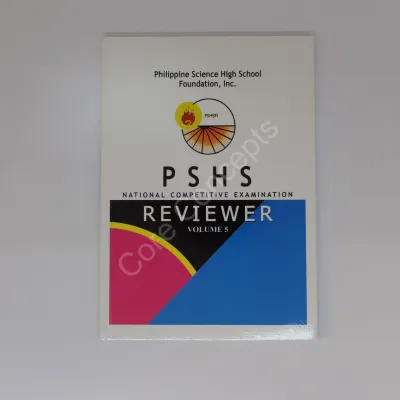
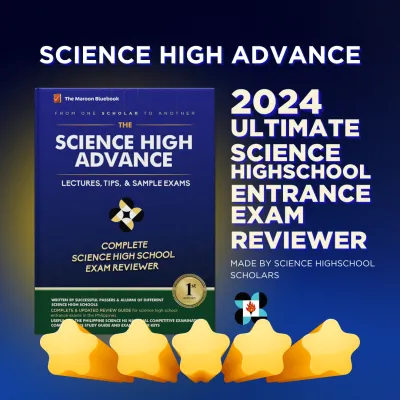
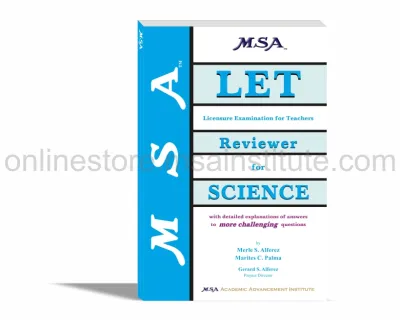
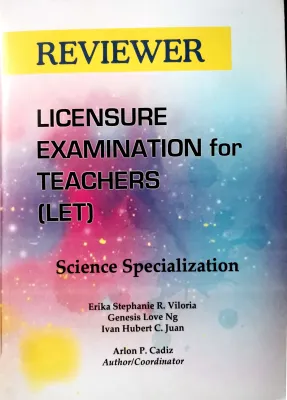
Prices are valid at publication and may change. Please refer to the product page for the latest price.
Curriculum and Exam Alignment
The primary factor in choosing a science reviewer is its alignment with your specific academic goals. In the Philippines, secondary education follows the Department of Education (DepEd) K-12 curriculum, which utilizes a spiral progression approach where branches of science are revisited with increasing complexity each year. If you are preparing for college entrance examinations, such as the University of the Philippines College Admission Test (UPCAT), the Ateneo College Entrance Test (ACET), the De La Salle University College Admission Test (DCAT), or the University of Santo Tomas Entrance Test (USTET), your reviewer must cover advanced concepts in Biology, Chemistry, Physics, and Earth Science. Ensure the eBook description explicitly states alignment with these specific syllabi, as generic foreign reviewers often omit key topics emphasized in local examinations.
Author and Publisher Credibility
Always verify the credentials of the authors and the reputation of the publisher before purchasing an eBook. Excellent science reviewers are typically written by seasoned Filipino educators, university professors, or established review centers with a proven track record in the local academic landscape. Local publishers understand the specific formatting, question styles, and common pitfalls that Filipino students encounter. Choosing materials from recognized academic publishers ensures that the content is accurate, free of conceptual errors, and pedagogically sound, saving you from the danger of studying incorrect or outdated scientific information.
Format and Device Compatibility
Digital reviewers come in various file formats, each offering distinct advantages and limitations. You must verify these technical specifications before completing your purchase to ensure a seamless reading experience:
- PDF (Portable Document Format): This is the most common and accessible format. It preserves the exact layout, complex chemical structures, mathematical equations, and physics diagrams across all devices. PDFs are highly recommended if you plan to view the reviewer on a larger screen, such as a laptop or tablet, or if you wish to print specific practice worksheets.
- ePUB (Electronic Publication): This format features reflowable text, which automatically adjusts to fit the screen of your smartphone or e-reader. While ePUBs are highly convenient for reading text-heavy passages during daily commutes, they can sometimes distort complex scientific formulas, tables, or detailed diagrams.
- Proprietary App Formats: Some educational publishers deliver their reviewers through dedicated mobile applications. These platforms often feature interactive elements, such as self-grading quizzes, progress trackers, and digital flashcards, but they require you to remain within their ecosystem and may limit offline access.
Edition Currency
Scientific knowledge and exam formats are not static. For the 2026-2027 academic cycle, it is crucial to purchase the most recent edition of your chosen reviewer. Newer editions reflect the latest scientific discoveries, updated DepEd learning competencies, and recent shifts in university entrance exam patterns. Checking the publication date or edition number prevents you from studying obsolete theories or practicing with outdated question formats that no longer match actual test conditions.
Top Categories of Science Reviewers for Philippine Exams
To find the most effective digital reviewer, you should categorize your search based on your current academic level and the specific milestones you need to achieve. Different examinations require distinct cognitive approaches and subject emphasis.

College Entrance Exam (CET) Reviewers
Senior high school students preparing for competitive university admissions require a science reviewer that goes far beyond basic memorization. College entrance exams test your conceptual understanding and your ability to apply scientific principles to unfamiliar scenarios.
- Advanced Multi-Disciplinary Coverage: Look for eBooks that offer comprehensive modules in General Science, Earth Science, Biology, Chemistry, and Physics. The reviewer should cover advanced topics such as stoichiometry, chemical bonding, kinematics, thermodynamics, genetics, and cellular respiration.
- Analytical Question Types: High-quality CET reviewers focus heavily on data interpretation, scientific reasoning, and experimental analysis. You will encounter questions that present graphs, tables, and laboratory setups, requiring you to draw logical conclusions or identify experimental variables.
- Integration of Mathematics: Physics and chemistry questions in college entrance exams frequently require mathematical calculations. Your reviewer must include practice drills that teach you how to solve complex quantitative problems quickly, often without the aid of a calculator, as calculators are strictly prohibited in exams like the UPCAT.
Philippine Science High School (PSHS) NCE Reviewers
Preparing a Grade 6 student for the National Competitive Examination (NCE) requires a specialized reviewer tailored to the unique cognitive demands of this highly competitive test.
- Focus on Scientific Inquiry: The NCE does not merely test factual recall; it evaluates a student's scientific aptitude. The eBook should emphasize scientific inquiry, teaching young learners how to formulate hypotheses, identify independent and dependent variables, and interpret basic experimental data.
- Logic and Spatial Reasoning: A significant portion of the NCE involves abstract reasoning and spatial visualization. Excellent reviewers integrate these non-verbal logic sections alongside general science questions, helping students develop the mental agility needed to solve pattern-recognition and shape-rotation problems.
- Detailed Explanations: Because Grade 6 students are still developing their analytical skills, the reviewer must provide comprehensive, step-by-step answer keys. Understanding the underlying logic of why an option is correct is far more valuable than simply checking if an answer is right or wrong.
Grade-Specific K-12 and Periodical Test Reviewers
For junior and senior high school students looking to maintain high grades during regular grading periods, curriculum-focused reviewers are indispensable tools.
- Alignment with MELCs: Ensure the digital reviewer is structured around the DepEd's Most Essential Learning Competencies (MELCs). This guarantees that the chapters you study directly correspond to the lessons being taught in your classroom during each grading quarter.
- Localized Scientific Context: Localized examples make complex scientific concepts easier to grasp. High-quality Philippine reviewers use local phenomena to illustrate scientific principles, such as explaining meteorology through PAGASA typhoon classifications and monsoon patterns (Amihan and Habagat), or discussing geology using the West Valley Fault and local active volcanoes like Taal and Mayon.
- Modular Learning Structure: A modular eBook allows you to focus strictly on the specific branch of science assigned to your current grade level. For instance, you can target Earth and Space Science in Grade 8, Chemistry in Grade 9, Physics in Grade 10, or specialized subjects like General Biology and General Chemistry in Senior High School.
Where to Safely Purchase Authentic Reviewer eBooks
Acquiring your digital study materials through legitimate channels is essential to protect your personal data, ensure content completeness, and respect intellectual property rights.
Official Channels
Always prioritize purchasing directly from official publishing house websites, university presses, or authorized digital bookstores. Many local academic publishers now operate dedicated e-commerce storefronts or official brand stores on major online marketplaces. Buying from these verified sellers guarantees that you receive the complete, uncorrupted, and authorized edition of the eBook, complete with all accompanying answer keys and supplementary materials.
Identifying Pirated Materials
The internet is flooded with cheap, unauthorized PDF copies of popular reviewers sold on social media pages or unverified digital listings. While these pirated files may seem tempting due to their low price, they carry significant risks:
- Incomplete Content: Pirated PDFs are often low-quality scans that frequently miss crucial pages, tables, or entire answer keys, rendering the reviewer useless for self-assessment.
- Illegible Graphics: Science requires clear visual aids. Pirated copies often feature highly compressed, blurry diagrams where chemical structures, physics vectors, or biological cell labels are completely unreadable.
- Security Vulnerabilities: Downloading files from unauthorized peer-to-peer networks or sketchy file-sharing links exposes your devices to malware, spyware, and phishing risks.
Understanding DRM Restrictions
Digital Rights Management (DRM) is technology used by publishers to prevent unauthorized sharing and copying of digital files. Before purchasing an eBook, read the product description carefully to understand its DRM parameters:
- Device Limits: Some platforms restrict eBook access to a specific number of devices (e.g., up to two tablets or one laptop). Ensure these limits match your study setup.
- Offline Access: Verify whether the eBook requires a continuous internet connection through a proprietary reader app, or if it allows offline downloading for uninterrupted studying during commutes or power outages.
- Expiration Dates: Some digital textbook rentals or subscription-based reviewers expire after a set period (e.g., six months or one academic year). Make sure the access window covers your entire preparation timeline.
Verifying Bundles
Many authorized digital platforms offer bundled packages that provide excellent value. These bundles may include the primary science reviewer eBook along with access to online mock exam portals, interactive flashcard sets, or digital lecture videos. When purchasing a bundle, verify how the access codes are delivered and ensure that the digital credentials are brand new and registered directly under your name to avoid activation issues.
Strategies for Maximizing Your Digital Review Experience
Transitioning from physical paper to a digital screen requires a shift in your study habits. To get the most out of your science reviewer eBook, you should adopt active learning strategies tailored to digital formats.
Active Annotation
Passive reading leads to poor information retention. Utilize the built-in annotation tools of your PDF reader or e-reading application to engage actively with the material. Highlight key formulas in physics, color-code essential vocabulary in biology, and use digital sticky notes to write down brief summaries of complex chemical processes in your own words. If your device supports a digital stylus, take handwritten notes directly on the margins of the eBook to stimulate muscle memory and reinforce learning.
Managing Screen Fatigue
Long study sessions in front of digital screens can lead to eye strain, headaches, and decreased focus. To protect your well-being and maintain high productivity, implement these practical adjustments:
- Optimize Display Settings: Switch your reading application to sepia or dark mode during evening study sessions to reduce harsh blue light exposure. Adjust the text size so you can read comfortably without squinting.
- Use Blue Light Filters: Enable your device's built-in blue light filter (often called "Night Light" or "Eye Comfort Shield") or wear computer glasses designed to filter out high-energy visible light.
- Practice the 20-20-20 Rule: Every 20 minutes, take a 20-second break to look at an object at least 20 feet (about six meters) away. This simple habit relaxes the focusing muscles inside your eyes and prevents digital eye strain.
File Organization and Syncing
Keep your digital study space tidy to minimize distractions and save time. Create a dedicated folder system on your device or cloud storage account, organizing your files by subject, grade level, or exam category. Ensure that your e-reader application is set to sync your reading progress, highlights, and annotations across all your devices. This allows you to seamlessly transition from studying on your tablet or laptop at home to reviewing quick flashcards on your smartphone during your school commute.
Frequently Asked Questions (FAQ)
Are free PDF science reviewers online reliable for exam prep?
Free PDF science reviewers found on random online forums, file-sharing sites, or social media groups are generally unreliable and highly risky. These files are often outdated, containing obsolete scientific facts or old exam formats that do not align with the current 2026-2027 curriculum standards. Furthermore, they frequently contain errors, lack verified answer keys, and can expose your devices to security threats like malware. For dependable preparation, you should stick to authorized digital platforms, official publisher websites, or verified open-access educational resources provided directly by the Department of Education.
Can I print specific chapters from my science reviewer eBook?
Your ability to print pages from a science reviewer eBook depends entirely on the publisher’s Digital Rights Management (DRM) settings and the terms of service of the platform where you purchased it. Some publishers allow unlimited printing of their PDFs, which is highly beneficial for students who prefer solving math-heavy physics or chemistry problems on physical paper. Other platforms restrict printing to a small percentage of the book or block printing entirely to prevent piracy. Always read the product specifications or contact the digital bookstore’s customer support to verify the print permissions before finalizing your purchase.
Community discussion
Share your experience or ask a question. Comments are reviewed before publication.