
For a complete beginner seeking a soothing, musical outlet, the steel tongue drum—frequently referred to in modern circles as a “rain drum”—is the most accessible and rewarding percussion instrument to purchase. Because these instruments are pre-tuned to harmonious scales, you can strike any tongue in any order and produce a beautiful, resonant melody. If your goals lean more toward pure rhythm, portable melodies, or ambient sound effects, other beginner-friendly options like the cajon, kalimba, or traditional rainstick offer distinct advantages.
Choosing your first instrument involves balancing your musical goals with practical considerations like space, noise levels, and your local climate. By understanding how these instruments differ in their learning curves, sound profiles, and maintenance needs, you can confidently select a percussion piece that will bring you years of creative satisfaction.
What Exactly Is a Rain Drum? (Clarifying the Instrument)
In the modern musical instrument market, the term “rain drum” has become a popular colloquialism for the steel tongue drum. This association grew from the instrument’s unique acoustic properties; when struck, the hollow steel body and tuned metal tongues produce a liquid, resonant, and deeply meditative tone that closely mimics the soothing sound of falling water. While historical bronze rain drums exist as heavy, decorative artifacts from Southeast Asian history, the modern beginner-friendly instrument is a compact, portable steel drum played with mallets or fingers.
Products mentioned in this guide
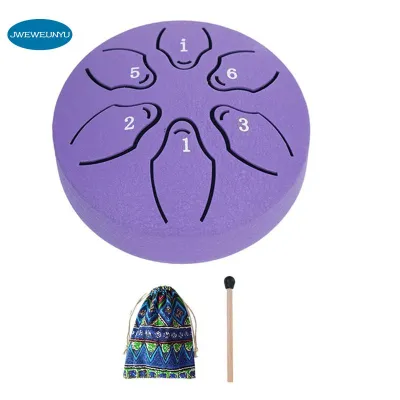
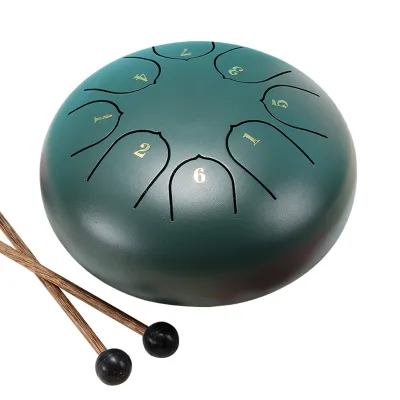
![[COD] E-WOITD Steel Tongue Drum Portable Rain Drum Hand Pan Drum Percussion Musical Instruments 3 Inch 6 Notes For Yoga Meditation Musical Toy](https://img.lazcdn.com/g/p/9371e1773e50af7412623ac8471c2934.jpg_400x400q80.jpg_.webp)
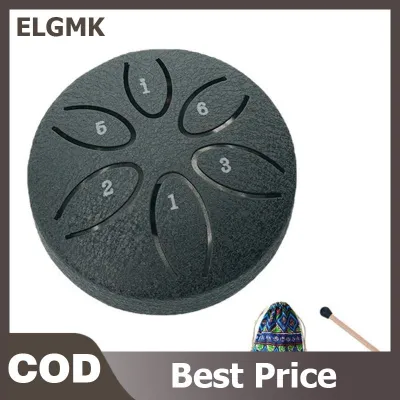
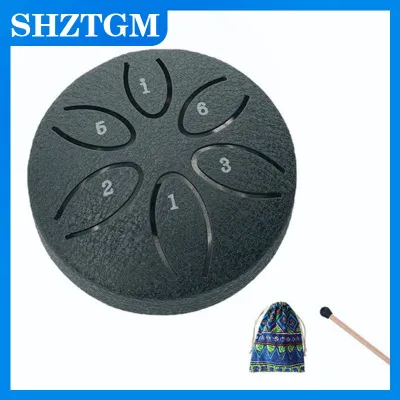

Prices are valid at publication and may change. Please refer to the product page for the latest price.
It is important to distinguish the steel tongue drum from a traditional rainstick. A rainstick is a long, hollow tube filled with small pebbles, seeds, or steel beads that cascade over internal pins when the tube is tilted, creating a continuous, realistic rustle of rain. While a rainstick is an excellent tool for environmental soundscapes, meditation, and sensory therapy, it is not a melodic instrument. You cannot play specific songs or scales on a rainstick; it is purely a textural sound effect.
For beginners, the steel tongue drum represents an incredibly low barrier to entry. Traditional drum kits require years of practice to coordinate four limbs and master complex stick techniques, often creating significant noise issues in residential areas. In contrast, a steel tongue drum provides instant gratification. Because the notes are tuned to a specific scale where all tones harmonize, you do not need to study music theory, read sheet music, or practice painful finger positions to make beautiful music on your first day.
How to Choose the Right Beginner Percussion Instrument
Selecting the ideal percussion instrument requires evaluating how it fits into your daily life, your living space, and your personal learning preferences.

Learning Curve and Cognitive Load
Different percussion instruments demand different types of focus. If you want an immediate, stress-free escape where you can improvise without thinking, melodic instruments with fixed scales—such as the steel tongue drum or the kalimba—are ideal. They remove the fear of making mistakes. Conversely, if you are eager to develop physical coordination, learn time signatures, and practice steady rhythmic patterns, a physical box drum like the cajon is more suitable, though it requires a higher initial investment of practice time.
Sound Profile and Volume Control
Consider where and when you plan to practice. Melodic percussion instruments offer soft, soothing tones that are highly compatible with shared living spaces or apartment living. A kalimba, for example, is quiet enough to play in bed without disturbing someone in the next room. A steel tongue drum has more projection but retains a soft, rounded attack that rarely penetrates walls. Rhythmic instruments like the cajon, however, are designed to project deep bass tones and sharp slaps, which can easily travel through floors and walls in close-quarter housing.
Portability and Storage Space
Your lifestyle dictates how portable your instrument needs to be. If you want a musical companion for beach trips, hikes, or casual outdoor gatherings, size and weight are paramount. A standard 17-key kalimba easily slips into a backpack or handbag, weighing less than half a kilogram. A steel tongue drum is highly durable but can be surprisingly heavy due to its solid steel construction, making it better suited for home use or short trips in a carrying bag. A cajon is the largest option, essentially serving as a piece of furniture that requires a dedicated corner in your room.
Build Quality and Climate Resilience
In tropical environments like the Philippines, climate resilience is a critical factor that many buyers overlook. High relative humidity and rapid temperature shifts can severely impact musical instruments. Metal instruments are susceptible to surface rust and oxidation, while wooden instruments can warp, crack, or suffer from glue failure when exposed to moisture. Understanding the material composition of your instrument—and how to protect it—is essential to preserving its tuning and structural integrity over time.
Best Rain Drums and Beginner-Friendly Percussion Instruments
To help you find the perfect match, let us explore the four most popular beginner percussion categories, detailing their unique strengths, key specifications to look for, and inherent limitations.
Steel Tongue Drums (Melodic "Rain Drums")
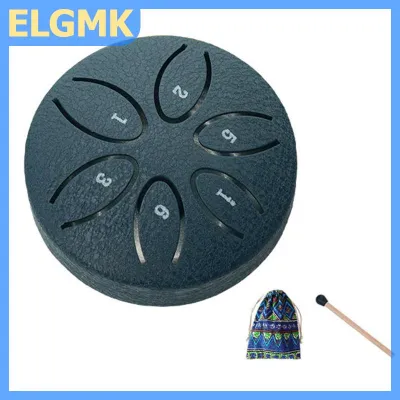
Steel tongue drums are circular steel vessels with precision-cut tongues on the top surface. When you strike a tongue with a rubber-headed mallet or a finger pick, the metal vibrates inside the hollow chamber, generating a rich, bell-like tone with long sustain.
- Why it is great: The primary appeal of the steel tongue drum is its foolproof design. Most beginner models are tuned to the major pentatonic scale (typically in the key of C major or G major). Because the pentatonic scale omits the fourth and seventh intervals of a standard major scale, it eliminates any harsh, dissonant intervals. You can strike the tongues completely at random, and the resulting patterns will sound like a composed, meditative melody.
- What to look for: Beginners should look for a drum with a diameter between 6 and 12 inches. A 6-inch drum is highly portable and usually features 8 notes, which is perfect for simple melodies. An 11-inch or 12-inch drum typically offers 11 to 13 notes, providing a wider range for playing actual songs. Look for drums made of high-grade carbon steel or titanium alloy; titanium alloys generally offer a brighter tone, cleaner high notes, and superior resistance to humidity-induced corrosion.
- Limitations: While the pentatonic scale is incredibly forgiving, it is also limited. You cannot play chromatic notes (sharps and flats), meaning you will not be able to play complex pop songs or classical pieces that shift keys. Additionally, because they are made of thick, solid steel, larger models can weigh between 2 to 4 kilograms, which may feel heavy if you plan to carry them long distances.
Traditional Rainsticks (Sound Effect Instruments)
Traditional rainsticks are ancient percussion instruments designed to replicate the natural acoustic texture of a rainstorm. They do not produce distinct musical notes but rather a continuous, soothing wash of white noise.
- Why it is great: The rainstick requires absolutely zero musical training or physical coordination. To play it, you simply tilt the tube slowly from one end to the other, letting gravity do the work. The sound is incredibly effective for stress relief, sound therapy sessions, yoga classes, or adding atmospheric texture to acoustic music recordings.
- What to look for: Pay close attention to the length and the materials. A short rainstick (around 25 to 50 centimeters) will have a very brief sound duration, requiring you to flip it constantly. A longer rainstick (80 to 100 centimeters) allows for a slow, continuous rain sound that can last up to thirty seconds per tilt. Natural materials like hollowed-out cactus wood or bamboo offer a warm, organic, and highly authentic sound, while synthetic plastic or acrylic rainsticks are exceptionally durable and let you watch the beads cascade inside.
- Limitations: The rainstick is strictly a sound-effect instrument. It cannot play melodies, harmonies, or structured rhythms. If you want to play recognizable tunes or jam dynamically with other musicians, a rainstick will feel highly limiting after the initial novelty wears off.
Cajons (Rhythmic Box Drums)
Originating from Peru, the cajon is a six-sided wooden box drum that you sit on while playing. By striking the front faceplate (known as the tapa) with your hands and fingers, you can produce a wide variety of drum-like sounds.
- Why it is great: The cajon is often described as a "drum kit in a box." Striking the center of the tapa produces a deep, resonant bass tone similar to a bass drum, while striking the top corners produces a sharp, high-pitched slap that mimics a snare drum. This versatility makes it the ultimate acoustic accompaniment for guitarists, singers, and acoustic jam sessions.
- What to look for: Look for a cajon with adjustable snare wires or guitar strings pressed against the inside of the faceplate, which allows you to customize the crispness of the snare sound. Ergonomic features, such as rounded top corners, make sitting and playing for extended periods much more comfortable. For wood types, birch frontplates offer a bright, punchy slap, while mahogany or beech frontplates provide a warmer, deeper bass response.
- Limitations: Unlike tongue drums, the cajon has a physical learning curve. You must develop a basic sense of rhythm, learn to separate your hand movements, and build up physical stamina in your hands and wrists. Sitting bent over the drum for long periods can also cause back strain if you do not maintain proper posture.
Kalimbas (Melodic Thumb Pianos)
An adaptation of the traditional African mbira, the kalimba consists of a wooden or acrylic board fitted with staggered metal tines. You hold the instrument in both hands and pluck the tines with your thumbnails.
- Why it is great: The kalimba is exceptionally portable, highly intuitive, and produces a delicate, music-box-like sound. It is quiet enough to play in shared spaces without causing a disturbance, making it a favorite for late-night relaxation. Most beginner kalimbas feature 17 keys tuned to the key of C major, allowing you to play a vast library of popular songs, folk tunes, and anime soundtracks using simple numbered tabs.
- What to look for: Beginners should start with a standard 17-key C major kalimba. You must choose between a hollow box body and a solid flat-board body. Hollow box kalimbas have a sound hole on the front, offering louder projection and a warm, resonant tone with the ability to create a "wah-wah" vibrato effect by waving your fingers over the back sound holes. Solid flat-board wood or acrylic kalimbas are quieter but produce incredibly clean, clear high notes with fewer "dead tines" (keys that fail to ring out clearly).
- Limitations: Playing the kalimba requires a degree of thumb dexterity, and you will need to keep your thumbnails slightly long to pluck the metal tines cleanly. Additionally, because wood expands and contracts, you will need to manually tune the tines occasionally using a small tuning hammer and a smartphone tuning app.
Quick Comparison of Beginner Percussion Instruments
To help you visualize how these instruments compare across key decision dimensions, refer to the summary table below:
| Instrument Type | Learning Curve | Sound Profile | Portability | Best Use Case |
|---|---|---|---|---|
| Steel Tongue Drum | Extremely Low (Instant) | Melodic, resonant, water-like, meditative | Moderate (Sturdy but heavy) | Solo meditation, stress relief, intuitive home play |
| Rainstick | None (Tilt to play) | Textural, white noise, mimicking rain | Low to Moderate (Can be long) | Sound therapy, yoga, ambient relaxation, sensory play |
| Cajon | Moderate (Requires rhythm practice) | Bass tones and sharp snare slaps | Low (Large wooden box) | Acoustic jam sessions, live gigging, replacing a drum kit |
| Kalimba | Low (Easy to learn with tabs) | Melodic, delicate, music-box tone | High (Fits in a small bag) | Quiet apartment practice, playing popular melodies, travel |
Buying and Caring for Your Instrument in the Philippines
When purchasing your first percussion instrument in the Philippines, sourcing and maintenance require careful attention due to the unique local climate and market conditions.
Where to Buy and What to Verify
To ensure you receive an instrument that is accurately tuned and built to last, purchase from established local music retailers, official brand flagship stores on major online marketplaces, or specialized percussion workshops. Cheap, unbranded instruments sold on generic discount platforms often suffer from poor metal tempering, resulting in tongues or tines that are permanently out of tune.
Before finalizing your purchase, run through this quick verification checklist:
- Included Accessories: Ensure the instrument comes with its essential starter kit. For steel tongue drums, this includes mallets, finger picks, a padded carrying bag, and a scale booklet. For kalimbas, verify that a tuning hammer and key stickers are included.
- Return Policy: Check the seller's return policy. Because these instruments can occasionally suffer shipping damage or detune during transit, you want the option to exchange the item if a tongue or tine arrives dead or out of pitch.
- Price Expectations: Entry-level kalimbas generally range from ₱500 to ₱1,500. Quality beginner steel tongue drums (6 to 8 inches) typically cost between ₱1,000 and ₱3,000, while larger 11-inch models range from ₱3,500 to ₱6,000. Reliable beginner cajons usually fall between ₱2,000 and ₱5,000.
Climate Maintenance for Tropical Environments
The high relative humidity of the Philippines (often exceeding 80%) poses a constant threat to musical instruments. Protecting your investment requires establishing a simple, consistent care routine based on your instrument’s materials.
For steel tongue drums, the primary enemy is rust. The moisture and natural acids from your fingers can quickly corrode the steel surface. After every playing session, wipe the entire drum down with a dry, clean microfiber cloth. To provide an extra layer of protection, apply a few drops of light mineral oil, sewing machine oil, or specialized instrument oil to the cloth and gently buff the metal surfaces once a month.
For wooden instruments, such as wooden cajons, kalimbas, and natural bamboo rainsticks, the main concern is moisture absorption and extreme temperature fluctuations. High humidity causes wood to swell, which can muff the tone, warp the wood, or weaken glue joints. Conversely, blast-chilling your room with air conditioning and then exposing the instrument to midday tropical heat can cause the wood to crack.
Always store your wooden instruments in their padded carrying bags or cases when not in use. Toss a few packets of silica gel (moisture absorbers) inside the case to keep the micro-environment dry. Never leave your instruments in direct sunlight, near open windows during rainstorms, or directly in the path of air conditioner vents.
Frequently Asked Questions (FAQ)
Do I need to know how to read sheet music to play a rain drum?
No, you do not need to know how to read traditional sheet music to play a steel tongue drum. Because these instruments are tuned to a self-harmonizing pentatonic scale, they are designed for intuitive play, improvisation, and learning by ear. Most beginner songbooks and online tutorials use simple numbered notation or color-coded diagrams that correspond directly to numbers engraved on the drum’s tongues, making it incredibly easy to play recognizable melodies within minutes.
How do I maintain a steel tongue drum in a humid climate?
To prevent rust in humid climates, always wipe down your steel tongue drum with a dry microfiber cloth after playing to remove moisture and finger oils. Store the drum inside its padded gig bag along with a few silica gel desiccant packets to absorb excess moisture. Avoid keeping the drum on the floor or in damp areas of your home, and never clean it with water, harsh household detergents, or abrasive scrubs, as these will strip the protective finish and damage the metal.
What is the difference between a steel tongue drum and a handpan?
While they look similar, steel tongue drums and handpans differ significantly in construction, playing style, and cost. Steel tongue drums are smaller, thicker, heavier, and have tongues cut directly into the steel; they are played with mallets or fingers and have a long, meditative sustain. Handpans (or hang drums) are much larger, made of thin nitrided steel, and are hammered into shape with distinct tone fields. Handpans are played exclusively with the hands, have a faster, brighter attack, and are significantly more expensive and delicate.
Community discussion
Share your experience or ask a question. Comments are reviewed before publication.