
In the competitive landscape of the modern Philippine workplace, technical expertise is only half the equation for professional success. Whether you are navigating the corporate boardrooms of Makati and Bonifacio Global City, leading cross-border teams in the IT-BPM sector, or pitching to local startup investors, the ability to articulate ideas with clarity and conviction is the ultimate career accelerator. For many professionals, however, standing in front of an audience or speaking up in high-stakes meetings triggers intense anxiety, often holding back otherwise brilliant careers.
Mastering public speaking does not require an innate, theatrical talent; rather, it is a structured, learnable skill. By studying proven communication frameworks, anyone can learn to manage performance anxiety, structure persuasive arguments, and connect deeply with listeners. The most effective self-help books on this subject offer practical, step-by-step methodologies that can be directly applied to daily workplace interactions. Leading this selection is Carmine Gallo’s acclaimed guide, Talk Like TED, alongside other highly practical titles designed to elevate your professional presence.
Before purchasing any of these titles, it is important to verify the specific edition, language, and medium or file format to ensure you receive the complete, unabridged content. Depending on your preferred learning style, you may choose physical paperbacks, digital e-books, or audiobooks. Always purchase from authorized sources and check device compatibility or regional digital restrictions, which can occasionally affect access to accompanying materials, worksheets, or audio narration in the local market.
Products mentioned in this guide
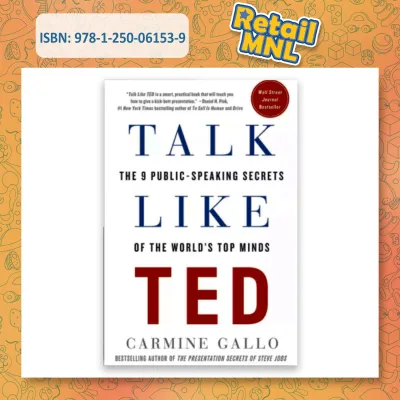

![[Brand New] Talk Like TED: The 9 Public Speaking Secrets of the Worlds Top Minds by Carmine Gallo (Paperback)](https://img.lazcdn.com/g/p/229091af9b971ed7ccf2db62ead7e346.jpg_400x400q80.jpg_.webp)

Prices are valid at publication and may change. Please refer to the product page for the latest price.
Why Strong Communication Skills Matter in the Philippine Workplace
The professional environment in the Philippines is uniquely collaborative, deeply relational, and highly communicative. Corporate culture here places a premium on interpersonal harmony, often referred to as pakikisama, which influences how feedback is given, how decisions are made, and how leadership is exercised. Because of this relational focus, communication is rarely just about transmitting dry data; it is about building trust, alignment, and mutual respect among colleagues, clients, and leadership.
In this environment, public speaking extends far beyond formal presentations on a grand stage. High-stakes communication happens daily in project updates, cross-departmental alignment meetings, client pitches, and town halls. A professional who can clearly articulate the value of a project, explain a complex technical delay without causing panic, or inspire a team during a period of transition will naturally stand out. Conversely, those who struggle to voice their ideas clearly risk having their contributions overlooked, regardless of their technical competence.
Furthermore, the rise of multinational corporations and global shared services in major Philippine cities has made cross-border communication a daily reality. Local professionals frequently present to regional directors in Singapore, clients in North America, or partners in Europe. Navigating these diverse audiences requires a high level of cultural adaptability, clarity, and conciseness. Mastering public speaking helps eliminate the fear of the proverbial “nosebleed”—the local term for the anxiety associated with speaking formal English under pressure—and replaces it with structured confidence.
Ultimately, clear communication is the bridge between hard work and professional recognition. When you can present your ideas persuasively, you position yourself as a thought leader and a natural candidate for leadership roles. Investing time in reading and applying public speaking principles is not merely an academic exercise; it is a strategic move to unlock promotions, secure client accounts, and command respect in any professional setting.
Criteria for Choosing the Right Public Speaking Book
With countless self-help and communication books available on online marketplaces and in local bookstores, selecting the right resource can feel overwhelming. To maximize the return on your reading time, it is helpful to evaluate books based on specific, practical dimensions rather than general popularity. The ideal guide should offer immediate utility, helping you solve real-world workplace challenges from the very next day.

First, prioritize books that offer actionable frameworks over abstract theory. A high-quality communication book should not simply tell you to “be confident” or “speak passionately.” Instead, it must provide concrete templates for structuring a narrative, physical techniques for managing adrenaline, and clear guidelines for designing supportive visual aids. Look for authors who break down the science of communication into repeatable steps that you can practice systematically.
Second, consider the versatility and scale of the advice. A book that focuses exclusively on addressing thousands of people in an auditorium may not serve your immediate needs if your primary goal is to contribute more effectively in ten-person weekly huddles. The best public speaking books offer scalable strategies that apply equally to massive keynotes, intimate boardroom discussions, virtual team calls, and one-on-one performance reviews.
Third, look for resources that address the psychological aspects of speaking. For many professionals, the primary barrier to effective communication is not a lack of vocabulary, but rather intense stage fright and the fear of judgment. Books that explore the cognitive and physiological roots of anxiety—and provide realistic tools to manage them—are invaluable for building long-term confidence. The curated selection below has been evaluated against these precise criteria to ensure maximum relevance for working professionals.
Top Public Speaking and Self-Help Books for Professionals
The following books represent a diverse mix of modern research, performance theory, practical logistics, and timeless principles. Together, they form a comprehensive curriculum for any professional looking to master workplace communication.
Talk Like TED: The 9 Public-Speaking Secrets of the World's Top Minds
To build a highly persuasive presentation, Carmine Gallo’s Talk Like TED serves as an exceptional starting point. This book analyzes hundreds of the most popular TED Talks to uncover the common elements that make these presentations incredibly engaging. Gallo categorizes these elements into nine core secrets, organized around three primary areas: emotional connection, novelty, and memorability. By understanding these principles, you can transform dry, slide-heavy business presentations into compelling, narrative-driven experiences.
One of the most valuable frameworks in the book is the “Rule of Three.” Gallo explains that the human brain is wired to process and retain information best when it is presented in groups of three. For a professional in the Philippines, this rule can be applied directly to structure a project pitch or a status update. Instead of overwhelming your audience with a list of ten minor updates, you can group your presentation into three clear, memorable pillars: the current progress, the primary bottleneck, and the next steps. This structure keeps your audience focused and ensures they walk away with the key takeaways.
Another critical concept is the science of storytelling, which Gallo demonstrates is essential for building emotional connections. He references research showing that stories trigger the release of chemicals like oxytocin in the brain, making the listener more empathetic and receptive to the speaker’s message. In a local corporate context, this means instead of just showing a spreadsheet of sales figures, you should frame those numbers around a real customer story or a team journey. This narrative approach makes the data memorable and persuasive.
While Talk Like TED is a powerful resource, readers should be mindful of its limitations. The book focuses heavily on large-stage, highly polished, 18-minute presentations, which may feel distant from daily corporate realities. To make the most of this guide, practice scaling these techniques down. You do not need a stage or a lapel microphone to use the Rule of Three or to share a brief, relevant anecdote; these tools work just as effectively in a five-minute update over Zoom or Teams.
Steal the Show: From Speeches to Job Interviews to Deal-Closing Pitches
For professionals who want to master high-stakes, everyday interactions, Michael Port’s Steal the Show offers a unique and highly practical perspective. Port, a former professional actor, views every critical professional interaction as a “performance.” This approach does not advocate for being fake or insincere; rather, it encourages you to be your most intentional, prepared, and impactful self when the spotlight is on you. This performance mindset is highly beneficial for job interviews, salary negotiations, and high-stakes client pitches.
In the competitive corporate hubs of the Philippines, standing out during an interview or a promotion review requires more than just listing your qualifications. Port teaches readers how to develop a clear “objective” for every interaction and how to align their body language, vocal tone, and words to achieve that goal. By treating an interview as a collaborative scene rather than an interrogation, you can build a stronger rapport with the hiring manager and present your career history as a compelling, cohesive story.
Additionally, the book provides excellent strategies for managing unpredictable situations and handling tough questions. Port introduces rehearsal techniques that help speakers prepare for different scenarios, ensuring they remain calm and authoritative even when caught off guard. This preparation is crucial for local professionals who must defend project budgets or answer unexpected inquiries from regional stakeholders during annual business reviews.
Confessions of a Public Speaker
If you are looking for a realistic, behind-the-scenes look at the logistical and psychological realities of speaking, Scott Berkun’s Confessions of a Public Speaker is an indispensable read. Berkun, a veteran speaker and author, cuts through the typical academic jargon to deliver a humorous, honest, and highly practical guide. He addresses the messy reality of live presentations, acknowledging that things rarely go perfectly according to plan.
One of the book’s greatest strengths is its detailed advice on managing physical nervousness. Berkun explains that stage fright is a natural evolutionary response to being stared at by a group, and he provides practical ways to channel that adrenaline into positive energy. He also covers the logistics of speaking, such as how to read a room’s energy, how to handle technical failures, and how to adapt when your presentation time is suddenly cut in half. This realistic perspective is incredibly reassuring for anyone who has ever panicked over a malfunctioning projector or a spotty internet connection during a hybrid meeting.
Furthermore, the book is highly relevant for today’s hybrid and virtual work environments. With many Philippine companies operating under flexible or remote work arrangements, presenting effectively through a screen has become a core competency. Berkun’s insights on maintaining audience engagement, managing pacing, and delivering value without relying heavily on slides are directly applicable to virtual team calls and webinars.
The Quick and Easy Way to Effective Speaking
For those who feel completely paralyzed by the thought of speaking in public, Dale Carnegie’s classic The Quick and Easy Way to Effective Speaking remains a foundational masterpiece. Carnegie’s timeless principles focus on building core confidence and overcoming the deep-seated fear of judgment. His approach is highly accessible, making it an excellent starting point for junior professionals or anyone looking to build their communication skills from the ground up.
Carnegie emphasizes that the most powerful way to connect with an audience is through sincerity, enthusiasm, and personal experience. He advises speakers to talk about subjects they are genuinely passionate about and to illustrate their points with personal anecdotes. In the warm, relational culture of the Philippines, this emphasis on authentic connection and personal storytelling is highly effective. It allows the speaker to build immediate trust with the audience, making the presentation feel more like a meaningful conversation than a formal speech.
Moreover, the book provides simple, practical exercises to help readers gradually expand their comfort zones. Carnegie encourages starting with low-stakes environments, such as sharing a brief story during a casual lunch or asking a question in a team meeting. By taking small, consistent steps, you can systematically dismantle your fear of speaking and build a solid foundation of confidence that will serve you throughout your career.
How to Apply Public Speaking Frameworks in Your Daily Work
Reading self-help books can provide valuable insights, but real growth only occurs when you actively apply these concepts to your daily professional routine. Transitioning from theoretical understanding to practical mastery requires deliberate practice and a willingness to step outside your comfort zone. You do not need to wait for a major company-wide presentation to start practicing; the daily workplace offers countless low-stakes opportunities to refine your skills.
To begin, integrate the “Rule of Three” from Talk Like TED into your daily written and verbal communication. When writing an email to a senior manager, structure it with three clear, bulleted points. When asked for your opinion during a spontaneous meeting, organize your response into three concise thoughts: the current situation, the primary challenge, and your recommended action. This simple habit will quickly train your brain to organize information logically and present it clearly under pressure.
Next, practice using storytelling techniques during project post-mortems or team updates. Instead of simply presenting a list of tasks completed and milestones reached, frame the update as a brief narrative arc. Describe the initial challenge your team faced, the specific strategies and collaborative efforts used to overcome the obstacle, and the ultimate outcome or lesson learned. This narrative approach not only makes your presentation more engaging but also highlights your team’s problem-solving capabilities and resilience.
Additionally, pay close attention to your vocal variety and physical presence during virtual team calls. Because remote meetings lack many of the physical cues of in-person interactions, your voice must work harder to maintain engagement. Practice varying your pitch, pacing, and volume to emphasize key points, and make a conscious effort to look directly at the camera rather than at the screen to simulate eye contact. These subtle adjustments can significantly increase your virtual presence and keep your audience focused.
Finally, establish a feedback loop to monitor your progress. Ask a trusted colleague to observe your presentations and provide constructive feedback on your delivery, pacing, and clarity. You might also consider recording your virtual presentations and reviewing them afterward to identify areas for improvement, such as filler words or distracting gestures. Remember that building public speaking confidence is an incremental process; start with small, manageable adjustments and gradually take on larger speaking opportunities as your skills develop.
Frequently Asked Questions (FAQ)
Should I read the physical book or listen to the audiobook?
Choosing between a physical book and an audiobook depends largely on your personal learning style and your specific goals for the material. Physical books or digital e-books are excellent for deep study, as they allow you to easily highlight key frameworks, write notes in the margins, and flip back and forth between chapters to review structures and templates. Having a physical copy on your desk also serves as a visual reminder to practice the techniques daily.
On the other hand, audiobooks offer a unique advantage for public speaking books, as they allow you to hear the author’s actual vocal delivery, pacing, tone, and inflection. Listening to a professional narrator or the author themselves can provide a direct demonstration of the very techniques being discussed in the text. A highly effective strategy is to use a hybrid approach: listen to the audiobook during your daily commute or workout to absorb the flow and delivery, and keep a physical or digital copy on hand for deep-dive reference, note-taking, and structured study.
Before making a purchase, always verify the file format and device compatibility, especially for digital and audio versions. Ensure that the platform you are using is authorized and accessible within the Philippines, as regional licensing restrictions can occasionally limit access to specific audio companion PDFs or workbook downloads.
How long does it take to see improvements in my speaking skills?
It is important to set realistic expectations when developing communication skills. Reading a book provides you with the necessary theoretical frameworks and strategies, but measurable improvement only comes through consistent, deliberate practice. You cannot expect to master public speaking overnight simply by finishing a book; it is a muscle that must be trained over time.
If you commit to applying at least one new technique each week—such as using the Rule of Three in your weekly emails or practicing mindful breathing before a team update—you will likely begin to notice a shift in your internal confidence within a few weeks. Your colleagues and managers will typically start to perceive a noticeable improvement in your clarity, structure, and delivery after three to six months of consistent, daily application. The key is to focus on continuous, incremental progress rather than aiming for immediate perfection.
Community discussion
Share your experience or ask a question. Comments are reviewed before publication.