
Understanding our mental frameworks is the first step toward meaningful personal growth. For Filipino readers, the best psychology books are those that do not merely offer generic self-improvement advice, but instead provide practical tools to reconcile modern psychological principles with deeply rooted cultural values like bayanihan (communal unity) and intense family obligations. By studying cognitive patterns, emotional regulation, and behavioral science, you can develop the mental clarity needed to navigate local challenges, from the high-pressure environment of the corporate grind to the complex social dynamics of a collectivist culture.
While mainstream self-help literature often focuses on individualistic success, true personal development in a local context requires a balance between individual well-being and community harmony. Psychological literacy empowers you to identify cognitive biases, manage chronic stress, and make conscious choices rather than falling back on passive resignation. Reading deeply in this field offers a structured path to self-awareness, allowing you to build a fulfilling life while remaining connected to the people who matter most.
Why Psychology Matters for Personal Growth in the Philippines
Navigating daily life in the Philippines presents a unique set of psychological demands. From enduring grueling multi-hour commutes in dense urban centers to managing the financial pressures of being a primary family breadwinner, the mental toll of daily survival can easily lead to chronic burnout. In these high-stress environments, understanding the psychological mechanisms behind stress and emotional regulation is not a luxury; it is a vital survival tool. When you understand how your brain responds to pressure, you can shift from a state of constant survival reactivity to intentional, proactive decision-making.
Products mentioned in this guide

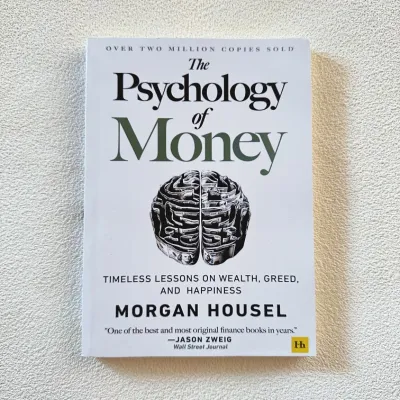
Prices are valid at publication and may change. Please refer to the product page for the latest price.
The unique strength of the local culture lies in its emphasis on deep interpersonal connections, shared identity, and mutual support. However, these same values can sometimes create heavy psychological weight, especially when high societal expectations and family obligations clash with personal career or lifestyle choices. Traditional concepts such as pakikisama (social harmony) can lead to conflict avoidance and emotional suppression if not balanced with healthy self-advocacy. Psychological literature provides the vocabulary and frameworks needed to understand these internal conflicts, helping you honor your relationships without sacrificing your mental health.
Moreover, the local professional landscape—whether in the fast-paced business process outsourcing (BPO) sector, creative industries, or traditional corporate settings—demands high levels of adaptability and emotional intelligence. By studying behavioral psychology, you gain insight into why people act the way they do, which directly improves your communication skills, conflict resolution strategies, and leadership capabilities. Ultimately, integrating psychological principles into your personal development journey allows you to build a resilient mindset that can withstand both economic volatility and personal setbacks.
How We Evaluate Psychology Books for Local Relevance
To ensure that the recommended literature provides genuine value, we evaluate psychology books across three core dimensions: cultural applicability, practical utility, and local accessibility. Cultural applicability is crucial because many foundational psychology texts are written from a highly individualistic Western perspective. We assess how effectively these concepts can be translated into a collectivist society, ensuring that the advice remains useful for readers who live in multigenerational households or navigate complex community networks.

Practical utility focuses on actionable guidance. We prioritize books that offer clear, evidence-based strategies over those that rely on vague motivational slogans or unscientific self-help trends. The goal is to provide you with concrete exercises, cognitive reframing techniques, and behavioral habits that you can immediately apply to your career, financial management, and personal relationships. This ensures that your reading time translates into measurable improvements in your daily life.
Accessibility is another key factor in our selection process. We focus on books that are widely available in major local bookstores and authorized digital platforms in the Philippines. Furthermore, we consider readability; the selected titles present complex psychological theories, such as neuroplasticity or cognitive behavioral therapy, in clear, jargon-free English that is easy to digest for readers of various educational backgrounds.
When reading these foundational texts, it is important to maintain a critical mindset. You do not have to accept every piece of Western advice wholesale. Instead, treat these psychological frameworks as flexible tools. For instance, when a book discusses setting strict boundaries, you can adapt that advice to fit the local nuances of utang na loob (debt of gratitude), learning to express appreciation and support for your family while still protecting your own mental and financial limits.
Essential Psychology Themes and Classic Books for Personal Growth
Personal growth is a multifaceted journey, and different stages of life require different psychological tools. Rather than attempting to read every popular book at once, it is far more effective to identify your current life bottlenecks—whether that is career stagnation, relationship friction, or poor daily routines—and select a book that directly addresses that specific area. Below are three essential psychological themes, illustrated by classic, globally recognized texts, along with practical guidance on how to apply their core principles to your daily life.
Cultivating Resilience and a Growth Mindset
Resilience is a highly valued trait in local culture, often expressed through the concept of diskarte—the resourcefulness and adaptability used to overcome daily adversity. However, true psychological resilience goes beyond mere survival; it involves learning and growing through challenges rather than just enduring them. To build this level of mental toughness, you must understand the underlying psychology of mindset shifts and cognitive adaptability.
- Mindset: The New Psychology of Success by Carol S. Dweck
This foundational book introduces the concept of the "growth mindset"—the belief that your basic abilities, intelligence, and talents can be developed through dedication, hard work, and learning. This contrasts with a "fixed mindset," which views abilities as static traits. For readers facing career setbacks or academic pressure, Dweck's research explains how shifting your perspective on failure can completely transform your professional trajectory. - Man's Search for Meaning by Viktor E. Frankl
Written by a psychiatrist who survived concentration camps, this classic text introduces logotherapy, which posits that the primary human drive is not pleasure, but the pursuit of what we find meaningful. Frankl's work provides profound comfort and perspective for those dealing with systemic hardships, career transitions, or personal grief, showing that we always retain the freedom to choose our attitude in any given set of circumstances.
Applying these concepts locally means reframing how you view setbacks such as inflation, job loss, or failed business ventures. Instead of viewing these challenges as permanent personal failures or accepting them with passive resignation, a growth mindset encourages you to treat them as opportunities to learn new skills, pivot your career, or refine your financial strategies. It transforms diskarte from a temporary coping mechanism into a structured, long-term strategy for personal and professional advancement.
Navigating Family Dynamics and Setting Boundaries
Family is the cornerstone of life in the Philippines, providing a deep sense of belonging, safety, and mutual support. However, navigating multigenerational households, meeting high family expectations, and managing the pressures of the sandwich generation—where you may be financially supporting both your children and your aging parents—can create intense emotional strain. Establishing healthy boundaries is essential for preventing caregiver burnout and maintaining long-term family harmony.
- Boundaries: When to Say Yes, How to Say No to Take Control of Your Life by Henry Cloud and John Townsend
This classic text explores the psychological and emotional limits we need to set to protect our well-being. It provides clear guidelines on how to identify where your responsibility ends and another person's begins, helping you communicate your limits clearly and compassionately without feeling overwhelmed by guilt. - The Courage to Be Disliked by Ichiro Kishimi and Fumitake Koga
Based on the theories of Alfred Adler, one of the giants of nineteenth-century psychology, this book uses a conversational dialogue to explain how to free yourself from the desire for interpersonal approval. Its core concept, the "separation of tasks," teaches you to distinguish between your own life tasks and the tasks of others, releasing you from the burden of trying to satisfy everyone else's expectations.
In a culture where setting boundaries can sometimes be misinterpreted as a lack of respect (bastos) or a rejection of family loyalty, these books offer a vital perspective shift. They teach you that boundaries are not walls designed to shut people out; they are gates that define how you can love and support others sustainably. Applying these principles allows you to address toxic behaviors or unreasonable financial demands with calm, respectful assertiveness, ensuring that your generosity does not lead to your own emotional or financial ruin.
Rewiring Habits for Practical Life Goals
Many of our daily struggles—whether saving money, maintaining a healthy lifestyle in a humid tropical climate, or studying for professional board exams—are ultimately matters of behavioral design. Relying solely on willpower is rarely effective because willpower is a finite cognitive resource that depletes under stress. To achieve long-term goals, you must understand the behavioral science of habit formation and learn how to design an environment that makes positive behaviors automatic.
- Atomic Habits: An Easy & Proven Way to Build Good Habits & Break Bad Ones by James Clear
This incredibly practical book breaks down the four laws of behavior change: make it obvious, make it attractive, make it easy, and make it satisfying. Clear explains how tiny, one-percent improvements compounded over time lead to massive personal transformations, providing a step-by-step framework to redesign your daily routines. - The Power of Habit: Why We Do What We Do in Life and Business by Charles Duhigg
Duhigg explores the neurological loop at the core of every habit: the cue, the routine, and the reward. By understanding how this loop operates in your brain, you can learn how to diagnose your bad habits and systematically replace them with constructive behaviors.
For local readers, these behavioral frameworks can be applied to highly practical scenarios. For example, you can use “habit stacking” to build a consistent savings routine by automatically transferring a small portion of your salary to a separate digital bank account immediately after your payroll notification arrives. If you are a remote freelancer or a BPO employee working graveyard shifts, you can use environmental design to optimize your sleep quality—such as using blackout curtains to block out the intense tropical sun—ensuring that your daily habits support your physical and mental health despite an unconventional schedule.
Where to Find and Buy Authentic Books in the Philippines
When purchasing psychology books, it is crucial to source them from authorized, reputable retailers to ensure you receive complete, high-quality editions. The local market has seen a rise in low-cost, counterfeit book prints, which are often sold on online marketplaces for unusually low prices (such as ₱100 to ₱150 for a thick paperback). These pirated copies frequently suffer from missing pages, illegible text, smudged ink that degrades quickly in high tropical humidity, and weak bindings that fall apart after a single reading. Investing in authentic editions supports the authors, researchers, and publishers who dedicate their lives to these fields.
To find genuine physical copies, your best starting points are major established book retailers in the Philippines, such as Fully Booked and National Book Store. These chains regularly stock authorized English editions of international bestsellers and classic psychology texts. If a specific title is out of stock, you can often request a special order through their customer service desks or official website portals. Many of these retailers also operate verified virtual storefronts on major local ecommerce platforms; always look for the official mall or authorized retailer badge before adding a book to your digital cart.
For readers who prefer digital formats, have limited physical shelf space, or want to read during long transits, digital editions are an excellent alternative. Authorized platforms such as Amazon Kindle, Kobo, and Google Play Books offer instant access to authentic e-books. If you prefer listening to books while commuting through Metro Manila traffic or doing household chores, verified audiobook platforms like Audible or Google Play Books provide high-quality, professional narrations.
Before making any book purchase online, use this simple verification checklist to protect your investment:
- Verify the Seller's Status: Ensure the online shop has a verified brand badge or is listed as an official distributor.
- Analyze the Price Point: If the price of a brand-new paperback is significantly lower than the standard retail price of ₱500 to ₱900, it is highly likely a counterfeit copy.
- Read Customer Reviews with Photos: Look at user-submitted photos in the review section to check the paper quality, cover printing, and binding.
- Check Edition Details: Confirm the book's language, publisher, publication date, and format (paperback, hardcover, or digital) to ensure it matches the official release.
Frequently Asked Questions (FAQ)
Are there recommended psychology books written by Filipino authors?
Yes, there is a rich and growing body of psychological literature written by Filipino psychologists, academic researchers, and mental health advocates. To find these works, look for publications from local university presses, such as the University of the Philippines (UP) Press, Ateneo de Manila University Press, and De La Salle University Publishing House, which are often distributed through university bookstores and major local book retailers. These academic and trade books frequently integrate Sikolohiyang Pilipino (Filipino Psychology), a movement founded by Virgilio Enriquez that explores native concepts like kapwa (shared identity) and loob (inner self), providing deep cultural resonance that Western books cannot replicate.
How do I adapt Western psychological concepts to Filipino family culture?
To successfully adapt Western psychological concepts, you should treat them as flexible principles rather than rigid, absolute rules. For instance, while Western self-help books often advocate for radical individualism and immediate confrontation when boundaries are crossed, this direct approach can cause unnecessary friction in a collectivist household. Instead, focus on the underlying goals of emotional regulation and mutual respect, and express your boundaries using gentle, non-confrontational communication that honors the relationship. By prioritizing long-term harmony alongside your personal growth, you can protect your mental well-being while maintaining strong, healthy connections with your family.
Community discussion
Share your experience or ask a question. Comments are reviewed before publication.