
Determining the right price for a product or service is one of the most critical decisions a new business owner will make. For young Filipino entrepreneurs launching their first ventures, the best pricing formula books are those that demystify complex financial theory and provide actionable, step-by-step unit economics frameworks. Books such as Confessions of the Pricing Man by Hermann Simon, Pricing with Confidence by Reed Holden and Mark Burton, and The Strategy and Tactics of Pricing by Thomas Nagle serve as excellent foundational guides. Rather than relying on guesswork, these resources teach structured methodologies to calculate baseline costs, evaluate customer willingness to pay, and protect profit margins against inflation and rising operational expenses.
To build a resilient enterprise in the Philippine market, you must transition from simple cost-recovery pricing to strategic value-based pricing. This guide explores the essential pricing literature that can help you master these concepts, outlines the core formulas your selected books should cover, and explains how to adapt global pricing theories to the unique realities of local commerce, payment gateways, and inter-island logistics.
Why Structured Pricing Matters for Your First Business
Many young entrepreneurs in the Philippines begin their business journeys with a simple strategy: look at what competitors are charging, undercut them by a few pesos, and hope the sales volume covers the expenses. While this approach might secure initial orders, it often leads to a race to the bottom that erodes profitability. Underpricing is a common pitfall that ignores the reality of overhead, packaging, transaction fees, and shipping variables. When you operate on razor-thin margins without a structured pricing formula, a single unexpected business disruption—such as a logistics delay or a sudden spike in raw material costs—can push your venture into a net loss.
Products mentioned in this guide
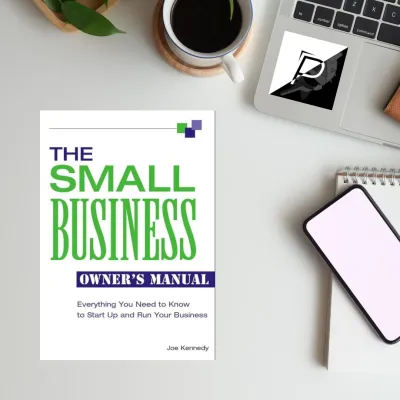

Prices are valid at publication and may change. Please refer to the product page for the latest price.
Relying on guesswork instead of structured formulas also masks the true health of your business. A structured pricing formula ensures that every single transaction contributes to your fixed overhead and your long-term growth. It forces you to account for variables that are easily overlooked, such as packaging materials, payment processing fees, and customer acquisition costs. By establishing a rigorous pricing framework early on, you transition from a survival mindset to a growth mindset, ensuring your business can sustain itself and eventually scale.
Investing time in reading a dedicated pricing formula book for business provides a reliable, tested framework that reduces the financial risk of trial-and-error pricing. In a highly competitive local market, learning from established pricing authorities allows you to skip the costly mistakes made by others. These books teach you how to communicate value to your customers so that you do not have to rely solely on low prices to attract business. Understanding the mathematics and psychology behind pricing empowers you to stand firm on your rates, protect your brand equity, and build a financially healthy enterprise from day one.
How to Choose the Right Pricing Book for Your Business Stage
Evaluating Accessibility and Practical Depth
When searching for a pricing book, it is easy to get lost in academic textbooks designed for corporate economists or MBA candidates. As a young entrepreneur running an early-stage startup, you need books that prioritize practical execution over macroeconomic theory. Look for titles that feature step-by-step worksheets, concrete algebraic formulas, and real-world case studies of small to medium enterprises. The ideal book should explain complex financial concepts in plain language, allowing you to immediately apply the chapters to your business plan. If a book is filled with abstract calculus and lacks practical templates, it may serve better as a reference manual down the line rather than an immediate guide for your launch.

Aligning Content with Your Business Model
Different business models require vastly different pricing architectures. If you are launching a physical product brand or an e-commerce shop, you need a book that heavily emphasizes cost-of-goods-sold (COGS) calculations, inventory holding costs, and volume-based discounting. Conversely, if you are starting a service-based business, a creative agency, or a freelancing practice, your primary challenge is pricing your time and expertise. In this case, look for books that focus on value-based pricing, retainer structures, and negotiation strategies. Aligning the book’s core focus with your specific business model prevents you from trying to force a physical-product pricing template onto a digital service, or vice versa.
Verifying Editions, Formats, and Regional Availability
Before purchasing any business book, always verify the publication date and the specific edition. The business landscape changes rapidly, and older editions may completely omit strategies for digital marketplaces, subscription models, or modern online payment systems. Check whether the book is available in your preferred format—whether that is a physical paperback for active highlighting, an e-book for instant searchability, or an audiobook for learning during your daily commute.
Additionally, verify the authorized distribution sources to avoid counterfeit prints that often suffer from missing pages, low-quality binding, and illegible charts. If you are ordering physical copies from overseas to the Philippines, factor in international shipping fees and customs clearance times. Opting for digital formats on verified global e-book platforms can bypass these logistical delays entirely, giving you immediate access to the material.
Essential Pricing Concepts Your Book Must Cover
Cost-Plus vs. Value-Based Pricing
A high-quality pricing book must clearly distinguish between cost-plus pricing and value-based pricing. Cost-plus pricing is the traditional method of calculating all costs associated with making a product or delivering a service, and then adding a fixed percentage markup for profit. While this method establishes a safe pricing floor, it often leaves money on the table because it ignores what the customer is actually willing to pay. Value-based pricing, on the other hand, sets prices primarily on the perceived value to the customer rather than the cost of production. Your chosen book should provide a clear roadmap on how to calculate your cost-plus floor first, and then guide you through the qualitative steps of shifting toward value-based pricing as your brand reputation grows.
Unit Economics and Margins
You cannot build a profitable business without mastering unit economics. The book you select should dedicate chapters to breaking down key metrics such as Customer Acquisition Cost (CAC), Customer Lifetime Value (LTV), gross margins, and contribution margins. It must explain how these metrics interact; for example, if your CAC is higher than your gross margin per customer, your business will lose money even as your sales volume grows. Look for clear mathematical formulas that show you how to calculate your break-even point in both units and total revenue. Understanding these calculations helps you determine exactly how many products or service hours you need to sell each month to cover your fixed overhead.
Psychological Pricing and Tiering
Pricing is as much about human psychology as it is about mathematics. A comprehensive pricing book should cover how different price structures influence consumer behavior. This includes concepts like charm pricing (e.g., pricing an item at ₱499 instead of ₱500 to make it feel significantly cheaper) and the decoy effect (introducing a third pricing tier to make the middle or premium option look more attractive). You should learn how to design tiered pricing packages that cater to different customer segments—such as basic, standard, and premium tiers—allowing you to capture maximum value from both budget-conscious buyers and high-spending clients.
Discounting and Promotion Strategies
Discounting is a powerful tool to drive short-term sales volume, but if executed poorly, it can permanently damage your brand’s perceived value and erode your profit margins. Your pricing book must provide formulas for calculating the true cost of promotions. It should teach you how to design voucher campaigns, seasonal sales, and product bundles that protect your baseline margins. Rather than offering flat discounts that train customers to only buy when there is a sale, the book should guide you on how to use value-add promotions—such as bundling complementary products or offering free shipping above a specific order threshold—to increase your average order value safely.
Highly Regarded Pricing Books for Beginners (Non-Exhaustive Examples)
Confessions of the Pricing Man by Hermann Simon
- Focus: This book focuses deeply on value-based pricing, price psychology, and understanding consumer willingness to pay. Simon, a renowned pricing consultant, shares decades of insights on how businesses can shift away from cost-centric thinking and focus instead on the value they create for their customers.
- Best For: Young entrepreneurs who need a major mindset shift. It is highly beneficial for those launching unique, differentiated products or specialized services where cost-plus pricing would severely undervalue the offering.
- Limitations: The book relies heavily on Western corporate examples and multinational case studies. Readers will need to actively translate these large-scale strategies and psychological principles into the context of local consumer behavior and smaller operational budgets.
Pricing with Confidence by Reed Holden and Mark Burton
- Focus: This book addresses the fear of charging what you are worth and provides actionable strategies to avoid the "discounting trap." It emphasizes building long-term pricing power and defending your prices against aggressive clients or competitors.
- Best For: B2B startups, service providers, freelancers, and agency founders who struggle with client negotiations and find themselves constantly lowering their rates to win deals.
- Limitations: The content is heavily geared toward professional services and business-to-business transactions. It offers fewer direct formulas or strategies for high-volume, low-margin physical retail or consumer e-commerce businesses.
The Strategy and Tactics of Pricing by Thomas Nagle et al.
- Focus: This text provides a highly structured, comprehensive framework for pricing strategy, complete with detailed formulas, analytical tools, and step-by-step implementation guides. It covers market segmentation, value creation, and competitive pricing dynamics.
- Best For: Readers who prefer a highly analytical, thorough approach. It serves as an excellent reference manual for those who want deep, structured tools to solve complex pricing challenges as their business scales.
- Limitations: The book can be dense, academic, and intimidating for absolute beginners. It is best read slowly or used as a step-by-step workbook rather than a casual, quick-read guide.
Buying Guidance for Filipino Readers
When looking to purchase these or other business books, it is crucial to verify the specific edition, language, medium, regional restrictions, and authorized source before finalizing your order. Never infer the exact contents of an edition solely from the cover image or title listing, as publishers often release regional variations with different chapters or case studies. Because shipping physical books to the Philippines can incur high import fees and long delivery times, compare the total cost of a physical copy against the convenience of an e-book or audiobook format. E-books often provide instant access and allow you to use search functions to quickly find specific formulas or worksheets when you are in the middle of drafting your business plan. If you choose physical copies, purchase only from authorized book distributors or verified online storefronts to ensure you receive complete, high-quality prints.
Adapting Global Pricing Formulas to the Local Market
Adjusting for Local Purchasing Power
The case studies featured in global pricing books almost always reflect Western markets with high average household incomes. When applying value-based pricing frameworks in the Philippines, you must adjust these concepts to match local purchasing power across different income segments. A premium product that commands a high price tag in a Western market may face extreme price sensitivity locally. To adapt, consider implementing a tiered product line or smaller packaging sizes (commonly referred to as the “tingi” culture) to make your offerings accessible to a broader demographic without lowering your per-unit profit margin. This allows you to maintain a premium brand image while catering to the economic realities of the local consumer base.
Factoring in Local Operational Costs
Global business books rarely account for the specific operational overhead associated with doing business in an archipelagic nation. When calculating your baseline cost-plus floor, you must build local variables directly into your formulas. This includes inter-island logistics costs, which can vary significantly depending on whether you are shipping within Luzon or sending goods to Visayas and Mindanao. Additionally, you must factor in the transaction fees charged by local payment gateways (such as GCash, Maya, and credit card processors) and the commission rates of local e-commerce marketplaces, which can range from 2% to over 15% per transaction. Failing to include these fees in your initial cost calculations will directly shrink your gross margins.
Cultural Nuances in Discounting
In the local e-commerce landscape, consumers have come to expect frequent promotional events, particularly the monthly “double-day” sales (such as 9.9, 10.10, and 11.11). If you apply standard discounting formulas from global textbooks without modification, participating in these monthly sales can quickly wipe out your profits. To adapt, design your baseline pricing structure with these promotions already factored in. Calculate a “normal” price that allows you to offer the expected discounts or free shipping vouchers during promotional campaigns while still maintaining your target gross margin. This ensures you can satisfy the local consumer appetite for deals without putting your business’s financial viability at risk.
Frequently Asked Questions (FAQ)
Are free online resources enough, or do I need to buy a pricing book?
While free online articles, blog posts, and video tutorials are excellent for quick tips and basic definitions, they often lack the depth and cohesive structure required to build a sustainable pricing architecture. Fragmented online resources rarely connect the dots between your operational costs, customer psychology, and long-term financial planning. A dedicated pricing book provides a comprehensive, step-by-step framework that guides you through the entire process from start to finish. Investing in a well-structured book ensures you do not miss critical steps, helping you build a professional pricing strategy that protects your margins as your business grows.
How do I calculate the landed cost for imported products in the Philippines?
To calculate the landed cost of imported products, you must sum the supplier’s product cost, international freight charges, cargo insurance, customs duties, local brokerage fees, and domestic transport costs to your warehouse. The basic formula is: Landed Cost = Product Cost + Freight + Insurance + Customs Duties + Port Handling Fees + Local Delivery. Because import regulations, tariff classifications, and taxes can be complex and subject to change, always consult the official guidelines of the Bureau of Customs or work with a licensed customs broker to get precise, up-to-date rates for your specific product category rather than relying solely on general business formulas.
Should I use the same pricing formula for my physical store and my online shop?
While maintaining consistent retail prices across both physical and digital channels is important for brand trust and customer consistency, the underlying formulas used to calculate your margins must account for their distinct cost structures. A physical retail space involves overhead costs such as rent, utilities, and in-store staff salaries. An online shop, on the other hand, incurs platform commissions, digital marketing costs, packaging materials, and payment gateway fees. You must analyze the unit economics of each channel separately to ensure that both the physical and online operations are individually profitable, even if the final price tag shown to the customer remains the same.

Community discussion
Share your experience or ask a question. Comments are reviewed before publication.