
Finding the perfect octave pedal can completely transform your sonic signature, whether you are looking to thicken a single-note guitar riff, emulate a massive synthesizer, or deliver room-shaking sub-bass. In the active live music scene of the Philippines—where musicians frequently transition from intimate acoustic gigs in Makati to high-energy rock shows in Quezon City—having a versatile, reliable pedalboard is essential. The right choice depends heavily on your instrument, your playing style, and whether you need vintage analog grit or pristine digital tracking.
To make an informed decision, you must evaluate how different tracking engines, circuitry designs, and frequency voicings interact with your guitar or bass. Understanding these technical elements will help you select a pedal that integrates seamlessly into your signal chain and delivers the exact tone you hear in your head.
How to Choose the Right Octave Pedal for Your Playing Style
Monophonic vs. Polyphonic Tracking
The fundamental difference between octave pedals lies in how they process input signals. Monophonic octave pedals are designed to track only one note at a time. If you attempt to play a chord through a monophonic pedal, the analog circuit or simple digital tracking engine will become confused, resulting in a chaotic, sputtering glitch effect. While this classic glitch is highly sought after for vintage rock leads and old-school synth-bass lines, it is limiting for modern playing. Polyphonic octave pedals utilize advanced digital signal processing (DSP) to analyze and pitch-shift multiple frequencies simultaneously, allowing you to play full chords, complex jazz voicings, or ambient swells with perfect clarity.
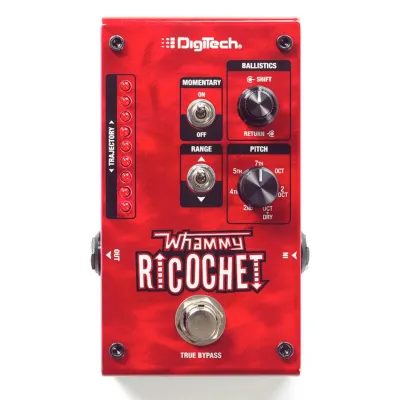
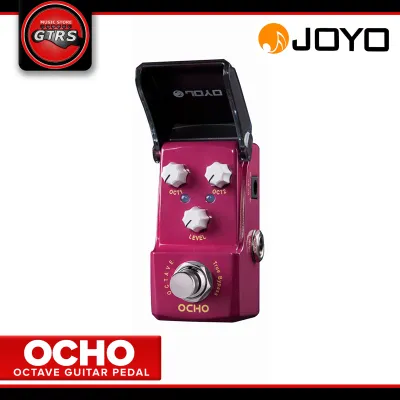
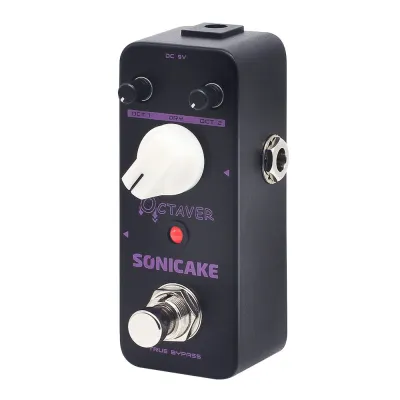
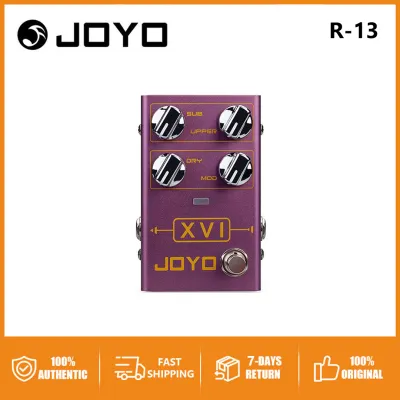
Products mentioned in this guide
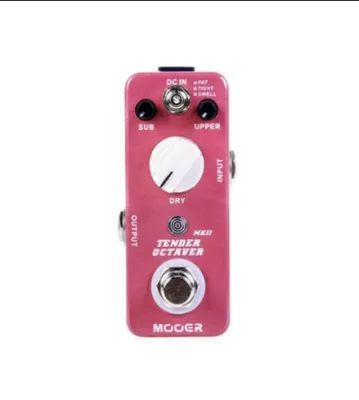
![[lashu42] TALENTOCTAVE Electric Guitar Single Effect Pedal 2 Low 1 High Octave Guitar Effect Pedal Guitar Accessories](https://img.lazcdn.com/g/p/210f639a7c06f7b773505e403f4ea277.jpg_400x400q80.jpg_.webp)
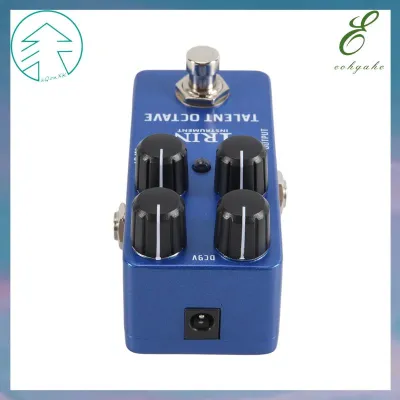
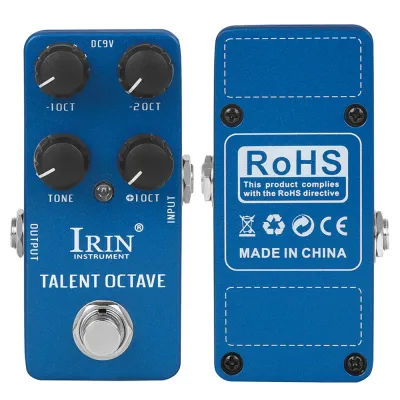
Prices are valid at publication and may change. Please refer to the product page for the latest price.
Tracking Speed and Latency
Tracking speed refers to the time it takes for the pedal to detect your instrument’s pitch and output the shifted octave. High latency creates a distracting delay between your physical pick attack and the audible effect, which can ruin your timing during fast-tempo performances. Fast tracking is critical for aggressive riffs, funk basslines, or rapid-fire lead runs. Digital pedals generally offer the fastest and most consistent tracking across the entire fretboard, whereas analog pedals require a clean, strong input signal and precise playing technique to track accurately without lagging.
Frequency Range and Instrument Voicing
Guitar and bass octave pedals are voiced differently to accommodate the unique frequency spectrum of each instrument. Bass octave pedals are specifically engineered to handle low-frequency inputs—even tracking down to the low B string on a 5-string bass—and are optimized to output a clean, focused sub-octave without turning your low-end mix into a muddy, undefined rumble. Guitar octave pedals focus more on midrange clarity, upper-octave shimmer (+1 octave), and maintaining chord definition, ensuring your tone cuts through a dense band mix without competing with the bassist.
Analog vs. Digital Circuitry
Analog octave pedals use frequency-divider circuits to generate an octave below your original signal, resulting in a warm, fat, and slightly gritty tone that blends organically with overdrive and fuzz. However, they are strictly monophonic and can struggle to track notes on the extreme high or low ends of the neck. Digital octave pedals use DSP to pitch-shift the signal, offering pristine high-fidelity clarity, perfect polyphonic tracking, and multiple pitch options (such as two octaves down or one octave up). While highly precise, some players find digital tracking to sound slightly clinical or synthetic compared to the organic warmth of analog circuits.
Best Octave Pedals for Guitarists
Best Overall for Guitar
The Boss OC-5 Octave is the most versatile and reliable choice for guitarists, seamlessly blending vintage heritage with modern digital precision. It features a dedicated switch to toggle between Vintage and Polyphonic modes. Vintage mode reproduces the legendary, warm monophonic tracking of the classic OC-2, while Polyphonic mode uses an advanced tracking engine to pitch-shift full chords cleanly across the entire neck.

A standout feature in Polyphonic mode is the Range knob, which allows you to restrict the octave effect to only the lowest notes of your chords, keeping your high-end melodies clean and articulate. The control layout is highly intuitive, featuring independent level knobs for your direct signal, one octave down, two octaves down, and one octave up.
- Power Requirements: Requires a standard 9V DC center-negative power supply.
- Current Draw: Approximately 55mA.
- Key Advantage: Extremely versatile with both vintage monophonic growl and modern polyphonic tracking.
- Limitation: As a digital pedal, daisy-chaining it with analog dirt pedals on a cheap power supply can introduce high-frequency clock noise.
Best Budget and Compact Option
For players looking to save precious pedalboard space and budget, the TC Electronic Sub ‘N’ Up Mini Octaver offers exceptional value. Housed in an ultra-compact mini chassis, this digital pedal utilizes a highly accurate polyphonic pitch-shifting engine that delivers clean, glitch-free octaves. Despite its small size, it features dedicated controls for dry signal level, octave up, and octave down, allowing you to quickly dial in a balanced tone.
This compact unit is fully compatible with TC Electronic’s TonePrint technology. This allows you to beam custom artist presets or custom-designed EQ profiles directly into the pedal via a smartphone app, giving you access to deep modulation and sub-2 octave effects that are not physically adjustable on the face of the pedal.
- Power Requirements: Requires a 9V DC center-negative power supply.
- Current Draw: Approximately 100mA.
- Key Advantage: Highly affordable, compact footprint, and deep digital customization via TonePrint.
- Limitation: Lacks battery power capability and physical knobs for secondary parameters, requiring the software editor for deep adjustments.
Best for Polyphonic and Complex Chords
If your playing style relies heavily on complex chord voicings, ambient soundscapes, or simulating acoustic 12-string guitars, the Electro-Harmonix Nano POG is the industry standard. Known for its lightning-fast tracking and pristine digital clarity, the Nano POG tracks every note of a chord instantly without any audible latency or warbling.
The control interface is remarkably simple, consisting of three knobs: Sub Octave, Octave Up, and Dry. This simplicity makes it incredibly easy to dial in organ-like textures, lush ambient swells, or a bright, shimmering top-end that cuts through any mix. The pedal also features a dedicated dry output jack, allowing you to split your signal and send the dry guitar tone to one amplifier while routing the octave-shifted wet signal to another for a massive stereo setup.
- Power Requirements: Requires a 9V DC center-negative power supply (power adapter often included).
- Current Draw: Approximately 25mA.
- Key Advantage: Flawless polyphonic tracking with zero latency and a dedicated dry output for stereo routing.
- Limitation: The digital processing is highly clean and precise; it does not produce the warm, gritty, or slightly imperfect analog sag that some blues and classic rock players prefer for single-note leads.
Best Octave Pedals for Bassists
Best Overall for Bass
The MXR M288 Bass Octave Deluxe is widely regarded as the ultimate workhorse for gigging bassists. This analog pedal is celebrated for its warm, organic tone and exceptional tracking stability down to the lowest frets of a standard bass. It features two distinct analog octave voices: “Growl,” which provides a mid-range heavy, throatier sub-octave tone, and “Girth,” which delivers a deep, smooth, and room-shaking low-end.
You can blend these two voices independently with your dry signal using the dedicated volume knobs, offering an incredible level of tonal customization. The pedal also includes a “Mid+” switch that boosts your midrange frequencies, helping your bass cut through dense live mixes in noisy venues. Because it is an analog circuit, it features true bypass switching to preserve your dry signal chain when the pedal is disengaged.
- Power Requirements: Requires a 9V DC center-negative power supply.
- Current Draw: Approximately 14mA.
- Key Advantage: Dual-voice analog design (Growl and Girth) with an active midrange boost switch.
- Limitation: As an analog circuit, it is strictly monophonic; bassists must maintain clean fingerstyle technique and avoid playing chords when the pedal is active to prevent tracking glitches.
Best for Synth-Like and Electronic Tones
For bassists performing modern electronic, indie, or synth-pop genres, the Boss SY-1 Synthesizer offers an expansive palette of synth-like octave tones and filters. While technically a synthesizer pedal, its tracking engine excels at delivering fat sub-octaves, multi-voice synth leads, and sequenced bass patterns that instantly transform your instrument into an electronic keyboard.
The pedal features 11 different synth types with 11 variations each, providing a total of 121 unique sounds, including classic analog-style bass synths and modulated octave sweeps. The dual concentric knobs allow you to independently adjust the volume of your direct bass signal and the synth effect, ensuring you never lose your fundamental low-end punch in a live mix. It also includes a send/return loop, enabling you to place your favorite drive or modulation pedals in parallel with the synth engine.
- Power Requirements: Requires a 9V DC center-negative power supply or 9V battery.
- Current Draw: Approximately 85mA.
- Key Advantage: Massive selection of 121 synth and multi-voice octave sounds with parallel effects loop routing.
- Limitation: High learning curve; with so many parameters and sound combinations, dialing in the perfect tone during a live gig requires patience and careful experimentation.
Best Analog-Style Bass Octave
The Aguilar Octamizer is designed specifically for bassists who crave vintage analog warmth, natural compression, and a gritty, organic sub-octave tone. The pedal features an independent clean channel and an octave channel, each equipped with its own dedicated tone controls.
The clean tone control utilizes a Full Spectrum Boost/Cut EQ, allowing you to shape your dry signal’s midrange and treble, while the octave filter uses a multi-pole low-pass filter to shape the texture of the sub-octave from smooth and deep to aggressive and edgy. This dual-filter design provides an organic, synth-like growl that blends beautifully with vintage tube amplifiers.
- Power Requirements: Requires a 9V DC center-negative power supply.
- Current Draw: Approximately 6mA.
- Key Advantage: Independent EQ shaping for both the clean and octave channels, delivering exceptional vintage warmth.
- Limitation: Demands highly precise, single-note playing technique; any fret buzz or accidental adjacent string vibrations will cause the tracking to stutter.
Quick Comparison of Recommended Octave Pedals
| Pedal Name | Target Instrument | Tracking Type | Circuit Style | Best Use Case |
|---|---|---|---|---|
| Boss OC-5 Octave | Guitar & Bass | Monophonic & Polyphonic | Digital | Versatile performance, vintage & modern tones |
| TC Electronic Sub 'N' Up Mini | Guitar | Polyphonic | Digital | Budget-friendly, compact pedalboards, custom presets |
| Electro-Harmonix Nano POG | Guitar | Polyphonic | Digital | Complex chords, ambient swells, 12-string emulation |
| MXR M288 Bass Octave Deluxe | Bass | Monophonic | Analog | Warm, organic low-end blending, live gigging |
| Boss SY-1 Synthesizer | Bass & Guitar | Polyphonic | Digital | Synth-like tones, electronic and modern genres |
| Aguilar Octamizer | Bass | Monophonic | Analog | Vintage warmth, independent clean & octave EQ shaping |
Buying Guide and Setup Checks for Local Players
When purchasing an octave pedal in the Philippines, it is highly recommended to buy from authorized local music stores, official brand distribution channels, or verified flagship stores on reputable online marketplaces. This ensures you receive an authentic product backed by a valid manufacturer warranty, protecting your investment from counterfeit units.
Before integrating a new octave pedal into your setup, carefully verify its power supply requirements. Most digital octave pedals are highly sensitive to voltage fluctuations and require a regulated 9V DC power supply with center-negative polarity. Ensure your pedalboard’s power supply can deliver the necessary current draw (measured in milliamperes, or mA); digital pedals like the Boss OC-5 or EHX Nano POG draw significantly more power than analog pedals and can introduce high-frequency noise or fail to boot if underpowered.
Finally, check the physical dimensions and jack placements of the pedal. Top-mounted jacks save valuable horizontal space on crowded pedalboards, which is a major advantage for local musicians who commute to gigs with compact, lightweight travel boards.
Frequently Asked Questions (FAQ)
Can I use a guitar octave pedal for bass, and vice versa?
Yes, you can physically connect either pedal to either instrument, but you will encounter tonal compromises. Guitar octave pedals are voiced for higher frequencies and may struggle to track the extremely low notes of a bass cleanly, resulting in a thin, warbly sound. Conversely, using a bass octave pedal on a guitar can result in a muddy mid-range and a lack of upper-octave sparkle.
Do I need a polyphonic octave pedal?
If your playing style involves strumming full chords, using complex jazz voicings, or creating lush ambient swells, a polyphonic octave pedal is essential for clean tracking. However, if you primarily play fast, single-note rock riffs, blues leads, or funk basslines, a monophonic pedal is often preferred because it tracks with a more organic, vintage feel and offers a classic synth-like grit.
Community discussion
Share your experience or ask a question. Comments are reviewed before publication.