
Selecting your first acoustic guitar amplifier is a pivotal step in transitioning from quiet bedroom practice to sharing your music with others. The best Joyo acoustic amplifier model for a beginner guitarist depends heavily on your primary practice environment, your budget, and whether you plan to perform or sing while playing. For most beginners, a compact model that balances clean tone reproduction with modern conveniences like Bluetooth connectivity and dual channels offers the most practical path to learning.
Joyo has established a strong reputation for producing accessible, budget-friendly musical equipment that does not sacrifice essential functionality. By focusing on straightforward user interfaces and robust physical designs, these amplifiers allow developing guitarists to explore their sound without the complexity or high cost of boutique studio gear. Understanding how to match an amplifier’s technical specifications to your personal goals will ensure you select a model that supports your musical journey for years to come.
Why Joyo Acoustic Amplifiers Are Popular for Beginners
For aspiring guitarists in the Philippines, finding high-quality musical gear that fits a reasonable budget is often the first major challenge. Acoustic guitars have unique amplification requirements compared to electric guitars; they require clean, transparent amplification that preserves the natural, woody resonance of the instrument’s soundboard. Standard electric guitar amplifiers are voiced to color the sound and often make an acoustic guitar sound harsh, thin, or muddy. Joyo acoustic amplifiers are specifically engineered to provide full-range, flat-response amplification, reproducing the true voice of your acoustic-electric instrument at an accessible price point.
Products mentioned in this guide
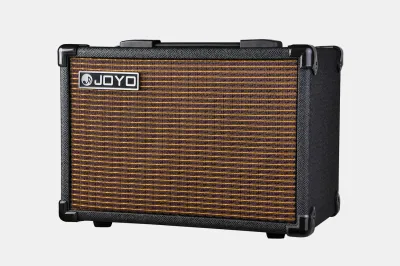
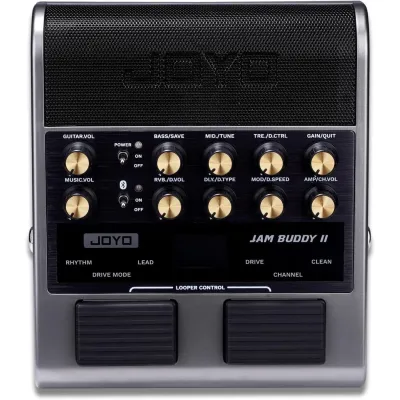
Prices are valid at publication and may change. Please refer to the product page for the latest price.
Entry-level musicians often face a steep learning curve when dealing with complex audio equipment. Joyo addresses this by designing amplifiers with highly intuitive control layouts that prioritize immediate usability over endless submenus. This straightforward approach allows you to spend more time practicing your chords and fingerpicking patterns and less time troubleshooting your tone settings.
Furthermore, choosing the right amplifier is not just about finding the loudest option available. A successful purchase requires matching the physical weight, power output, and input configurations of the amplifier to your daily practice habits and immediate environment. Joyo’s diverse lineup offers tailored solutions whether you are practicing quietly in a small bedroom, jamming with friends in a living room, or preparing for your very first outdoor performance.
Essential Features to Look for in a Beginner Joyo Amp
Navigating spec sheets can be overwhelming if you do not know which technical terms directly impact your daily playing experience. Focusing on a few core specifications will help you cut through the marketing jargon and identify the features that genuinely matter for acoustic guitar practice.

Wattage, Speaker Size, and Portability
Wattage represents the electrical power the amplifier sends to the speaker, but it is not a direct indicator of absolute volume. For acoustic instruments, higher wattage provides “headroom,” which is the amplifier’s ability to reproduce clean, undistorted sound at higher volumes. Because acoustic guitars sound best when amplified cleanly, having sufficient headroom is important, though beginners rarely need massive power ratings to get started.
Speaker size plays a critical role in shaping the overall character of your tone. A smaller speaker, such as a 5-inch or 6.5-inch driver, is highly portable and excellent for reproducing crisp high frequencies, but it may struggle to deliver the deep, warm bass notes of a dreadnought guitar body. Conversely, an 8-inch or larger speaker moves more air, providing a much fuller and more balanced low-end response that makes your guitar sound rich and natural.
Portability is a key consideration if you plan to carry your amplifier to music lessons, school, or local jam sessions. Before making a decision, check the product specifications for the exact weight and dimensions of the unit. If you rely on public transportation or walk long distances, prioritizing a lightweight model under 5 kilograms will make transport significantly easier and prevent physical strain.
Independent Channels and EQ Controls
Many beginner acoustic guitarists also enjoy singing, or plan to collaborate with vocalists in the future. A dual-channel amplifier features two completely independent inputs, allowing you to plug your acoustic-electric guitar into Channel 1 and a dynamic microphone into Channel 2. This setup lets you amplify both your instrument and your voice simultaneously through a single, highly portable device.
Equalization (EQ) controls are essential for tailoring your sound to different rooms and correcting the natural limitations of acoustic pickups. Under-saddle piezo pickups, which are common on entry-level acoustic-electric guitars, can sometimes produce a harsh, overly bright, or “quacky” sound. A standard three-band EQ consisting of Bass, Middle, and Treble knobs allows you to smooth out these frequencies. For instance, gently rolling back the Middle control can reduce a boxy tone, while boosting the Bass adds warmth to a thin-sounding instrument.
When reviewing specifications, verify that the amplifier features a dedicated high-impedance (Hi-Z) instrument input. Passive acoustic pickups require a high-impedance connection to prevent signal loss and preserve high-frequency clarity. Plugging an acoustic guitar into a standard low-impedance line input can result in a dull, muddy sound that lacks dynamic range.
Built-in Effects and Connectivity Options
Onboard digital effects can significantly enhance your acoustic tone without requiring you to purchase expensive external effect pedals. Reverb is the most crucial effect for acoustic guitarists, as it simulates the natural acoustic reflections of a larger room, adding depth, space, and warmth to a dry pickup signal. Chorus is another popular effect that subtly duplicates and detunes your signal, creating a lush, shimmering sound that is highly effective for fingerstyle arrangements.
Modern connectivity options are incredibly valuable for contemporary learning methods. Amplifiers equipped with auxiliary inputs (Aux In) or wireless Bluetooth connectivity allow you to stream backing tracks, metronome beats, or instructional video audio directly from your smartphone or tablet through the amplifier speaker. This allows you to play along with your favorite songs and lessons in real time, making practice sessions much more engaging.
Silent practice capabilities are essential for maintaining good relationships with family members and neighbors. Ensure the amplifier features a dedicated headphone output jack. When headphones are plugged in, the amplifier’s main speaker should mute automatically, allowing you to practice late at night without causing a disturbance. Additionally, check if the headphone jack is a standard 3.5mm size or a larger 6.35mm size so you can obtain the correct cables or adapters beforehand.
Matching Amp Specifications to Your Practice Environment
Your physical surroundings dictate how much power, projection, and portability you actually require. Choosing an amplifier optimized for your specific space prevents you from overpaying for power you cannot use, or buying an underpowered unit that cannot be heard.
Bedroom Practice and Quiet Learning
For personal practice in a small bedroom or study, high volume is not a priority. In fact, large, high-wattage amplifiers often sound dull and flat at very low volumes because their speakers require more power to vibrate optimally. A compact amplifier rated between 10W and 20W is ideal for these environments, as it is designed to deliver a lively, balanced, and full-range tone at conversational volume levels.
In tight living spaces, physical footprint is just as important as sound output. A compact cube-style amplifier can sit easily on a desk, shelf, or bedside table without cluttering your room. Look for models that prioritize lightweight construction and simple power requirements, making them easy to set up and put away when not in use.
A reliable headphone output is a non-negotiable feature for home practice. Some entry-level amplifiers also include basic cabinet emulation on the headphone output, which simulates the natural acoustic response of a physical speaker cabinet through your headphones, preventing the sound from feeling harsh, dry, or fatiguing to your ears during long practice sessions.
Living Room Jamming and Small Gatherings
If you plan to play alongside other musicians, such as another acoustic guitarist, a keyboardist, or a hand-drummer playing a cajon, a small 10W practice amp will quickly be overwhelmed. To maintain clean projection and ensure your guitar notes do not get lost in the mix, you will need a moderately powered amplifier rated between 30W and 40W, paired with an 8-inch speaker.
At small family gatherings or casual living room performances, a dual-channel setup becomes highly advantageous. Having separate volume and EQ controls for both your guitar and a vocal microphone allows you to balance your performance perfectly, ensuring your vocals remain clear and articulate over the acoustic strumming of your guitar.
Sound dispersion is another critical factor when playing for a small audience. If an amplifier sits flat on the floor, it projects sound directly at your ankles and the furniture, muffling the high frequencies. Amplifiers designed with a cabinet tilt-back feature or a built-in speaker stand mount project the sound upward toward the ears of both the player and the audience, resulting in much better clarity throughout the room without needing to turn the volume up to uncomfortable levels.
Outdoor Busking and Open-Mic Nights
Performing outdoors or in busy public spaces presents a unique set of acoustic challenges. Without walls to reflect and contain the sound, acoustic energy disperses rapidly in all directions. To cut through ambient street noise, wind, and crowd chatter, you will require a robust amplifier rated at 50W to 60W or higher, featuring a larger speaker system capable of projecting sound over longer distances.
Access to standard AC wall outlets is rarely guaranteed when busking on the street or performing in temporary outdoor setups. Therefore, you must prioritize amplifiers that offer reliable battery power options. Verify the manufacturer’s specifications regarding battery compatibility; some models utilize standard AA batteries, while others feature built-in rechargeable lithium-ion battery packs. Check the rated battery runtime at performance volumes to ensure the amplifier can last through your entire set list.
Outdoor performance gear must be built to withstand the physical demands of travel and exposure to the elements. Look for cabinets constructed with heavy-duty wood or impact-resistant plastics, reinforced metal or plastic corner protectors, and a durable vinyl wrapping. A solid metal speaker grille is highly recommended over a cloth grille, as it provides superior protection against accidental punctures during transport. Finally, ensure the unit has a comfortable, heavy-duty carry handle or a secure shoulder strap to make walking between performance locations safe and easy.
Pre-Purchase Checklist for Joyo Acoustic Amplifiers
Before finalizing your purchase, taking the time to verify a few critical details will protect your investment and ensure your new amplifier performs safely and reliably in your home.
- Verify the Voltage and Power Specifications: The standard electrical grid in the Philippines operates at 220V AC at 60Hz. Many musical instruments imported from other regions are designed strictly for 110V systems. Connecting a 110V amplifier directly to a 220V outlet will cause catastrophic damage to the internal power transformer and electronics. Always inspect the power label on the back of the amplifier or the external power adapter brick to ensure it explicitly states "Input: 100-240V" (universal voltage) or "220V". If the unit is strictly 110V, you will need to purchase a compatible step-down transformer.
- Inspect the Physical Build Quality: If you are purchasing your amplifier from a physical music retail store, conduct a thorough visual inspection. Check that all control knobs turn smoothly without feeling loose or gritty, ensure the input jacks hold your cables securely without wobbling, and inspect the cabinet corners and vinyl wrapping for any tears or separation. Shake the unit gently to ensure there are no loose internal components rattling.
- Test All Inputs and Wireless Connectivity: Bring your own acoustic-electric guitar and a high-quality instrument cable to the store to test the actual unit you plan to buy. Plug into the instrument channel and turn the volume up to check the noise floor; a good amplifier should not produce excessive hiss or hum when you are not playing. Test the EQ knobs to ensure they noticeably alter the tone. If the model features Bluetooth, pair your smartphone and play a track to confirm the wireless connection is stable and does not drop out when you step a few meters away.
- Buy from Authorized Dealers and Check the Warranty: While it can be tempting to purchase from unauthorized sellers on online marketplaces to save money, doing so carries significant risks. Gray market items often lack local warranty coverage, meaning you will have to pay for expensive shipping or repair costs if a component fails. Prioritize established local music retailers or official online brand stores that provide a clear, local warranty and reliable after-sales support.
Frequently Asked Questions (FAQ)
Can I use an electric guitar with a Joyo acoustic amplifier?
You can safely plug an electric guitar into an acoustic amplifier without damaging the equipment, but the sound quality will be vastly different from a dedicated electric guitar amplifier. Acoustic amplifiers are designed as full-range, flat-response systems meant to reproduce clean, uncolored tones. Electric guitars rely heavily on the mid-range coloration and gentle high-frequency roll-off provided by electric guitar speakers. Consequently, an electric guitar played through an acoustic amp may sound overly bright, sterile, or harsh. If you must use this setup, you can warm up the tone by rolling back the Treble control and slightly boosting the Middle and Bass controls on the amplifier’s EQ.
Do I need a special cable for my acoustic-electric guitar?
To connect your acoustic-electric guitar to your amplifier, you need a standard 1/4-inch TS (Tip-Sleeve) instrument cable. This is a shielded cable designed specifically to carry low-level, high-impedance audio signals from your guitar’s pickup system to the amplifier’s preamp without picking up excessive electromagnetic interference. You should never use an unshielded speaker cable for this connection. Although speaker cables look identical from the outside and use the same 1/4-inch plugs, their lack of internal shielding will introduce massive amounts of hum, buzz, and noise into your signal chain.
How should I store my acoustic amplifier in a humid climate?
The tropical climate of the Philippines, characterized by high relative humidity, poses specific risks to electronic musical equipment. Excess moisture can oxidize metal input jacks, cause control knobs to become scratchy and noisy when turned, and soften paper speaker cones, which degrades their structural integrity over time. To protect your amplifier, store it in a dry, well-ventilated room away from open windows, direct sunlight, and concrete walls that trap moisture. Avoid wrapping the amplifier in airtight plastic bags, as these trap humidity inside. Instead, cover the unit with a breathable fabric dust cover, and place a few reusable silica gel packets inside the cabinet or near the amplifier to help absorb local moisture.
Community discussion
Share your experience or ask a question. Comments are reviewed before publication.