
Setting up a high-quality 88-key digital piano with weighted keys is a significant investment for any musician in the Philippines. Whether you are practicing classical repertoire at home, recording in a studio, or performing live gigs, the stability of your instrument is paramount. To protect your investment and ensure an optimal playing experience, finding a reliable keyboard stand heavy duty model is essential. A flimsy stand not only introduces distracting wobble during energetic performances but also poses a severe structural risk, potentially leading to catastrophic falls. This guide explores the most robust stand designs available, key specifications to verify before purchase, and how to safely source and maintain your setup under local environmental conditions.
Why 88-Key Digital Pianos Need Heavy-Duty Support
An 88-key digital piano with weighted hammer-action keys behaves very differently from a lightweight synthesizer or portable keyboard. Weighted actions simulate the mechanical hammers of an acoustic piano, which means the instrument itself must be structurally dense. Most high-quality 88-key digital pianos weigh anywhere from 12 kilograms to upwards of 28 kilograms. When you place an instrument of this weight on a standard, thin-gauge keyboard stand, you run a high risk of structural fatigue, joint failure, or immediate tipping.
The physical act of playing a weighted keyboard also introduces significant dynamic force. When a pianist plays fortissimo passages, rapid octaves, or heavy chords, the downward and lateral energy is transferred directly from the fingers through the keybed and into the stand. A lightweight stand will sway laterally or bounce vertically under this kinetic load. This wobble is not just a minor annoyance; it actively disrupts your playing technique, alters your control over dynamics, and can cause physical fatigue as your body tries to compensate for a moving target.
Products mentioned in this guide
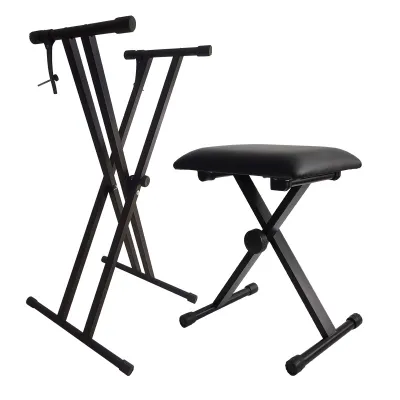
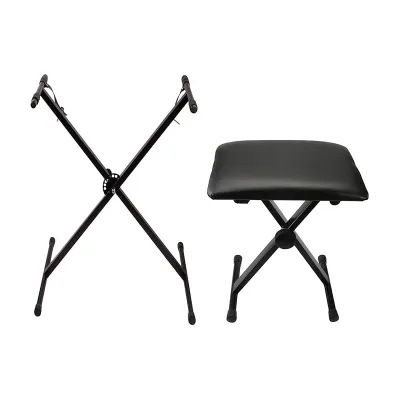
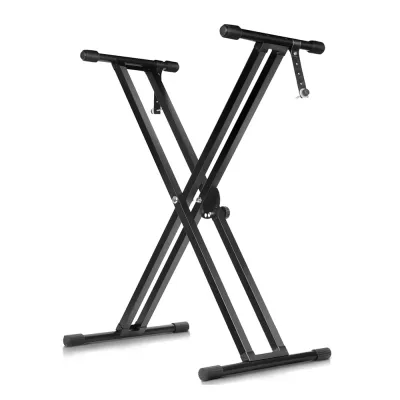
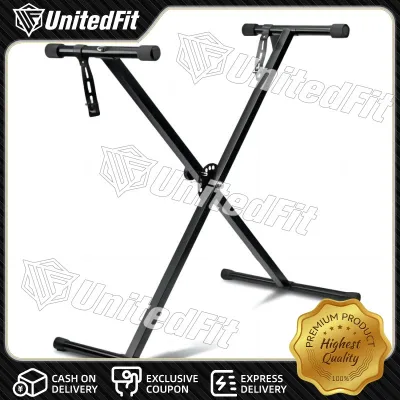
Prices are valid at publication and may change. Please refer to the product page for the latest price.
Furthermore, the safety risks of using an inadequate support system are substantial. A top-heavy setup is highly susceptible to tipping over if bumped by family members, pets, or stage crew. In active households or busy performance venues, a sudden collision can send a costly digital piano crashing to the floor, resulting in cracked chassis, broken key mechanisms, and severed internal connections. Utilizing a wide, stable base with secure locking mechanisms and proper weight distribution is the only way to guarantee the safety of both the player and the instrument.
Best Heavy-Duty Stand Types for Digital Pianos
When shopping for a support system, the term “heavy-duty” should not be treated as a mere marketing label. True heavy-duty stands are defined by their structural engineering, the gauge of the steel tubing used, the quality of the welded joints, and the surface area of their contact points. To support a heavy digital piano safely, you must choose a design specifically engineered to handle high vertical loads and resist lateral twisting forces.

There are three primary stand architectures that meet these rigorous standards. Each design offers a unique balance of stability, portability, and legroom, making them suitable for different playing environments and user preferences.
Z-Style Stands: Maximum Stability and Legroom
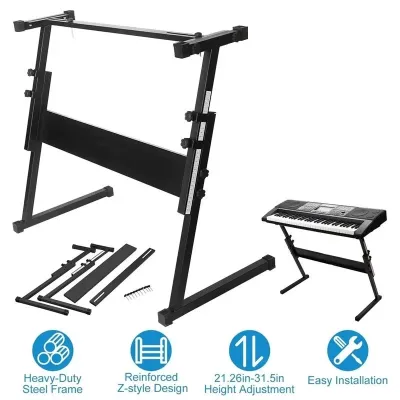
Z-style stands are widely considered the gold standard for supporting heavy digital pianos, especially for seated players. The unique “Z” shape places the main vertical support beams at an angle, directing the downward weight of the keyboard straight into two wide, flat floor bars. This geometric configuration is exceptionally rigid and provides unmatched resistance to lateral (side-to-side) swaying, even during the most intense performances.
One of the greatest practical benefits of a Z-style stand is the completely open space beneath the keyboard. Because there are no crossbraces directly under the center of the instrument, seated players enjoy maximum legroom. This open design allows you to position sustain pedals, triple-pedal units, or expression pedals exactly where you need them without constantly knocking your shins or knees against metal bars.
However, Z-style stands do come with specific trade-offs regarding portability and weight. Because they are constructed from thick, heavy-duty steel tubing, the stand itself is quite heavy. While most models can be adjusted for width and height, they do not fold flat in a single motion. Transporting a Z-stand usually requires loosening several hand knobs to break the frame down into three separate pieces, making them more suited for permanent home studios, classrooms, or semi-permanent stage setups rather than quick-turnaround gigs.
Double-Braced X-Style Stands: Portable but Demanding
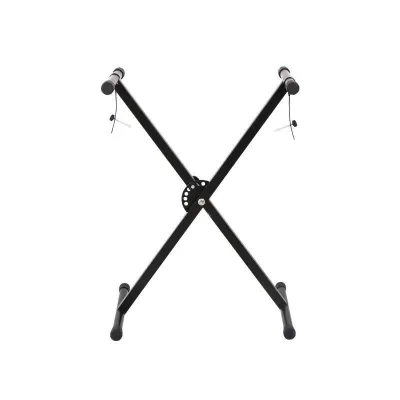
If you need to transport your digital piano frequently for gigs, rehearsals, or church services, portability is a major factor. While standard single-braced X-stands are notoriously unstable and should never be used for heavy keyboards, a high-quality double-braced X-style stand offers a viable, highly portable alternative. These stands feature double-crossing steel tubes on each side, forming a much stronger truss-like structure that resists bending and twisting.
The primary advantage of a double-braced X-stand is its convenience. It can be folded completely flat in seconds, allowing you to slide it into a car trunk, carry it with one hand, or store it behind a door when not in use. This makes it the go-to choice for gigging musicians in busy urban areas like Metro Manila, where transport space and setup times are often highly constrained.
Despite their convenience, double-braced X-stands present notable drawbacks for seated players. The crossing “X” bars directly restrict your legroom, forcing you to sit further back or angle your knees awkwardly around the frame. This restriction also makes it difficult to place sustain pedals in a natural ergonomic position. Additionally, because the stability of an X-stand decreases the higher you raise it, you must carefully verify the manufacturer’s weight rating at your preferred playing height, as some models lose significant load capacity when fully extended.
Table and Column Stands: Ideal for Permanent Setups
Table-style stands, often referred to as platform stands, feature four independent legs that fold outward, mimicking a heavy-duty utility table. This design provides exceptional vertical load capacity, often exceeding 100 kilograms, because the weight of the digital piano is distributed evenly across four distinct corner pillars. The absence of central obstructions provides completely open floor space for your feet and pedal boards.
Table stands are highly favored for permanent home installations, living rooms, and dedicated recording studios. Their clean, industrial aesthetic integrates seamlessly with modern home decor, and many models allow for independent height adjustment on each leg to compensate for uneven flooring. The main disadvantage is their large physical footprint; they do not fold down as compactly as X-stands, and their wide base requires a dedicated area of floor space.
Column stands, on the other hand, feature a single vertical column with tiers that extend outward to hold one or more keyboards. While they look incredibly sleek and modern on stage, they rely on a heavy tripod base or flat plate for stability. For a heavy 88-key digital piano, a column stand must be of exceptional professional grade to prevent top-heavy tipping, and they generally offer less adjustment flexibility than table or Z-style designs.
Key Specifications to Check Before You Buy
To ensure the stand you purchase online or in-store is truly capable of supporting your digital piano, you must look past the product titles and evaluate the physical specifications. Checking these details beforehand will save you from the hassle of returning an inadequate product or, worse, dealing with a collapsed setup.
- Weight Capacity: Always look for the manufacturer's official maximum weight rating. A safe rule of thumb is to choose a stand with a weight capacity that exceeds your digital piano's actual weight by at least 20% to 30%. This safety buffer accounts for the dynamic downward force exerted when you play keys with high velocity.
- Width and Depth Adjustability: Measure the physical dimensions of your digital piano before shopping. Ensure the stand's top support arms are long enough to cradle the depth of your keyboard's base. If the support arms are too short, the keyboard will overhang dangerously, making it easy to tip forward or backward if bumped.
- Rubber Grips and End Caps: Examine the quality of the padding on the support arms and the feet of the stand. Heavy-duty stands should feature thick, textured, non-slip vulcanized rubber grips to hold the heavy keyboard securely in place. In the hot, humid climate of the Philippines, cheap plastic caps can quickly degrade, crack, or become slick, which can cause the stand to slide on smooth tile floors.
- Material and Locking Mechanisms: Opt for stands constructed from heavy-gauge steel with a durable powder-coated finish to resist rust in humid environments. Avoid stands that rely on thin plastic quick-release levers for height adjustment. Instead, look for solid steel spring-loaded pull-pins, heavy-duty clutch-style metal knobs, or physical safety lock pins that physically insert through the steel tubing to prevent accidental slippage.
Quick Comparison: Which Stand Type Fits Your Setup?
To help you determine which structural design aligns best with your specific playing environment, budget, and portability requirements, refer to the comparison matrix below.
| Stand Type | Stability | Portability | Seated Legroom | Setup Time | Best Use Case |
|---|---|---|---|---|---|
| Z-Style | Exceptional | Moderate | Excellent | 5–10 minutes | Home studios, music schools, permanent practice spaces |
| Double-Braced X | Good | Excellent | Poor | Under 1 minute | Gigging musicians, touring players, small apartments |
| Table / Platform | Outstanding | Poor | Excellent | 2–5 minutes | Living rooms, professional recording studios, heavy stage pianos |
| Column | Moderate | Moderate | Fair | 3–5 minutes | Modern stage performances, multi-keyboard setups |
Sourcing and Verifying a Keyboard Stand Heavy Duty in the Philippines
Finding a genuine, high-quality stand in the Philippines requires a discerning eye, especially when navigating online marketplaces. Many low-cost sellers use terms like “heavy-duty” or “professional” to describe flimsy, lightweight stands made of thin-walled metal tubing. To avoid these sub-par products, it is highly recommended to purchase from established, authorized musical instrument distributors, specialized local music stores, or reputable brick-and-mortar shops.
When buying from online e-commerce platforms, pay close attention to the shipping weight listed in the product specifications. A genuine heavy-duty Z-style or table stand will typically have a shipping weight of 6 to 10 kilograms or more due to the density of the steel. If a listing claims to be a “heavy-duty” stand but lists a shipping weight of only 2 or 3 kilograms, it is highly likely made of thin, unsafe materials. Additionally, read customer reviews carefully, filtering for buyers who specifically mention using the stand with heavy 88-key weighted digital pianos.
Once your stand is delivered, perform a thorough inspection before placing your expensive instrument on it. Unbox the stand and check the quality of the welds; they should be smooth, continuous, and free of cracks or air bubbles. Assemble the stand without the keyboard first, and apply significant downward pressure with your hands to test for any structural flexing, loose joints, or wobbling. Ensure all locking pins, safety clutches, and threaded knobs tighten securely and do not slip under pressure.
Safe Setup and Ongoing Maintenance
Properly setting up and maintaining your heavy-duty stand is just as important as choosing the right model. Because 88-key digital pianos are physically long and heavy, lifting them onto a stand can be awkward and physically taxing. Whenever possible, use two people to lift and position the keyboard onto the stand to prevent back strain, muscle injury, or accidentally dropping the instrument during setup.
Always position your stand on a flat, level surface. In many Philippine homes, tiled floors can have slight variations or uneven grout lines. If your stand features adjustable leveling feet, take the time to fine-tune each foot until the stand sits perfectly flat without any rocking. Avoid placing your keyboard setup in high-traffic areas where family members or guests might trip over the feet, and keep it away from open windows during the monsoon season to protect both the metal stand and the sensitive electronics from rain splashes and extreme humidity.
Finally, establish a routine for ongoing maintenance. The physical vibrations generated by daily playing can slowly loosen threaded adjustment knobs, bolts, and structural screws over time. Every few months, take a few minutes to inspect all connection points and tighten any loose hardware. Wipe down the metal frame periodically with a dry microfiber cloth to remove sweat, dust, and moisture, ensuring your heavy-duty stand remains safe, stable, and rust-free for years to come.
Frequently Asked Questions (FAQ)
Can I use a standard single-X stand for an 88-key digital piano?
No, it is highly discouraged to use a standard single-X stand for any heavy 88-key digital piano. Single-X stands are designed for lightweight keyboards and synthesizers. Placing a heavy, weighted instrument on a single-X frame creates a highly unstable, top-heavy setup that is prone to severe lateral swaying and structural collapse. The single crossing joint is a common failure point under heavy loads, which can result in catastrophic damage to your piano.
How do I stop my heavy keyboard from sliding on the stand?
To prevent your keyboard from sliding, first ensure that the stand’s built-in rubber pads are clean, dust-free, and properly aligned with the flat underside of your digital piano. If the original rubber padding has worn down, you can apply aftermarket high-density adhesive rubber foam strips or non-slip neoprene tape to the support arms. Some heavy-duty stands also feature integrated safety straps that screw directly into the bottom of compatible digital pianos for absolute security.
Are Z-style stands difficult to assemble and move?
Z-style stands require more initial assembly out of the box compared to X-stands, usually requiring you to bolt the side frames to the center crossbar using included hex keys or hand knobs. While they are straightforward to build, they are heavier and bulkier, making them more difficult to move quickly. If you need to transport a Z-style stand, you will generally need to loosen the adjustment knobs to break it down into its three primary flat sections, which requires a few minutes of effort.
Community discussion
Share your experience or ask a question. Comments are reviewed before publication.