
A guitar tuning peg—also known as a machine head, tuner, or tuning key—is one of the most critical hardware components on your instrument. It is responsible not only for adjusting the pitch of your strings but also for holding that pitch stable against physical play and environmental shifts. In the Philippines, where high relative humidity and tropical temperature fluctuations can cause guitar neck wood to expand and contract, having reliable tuning pegs is essential. A poor-quality set can lead to constant slipping, frustrating performance disruptions, and poor intonation. Finding the best upgrade depends entirely on understanding your guitar’s design, your playing style, and the mechanical specifications of the hardware.
How to Choose the Right Tuning Pegs for Your Guitar
Selecting the correct tuning pegs requires a clear understanding of both physical compatibility and mechanical performance. Installing the wrong set can result in a misaligned string path, physical damage to your headstock, or a completely non-functional instrument.
Structural Differences Between Acoustic and Electric Tuners Acoustic and electric guitars feature distinct headstock designs that dictate the type of tuning pegs they can accept. Traditional acoustic guitars often use a 3+3 headstock configuration (three tuners on each side), which requires dedicated left-side and right-side tuning units. Classical guitars utilize slotted headstocks with horizontal rollers, which are entirely different from the vertical posts used on steel-string acoustics. Electric guitars, on the other hand, frequently feature 6-in-line configurations (all six tuners on one side) or 3+3 layouts. Electric tuner posts are often shorter and may feature staggered heights to optimize the string break angle over the nut.
Products mentioned in this guide
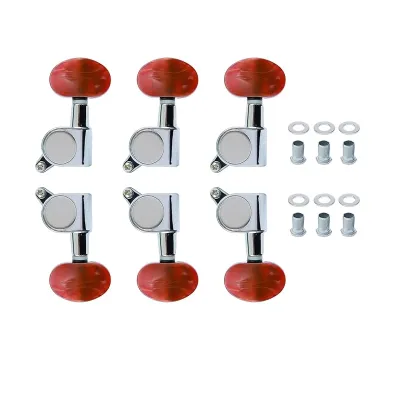
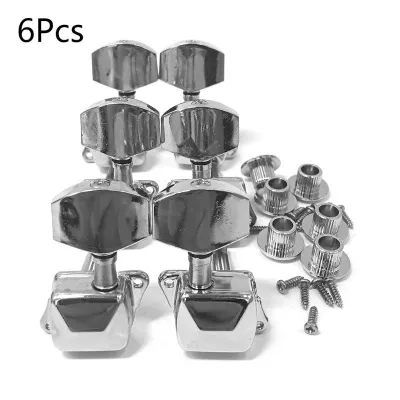
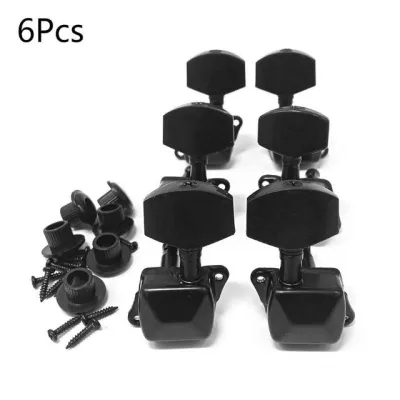
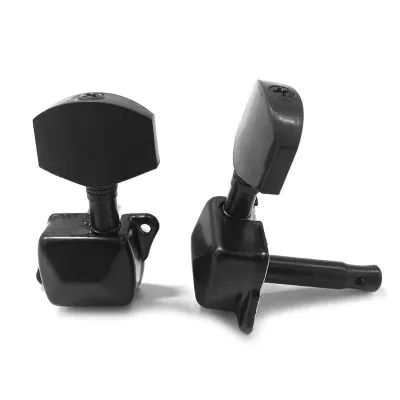
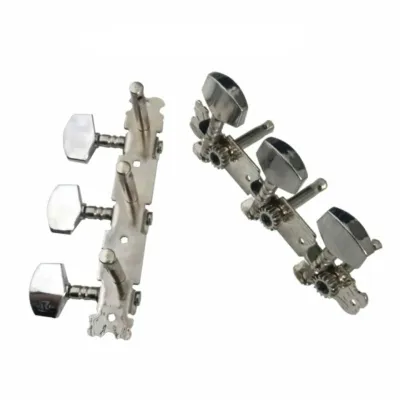
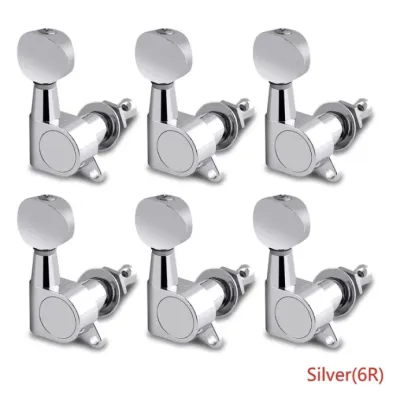
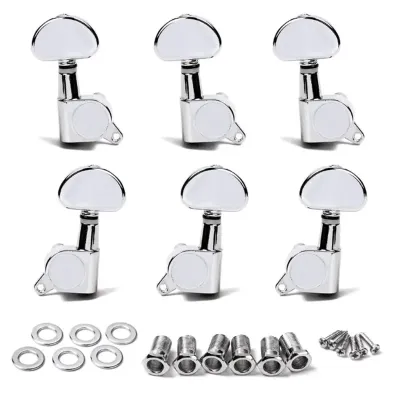
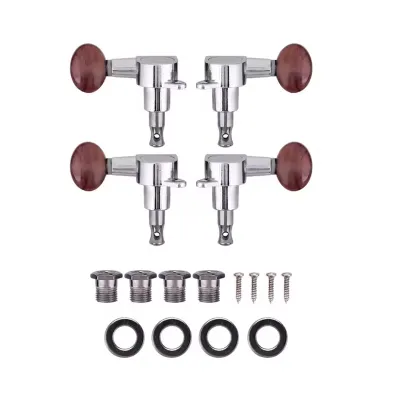
Prices are valid at publication and may change. Please refer to the product page for the latest price.
Understanding Gear Ratios The gear ratio of a tuning peg determines how many times you must turn the tuning button to rotate the string post one full turn. Common gear ratios include 14:1, 18:1, and 21:1. A 14:1 ratio means 14 full rotations of the button result in one rotation of the post. While a 14:1 ratio is standard and functional, higher ratios like 18:1 or 21:1 offer much finer tuning precision. This higher precision makes it easier to make micro-adjustments, which is especially helpful when tuning to alternative layouts or performing under precise studio conditions.
Locking vs. Non-Locking Tuners Locking tuners feature an internal mechanism—usually controlled by a thumbwheel on the back of the housing—that clamps the guitar string securely inside the post hole. This design eliminates the need to wrap the string around the post multiple times, which significantly speeds up string changes and removes a major source of tuning instability. Locking tuners are highly recommended for electric guitars equipped with tremolo systems, where aggressive whammy bar use can easily slacken loose string wraps. For hardtail electric guitars and standard steel-string acoustic guitars, high-quality non-locking tuners with precise gears are generally sufficient to maintain excellent stability.
Mounting Screw Alignments and Bushing Types Before purchasing any tuning pegs, you must verify the mounting style on the back of your headstock. Tuners are secured using either threaded hex bushings (which bolt on through the front of the headstock) or vintage-style push-in bushings (which rely on friction fit). Additionally, tuners feature small mounting tabs with screw holes to prevent the housing from rotating. These tabs are positioned at various angles, such as 45 degrees, 90 degrees, or directly vertical. Some modern guitars use pin-mount systems that require no screws at all, relying instead on small alignment pins on the back of the tuner housing. Choosing a replacement that matches your existing screw tab alignment or pin configuration prevents you from having to drill new holes into your headstock.
Top Tuning Peg Recommendations for Acoustic Guitars
Upgrading your acoustic guitar’s tuning pegs can breathe new life into an older instrument, making it feel smoother to tune and far more reliable during long playing sessions. When selecting tuners for an acoustic guitar, prioritize drop-in compatibility, high-quality plating to resist humidity-induced corrosion, and smooth mechanical gear action.

Best Overall Upgrade for Steel-String Acoustics
For standard steel-string acoustic guitars, upgrading to high-ratio sealed 3+3 tuners is the most reliable way to secure long-term tuning stability. Premium sealed tuners with an 18:1 gear ratio offer an exceptional balance of micro-tuning precision and structural durability. These tuners feature cast housings that protect the internal gears from dust, sweat, and moisture—a crucial benefit in tropical environments.
Most standard dreadnought and concert acoustic guitars utilize a 3+3 configuration with a 10mm headstock hole. When selecting this upgrade, verify whether your guitar features a 45-degree or 90-degree mounting screw tab. Many premium manufacturers offer interchangeable button styles, allowing you to choose classic large metal buttons, vintage-style keystone shapes, or elegant ebony buttons to match your acoustic’s aesthetic. High-quality sets in this category generally range from ₱3,500 to ₱7,000 in local specialty music stores.
Best Budget-Friendly Acoustic Tuners
If you are upgrading an entry-level acoustic guitar or a vintage instrument on a budget, you do not need to spend a fortune to achieve reliable tuning stability. Budget-friendly sealed 3+3 tuners, typically priced between ₱500 and ₱1,500 in local music specialty stores and offering a 14:1 or 15:1 gear ratio, serve as an excellent cost-effective upgrade over loose, factory-stock open tuners.
These budget tuners are designed to fit standard modern 10mm peg holes, making them a straightforward drop-in replacement for many entry-level guitars without requiring any drilling. While they may lack the ultra-smooth feel of high-end 18:1 or 21:1 tuners, they provide a massive upgrade in gear tightness and hold their pitch remarkably well. Be sure to measure your existing headstock holes carefully, as some older or very cheap budget guitars may use smaller 8.5mm vintage holes that would require widening to fit modern sealed tuners.
Best for Classical and Nylon-String Guitars
Classical and nylon-string guitars require entirely different hardware than steel-string acoustics. Because nylon strings exert lower tension but require a larger diameter post to prevent the strings from slipping or shearing, classical guitars use plate-mounted roller tuners. These tuners feature thick plastic or composite rollers that sit horizontally inside the slots of a classical headstock.
When shopping for classical guitar tuners, steel-string acoustic pegs are completely incompatible. You must choose a dedicated 3+3 plate-mounted classical tuner set. It is critical to measure the exact distance between the rollers—the industry standard is typically 35mm from the center of one roller to the center of the next—as well as the overall length of the mounting plate and the positioning of the wood screws. Choosing a set with matching dimensions ensures a smooth, drop-in replacement that preserves the delicate wood of your classical headstock.
Top Tuning Peg Recommendations for Electric Guitars
Electric guitars demand versatile tuning hardware that can handle aggressive string bending, heavy vibrato, and various headstock shapes. The right choice depends heavily on your guitar’s specific headstock layout and whether you use a tremolo system.
Best 6-In-Line Tuners for Stratocaster-Style Guitars
Guitars with a 6-in-line headstock, such as Stratocasters and Telecasters, often struggle with tuning stability due to the angle at which the strings travel from the nut to the tuning posts. To address this, staggered locking 6-in-line tuners are highly recommended. Staggered tuners feature posts of varying heights, with the posts for the high strings being shorter than those for the low strings.
This height variation increases the downward string angle (break angle) over the nut, which often eliminates the need for physical string trees. Removing string trees reduces friction points where strings commonly get caught and go out of tune. When purchasing a 6-in-line set, verify whether your headstock is designed for right-handed or left-handed mounting, as the orientation of the mounting tabs or alignment pins must match your headstock’s rear profile.
Best 3+3 Configuration Tuners for Les Paul-Style Guitars
Guitars featuring a 3+3 headstock layout with an angled headstock, such as Les Paul-style instruments, require robust tuners with the correct shaft length to ensure smooth operation. High-ratio sealed 3+3 tuners or vintage-style keystone tuners are the ideal choice here. Because the strings on these guitars pull outward at an angle after leaving the nut, any binding in the tuner gear or post can cause immediate tuning issues.
When upgrading a 3+3 electric guitar, pay close attention to the bushing style. Vintage-style models often use smaller 8.5mm press-fit bushings, while modern models use 10mm threaded hex bushings. Choosing a set that matches your existing setup avoids the need for adapter bushings or headstock modification. Additionally, look for aesthetic options like vintage green keystone buttons or polished nickel finishes to maintain the classic look of your instrument.
Best Locking Tuners for Tremolo-Equipped Guitars
If your electric guitar features a synchronized, floating, or non-locking tremolo system, standard tuning pegs are often the weak link in your tuning stability. For these instruments, heavy-duty rear-thumbwheel locking tuners are an essential upgrade. These tuners feature a mechanical pin inside the post that clamps down on the string when you tighten the thumbwheel on the back of the housing.
By securing the string firmly inside the post hole, locking tuners eliminate the need for multiple string wraps around the post. Multiple wraps can stretch, slip, and store slack, which causes the guitar to go sharp or flat when using a whammy bar. When installing locking tuners, pull the string completely taut through the post hole, tighten the rear thumbwheel securely, and tune to pitch—usually requiring less than half a turn of the post for maximum stability.
Compatibility Checks and Safe Installation Guidelines
Before purchasing a new set of tuning pegs, performing thorough compatibility checks is vital to ensure a seamless installation and protect your guitar from irreversible damage.
Measuring Your Guitar’s Specifications To find a true drop-in replacement that requires no modification to your guitar, you must take precise measurements of your current hardware. Use a digital caliper or a precise ruler to check the following dimensions:
- Peg Hole Diameter: Remove one of your current tuners and measure the diameter of the hole drilled through the headstock. Modern sealed tuners typically require a 10mm (13/32 inch) hole, while vintage-style tuners usually require an 8.5mm to 9mm (11/32 inch) hole.
- Mounting Screw Location: Look at the back of your headstock and note the position of the small wood screw holding each tuner in place. Common configurations include a single screw tab at 45 degrees, 90 degrees, or straight down (vertical).
- Post Length and Diameter: Measure the height of the tuner post from the base of the housing to the string hole to ensure it provides adequate clearance above your headstock wood.
Strict Safety Boundaries for Installation While replacing tuning pegs is a common upgrade, it can easily lead to damaged wood if not handled carefully. Always check the instructions provided by both your guitar’s manufacturer and the tuning peg manufacturer before beginning.
If your new tuning pegs do not fit your existing headstock holes, or if the mounting screws do not align, do not attempt to force them. If the upgrade requires reaming (enlarging) the peg holes, drilling new pilot holes for mounting screws, or filling old holes with wood filler, stop immediately and consult a professional luthier or a qualified guitar technician. Attempting to drill or ream a headstock without the proper specialized tools (such as a hand reamer) can easily crack the wood, splinter the headstock veneer, or result in crooked tuners that ruin your guitar’s playability and resale value.
Reversible Steps for a Safe DIY Swap If you have verified that your new tuners are a perfect drop-in match, you can safely perform the swap using these reversible steps:
- Loosen the tension on all strings completely and remove them from the guitar.
- Use a small screwdriver or wrench to carefully remove the mounting screws and bushings on the old tuners. Work slowly to avoid slipping and scratching the headstock finish.
- Gently pull the old tuners out from the back of the headstock. If a push-in bushing is tight, use a wooden dowel from the back to tap it out gently.
- Insert the new tuners into the peg holes from the back, ensuring they sit completely flush against the wood.
- Hand-tighten the front bushings or push-in collars, then secure the rear mounting screws. Do not over-tighten the screws, as guitar wood is relatively soft and the threads can easily strip.
- Tighten the front hex bushings using a properly sized wrench until snug, taking care not to crush the wood or lacquer.
Frequently Asked Questions (FAQ)
Do heavier tuning pegs affect guitar sustain and tone?
The physical mass of your guitar’s headstock does play a role in how the instrument vibrates. Installing heavier tuning pegs increases the overall mass of the headstock, which can slightly alter the neck’s resonant frequency. In some cases, this added mass can help reduce dead spots (notes on the fretboard that decay faster than others) and marginally increase sustain. However, the actual change in perceived tone or sustain is highly subjective and incredibly subtle. For the vast majority of players, any tonal difference is negligible compared to the massive impact of your pickups, amplifier settings, string gauge, and overall playing technique.
How often should I lubricate my guitar tuning machines?
The maintenance requirements for your tuning pegs depend entirely on whether they are open-gear or sealed designs. Sealed tuners are lubricated and sealed at the factory, meaning they are protected from environmental debris and do not require any user lubrication. Attempting to lubricate sealed tuners can ruin the internal seals. Open-gear tuners, which are common on classical and vintage acoustic guitars, benefit from a very light application of a specialized gear grease or dry lubricant once or twice a year to keep the gears turning smoothly. Never use liquid household oils or penetrating sprays like WD-40, as these attract dust, can degrade plastic or wooden buttons, and may seep into and damage your guitar’s wood finish.
Can I put electric guitar tuning pegs on an acoustic guitar?
In general, electric guitar tuning pegs are not directly cross-compatible with acoustic guitars. Acoustic guitars typically feature thicker headstocks and require longer tuning posts with wider string holes to accommodate the thicker core of bronze acoustic strings. Additionally, the mounting footprint and screw tab alignments of electric tuners rarely align with acoustic headstocks. Attempting to force electric tuners onto an acoustic guitar can result in poor string alignment, insufficient post clearance, or structural damage to the headstock. Always purchase tuning pegs that are explicitly categorized for your specific type of guitar to ensure proper fit and function.
Community discussion
Share your experience or ask a question. Comments are reviewed before publication.