
Choosing your first drum kit can be challenging, especially when balancing sound quality, realistic playability, and budget. For aspiring drummers in the Philippines, investing in a quality electric drum set is one of the most practical ways to start this musical journey. These modern instruments allow you to practice silently with headphones, fit into tight living spaces, and access a wide variety of drum sounds with the touch of a button.
To find the right kit, look for a model that balances realistic pad rebound, a sturdy rack system, and a user-friendly sound module. The ideal beginner setup should also include essential hardware like a drum throne, a physical kick pedal, and drumsticks so you can start playing immediately. By focusing on these core elements, you can avoid early upgrade costs and ensure your practice sessions remain engaging and productive.
How to Choose Your First Electric Drum Set
A truly beginner-friendly electric drum set should eliminate technical barriers so you can focus entirely on learning rhythm and coordination. When browsing local music stores, look for “all-in-one” bundles that package the drum pads and module with essential accessories like a drum throne, a pair of drumsticks, and a kick pedal. A straightforward module interface with dedicated buttons for the metronome, volume, and kit selection is far better for a beginner than a complex system that requires deep menu diving just to change a basic setting.
Products mentioned in this guide
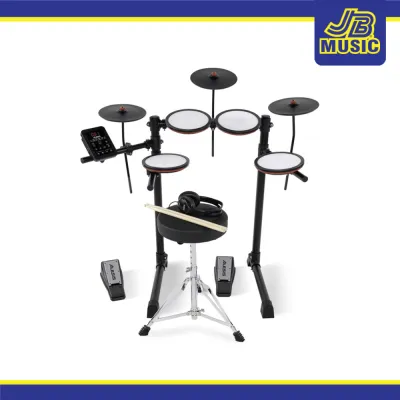
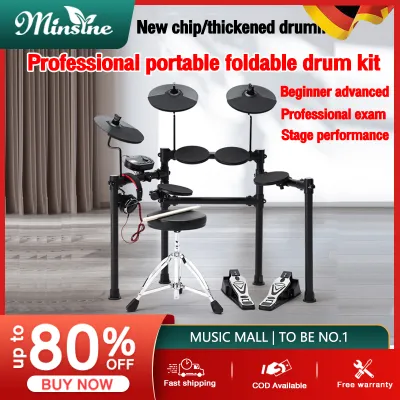
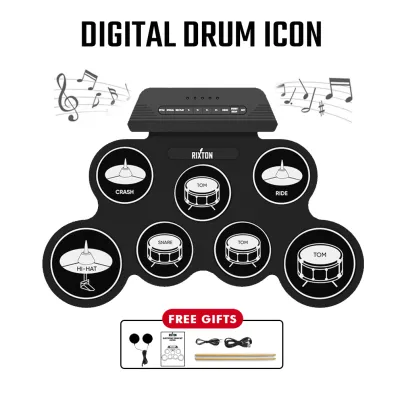
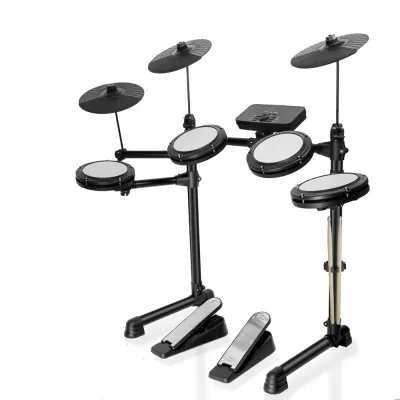
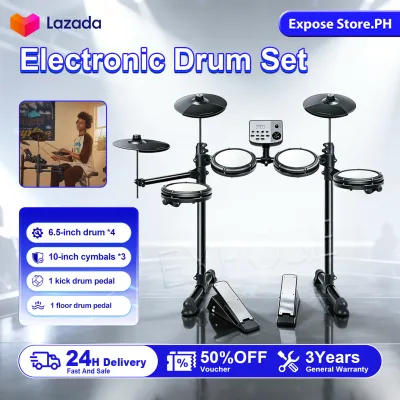
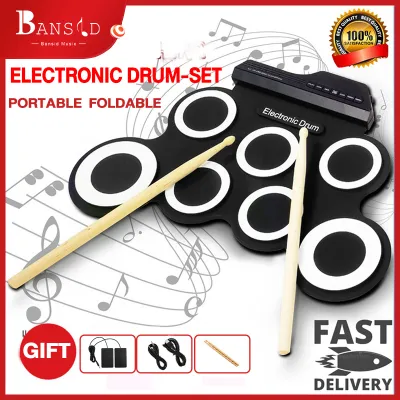
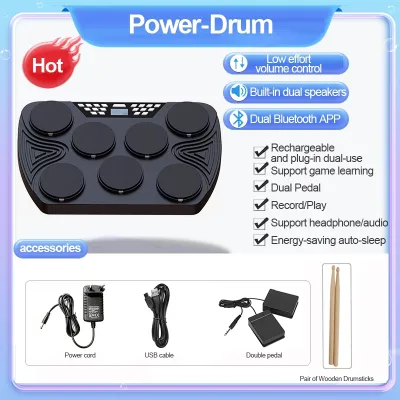
Prices are valid at publication and may change. Please refer to the product page for the latest price.
The material of the drum pads plays a massive role in how the kit feels and how much noise it produces. Mesh heads, made of tightly woven fabric, are highly recommended because they closely mimic the natural rebound and tension of an acoustic drumhead. They are also incredibly quiet when struck, making them perfect for late-night practice. In contrast, cheaper rubber pads feel hard, offer an unrealistic bounce that can fatigue your wrists, and produce a loud, physical click that easily penetrates walls.
Space and noise are critical considerations for musicians living in Philippine urban centers like Metro Manila, Cebu, or Davao. High-density housing, such as condominiums, townhouses, and close-knit barangay apartments, makes acoustic drums virtually impossible to play without causing neighborhood disputes. An electric drum kit solves this issue by keeping the physical impact noise low enough to remain unnoticed through concrete walls, allowing you to practice at any hour of the day or night.
Budgeting for your first kit in Philippine Pesos (PHP) requires understanding what features become available at different price points. Entry-level kits generally range from ₱12,000 to ₱25,000, offering basic sound modules and simpler single-zone pads. Mid-range kits, priced between ₱25,000 and ₱50,000, introduce full mesh setups, sturdier racks, and dual-zone pads that allow for more expressive playing. Investing in a mid-range kit often provides better long-term value, as the hardware and sounds will easily accommodate your growing skills for several years.
Top Electric Drum Sets for Beginners
Selecting the right model depends on your specific living situation, budget, and long-term musical goals. The Philippine market offers several excellent choices from reputable global brands, widely available through authorized local music distributors and online marketplaces.

Best Overall Balance of Feel and Features
For beginners committed to developing proper technique, kits in the class of the Alesis Nitro Max or the Nux DM-210 offer an outstanding balance of realistic feel and modern features. These models typically feature dual-zone mesh snare pads, which allow you to play both standard head strikes and realistic rim shots. They also include a dedicated kick drum tower with a physical bass drum pedal, which is essential for building authentic foot control and leg strength.
The primary advantage of these mid-range kits is their highly responsive playability and built-in learning tools, such as Bluetooth connectivity for streaming backing tracks directly from your phone. However, a common limitation is that the physical rack height can feel slightly low for exceptionally tall players, requiring careful adjustment during setup. Additionally, the included cymbal pads are usually smaller than acoustic cymbals, though they still support essential techniques like cymbal choking.
When purchasing these models in the Philippines, it is highly recommended to buy from authorized local distributors like JB Music or Lazer Music. Doing so ensures you receive a genuine product backed by a local warranty, typically covering the electronic module and trigger sensors for 6 to 12 months. This local support provides peace of mind, as getting replacement parts or technical assistance is much easier than dealing with overseas sellers.
Best Entry-Level Budget Pick
If you want to test your interest in drumming without making a significant financial commitment, entry-level models like the Alesis Debut or Nux DM-1X are excellent starting points. Often retailing for under ₱15,000, these highly affordable kits are designed to lower the barrier to entry for young players and casual hobbyists. They feature a very compact footprint and a simplified module that gets straight to the point.
To achieve this accessible price point, manufacturers make specific compromises, such as using smaller single-zone pads and simpler pedal switches instead of a physical kick tower. The sound modules on these budget kits also have limited sound libraries and may lack advanced features like cymbal choking or dual-zone triggers. This means the cymbals will sound the same whether you strike the edge or the bow, and the drum sounds may feel slightly more synthetic.
Despite these limitations, these budget-friendly kits provide immense learning value for mastering basic coordination, timing, and stick rudiments. They are perfect for younger children or anyone unsure if they will stick with the instrument long-term. As your playing improves, you can easily maximize the kit’s value by upgrading to higher-quality over-ear headphones or eventually replacing the pedal switches with physical trigger pads as your budget allows.
Best Compact Kit for Condos and Small Spaces
For those living in micro-condos or shared studio apartments where floor space is at a premium, highly portable and foldable kits like the Roland TD-02K or the Donner DED-80 are ideal solutions. These kits are engineered with a unique, low-profile rack system that can be folded down flat in minutes. This allows you to slide the entire drum set under a bed or tuck it neatly into a closet when it is not in use.
The physical footprint of these compact kits is remarkably small, often requiring less than one square meter of space when fully assembled. This makes it easy to set up in the corner of a bedroom or living room without disrupting the flow of your home. The trade-off, however, is that these kits often utilize beaterless foot controller pedals to save space and reduce weight. While these pedals are incredibly quiet, they do not fully replicate the physical resistance and rebound of a real bass drum pedal.
Another challenge with lightweight, compact kits is their tendency to slide around on smooth tile or polished hardwood floors, which are common in Philippine homes. To prevent the pedals and rack from slipping away from you during an energetic practice session, always place the kit on a heavy, rubber-backed drum rug or a thick yoga mat. This simple addition keeps the hardware firmly in place while protecting your floors from scratches and scuffs.
Best Upgrade Path for Growing Skills
If you want an instrument that can adapt as your drumming skills progress from beginner to intermediate, look for expandable models like the Roland TD-07DMK or the Yamaha DTX452K. Positioned at the higher end of the beginner price spectrum, these kits are built with premium materials and advanced electronic components designed to withstand years of heavy practice.
The standout feature of these kits is their expandability. The drum modules are equipped with extra trigger input jacks, allowing you to plug in an additional crash cymbal or an extra tom pad as your playing style demands a larger setup. Furthermore, they feature robust, standard-sized rack tubing, meaning you can easily mount third-party hardware, clamps, and accessories without compatibility issues.
These advanced modules also offer excellent USB-MIDI connectivity, which allows you to connect the drum set directly to a computer, tablet, or laptop. This enables you to trigger high-end Virtual Studio Technology (VST) drum software, giving you access to ultra-realistic, studio-recorded drum sounds. This feature is invaluable for home recording, online music lessons, or playing along with educational software that tracks your timing and accuracy in real-time.
Key Features to Compare Before Buying
Understanding the technical specifications of an electric drum set will help you make an informed decision when comparing different models in a store or online catalog.
- Pad Technology: The choice between mesh heads and rubber pads is the most critical factor affecting your playing experience. Mesh heads allow you to adjust the physical tension of the drumhead using a standard drum key, letting you customize the rebound to match the feel of a real acoustic drum. They also absorb the physical impact of your drumsticks, reducing the amount of shock transmitted to your wrists and elbows. Rubber pads, while durable and budget-friendly, have a fixed, hard playing surface that can cause joint fatigue during long practice sessions and produce a much louder acoustic clicking noise.
- Kick Pedal Mechanism: Evaluating the kick pedal mechanism is equally important for developing proper foot technique. A beaterless trigger pedal uses a simple electronic switch to register your foot presses, which is quiet but lacks physical feedback. A physical kick pad tower, on the other hand, features a vertical pad that you strike with a real bass drum pedal and beater. This physical setup is essential for learning advanced techniques like double-stroke bass drumming and heel-up playing, ensuring a seamless transition if you ever play an acoustic drum kit.
- Module and Sounds: The drum module, often called the "brain," determines the quality of your sound and the variety of your practice tools. Pay close attention to the module's polyphony rating, which ensures that fast drum rolls and cymbal crashes do not cut off abruptly. Look for modules that feature multi-velocity samples, where the tone and character of the drum sound change dynamically depending on how hard you hit the pad. Essential built-in features should include a highly adjustable metronome, coaching programs to test your timing, and pre-loaded play-along tracks in various musical genres.
- Connectivity: Connectivity options dictate how easily you can integrate the drum set into your daily life. A USB-MIDI port is standard on most modern modules, allowing you to connect to computers and mobile devices for recording or interactive learning apps. If you enjoy playing along with your favorite songs, look for a module with Bluetooth audio capabilities, which lets you stream music wirelessly from your phone. If Bluetooth is not available, ensure the module has a standard 3.5mm auxiliary input (Aux-in) jack so you can connect your phone or music player using an audio cable.
Setup, Noise Control, and Maintenance
Properly setting up and caring for your electric drum set will prolong its lifespan, protect your physical health, and keep your relationships with your family and neighbors harmonious.
- Vibration Isolation: Even though you will likely practice with headphones, the physical vibrations from your kick pedal can easily travel through the floor structure of multi-story buildings, sounding like a heavy hammer to neighbors living downstairs. To isolate these low-frequency vibrations, place your drum kit on a thick, high-density foam mat or a dedicated drum rug. For severe noise transmission issues, you can construct a simple DIY "tennis ball riser" by sandwiching sliced tennis balls between two sheets of sturdy plywood, which effectively decouples the drum kit from the floor.
- Climate Care: The tropical climate of the Philippines presents unique challenges for electronic musical instruments, as high humidity and heat can accelerate the degradation of sensitive sensors and electronic components. Keep your drum kit away from direct sunlight, open windows, and damp areas of your home. High humidity can cause rubber pads to become sticky and can lead to corrosion inside the drum module's input jacks. To prevent this, place silica gel packets near the module, wipe down the pads with a dry microfiber cloth after every session, and use a breathable dust cover when the kit is not in use.
- Power and Safety: Electronic drum modules contain delicate microprocessors that are highly sensitive to electrical surges and voltage fluctuations, which are common in many parts of the Philippines. Before plugging in your kit, always check the voltage rating on the power adapter to ensure it is compatible with the local 220V standard. To protect your investment from sudden power spikes, brownouts, or lightning strikes, always plug your drum module into a high-quality surge protector or an uninterruptible power supply (UPS) rather than directly into a wall outlet.
- Ergonomic Assembly: Assembling your kit ergonomically is vital for preventing physical strain, back pain, and repetitive strain injuries. Begin by adjusting your drum throne height so that your thighs are parallel to the floor or angled slightly downward, allowing your feet to rest naturally on the pedals. Position your snare pad at waist height, angling it slightly toward you so your sticks strike the center of the pad without hitting your thighs. Position the toms and cymbals within easy arm's reach, ensuring you do not have to stretch or twist your torso, which helps build good posture and efficient playing habits from day one.
Frequently Asked Questions (FAQ)
Do I need a special amplifier for an electric drum set?
Yes, standard guitar amplifiers are not designed to handle the wide frequency range of an electric drum kit. Guitar amps are voiced specifically for mid-range frequencies and can easily distort or suffer permanent speaker damage when trying to reproduce the deep, low-end frequencies of a bass drum. For the best listening experience when not using headphones, invest in a dedicated electronic drum monitor, a keyboard amplifier, or a high-quality pair of over-ear studio headphones.
Can I use an electric drum set to learn acoustic drumming?
Yes, an electric drum set is an excellent tool for learning acoustic drumming, as fundamental skills like stick grip, rudiments, hand-foot coordination, and timing transfer perfectly. However, you will experience a brief adjustment period when transitioning to an acoustic kit. Acoustic drums have a different physical rebound, wider dynamic ranges, and interactive physical feedback from the hi-hat and cymbals that require more precise physical control and volume management.
Community discussion
Share your experience or ask a question. Comments are reviewed before publication.