
Finding the absolute best platform for historical books is not about locating a single, universal winner. Instead, it requires matching your specific reading habits to a service’s unique catalog strengths. For readers who seek popular narrative history, mainstream biographies, and military accounts, one dominant platform offers unmatched volume. For academic researchers who require flawless formatting for footnotes, indexes, and high-resolution maps, alternative ecosystems provide a vastly superior experience. Meanwhile, avid consumers of historical fiction will find that subscription-based models offer the most cost-effective path.
Before investing in any digital library, conducting a targeted historical search requires understanding how different platforms organize their archives. Catalog size alone does not guarantee a high-quality reading experience. To avoid frustrating purchases, readers must always verify the specific edition, translation quality, and publisher authorization of a text. This guide compares the major ebook ecosystems to help you determine which platform best serves your journey through the past.
What Makes a Great eBook Platform for History Books?
Evaluating a digital platform for historical literature requires looking beyond simple bestseller lists. A truly robust history catalog must balance inventory depth across multiple eras and regions with a healthy mix of academic monographs, popular narrative non-fiction, and primary source documents. Many platforms excel at showcasing modern historical fiction while neglecting the dense, peer-reviewed texts that serious history enthusiasts crave. Conversely, some services host vast numbers of public domain classics but fail to offer modern scholarly editions that provide crucial context and updated translations.
Products mentioned in this guide
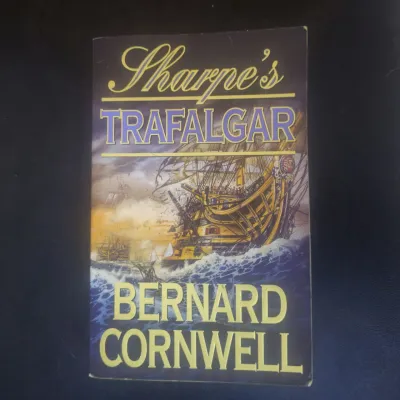


Prices are valid at publication and may change. Please refer to the product page for the latest price.
Formatting is another critical dimension that can make or break a historical ebook. Unlike standard fiction, historical non-fiction relies heavily on complex structural elements. These include nested footnotes, extensive endnotes, detailed bibliographies, and high-resolution maps or charts. On poorly optimized platforms, clicking a footnote link can transport you to the end of the book with no easy way to return to your original page. Maps and battle plans often render as tiny, pixelated images that remain illegible even when zoomed. A superior ebook platform must utilize advanced rendering engines that preserve these elements in a clean, reflowable format.
Finally, metadata accuracy and edition verification are paramount. The digital marketplace is flooded with low-quality, unedited scans of public domain texts masquerading as modern publications. A great platform must provide clear metadata, including the original publication date, the specific translator, the publisher, and whether the text is abridged. Without this information, readers risk purchasing outdated historical scholarship or poorly formatted optical character recognition (OCR) transfers that are riddled with typographical errors.
How Major eBook Platforms Handle History Catalogs
Different ebook ecosystems cater to distinct types of history readers. Understanding how each major service structures its catalog, handles complex formatting, and curates its historical titles will help you identify where to focus your reading budget.

Amazon Kindle: Volume and Mainstream Non-Fiction
Amazon’s Kindle store boasts the largest absolute volume of historical books on the market. It is the undisputed leader for popular history, mainstream biographies, and widely distributed military histories. If you are searching for the latest releases from major publishing houses or prominent narrative historians, you will almost certainly find them here. The platform’s sheer scale ensures that almost every mainstream historical work is available for immediate download.
However, this massive volume comes with a significant downside for history enthusiasts. The Kindle store is heavily cluttered with low-quality, automated reprints of public domain texts. Unregulated publishers frequently copy free texts from the internet, slap a generic cover on them, and sell them as cheap ebooks. These versions often lack proper formatting, table of contents, and illustrations. Furthermore, Kindle’s proprietary formatting can occasionally struggle with complex academic layouts, turning footnote-heavy texts into a frustrating reading experience. To navigate this, readers must carefully inspect the publisher details and download a sample to check the formatting before purchasing.
Kobo: Public Domain Integration and Formatting
Kobo has carved out a strong reputation among serious readers for its open ecosystem and superior handling of digital typography. One of Kobo’s greatest strengths for history lovers is its seamless integration with high-quality, free public domain catalogs like Project Gutenberg. Instead of forcing readers to sift through low-grade commercial reprints, Kobo makes it easy to access clean, well-formatted historical classics directly through its store.
Because Kobo relies primarily on the widely accepted EPUB format, its devices and apps render complex layouts exceptionally well. Footnotes are typically displayed in elegant pop-up windows rather than forcing you to jump to the back of the book, allowing you to read dense historical arguments without losing your place. The platform also supports independent historical publishers and university presses, providing a diverse selection of niche titles that might be difficult to discover elsewhere. For those reading older texts, Kobo’s robust built-in dictionaries and note-taking features make it easy to look up archaic terms and organize research notes.
Apple Books and Google Play Books: Academic and Ecosystem Focus
Apple Books and Google Play Books offer distinct advantages that appeal to academic researchers and casual readers alike. Both platforms feature exceptionally clean, visually appealing user interfaces that excel at rendering high-resolution historical images, maps, and color plates. This makes them ideal for reading art history, archaeological surveys, and heavily illustrated historical guides.
Google Play Books is particularly valuable for academic historical research due to its unique document management features. The platform allows users to upload their own DRM-free historical PDFs and EPUB files directly to their personal library. This means you can store digitized archival documents, academic papers, and rare out-of-print books alongside your commercial purchases. Additionally, Google Play Books has a strong partnership with university presses, making it a surprisingly deep source for specialized academic history titles. Apple Books, while offering a smaller overall catalog of niche indie history, provides a seamless, highly polished reading experience across macOS and iOS devices.
Subscription Services: Breadth vs. Depth for History
Subscription-based ebook platforms offer an appealing value proposition: unlimited access to a library of books for a flat monthly fee. For readers who consume multiple historical novels or popular narrative histories each month, services like Kobo Plus or Everand can represent significant cost savings. These platforms are excellent for exploring new historical fiction authors or browsing general historical biographies without the pressure of a per-book purchase.
However, subscription models have clear limitations when it comes to serious historical research. Academic publishers and university presses rarely make their catalogs available on unlimited subscription services due to licensing constraints. If your reading list consists of specialized historical monographs, primary source collections, or specific critical editions, you will likely find these platforms lacking. The catalogs also tend to rotate frequently, meaning a book you save today might not be available next month. Subscription services are best viewed as a supplement for casual reading rather than a primary archive for deep historical study.
Mastering the Historical Search: How to Find the Right Edition
To build a high-quality digital library, you must master the art of the historical search. Standard keyword searches on major ebook platforms often return thousands of irrelevant results, mixing modern romance novels set in the past with rigorous academic histories. To bypass this clutter, you must learn to use advanced search parameters and critical evaluation techniques.
When searching for non-fiction historical works, avoid generic terms like “Roman history” or “World War II.” Instead, refine your query by using specific historical figures, battles, treaties, or academic concepts. Many platforms support Boolean search operators (such as AND, OR, and NOT) or allow you to filter results by category, publication date, and publisher. If you are looking for academic-grade history, try filtering by university press publishers or searching for the author’s academic credentials. This instantly separates peer-reviewed scholarship from amateur historical writing.
Identifying and avoiding low-quality public domain reprints is another crucial skill. When you perform a historical search for a classic text, you will often see dozens of versions at various price points. To find the best edition, follow these verification steps:
- Verify the Publisher: Look for established academic or trade publishers (such as Penguin Classics, Oxford World's Classics, or major university presses). Avoid publishers with generic names like "Classic Reprint Series" or "Independently Published."
- Check for Editorial Content: Authoritative editions almost always include an introduction by a modern scholar, explanatory footnotes, a bibliography, and translator notes. Check the book description or sample pages for these additions.
- Examine the Publication Date: Ensure the ebook metadata lists both the original publication date of the text and the release date of the specific digital edition.
- Read Formatting Reviews: Look at user reviews specifically mentioning "formatting," "OCR errors," "typos," or "missing maps." If multiple reviewers complain about unreadable text, avoid that edition.
Taking the time to verify these details ensures that your historical search leads to an accurate, readable text that respects the original scholarship.
Reading in the Philippines: Regional Access and Device Compatibility
For history readers in the Philippines, digital reading comes with unique regional considerations. Licensing agreements vary by country, which means that certain historical texts, academic editions, and subscription catalogs available in Western markets may be geo-restricted or entirely unavailable in the local digital storefronts. Before committing to a specific ecosystem, it is wise to search the localized store to ensure the titles you need are accessible in your region.
Device selection is another critical factor, especially when considering the tropical climate of the Philippines. E-ink readers are highly recommended for long, text-heavy reading sessions. Their glare-free screens are easily readable under the bright midday sun, and their exceptional battery life is invaluable during power outages or when traveling between islands. Furthermore, modern e-ink screens are highly durable, though readers should still protect them from extreme tropical humidity. However, if your historical reading involves studying detailed color maps, archaeological diagrams, or illuminated manuscripts, a high-resolution tablet is necessary, as standard e-ink screens cannot display color or complex graphics effectively.
Local transactions and pricing also play a role in your choice. Platforms like Google Play Books and localized versions of Kobo and Amazon bill directly in Philippine Pesos (₱ / PHP), allowing you to avoid unpredictable foreign exchange fees. These platforms also support popular local payment methods, including GCash, Maya, and local credit cards, making purchases straightforward. Finally, given that internet connectivity can be intermittent in certain regions of the Philippines, prioritize platforms that offer robust offline reading capabilities. Ensure your device has enough internal storage to download your historical books and documents locally, allowing you to read uninterrupted regardless of your connection status.
Final Verdict: Which Platform Should You Choose?
Your choice of an ebook platform should align directly with your primary reading goals and the specific types of historical books you enjoy.
- Choose Amazon Kindle if you primarily read popular historical biographies, mainstream narrative non-fiction, and want the absolute largest selection of commercial titles. It is the best choice for readers who want hassle-free access to major new releases.
- Choose Kobo if you value open file formats, read a mix of public domain classics and modern titles, and demand high-quality typography and footnote formatting. It is also the ideal choice for those who prefer dedicated, eye-strain-free e-ink devices.
- Choose Google Play Books if you are an academic researcher, student, or history buff who needs to upload personal PDFs, read university press publications, and manage a diverse library of personal research documents alongside commercial purchases.
- Choose a Subscription Service if you are a high-volume reader of historical fiction or casual narrative non-fiction and want to explore a rotating catalog of books for a predictable monthly fee.
By matching your platform to your reading style, verifying the exact editions of your books, and considering your local hardware and regional needs, you can build a digital historical library that provides deep, accurate, and engaging insights into the past.
Community discussion
Share your experience or ask a question. Comments are reviewed before publication.