
Learning to play double bass drum patterns is an exciting milestone for any developing drummer, especially those diving into metal, hard rock, or progressive fusion. Finding the right double pedal kick drums requires balancing mechanical responsiveness, long-term durability, and affordability. For beginners in the Philippines, navigating the local music market means looking for hardware that can withstand high humidity while offering enough adjustability to match a player’s growing physical technique. Investing in a reliable entry-level pedal ensures you build proper foot independence without fighting poorly designed hardware.
Choosing your first double pedal can feel overwhelming given the variety of drive systems, cam shapes, and adjustment options available. By focusing on fundamental mechanical features rather than cosmetic extras, you can find a pedal that supports your learning journey and lasts for years of daily practice.
What to Look for in a Beginner Double Kick Pedal
Drive System Comparison
The drive system is the physical link between the footboard and the beater assembly, directly shaping how the pedal feels under your foot. Chain drive systems use a metal bicycle-style chain to pull the cam. This design is highly favored for beginners because it offers a familiar, predictable response, excellent durability, and straightforward maintenance. Single-chain variants are lightweight and responsive, while double-chain designs provide extra lateral stability and power transfer.
Products mentioned in this guide
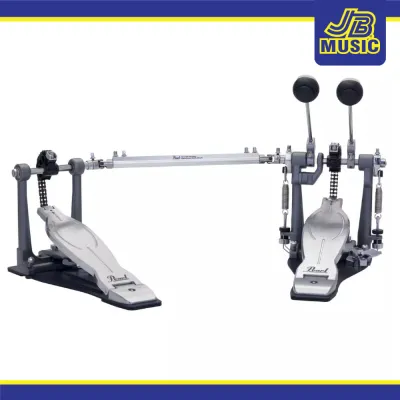
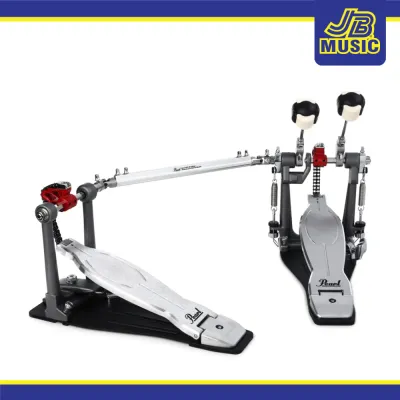
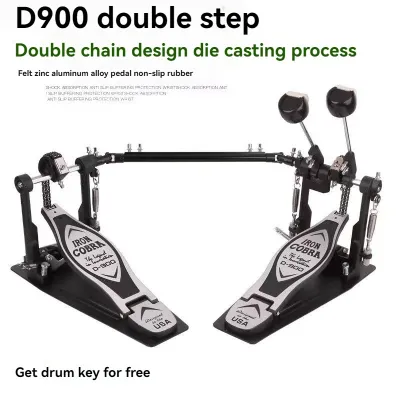
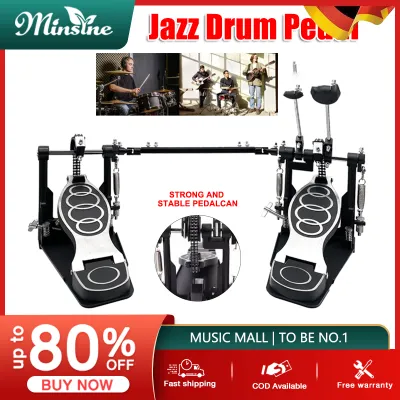
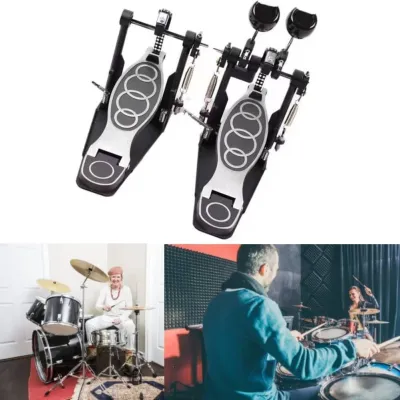
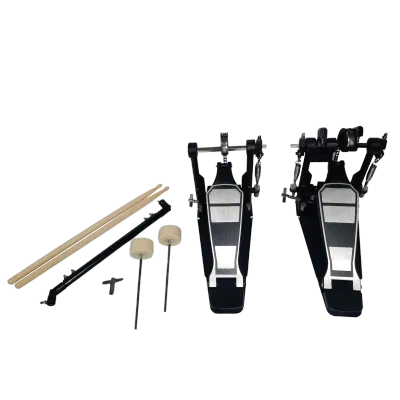
Prices are valid at publication and may change. Please refer to the product page for the latest price.
Belt drive systems employ a flexible strap made of nylon, rubber, or reinforced fabric. These straps deliver a smooth, quiet, and slightly more elastic feel, though they may wear out faster under aggressive playing styles in warm environments. Direct drive systems utilize a solid metal link instead of a chain or strap, eliminating any lag or flex. While direct drive offers maximum speed and precision, it can feel unforgivingly sensitive for beginners who are still developing consistent foot control and ankle strength.
Beater Adjustability
The beater is the component that physically strikes the drumhead, and its design dictates your overall tone and attack. Dual-sided beaters are standard on many entry-level pedals, featuring a soft felt side for warm, traditional tones and a hard plastic side for a sharp, punchy attack. Adjustable beater angles allow you to change the distance the beater travels before hitting the head. This adjustment is crucial for customizing the pedal’s throw to match your leg length and playing style, helping you find the right balance between volume and control.
Spring Tension Mechanisms
Spring tension controls how quickly the footboard rebounds after a stroke. High tension snaps the pedal back rapidly, which is useful for fast patterns but requires more leg strength to press down. Low tension feels lighter and easier on the muscles but can result in a sluggish response if the spring is too loose. Beginners should look for pedals with easily adjustable, locking tension knobs that prevent the spring from slipping loose during intense practice sessions, allowing you to gradually increase tension as your leg strength develops.
Footboard and Hinge Quality
A stable, full-length footboard provides a reliable surface for practicing various foot techniques, such as the heel-toe or slide methods. The hinge at the heel of the footboard must be robust and smooth, as any lateral play or friction here leads to energy loss, squeaking, and premature wear. High-quality bushings or sealed ball bearings in the hinge assembly ensure a consistent, quiet feel over years of repetitive use, preventing the hardware from flexing under heavy foot strikes.
Top Double Pedal Kick Drums for Entry-Level Drummers
Best for Tight Budgets and Reliability
For drummers starting with a limited budget, finding a pedal that delivers dependable performance without unnecessary complexity is the primary goal. Budget-friendly double pedals typically feature single-chain drive systems, round cams for a linear response, and solid steel baseplates that keep the units firmly anchored to the floor. These straightforward designs allow you to focus entirely on developing your physical coordination rather than constantly tweaking complex mechanical settings.

Classic entry-level series from reputable manufacturers, such as the Tama Iron Cobra 200 or Pearl P-932 Demonator, serve as excellent examples of reliable starting points. These models borrow design elements from their high-end siblings, offering robust construction and smooth action at a fraction of the cost. They provide the necessary stability for daily practice without the premium price tag of professional-grade touring hardware.
When shopping in the Philippines, it is highly recommended to check local authorized music retailers and established online instrument stores. Visiting physical showrooms in major metropolitan areas allows you to test the physical tension of the pedals in person before making a purchase. Additionally, local distributors often offer bundle deals, manufacturer warranties, and reliable after-sales support that online marketplaces may not guarantee.
While budget-friendly pedals are highly capable, they do come with certain design limitations. They often feature slightly heavier footboards, simpler hinge mechanisms, and less refined universal joints on the slave pedal. This can result in a minor lag or a slightly heavier feel in the left foot (for right-handed players), which may require more physical effort to keep synchronized as your playing speed increases.
Best for Smooth Action and Faster Response
As you progress, developing speed and precise ankle technique requires a pedal that responds quickly to subtle foot movements. The shape of the cam—the curved component that the chain wraps around—plays a major role in this physical feel. Round cams offer a consistent, linear acceleration throughout the entire stroke, making them highly predictable. Offset or eccentric cams, on the other hand, alter the leverage during the swing, accelerating the beater faster as it approaches the drumhead to deliver a more powerful strike with less physical effort.
To minimize leg fatigue during extended practice sessions, look for pedals that offer adjustable footboard angles independent of the beater angle. This feature allows you to lower the footboard height, reducing the strain on your shin muscles when playing at slower tempos or during long warm-ups. Lighter default spring configurations also help beginners maintain control without fighting excessive resistance.
The performance of a double pedal is heavily dependent on the quality of the universal joint and drive shaft connecting the primary and slave pedals. A high-quality, lightweight aluminum drive shaft minimizes power loss and latency, ensuring that the slave pedal feels just as responsive as the main pedal. Without a precise joint, the secondary foot can suffer from lag, making it difficult to maintain even, consistent double bass rolls.
Best for Long-Term Durability and Upgradability
Investing slightly more upfront in a durable, mid-tier double pedal can save you money over time by eliminating the need for a premature upgrade. Pedals built with robust cast metal components, heavy-duty steel baseplates, and reinforced hoop clamps are designed to withstand years of heavy foot strikes. Look for models that feature easily replaceable parts, such as standard springs, universal beaters, and modular drive shafts, which allow you to maintain the hardware indefinitely.
A mid-tier pedal typically offers advanced adjustability, such as interchangeable cams, variable beater weights, and customizable footboard textures. This level of customization allows the pedal to grow alongside your developing skill set. As your speed, power, and technical demands increase, you can fine-tune the hardware’s mechanics rather than buying an entirely new double pedal system.
Universal compatibility is another major advantage of well-engineered entry-to-mid-tier pedals. They are designed to clamp securely onto various bass drum hoop thicknesses without causing damage, and their compact footprint fits easily alongside electronic kick towers or acoustic bass drums. This adaptability is particularly valuable for Filipino drummers who may transition between practicing on a quiet electronic kit at home and performing on an acoustic kit at local rehearsal studios.
How to Set Up and Maintain Your Double Pedal
Initial Setup
To begin, place both pedals on a flat, non-slip surface and adjust the distance between them so your legs rest at a comfortable, natural angle. Adjust the spring tension so that when you press and release the footboard, the beater rebounds quickly without requiring excessive downward force from your leg. A good baseline is to set both the primary and slave pedal springs to a medium tension, ensuring they feel identical when played simultaneously.
Beater Alignment
Set the beater height so that the head of the beater strikes the center of the bass drum head, or slightly above center for a fuller tone. Adjust the resting angle of the beaters so they sit approximately 45 degrees back from the drumhead. If the beaters are positioned too close to the head, you will lose volume and power; if they are angled too far back, they may strike your shins or feel sluggish to initiate.
Routine Maintenance
The tropical climate and high humidity in the Philippines can accelerate rust and cause moving parts to squeak or bind over time. Regularly wipe away dust and sweat from the hinges, chains, and springs using a clean, dry microfiber cloth. Apply a few drops of manufacturer-approved, lightweight lubricant to the universal joints and spring bearings every few months to maintain smooth operation. Always ensure the bass drum hoop clamp is securely tightened to prevent the pedal from shifting during play.
Safety and Verification
Before making any major mechanical adjustments, consult the specific manufacturer’s instruction manual for your pedal model. Pay close attention to torque limits for key screws and clamp bolts to avoid stripping the metal threads. Use only the recommended types of lubricants, as heavy oils or WD-40 can attract abrasive dust and degrade internal bearings, potentially voiding your manufacturer’s warranty.
Common Beginner Mistakes to Avoid
Over-tightening Springs
Many beginners mistakenly believe that cranked-up spring tension is the secret to achieving high-speed double bass rolls. In reality, excessively tight springs require your leg muscles to work twice as hard, leading to rapid fatigue, tension, and poor technique. It is far better to start with medium-to-low tension, focusing on relaxed ankle movements and letting the natural rebound of the drumhead do the work.
Neglecting the Left Foot
For right-handed drummers, the left foot (or the non-dominant foot) is naturally weaker and less coordinated. A common mistake is practicing double bass patterns without dedicating isolated time to the slave pedal. To build true independence, practice basic single-stroke rolls starting with your non-dominant foot, and use the slave pedal to play simple timekeeping patterns during your regular practice routines.
Skipping Single-Kick Fundamentals
A double pedal should expand your creative options, not serve as a shortcut to bypass fundamental foot control. Attempting complex double bass patterns before mastering solid single-kick timing, dynamics, and groove can ruin your overall sense of time. Ensure you can play clean, powerful, and steady rhythms with a single pedal before integrating the secondary pedal into your drum fills and beats.
Improper Clamping
Hastily clamping your pedal to the bass drum hoop without checking the alignment can damage both the hoop and the pedal’s baseplate. Always use a rubber hoop protector or a small piece of adhesive rubber padding to cushion the contact point between the metal clamp and the wooden hoop. Make sure the pedal sits completely flat on the floor before tightening the clamp; an angled pedal puts uneven stress on the frame, which can cause the metal to warp or crack over time.
Frequently Asked Questions (FAQ)
Do I need a double pedal as a beginner?
While mastering single-pedal grooves is essential for developing foundational timekeeping and dynamics, a double pedal is highly recommended if your primary musical goal is to play genres like metal, hard rock, or modern fusion. Learning to coordinate both feet early on helps build balanced leg strength and prevents you from having to relearn basic foot techniques later in your drumming journey.
Can I use a double pedal on an electronic drum kit?
Yes, most acoustic double pedals are fully compatible with electronic drum kits, provided the electronic kick tower is wide enough to accommodate two beaters. When setting up, verify that the kick pad is physically stable and adjust the mesh head tension to prevent excessive rebound. Additionally, consider using plastic or wood beaters instead of felt, as felt can quickly wear down mesh drumheads through friction.
How much should I budget for a good beginner double pedal in the Philippines?
You should budget for a pedal that balances cost with structural durability, generally avoiding the cheapest unbranded options that lack solid baseplates or reliable hinges. While prices fluctuate, entry-level double pedals from established brands in the Philippines typically range from ₱8,000 to ₱15,000. To secure genuine warranties and reliable after-sales support, purchase your pedal through authorized local distributors or reputable music shops.
Community discussion
Share your experience or ask a question. Comments are reviewed before publication.