
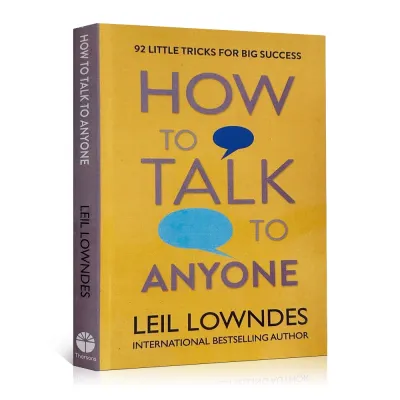
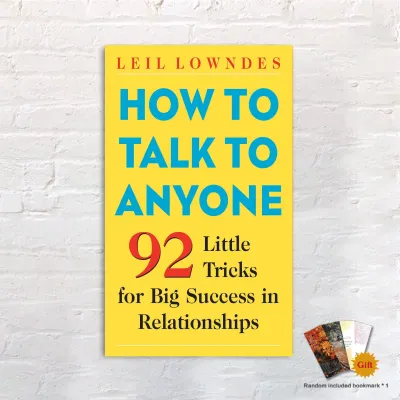
Leil Lowndes’ How to Talk to Anyone is a highly practical guide for mastering small talk, reading body language, and building initial rapport. It is particularly valuable for professionals who frequently attend networking events, mix at client dinners, or need to break the ice with new colleagues. However, if your primary goal is to navigate high-stakes salary negotiations, resolve deep workplace conflicts, or lead cross-functional teams, you will likely need a more specialized resource. Deciding whether this book is worth your time depends entirely on your current career stage and the specific communication challenges you face daily.
Is 'How to Talk to Anyone' the Right Choice for You?
How to Talk to Anyone offers 92 concrete, actionable techniques designed to make you a more confident and charismatic conversationalist. Lowndes focuses heavily on the mechanics of first impressions, using body language, eye contact, and subtle verbal cues to make others feel comfortable in your presence. For professionals who feel anxious entering a room full of strangers or struggle to keep a casual conversation going, these bite-sized tips provide an immediate, practical toolkit.
The book excels in social and semi-professional settings where rapid rapport-building is essential. If your job involves sales, client relations, or frequent networking events, the techniques can help you transition smoothly from awkward introductions to engaging dialogues. It teaches you how to listen actively, mirror conversational partners, and avoid common social gaffes that can stall a budding professional relationship.
Products mentioned in this guide

Prices are valid at publication and may change. Please refer to the product page for the latest price.
Despite these strengths, the book has notable limitations. It operates primarily on the surface level of human interaction, offering quick fixes and behavioral adjustments rather than deep psychological insights. If you are dealing with systemic team dysfunction, managing intense emotional friction during performance reviews, or trying to align stakeholders with conflicting interests, these lighthearted social tactics will fall short.
To determine if this book is the right investment, evaluate your primary communication pain points. If you find yourself freezing during casual office interactions or struggling to mingle at industry gatherings, this book is highly relevant. If your challenges are more structural—such as negotiating contracts or managing complex team dynamics—you should look toward titles that address conflict resolution and strategic negotiation.
How to Choose the Best Communication Book for Your Career
Selecting the right communication book requires a clear understanding of your professional goals and the specific environment in which you operate. Rather than simply purchasing the most popular bestseller, start by identifying your immediate skill gap. Determine whether you need to improve your public speaking, refine your daily written correspondence, master high-stakes negotiation, or develop greater emotional intelligence to handle difficult conversations.

The format of the book also plays a significant role in how effectively you absorb and apply its lessons. For busy professionals navigating long daily commutes in heavy traffic, audiobooks can turn passive travel time into productive learning sessions. Conversely, if you prefer to highlight key passages, write notes in the margins, and easily refer back to specific exercises, a physical book or an e-book is generally more effective.
Look for books that prioritize actionability over abstract theory. The most impactful communication guides offer concrete scripts, real-world case studies, and structured exercises that you can practice immediately in your daily interactions. A book that explains the psychology of communication is useful, but one that provides a step-by-step framework for delivering tough feedback is far more valuable in a fast-paced corporate setting.
Additionally, it is crucial to consider the cultural context of the advice. Many popular communication books are written from a Western perspective, which often champions directness, assertiveness, and flat organizational hierarchies. In a Filipino workplace, where communication is traditionally high-context, indirect, and deeply respectful of hierarchy, some of these direct techniques may need careful calibration. You must learn to balance assertiveness with diplomacy, ensuring you maintain smooth interpersonal relationships while still expressing your professional needs clearly.
Top Communication and Interpersonal Skills Books to Consider
To help you build a comprehensive professional skill set, we have curated a selection of highly regarded communication books. Each of these titles addresses a distinct interpersonal challenge, ranging from high-stakes conflict resolution to daily workplace clarity. By understanding what each book offers, you can choose the resource that best aligns with your current career objectives and organizational environment.
Crucial Conversations: Tools for Talking When Stakes Are High
Written by Kerry Patterson, Joseph Grenny, Ron McMillan, and Al Switzler, Crucial Conversations provides a robust framework for handling discussions where opinions vary, stakes are high, and emotions run strong. The book focuses on the concept of psychological safety, teaching readers how to make it safe for everyone to share their honest perspectives without fear of retaliation or defensiveness.
A key strength of this book is its focus on self-awareness and managing emotional triggers. It helps you recognize when a conversation is turning sour and provides practical tools to steer the dialogue back to a productive path. Instead of resorting to silence or verbal aggression, you learn to maintain a constructive flow of information.
This title is highly recommended for managers, team leaders, and human resource professionals who must regularly deliver sensitive feedback, manage organizational changes, or resolve deep-seated conflicts between team members. It is an essential read for anyone looking to build trust and collaboration in high-pressure environments.
Never Split the Difference: Negotiating As If Your Life Depended On It
Written by former international hostage negotiator Chris Voss, Never Split the Difference offers a fascinating and highly practical approach to negotiation. Voss argues that traditional negotiation theories rely too heavily on cold logic, whereas real-world decisions are driven primarily by emotion and instinct. He introduces “tactical empathy,” a method of active listening designed to uncover the hidden motivations of your counterpart.
The book outlines specific, actionable techniques such as mirroring (repeating the last few words your counterpart said) and labeling (identifying and naming their emotions). These tools are designed to build rapid trust, disarm defensive behavior, and gather critical information without making the other party feel cornered or manipulated.
While the strategies originated in high-stakes hostage situations, they are highly applicable to everyday business scenarios. Whether you are negotiating a salary increase, discussing project timelines with a client, or setting boundaries with a demanding supervisor, this book provides the tactical tools needed to achieve favorable outcomes without damaging professional relationships.
Surrounded by Idiots: The Four Types of Human Behavior
Thomas Erikson’s Surrounded by Idiots simplifies the complex world of human behavior by using a color-coded system based on the classic DISC personality model. Erikson categorizes people into four distinct behavioral types: Red (dominant and driven), Yellow (inspiring and social), Green (stable and supportive), and Blue (analytical and detail-oriented).
The core premise of the book is that communication breakdowns often occur because we speak to others in our own preferred style rather than adapting to theirs. By learning to identify the behavioral colors of your colleagues, clients, and managers, you can tailor your delivery, tone, and message to match their natural communication preferences.
This book is exceptionally useful for improving internal team collaboration, delegating tasks effectively, and managing diverse personalities. It helps reduce workplace friction by reframing frustrating behavioral differences as predictable communication styles that can be navigated with the right approach.
Simply Said: Communicating Better at Work and Beyond
Jay Sullivan’s Simply Said is a highly practical guide dedicated to the art of clear, brief, and purposeful communication in the corporate world. Sullivan emphasizes that effective communication is never about the speaker; it is always about the audience. The book provides actionable advice on how to shift your focus from what you want to say to what your listener needs to hear.
The book covers a wide range of daily professional tasks, including writing concise emails, structuring persuasive presentations, and delivering clear verbal updates. It offers specific strategies for eliminating unnecessary corporate jargon, organizing your thoughts logically, and ensuring your core message is easily understood by busy decision-makers.
This title is ideal for corporate professionals, consultants, and technical experts who need to translate complex data into clear, actionable insights. By mastering the principles of brevity and clarity, you can save time, reduce misunderstandings, and significantly increase your professional influence.
Quick Comparison of Recommended Communication Books
To help you quickly identify which book best suits your current professional needs, we have summarized the key features of each recommended title in the table below.
| Book Title | Primary Focus | Best For | Key Takeaway |
|---|---|---|---|
| How to Talk to Anyone | Small talk, body language, and initial rapport | Networking events, client dinners, and social mingling | Master the mechanics of first impressions and casual conversation. |
| Crucial Conversations | Psychological safety and high-stakes dialogue | Managers, team leaders, and conflict resolution | Keep dialogue flowing constructively when emotions run high. |
| Never Split the Difference | Tactical empathy and emotional negotiation | Salary discussions, sales, and boundary-setting | Use active listening and emotional labeling to influence outcomes. |
| Surrounded by Idiots | Personality-based communication styles (DISC) | Team collaboration and managing diverse personalities | Adapt your communication style to match the behavioral traits of others. |
| Simply Said | Clarity, brevity, and structured messaging | Emails, presentations, and daily corporate communication | Focus entirely on the audience's needs to deliver clear messages. |
Where to Buy and What to Check Before Purchasing
When you are ready to invest in your professional development, it is important to purchase your books from authorized and reputable channels. In the Philippines, established physical bookstores and their official online storefronts are the safest options for securing genuine copies. Purchasing from verified sellers ensures that you receive high-quality prints and directly support the authors and publishers.
Before finalizing your purchase, carefully verify the edition and format of the book. If you are buying an audiobook, check whether it is the unabridged version to ensure you do not miss any valuable chapters or exercises. For physical books, pay attention to the publication year, as newer editions may contain updated case studies, revised frameworks, or additional practical resources.
Be vigilant about book authenticity, especially when browsing unverified online marketplaces or third-party sellers on ecommerce platforms. Counterfeit or pirated editions are common and often suffer from poor print quality, missing pages, smudged ink, and weak binding that falls apart easily. Checking customer reviews for photos of the actual book cover and pages can help you verify the print quality before buying.
Keep realistic price expectations in mind when budgeting for these titles. Imported self-help and business books typically range from ₱400 to ₱1,200 or more, depending on whether they are paperbacks, hardcovers, or digital formats. While pirated copies may seem tempting due to extremely low prices, investing in a genuine, durable edition ensures a better reading experience and a lasting addition to your professional library.
Frequently Asked Questions (FAQ)
How long does it take to see results from reading communication books?
Reading a communication book is only the first step toward improving your interpersonal skills. To see tangible results, you must consistently practice the techniques in real-world scenarios, which requires deliberate effort and patience. Most professionals begin to notice subtle improvements in their daily interactions, such as smoother small talk or better-managed conflicts, within a few weeks of consistent application. However, mastering these skills and turning them into natural habits typically takes several months of practice and self-reflection.
Are audiobooks as effective as physical books for learning communication skills?
The effectiveness of audiobooks depends largely on your personal learning style and daily routine. Audiobooks are highly convenient for absorbing concepts, stories, and conversational tones during your daily commute or while performing routine tasks. However, physical books or e-books are often superior when it comes to studying structured frameworks, highlighting key passages, and completing written exercises. For the best results, consider using audiobooks for initial exposure to the concepts and physical copies for deep study and reference.
Should I read multiple communication books at the same time?
It is generally more effective to focus on one communication book at a time rather than reading multiple titles simultaneously. Each book introduces its own unique methodology, terminology, and behavioral frameworks. Trying to apply different systems at once can lead to cognitive overload and confusion, making it difficult to build consistent habits. Focus on fully digesting one book, practicing its core techniques in your daily work life, and only moving on to the next title once you feel comfortable with the newly acquired skills.

Community discussion
Share your experience or ask a question. Comments are reviewed before publication.