
Choosing your first acoustic guitar is a milestone decision that shapes your entire musical journey. In the Philippines, finding the right instrument involves balancing physical comfort, sound quality, and the durability required to withstand a tropical climate. The ideal beginner guitar is not necessarily the most expensive model, but rather one that features low string action, a comfortable neck profile, and a body shape that fits your physical frame.
By focusing on playability and construction quality, you can avoid the common pitfalls that lead many new players to abandon the instrument. A guitar that is physically painful to play or prone to structural warping will quickly end up gathering dust. Understanding what makes an instrument beginner-friendly ensures your budget is spent on features that actively support your learning and practice habits.
Key Features That Make an Acoustic Guitar Beginner-Friendly
When evaluating a beginner guitar, physical playability is the single most important factor. The distance between the strings and the fretboard, known as the string action, directly dictates how much finger pressure is required to produce a clean note. High action forces you to press down excessively hard, which quickly causes finger fatigue, soreness, and frustration. Conversely, low action allows your fingers to glide smoothly across the fretboard, making early practice sessions far more enjoyable and productive.
Products mentioned in this guide
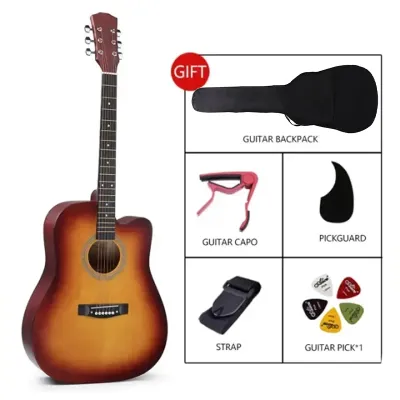
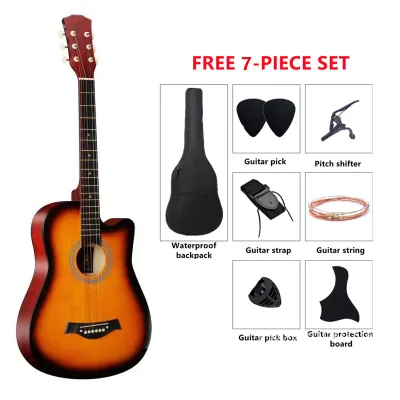
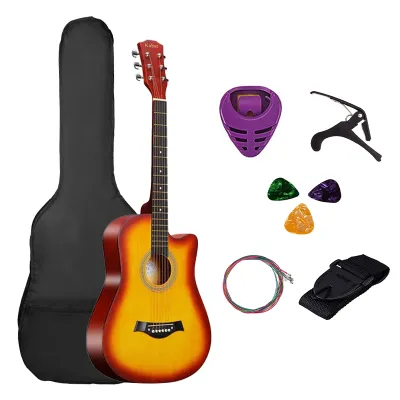

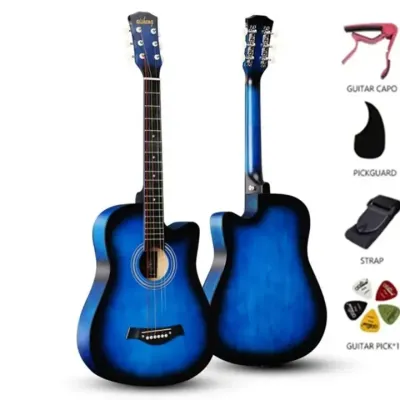
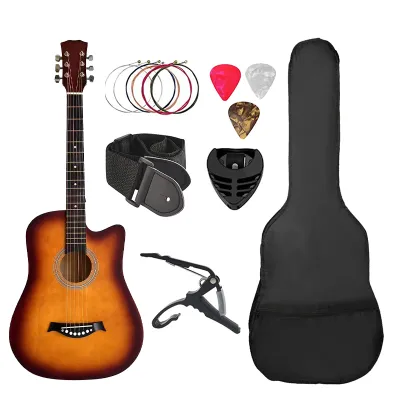

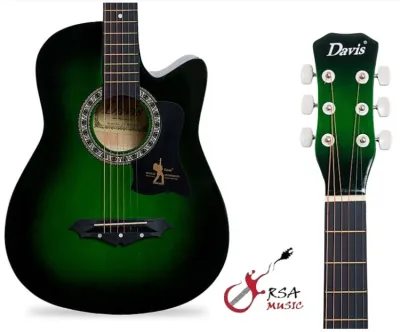
Prices are valid at publication and may change. Please refer to the product page for the latest price.
The shape and thickness of the neck, or the neck profile, also play a critical role in hand comfort. Beginners generally benefit from a modern thin-C or slim-U neck profile, which allows smaller hands to wrap comfortably around the fretboard. A neck that is too thick or bulky can strain your thumb and wrist, making it difficult to reach the lower strings or execute basic open chords.
Scale length and fretboard width are additional dimensions that influence how a guitar feels in your hands. A shorter scale length—the distance between the nut and the bridge—reduces the overall tension of the strings, making them softer to press down. A standard nut width of around 43 millimeters (1.69 inches) is ideal for most beginners, as it provides enough spacing to prevent your fingers from accidentally muting adjacent strings without requiring an uncomfortable stretch.
It is important to recognize that factory setups are rarely perfect, especially for budget-friendly instruments. Guitars are often shipped from factories with slightly high action to prevent string buzz during long transit periods. Investing a small portion of your budget—typically between ₱500 and ₱1,500—to have a local luthier or guitar technician perform a professional setup is highly recommended. They can adjust the truss rod, file the nut slots, and lower the saddle to optimize the playability of your instrument before your very first lesson.
Match Your Body Shape to Your Playing Style and Comfort
Acoustic guitars come in various shapes and sizes, and choosing the right one is essential for physical comfort during long practice sessions. The physical size of the guitar body dictates how your arm drapes over the instrument and how close the fretboard feels to your body.

Dreadnought: The Versatile Standard for Strumming
The dreadnought is the most recognizable and widely manufactured acoustic guitar shape in the world. Characterized by its large body, broad shoulders, and deep waist, this design is engineered for maximum projection, robust volume, and a strong bass response. It is highly versatile and serves as the industry standard for flatpicking, heavy strumming, and vocal accompaniment.
However, the sheer physical volume of a dreadnought can pose challenges for certain players. If you have a smaller body frame, are purchasing a guitar for a younger teen, or prefer practicing while seated on a deep sofa, a dreadnought can feel bulky and awkward. The wide lower bout forces your plucking arm high and forward, which can lead to shoulder tension over extended playing periods.
Concert and Auditorium: Ergonomic Comfort for Smaller Frames
For players seeking a more ergonomic experience, concert and grand auditorium shapes offer an excellent alternative. These designs feature a much narrower waist and a slightly shallower body depth compared to a dreadnought. The tighter waist allows the guitar to sit lower and more securely on your lap when playing seated, bringing the neck closer to your body.
Tonally, these mid-sized guitars produce a highly balanced sound with a focused midrange and clear treble response. While they lack the booming bass of a dreadnought, their excellent note separation makes them incredibly responsive to fingerstyle playing and light-to-medium strumming. They provide a highly comfortable middle ground for adults and teenagers alike.
Parlor and Travel Sizes: Portability for Younger Players
Parlor guitars and 3/4-sized travel instruments are the smallest steel-string acoustics available. These compact guitars feature short scale lengths, narrow bodies, and lightweight construction, making them exceptionally easy to handle. They are the ideal choice for younger children, petite players, or anyone who needs a highly portable instrument for daily commutes or travel.
While these smaller instruments naturally sacrifice low-end bass response and overall projection, they offer a unique, punchy midrange tone that has its own charm. The reduced string tension of a shorter scale makes fretting chords incredibly easy for uncallused fingers. Choosing a travel-sized guitar ensures that physical size is never a barrier to daily practice.
Laminate vs. Solid Top: Balancing Budget and Tropical Durability
The type of wood construction used in an acoustic guitar determines both its tonal potential and its resilience to environmental factors. For players in the Philippines, this choice is particularly significant due to the country’s intense tropical climate.
Laminate construction involves gluing together multiple thin layers of wood, topped with a decorative outer veneer. Because the wood grains of these layers run in opposing directions, laminate guitars are incredibly stable and structurally rigid. They are highly resistant to rapid changes in temperature and relative humidity, meaning they are unlikely to warp, swell, or crack when exposed to the intense humidity of the wet season or the dry air of an air-conditioned room. Furthermore, all-laminate guitars are highly budget-friendly, typically ranging from ₱3,000 to ₱8,000, making them an accessible entry point for beginners.
A solid top guitar features a soundboard made from a single, continuous piece of natural wood. This allows the top to vibrate much more freely and efficiently when the strings are plucked, resulting in superior resonance, richer harmonics, and better volume. Over time, as the natural resins in the solid wood dry out, the tone of the guitar will actually improve and “open up.” Beginners with a flexible budget—typically starting around ₱10,000—should consider a solid-top guitar if they want an instrument that will grow with them as their skills advance, provided they are willing to care for its environmental needs.
The most common tonewood used for acoustic guitar tops is spruce, which is favored for its bright, articulate tone and versatile dynamic range. Mahogany and sapele are also popular choices, offering a visually darker aesthetic and a warmer, woodier sound with a focused midrange. When choosing between these woods, select the one that matches your personal aesthetic and tonal preferences, as both are excellent options for learning.
Navigating Entry-Level Brands and Verifying Build Quality
Navigating the market for entry-level guitars requires focusing on established brands that maintain reliable quality control standards. Choosing an entry-level model from a reputable manufacturer ensures that the instrument is built to correct structural specifications, which is vital for proper intonation and tuning stability.
Major global brands such as Yamaha (specifically the F and FG/FS series), Cort (AD series), Fender (Squier and CD series), and Ibanez (PF series) have spent decades refining their entry-level manufacturing processes. These brands offer consistent build quality, reliable hardware, and accessible customer support. While lesser-known, ultra-budget brands may seem tempting due to lower prices, they often suffer from inconsistent quality control, which can manifest as warped necks, misplaced frets, or unstable tuning machines.
Before finalizing any purchase, it is highly recommended to perform a physical inspection of the instrument using a simple checklist:
- Verify Neck Relief: Hold the guitar body and look straight down the edge of the fretboard from the headstock toward the bridge. The neck should be almost straight, with a very slight, barely visible upward curve. A severe forward bow or a backward bow will cause severe fret buzz or make the guitar unplayable.
- Check for Fret Sprout: Run your thumb and index finger gently along both sides of the wooden fretboard. The metal fret ends should feel smooth and flush with the wood. If they feel sharp or protrude past the edge of the fretboard, the wood has shrunk, which can scratch your hands during play.
- Inspect the Bridge: Examine the wooden bridge where it is glued to the top of the guitar body. There should be no visible gaps, lifting, or separation between the bridge and the soundboard.
- Test the Tuning Machines: Turn each tuning peg slowly in both directions. The gears should turn smoothly and consistently without slipping, grinding, or feeling excessively loose.
Deciding where to buy your guitar involves weighing the benefits of local music stores against online marketplaces. Visiting a brick-and-mortar store (such as JB Music, Yupangco, Lazer, or RJ Guitar) allows you to physically hold the instrument, feel its weight, and hear its acoustic tone in person. It also provides immediate access to in-store assistance and professional setup services.
If you choose to purchase from an online marketplace or e-commerce platform, always buy from authorized flagship stores or highly rated specialty music sellers. Carefully read customer reviews to verify the seller’s packaging quality, as guitars require robust double-boxing and bubble wrap to survive domestic shipping. Additionally, confirm the platform’s return and refund policies to ensure you are protected in the event of shipping damage or manufacturing defects.
Essential Accessories and Protecting Your Guitar in Humid Climates
Acquiring your acoustic guitar is only the first step; maintaining the instrument and equipping yourself with the right tools are essential for a successful learning experience. A few key accessories will protect your investment and make daily practice much more convenient.
A padded gig bag is an absolute necessity for protecting your guitar from minor impacts, scratches, and dust. Look for a bag with at least 10mm to 20mm of foam padding and sturdy shoulder straps for easy transport. You will also need a reliable clip-on chromatic tuner, which attaches directly to the headstock and detects the instrument’s vibrations, allowing you to tune accurately even in a noisy room. A basic capo is another invaluable tool, allowing you to easily change the key of a song to match your vocal range without having to learn complex chord shapes. Finally, keep a variety pack of guitar picks of different thicknesses (ranging from thin to heavy) so you can experiment and find what feels most comfortable for your strumming style.
The tropical climate of the Philippines, characterized by high relative humidity that can exceed 80%, presents a unique challenge for instrument care. High humidity causes natural wood to absorb moisture and swell, which can lift the bridge, warp the top, and raise the string action. Conversely, leaving a guitar in an air-conditioned room for extended periods can dry out the wood too quickly, leading to shrinkage and cracking.
To protect your guitar, store it inside its padded gig bag or a hard case when you are not playing, rather than leaving it exposed on a wall hanger or floor stand. Place silica gel packets or specialized two-way humidity control packets inside the accessory compartment of the case to help regulate the internal moisture levels. Avoid storing the instrument in direct sunlight, near open windows, or directly in the path of air conditioning vents.
Proper string maintenance is also crucial for ease of play and tone quality. Factory strings are often heavy and prone to rapid corrosion from humid air and finger sweat. Replacing them with a fresh set of extra-light (gauge .010 to .047) or custom-light (gauge .011 to .052) steel strings will make pressing down on the frets significantly easier for beginners. After every playing session, take a moment to wipe down the strings and fretboard with a clean, dry microfiber cloth to remove oils and sweat, which will prevent rust and extend the life of your strings.
Frequently Asked Questions (FAQ)
Is a classical nylon-string guitar easier for beginners than a steel-string acoustic?
Nylon strings are softer and more flexible than steel strings, which makes them much gentler on uncallused fingertips during your first few weeks of learning. However, classical guitars feature significantly wider, flatter fretboards and thicker neck profiles than steel-string acoustics. This wider spacing requires a larger hand stretch, which can make forming basic open chords challenging for players with smaller hands. Ultimately, your choice should align with your musical goals: if you want to play pop, rock, country, or folk music, starting on a steel-string acoustic is recommended, whereas classical, flamenco, or traditional fingerstyle music is best suited for a nylon-string classical guitar.
Do I need an acoustic-electric model with built-in pickups?
If your primary goal is to practice at home, learn basic chords, and play for yourself, a purely acoustic model is highly recommended. Built-in electronics, such as pickups and preamps, add to the manufacturing cost of the instrument. At an entry-level price point, this extra cost often means the manufacturer had to compromise on the quality of the wood, hardware, or construction to keep the price low. A purely acoustic guitar provides the best value in terms of structural quality and natural tone for your budget. You can always have a high-quality aftermarket pickup installed by a professional technician later if you decide to perform live or record.
How can I tell if my guitar neck needs a truss rod adjustment?
You can check your guitar’s neck relief using a simple visual test. Press down the low E string at the first fret with your left hand, and simultaneously press it down at the fret where the neck meets the body (usually the 14th fret) with your right hand. While holding the string down, look at the gap between the bottom of the string and the top of the 6th or 7th fret. There should be a very small gap, roughly the thickness of a standard business card or a heavy guitar pick. If the string is touching the fret, the neck is too straight or backbowed, which causes fret buzz. If the gap is noticeably larger than a business card, the neck has too much forward bow, resulting in high, uncomfortable action. If your neck requires adjustment, it is safest to take it to a professional guitar technician to prevent accidental damage to the truss rod.
Community discussion
Share your experience or ask a question. Comments are reviewed before publication.