
Starting your drumming journey in the Philippines requires balancing your learning goals with practical living conditions. Whether you live in a high-rise condominium in Metro Manila or a shared family home in the provinces, noise control, space limitations, and budget are major factors. An electronic drum set offers a practical solution, allowing you to practice silently with headphones while enjoying a wide variety of drum sounds. Among the entry-level options on the market, Alesis has established itself as a prominent brand for beginners, offering kits that balance modern features with accessible pricing.
Choosing the right Alesis drum set depends on how much space you have, your budget, and whether you plan to transition to acoustic drums in the future. The ideal beginner kit should provide a realistic playing feel, durable hardware that can withstand daily practice, and a sound module that keeps you motivated. By understanding the key differences between entry-tier and mid-tier beginner models, you can make an informed investment that supports your musical growth for years to come.
What to Look for in a Beginner Alesis Drum Set
When shopping for your first electronic drum kit, the physical components and the technology inside the drum module will directly impact how quickly you develop proper technique. Electronic drums rely on sensors to translate your physical strikes into digital sounds, meaning the materials and mechanisms used play a critical role in your learning experience.
Products mentioned in this guide
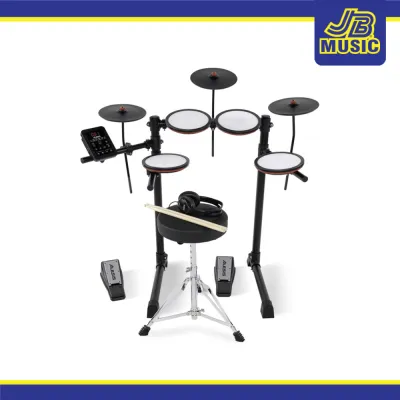
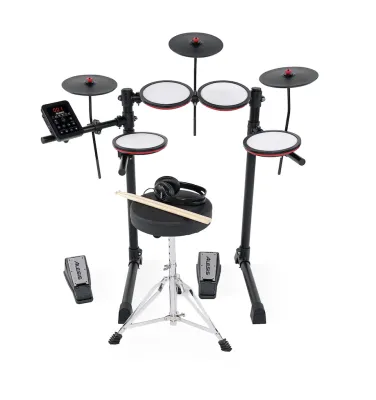
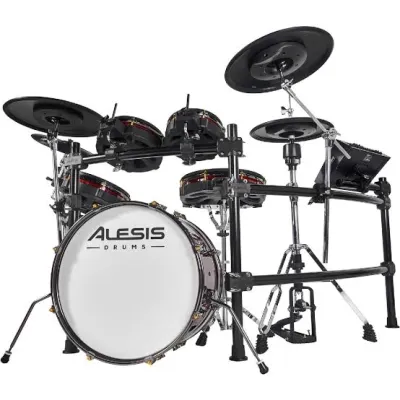
Prices are valid at publication and may change. Please refer to the product page for the latest price.
Mesh Pads versus Rubber Pads The material of the drum heads is one of the most important decisions you will make. Older or ultra-budget electronic kits often use hard rubber pads. While rubber is highly durable and inexpensive, it has a very stiff rebound that can cause wrist fatigue during long practice sessions. Furthermore, striking rubber pads produces a loud, hollow acoustic tapping sound that can easily annoy family members or neighbors in adjacent rooms.
In contrast, mesh drum heads are made of a woven material that closely mimics the tension and rebound of a traditional acoustic drum skin. Mesh pads are significantly quieter when struck, making them the preferred choice for quiet home practice. They also allow you to adjust the tension using a standard drum key, helping you customize the stick response to your liking. For a beginner, starting with mesh pads promotes better stick control and reduces physical strain on your hands and wrists.
Kick Drum Pedal Mechanisms The way you play the bass drum is another crucial factor in your physical development as a drummer. Entry-level electronic kits generally use one of two kick pedal designs: a compact, pedal-only trigger unit or a physical kick drum tower with a separate beater pedal.
Pedal-only units, often called stealth or trigger pedals, use an internal switch to trigger the bass drum sound when pressed. These are highly compact, lightweight, and produce almost no physical vibration through the floor, which is excellent for upstairs bedrooms or apartments. However, they lack the physical rebound of a real bass drum pedal.
A kick drum tower, on the other hand, features a vertical pad that you strike with a traditional bass drum pedal and beater. This setup replicates the exact mechanical feel of an acoustic bass drum. It allows you to practice essential foot techniques, such as heel-up or heel-down playing, and builds the necessary ankle strength and muscle memory. If you plan to play acoustic drums in a band, church, or studio, investing in a kit with a physical kick tower is highly recommended.
Essential Module Features for Beginners The drum module, often called the “brain” of the kit, houses the synthesizer and control interface. For a beginner, a complex module with thousands of editable parameters can be overwhelming. Instead, look for a module that prioritizes core educational tools.
A built-in metronome is non-negotiable for developing a steady sense of rhythm. Look for modules that allow you to easily adjust the tempo, time signature, and click sound. Play-along tracks are also incredibly valuable, as they let you practice keeping time with a full band in various musical genres. Additionally, many Alesis modules include coaching modes that grade your timing accuracy, helping you identify whether you are rushing or dragging the beat.
Connectivity Needs Your drum module must connect seamlessly with your other devices to maximize your practice sessions. A standard headphone jack (either 3.5mm or 6.35mm) is essential for silent practice. Ensure the module has an auxiliary (Aux) input, which allows you to connect your smartphone, tablet, or laptop via an audio cable to play along with your favorite songs on Spotify, YouTube, or MP3 files.
For modern learners, a USB/MIDI port is equally important. This connection allows you to link your drum kit to a computer or tablet, turning your drum set into a MIDI controller. You can then use the kit with interactive drum learning software, recording programs, or virtual instrument plugins to expand your sound library.
Popular Alesis Electronic Drum Kits for Beginners
Alesis offers several distinct series designed specifically for those starting their drumming journey. These kits are structured into clear tiers based on their physical size, hardware capabilities, and module features.

Compact and Budget-Friendly Options (e.g., Turbo Series)
The Alesis Turbo Mesh is a prime example of an entry-tier electronic drum kit designed for absolute beginners who have limited space and a strict budget. This kit is engineered to provide the essential benefits of electronic drumming without unnecessary complexity.
The physical footprint of the Turbo Mesh is remarkably compact. It utilizes a lightweight, folding aluminum rack that can be easily tucked into a corner or stored in a closet when not in use. This makes it an excellent option for small bedrooms, studio apartments, or shared living spaces common in urban Philippine households.
Despite its budget-friendly positioning, the Turbo Mesh features all-mesh drum heads, including an 8-inch mesh snare pad and three 8-inch mesh tom pads. The module interface is highly simplified, featuring large, clearly labeled buttons and a straightforward LED display. This allows young learners or non-technical users to turn on the kit and start playing immediately without navigating complicated menus.
However, to keep the kit affordable and compact, certain design trade-offs were made. The cymbals are single-zone, meaning they produce the same sound regardless of whether you strike the bow or the edge, and they do not support a “choke” function (stopping the sound by grabbing the cymbal). Additionally, the kick drum and hi-hat controllers are basic, pedal-only trigger units rather than physical stands or towers. The pads also have slightly lower dynamic sensitivity, meaning subtle variations in how hard you hit the drum may not be fully captured by the module. When purchasing this tier, always check with your local music retailer regarding what accessories are included in the box, as some regional bundles may or may not include a drum throne, headphones, or drumsticks.
Step-Up Beginner Kits (e.g., Nitro Series)
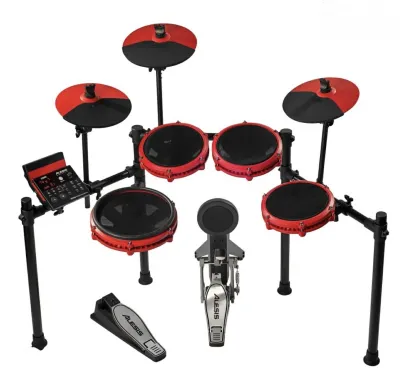
For beginners who want a more authentic playing experience and room to grow as their skills advance, step-up models like the Alesis Nitro Mesh (or its updated counterparts) represent a significant upgrade. These kits are designed to bridge the gap between entry-level electronic practice and acoustic performance.
One of the primary advantages of the Nitro series is the inclusion of a dual-zone mesh snare pad. A dual-zone pad can detect strikes on both the center of the drum head and the outer rim independently. This allows you to perform rim shots and cross-stick patterns, which are essential techniques in genres like jazz, reggae, and rock. The cymbals on these step-up kits are also more expressive, with the crash cymbal featuring a physical choke sensor so you can silence the ring instantly with your hand.
The most notable mechanical upgrade is the inclusion of a dedicated kick drum tower. Instead of a simple trigger pedal, the Nitro series provides a sturdy vertical pad mounted on a steel frame, accompanied by a real chain-drive bass drum pedal. This allows you to practice authentic foot techniques and even swap out the included pedal for your preferred aftermarket model. The hi-hat controller pedal also offers more intermediate control, allowing for open, half-open, and closed sounds.
The trade-off for these advanced features is a larger physical footprint and a higher price point. The steel rack is more robust and rigid than the Turbo’s aluminum frame, which prevents the kit from sliding during intense play but also makes it heavier and less convenient to fold away. Before purchasing, it is highly recommended to measure your dedicated practice space to ensure you have enough room to comfortably sit, play, and access the rear connections of the module.
Comparing Key Specifications Across Entry-Level Kits
To help you decide which tier best fits your budget and practice environment, it is helpful to compare their technical specifications side-by-side. Use the following framework as a guide when evaluating different Alesis models online or at your local music store in the Philippines.
| Pad Material | Snare Zones | Kick Pedal Type | Built-in Sounds/Kits | Physical Footprint |
|---|---|---|---|---|
| Mesh (Turbo Series) | Single-Zone | Pedal-Only Trigger | Basic (approx. 120 sounds, 10 kits) | Compact / Foldable (approx. 3 x 2 feet) |
| Mesh (Nitro Series) | Dual-Zone | Physical Kick Tower & Pedal | Expanded (approx. 385 sounds, 40 kits) | Medium / Semi-Fixed (approx. 4 x 3 feet) |
When shopping, keep in mind that regional product bundles can vary significantly. Some packages may include local power adapters, specific drumstick sizes, or bundled headphones. Always read the product label carefully and verify the exact box contents with the seller before finalizing your checkout to avoid unexpected secondary purchases.
Setup, Connectivity, and Humidity Care in the Philippines
Setting up and maintaining an electronic drum kit in the Philippines requires special attention to local electrical standards and the tropical climate. Taking preventative measures during setup will protect your investment and ensure the longevity of the sensitive electronic components.
Electrical Safety and Power Compatibility The standard electrical voltage in the Philippines is 220V at 60Hz. Most Alesis drum modules utilize an external power adapter (often called a “wall wart”) to convert this high voltage down to a safe direct current (usually 9V or 12V). Before plugging your module into the wall, verify that the power adapter’s input label explicitly states compatibility with 220V. Using an incorrect 110V adapter designed for other regions will permanently damage the adapter and potentially fry the drum module.
Additionally, local power grids can experience sudden voltage fluctuations, brownouts, or power surges, especially during the typhoon season. To safeguard your drum module’s internal circuitry, always plug the power adapter into a high-quality surge protector or an Uninterruptible Power Supply (UPS) rather than directly into the wall outlet.
Humidity and Climate Maintenance The high relative humidity in the Philippines poses a unique challenge to electronic musical instruments. Moisture in the air can accelerate the oxidation of metal jacks, degrade rubber components, and encourage mold growth on mesh drum heads.
To protect your kit, place it in a well-ventilated room, ideally one with consistent air conditioning or fan circulation. Avoid setting up the drums directly against damp concrete walls or in direct sunlight, which can warp plastic parts. Placing reusable silica gel packs inside the accessory pouch or near the module’s connection ports can help absorb localized moisture. After an intense, sweaty practice session, make it a habit to wipe down the mesh heads, rubber cymbals, and the module face with a dry, clean microfiber cloth to prevent sweat from seeping into the sensors.
Device and App Connectivity Connecting your Alesis module to an external device like an iPad, Android tablet, or laptop can open up a world of interactive learning. To do this, you will need a standard USB Type-A to Type-B cable (commonly known as a printer cable).
If you are connecting to a modern smartphone or tablet, you will also need an On-The-Go (OTG) adapter (such as a USB-C to USB-A adapter or a Lightning to USB-A adapter) to bridge the cable to your device’s charging port. Always verify that your mobile device meets the minimum operating system requirements of your chosen drum learning app before purchasing any adapters.
Headphones and Amplification For silent practice, the quality and specifications of your headphones are just as important as the drum module itself. Check the impedance rating of your headphones; consumer headphones with an impedance between 16 and 32 ohms are ideal, as they can be easily driven to a comfortable volume by the module’s built-in headphone amplifier. If you use high-impedance studio monitor headphones (e.g., 250 ohms), the volume may be too quiet unless you use an external headphone amplifier.
Also, pay attention to the connector size. Many Alesis modules use a 3.5mm (1/8-inch) headphone jack, while others use a 6.35mm (1/4-inch) jack. Keep a gold-plated 3.5mm-to-6.35mm adapter handy so you can connect any pair of headphones. If you plan to perform for others or practice without headphones, you will need an external amplifier. Ensure you check the wattage requirements and use a dedicated instrument cable to connect the module’s Left/Mono output to the amplifier’s input.
Frequently Asked Questions (FAQ)
Do I need a special amplifier for an Alesis electronic drum set?
Yes, if you want to play out loud, you should use an amplifier specifically designed for electronic drums or a flat-response PA system. Standard electric guitar or bass amplifiers are not built to handle the wide frequency range of electronic drums. A guitar amp focuses on mid-range frequencies and can easily distort or suffer permanent speaker damage from the powerful low-end frequencies of a kick drum. Dedicated electronic drum monitors feature a woofer for deep bass and a tweeter for crisp cymbal highs, ensuring accurate sound reproduction. Always check your module’s output specifications to match the correct cables and input levels.
Can I use an Alesis electronic drum kit with drum learning apps?
Absolutely. Most modern Alesis drum modules feature a USB-MIDI port, allowing them to function as a universal MIDI controller. When you connect the module to a computer, tablet, or smartphone, the software can detect which pad you hit and how hard you hit it in real-time. This compatibility allows you to use popular interactive learning apps, gamified drum software, or digital audio workstations (DAWs) for recording. Before starting, check the specific app’s system requirements and ensure you have the correct USB cables or compatible Bluetooth MIDI adapters if your specific module supports wireless connectivity.
Community discussion
Share your experience or ask a question. Comments are reviewed before publication.