
Finding the right acoustic guitar strings as a beginner in the Philippines involves balancing physical comfort with climate resilience. The high humidity of a tropical climate can degrade uncoated metal strings in a matter of weeks, while the physical strain of pressing down on heavy-gauge steel wires can easily discourage new players. Choosing the correct set of strings can make the difference between a painful, frustrating practice session and an enjoyable learning experience.
For most beginners, a set of light-gauge (.012) or extra-light (.011) phosphor bronze strings offers the ideal starting point. These gauges provide enough tension to produce a rich, resonant acoustic tone without putting excessive strain on uncalloused fingertips. Opting for coated strings, though slightly more expensive upfront, provides a protective barrier against sweat and humidity, ensuring the strings last for months rather than weeks.
Quick Picks: Top Acoustic Guitar Strings for Beginners
To help you get started quickly, the table below summarizes the top acoustic guitar string categories suitable for beginners. These recommendations focus on playability, tone, and how well they withstand the local climate.
Products mentioned in this guide
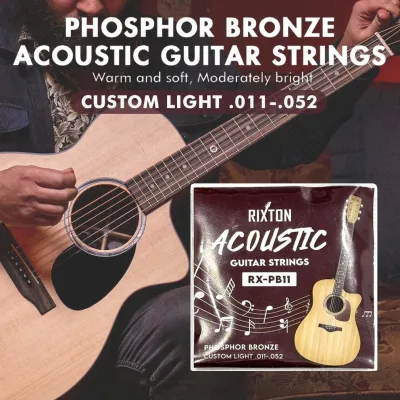
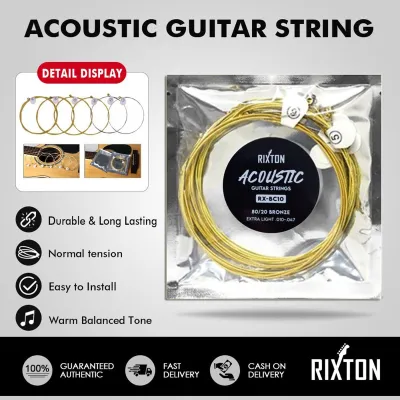
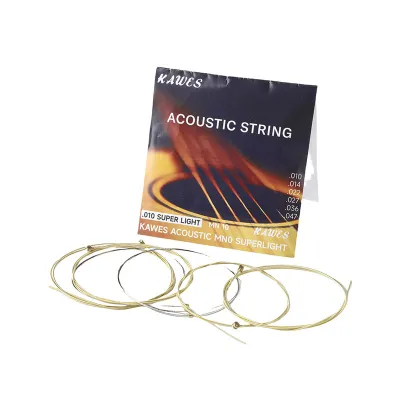
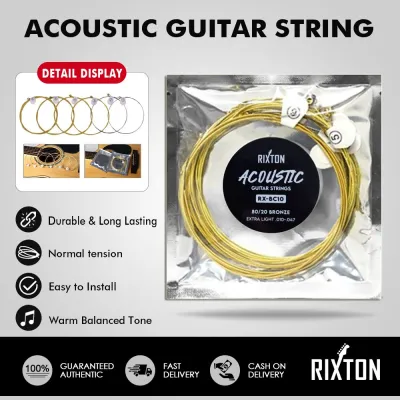
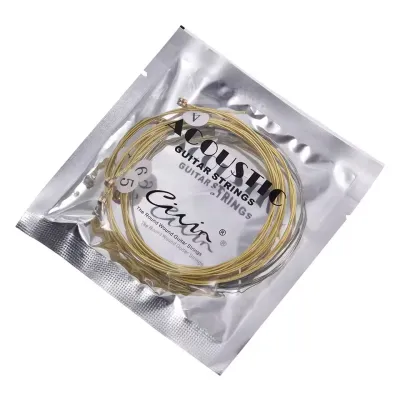
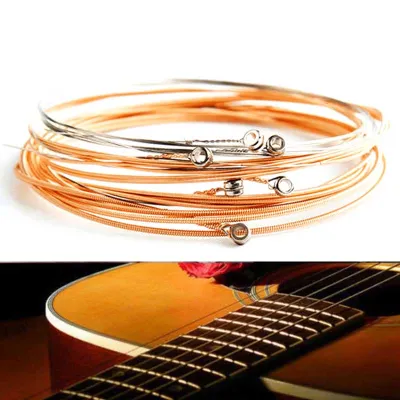
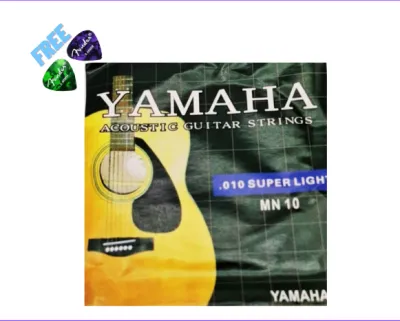
Prices are valid at publication and may change. Please refer to the product page for the latest price.
| Category | Recommended Gauge | Primary Benefit | Approximate Price Range |
|---|---|---|---|
| Best Overall | Light (.012 – .053) | Long-lasting protection, smooth feel, reduced finger squeak | ₱800 – ₱1,200 |
| Best Budget | Light (.012 – .053) | Bright, traditional tone, highly affordable | ₱300 – ₱500 |
| Best for Sensitive Fingers | Extra-Light (.010 – .047) | Minimal tension, very easy to press down | ₱350 – ₱800 |
| Best for Humid Climates | Custom Light (.011 – .052) | Specialized anti-rust treatment, natural feel | ₱600 – ₱900 |
These string sets are widely available throughout the Philippines. You can find them at major brick-and-mortar music instruments retailers in local shopping malls or through official brand distributors on reputable online marketplaces. When purchasing online, always buy from authorized dealers to ensure you receive genuine products, as counterfeit strings are common and suffer from poor durability and poor intonation.
What Makes a Guitar String Set Ideal for Beginners?
String Gauge and Tension
The thickness of a guitar string is referred to as its gauge, measured in thousandths of an inch. A standard light set typically starts with a .012-inch high E string and ends with a .053-inch low E string. For beginners, string gauge directly dictates the amount of physical tension required to bring the guitar to standard pitch. Thicker strings require higher tension, which exerts significant pressure on untrained fingers, leading to soreness and slower progress.

Starting with a lighter gauge, such as .011 (Custom Light) or .012 (Light), allows a beginner to develop finger strength and calluses gradually. While some players might be tempted to go straight to extra-light (.010) strings, these can sometimes feel too loose and may cause fret buzz if the guitar’s neck is not properly set up for lower tension. A balanced light set provides a comfortable middle ground, offering sufficient physical resistance to build proper finger technique while remaining gentle enough for daily practice.
Material and Coating
The metal alloy used to wrap the lower four strings of an acoustic set heavily influences both the tone and the physical feel. The two most common alloys are 80/20 bronze and phosphor bronze. 80/20 bronze consists of 80% copper and 20% zinc, delivering a bright, crisp, and metallic sound that projects clearly. Phosphor bronze contains roughly 92% copper, 8% tin, and a small amount of phosphorus, which results in a warmer, darker, and more balanced tone.
Beyond the alloy, beginners must choose between uncoated and coated strings. Uncoated strings are traditional, offering a textured feel and a highly responsive, bright sound at a lower initial cost. Coated strings feature an ultra-thin, microscopic polymer sleeve wrapped over the wound strings. This coating prevents sweat, dirt, and skin oils from settling into the gaps between the winding wraps, significantly extending the string’s life and providing a smoother, sleeker feel under the fingers.
Climate Considerations
The tropical environment of the Philippines presents a unique challenge for acoustic guitarists. With relative humidity levels frequently exceeding 70% to 80% throughout the year, metal strings are constantly exposed to moisture in the air. When this ambient moisture mixes with the salt and acid from a player’s hands during practice, galvanic corrosion occurs at an accelerated rate.
On uncoated strings, this corrosion manifests as dark spots, rust, and a rough, gritty texture that can make playing uncomfortable. More importantly, corroded strings lose their elasticity, resulting in a dull, dead tone and poor tuning stability. In this humid environment, coated or treated strings offer exceptional practical value. Although they require a higher initial investment, their ability to resist rust means they maintain their bright tone and structural integrity much longer than standard uncoated sets.
Value and Availability
For someone just starting their musical journey, cost-effectiveness is a major consideration. A budget-friendly string set should not mean compromising on quality, as poorly made strings break easily and fail to hold their tune, leading to frustration. Beginners should look for established, widely recognized brands that are consistently stocked by local music shops.
Standard uncoated sets generally cost between ₱300 and ₱500, making them highly accessible for quick replacements. Premium coated sets range from ₱800 to ₱1,200 but can last up to five times longer. Choosing a brand with strong local availability ensures that if a string snaps during a practice session, you can easily obtain an identical replacement without waiting weeks for international shipping or adjusting to a completely different string tension.
Recommended Acoustic Guitar String Sets
Best Overall for Comfort and Longevity
For beginners looking for the best balance of playability, tone, and durability, a premium coated light set (.012 – .053) is highly recommended. These strings utilize advanced polymer coating technology to shield the metal winding from the elements. The microscopic coating is so thin that it does not interfere with the string’s vibration, yet it effectively seals out sweat, skin oils, and humidity. This makes them exceptionally well-suited for the warm, humid climate of the Philippines.
One of the primary advantages of this category is the smooth, comfortable feel. The thin coating fills the microscopic valleys between the winding wraps, creating a sleeker surface. This significantly reduces the physical friction on your fingertips and minimizes the annoying squeaking sound that occurs when sliding your fingers along the fretboard. This smoother texture is highly forgiving for beginners who are still mastering smooth transitions between chords.
While the upfront cost of these premium coated sets is higher than standard strings, they represent excellent long-term value. Because they resist corrosion so effectively, you will not need to change your strings nearly as often. This saves you both money over time and the hassle of frequently restringing your guitar, allowing you to focus entirely on practicing.
- Limitations: Despite their benefits, coated strings do have a few minor drawbacks. Some guitarists find the coated surface feels slightly slippery or plastic-like compared to the raw texture of uncoated metal. Additionally, the polymer barrier can slightly dampen the high-frequency response, resulting in a tone that is marginally warmer and less piercingly bright than a brand-new uncoated set.
Best Budget-Friendly and Bright Tone
If you prefer a traditional, highly articulate acoustic sound and do not mind changing your strings more frequently, an uncoated phosphor bronze or 80/20 bronze set is an excellent choice. These sets are highly affordable, typically retailing for under ₱500. They deliver a classic, unfiltered acoustic tone with a sparkling high-end that brings out the natural resonance of your guitar’s wood.
The bright, crisp sound of a fresh uncoated set is highly beneficial for beginners. Because every note rings out with absolute clarity, you can easily hear the distinct pitch of each string within a chord. This immediate auditory feedback helps you identify mistakes quickly, such as when a finger is accidentally muting an adjacent string or when you are not pressing down hard enough on a fret.
To maximize value, many beginners purchase these uncoated sets in multi-packs. Buying a three-pack of standard strings reduces the cost per set, ensuring you always have a spare set on hand when a string eventually breaks or loses its tone. This approach is ideal for players who enjoy the ritual of maintaining their instrument and want to keep their guitar sounding fresh on a budget.
- Limitations: The major limitation of uncoated strings is their vulnerability to environmental wear. In the humid Philippine climate, uncoated bronze will begin to oxidize almost immediately upon exposure to air and sweat. Within two to three weeks of daily play, the strings may turn dark, feel rough to the touch, and lose their bright, ringing sustain, requiring a complete replacement to restore the guitar's sound quality.
Best Extra-Light Gauge for Sensitive Fingers
For players who struggle with finger pain or have smaller hands, transitioning to an extra-light gauge set (.010 – .047 or .011 – .052) can make a dramatic difference. These sets use thinner core and wrap wires, which require significantly less physical tension to pull the strings up to standard pitch. This lower overall tension makes the strings much softer and easier to press down against the fretboard.
This category is particularly suited for younger beginners, individuals with sensitive fingertips, or musicians who are transitioning from classical guitars with soft nylon strings or electric guitars with highly flexible strings. By reducing the physical effort required to fret chords, extra-light strings help prevent hand fatigue and allow for longer, more comfortable practice sessions.
Using extra-light strings can also help prevent physical strain on older or budget-friendly acoustic guitars. Because these instruments may not have highly reinforced necks, the lower tension exerted by extra-light strings reduces the risk of the neck bowing or the bridge lifting over time, preserving the structural health of your guitar.
- Limitations: The primary trade-off with extra-light strings is their impact on sound. Thinner strings have less physical mass, meaning they transfer less vibrational energy to the guitar's soundboard. As a result, your guitar will produce less acoustic volume and have a thinner, less robust bass response. Furthermore, because the strings are thinner, they are more delicate and can snap easily if you strum aggressively or use a heavy pick.
Best Corrosion Resistance for Humid Climates
For players living in coastal regions of the Philippines or practicing in rooms without consistent air conditioning, specialized treated strings offer an excellent solution. Unlike standard coated strings that feature a physical plastic sleeve, treated strings undergo a molecular-level hydrophobic treatment. This treatment is applied to all six strings in the set, including the plain steel high strings, which are often left unprotected in standard coated sets.
This advanced treatment prevents moisture, sweat, and environmental salt from adhering to the metal surface. By keeping the strings dry at a microscopic level, these sets prevent rust from forming and ensure excellent tuning stability, even when the weather is exceptionally humid or rainy. The treatment is so thin that it is virtually imperceptible, allowing the strings to retain the natural, textured grip of traditional uncoated metal.
These strings are ideal for beginners who want the longevity of a coated string but dislike the slippery feel of polymer sleeves. They provide a reliable, consistent playing experience, ensuring your guitar is always ready to play without the strings feeling sticky or looking tarnished.
- Limitations: Treated strings generally occupy a mid-tier price point, making them more expensive than budget uncoated options. In terms of sound, the anti-corrosion treatment can give the strings a slightly darker, more focused midrange character. They may lack the ultra-bright, metallic shimmer of a brand-new uncoated 80/20 bronze set, which some players prefer for fingerpicking or bright strumming.
How to Extend the Life of Your Guitar Strings
Cleaning
Developing a consistent cleaning routine is the simplest and most effective way to protect your investment. After every single playing session, make it a habit to wipe down your strings with a clean, dry, lint-free microfiber cloth. Sweat and oils from your fingers accumulate on the underside of the strings where they contact the frets; to clean this area, fold the cloth, pinch an individual string gently, and slide the cloth up and down the length of the fretboard.
Avoid using harsh household chemical cleaners or water on your strings, as these can accelerate rust and damage the wood of your fretboard. If you want to clean the fretboard itself, do so during string changes using specialized, manufacturer-approved fretboard conditioners, and always follow the care instructions provided by your guitar’s manufacturer.
Storage
Where and how you store your guitar when you are not playing has a massive impact on string longevity. Avoid leaving your guitar exposed on a stand in a room with high humidity or rapid temperature fluctuations. Instead, store your instrument inside a padded gig bag or a hardshell case when it is not in use.
To combat the humid Philippine climate, place one or two reusable silica gel packets inside the accessory compartment of your guitar case. These packets will absorb excess moisture from the air, maintaining a more stable microclimate around your instrument. Additionally, keep your guitar away from direct sunlight, open windows, and direct drafts from air-conditioning units, as sudden temperature drops can cause condensation to form on the metal strings, leading to rapid rust.
Replacement Signals
Knowing when to replace your strings is essential for maintaining a good playing experience. As strings age, they lose their elasticity and structural integrity. Look out for these clear, observable signs that it is time for a new set:
- Visible discoloration: The strings look dark brown, black, or show green spots of oxidation.
- Rough texture: You feel physical friction, grime, or rough spots when sliding your fingers along the strings.
- Dull tone: The guitar sounds muddy, lifeless, and lacks the bright sustain it had when the strings were new.
- Tuning instability: The strings constantly slip out of tune, even after you have stretched them properly.
- Physical wear: You can see the outer winding wire beginning to separate or fray, particularly over the first few frets.
Frequently Asked Questions (FAQ)
How often should a beginner change acoustic guitar strings?
If you practice daily for 30 to 60 minutes, standard uncoated strings should generally be replaced every 3 to 6 weeks to maintain good tone and playability in the Philippines. Coated or treated strings can easily last 3 to 5 months under the same playing conditions. Rather than following a strict calendar schedule, it is best to monitor your strings for physical rust, stiffness, and a loss of bright resonance.
Can I use classical nylon strings on a steel-string acoustic guitar?
No, you should never install classical nylon strings on a steel-string acoustic guitar. Nylon strings are designed for much lower tension and require completely different bridge designs, tie-on posts, and wide plastic tuning rollers. If installed on a steel-string guitar, nylon strings will slip off the metal tuning pegs, fail to secure at the bridge pins, and produce a very quiet, muddy sound. Conversely, never install steel strings on a classical guitar, as the high tension can permanently warp the neck or pull the bridge off the wood soundboard.
What is the difference between 80/20 bronze and phosphor bronze strings?
The primary difference lies in their alloy composition and resulting tonal characteristics. 80/20 bronze strings, made of 80% copper and 20% zinc, produce a very bright, crisp, and metallic tone that projects well but tends to lose its brilliance quickly. Phosphor bronze strings, made of 92% copper, 8% tin, and a trace of phosphorus, offer a warmer, richer, and more balanced sound. The addition of phosphorus also gives these strings superior natural resistance to corrosion, making them highly popular in humid climates.
Community discussion
Share your experience or ask a question. Comments are reviewed before publication.