
Upgrading or replacing a 10 inch drum hoop is one of the most effective and affordable ways to improve the sound, tuning stability, and aesthetic appeal of your drum kit. Whether you are working with a 10-inch rack tom, a piccolo snare, or a specialized auxiliary snare drum, the hoop plays a vital role in how the drumhead vibrates and how the shell projects its sound. For beginner drummers in the Philippines, finding the right balance between cost, durability, and ease of tuning is essential to maintaining an enjoyable and productive practice routine.
Selecting the ideal hoop requires understanding how different materials and designs interact with your drum shell. The right choice can transform a budget-friendly entry-level drum into a reliable instrument that stays in tune through long practice sessions in tropical weather. By focusing on key features like metal thickness, manufacturing methods, and compatibility, you can make an informed decision that elevates your playing experience without overstretching your budget.
What to Look for in a Beginner-Friendly 10-Inch Hoop
A drum hoop serves several critical structural and acoustic purposes that directly affect your daily playing experience. First and foremost, the hoop secures the drumhead to the shell, distributing the tension from the tension rods evenly across the bearing edge. This even distribution is what allows the drum to produce a clear, consistent pitch rather than a muddy or choked sound. Additionally, the hoop acts as the contact point for rimshots and cross-stick patterns, meaning it must be robust enough to withstand constant impact from wooden drumsticks.
Products mentioned in this guide
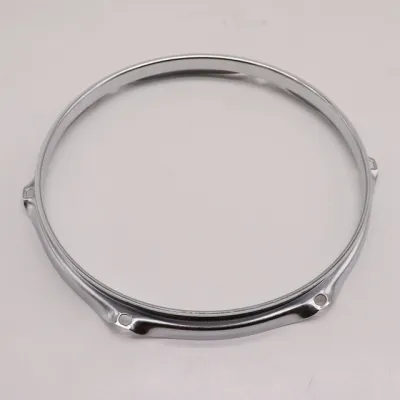
Prices are valid at publication and may change. Please refer to the product page for the latest price.
The material and manufacturing method of the hoop dictate how much the drum shell is allowed to breathe and resonate. Standard hoops are categorized into stamped (triple-flanged), die-cast, and wood varieties, each offering a distinct sonic profile and level of rigidity. For beginners, the primary goal is finding a hoop that controls unwanted, harsh overtones while still allowing enough natural resonance to help you hear when the drum is properly in tune. Highly rigid hoops offer focused attack, while more flexible hoops provide a broader, more open sound.
Durability is another crucial factor, especially for players who are still developing their striking technique and tuning skills. Standard entry-level drums often come with thin, 1.6mm steel hoops that can easily warp if the tension rods are tightened unevenly. Upgrading to a heavier 2.3mm hoop provides significant resistance to bending and warping, ensuring the hoop remains perfectly flat over years of use. This structural integrity makes the tuning process much easier for beginners, as the hoop will not twist or flex as you adjust individual lugs.
Value for money is about balancing the initial purchase price with the longevity and performance benefits the hoop provides. While premium options offer excellent stability, they may not always be necessary for a beginner’s practice space. The ideal purchase should protect your drumhead from premature wear, keep your drum in tune during extended play, and resist the corrosive effects of local environmental conditions. Investing in a well-made hoop saves money over time by reducing the frequency of drumhead replacements and hardware repairs.
Best 10-Inch Hoop Types for Beginners
Understanding the differences between the three primary hoop categories allows you to choose the hardware that best matches your playing style, musical preferences, and budget. Because specific model availability can vary among local music distributors and online marketplaces in the Philippines, focusing on these category-level characteristics is the most reliable way to guide your purchase.

Triple-Flanged (Stamped) Hoops: The Versatile Standard
Triple-flanged hoops, also known as stamped hoops, are the most common and versatile option available on the market today. These hoops are manufactured by stamping a sheet of steel into a shape with three distinct flanges or folds. This design provides structural strength while allowing the metal to retain a slight degree of flexibility. For beginner drummers, this flexibility is highly forgiving because it allows the hoop to conform naturally to minor imperfections in the drumhead collar or the drum shell’s bearing edge.
Sonically, triple-flanged hoops produce an open, lively, and highly resonant tone with plenty of natural sustain. They do not choke the drum shell, allowing the full character of the wood or metal to project clearly. This open sound profile is excellent for learning how to control overtones using dampening gels or rings, giving you a hands-on understanding of drum acoustics. The standard 2.3mm triple-flanged hoop is widely considered the industry sweet spot, offering a substantial upgrade in stiffness and rimshot feel over stock 1.6mm hoops.
From a budget perspective, triple-flanged steel hoops are highly cost-effective, making them the logical first upgrade for any beginner. They are widely available from various hardware manufacturers and fit seamlessly onto most standard drum shells. If you are looking to improve your drum’s tone and tuning stability without spending a significant amount of money, a quality set of 2.3mm triple-flanged hoops provides the best overall value.
Die-Cast Hoops: Best for Focused Tone and Tuning Stability
Die-cast hoops are manufactured by pouring molten metal, typically zinc or aluminum alloys, into a precision mold. This process results in a single, solid piece of metal that is significantly heavier, thicker, and more rigid than any stamped steel hoop. Because they are cast as a single unit, die-cast hoops have absolutely no flex or give, which dramatically alters both the physical performance and the acoustic output of the drum.
The primary benefit of a die-cast hoop for a beginner is its exceptional tuning stability. Because the hoop is entirely rigid, it distributes the downward pressure of the tension rods with absolute uniformity across the entire perimeter of the drumhead. If you struggle with keeping your drum in tune or find that your tension rods back out during heavy playing, die-cast hoops offer a reliable solution. They hold their pitch much longer than stamped hoops, meaning you can spend more time practicing and less time adjusting your drum key.
In terms of sound, die-cast hoops produce a highly focused, dry attack with a shortened sustain and minimal ring. They naturally control wild overtones, giving the drum a pre-equalized, professional sound that is highly desirable for recording or close-mic situations. However, they do carry a higher price point and add significant weight to the drum shell. For beginners who want a crisp, articulate sound and maximum tuning reliability, the investment in die-cast hardware is highly justified.
Wood Hoops: Best for Warmth and Vintage Feel
Wood hoops offer a distinct acoustic and aesthetic alternative to metal hardware, typically crafted from multi-ply maple, birch, or oak. These hoops are significantly thicker than metal options and are designed to give the drum a warm, fat, and highly organic tone. By absorbing some of the high-frequency ring, wood hoops emphasize the low-end and midrange frequencies of the drum shell, making them a favorite for acoustic sessions, jazz, and low-volume practice.
For beginners, the most immediate physical benefit of wood hoops is the feel and sound of rimshots and cross-sticks. Striking a wood hoop produces a deep, woody click that is incredibly satisfying and significantly quieter than the sharp, metallic crack of steel or zinc. This softer impact is much gentler on your drumsticks, reducing splintering, and is also easier on your hands and wrists during long practice sessions. The natural aesthetic also adds a beautiful, vintage look to any standard drum kit.
Despite these benefits, wood hoops require a higher level of care and maintenance, which is an important consideration for absolute beginners. They are susceptible to chipping if struck repeatedly with poor rimshot technique, and they can warp or crack if exposed to extreme changes in temperature and humidity. For players who are willing to handle their instruments with care and prefer a warm, vintage acoustic character, wood hoops provide a unique and rewarding playing experience.
How to Verify Fit and Compatibility Before Buying
Before purchasing a new 10 inch drum hoop, performing a few precise measurements and checks is absolutely necessary to ensure the hardware fits your specific drum shell. Drum manufacturers do not follow a single universal standard for hardware specifications, meaning a generic 10-inch hoop may not automatically align with your existing setup. Taking the time to verify these details beforehand prevents the frustration of ordering incompatible parts.
Lug Count Verification The most critical step is verifying the lug count of your drum shell. While 10-inch drums are incredibly common, they can be configured with different numbers of tuning lugs depending on the brand and model. A standard 10-inch rack tom or snare drum typically features either a 6-lug or an 8-lug configuration, though some specialized or vintage models may even use 5 lugs. You must physically count the number of tension rods on one side of your drum and ensure the new hoop has the exact same number of holes. A 6-lug hoop cannot be forced onto an 8-lug drum shell, as the holes will not line up with the lugs.
Snare vs. Tom Hoops It is vital to distinguish between hoops designed for tom-toms and those designed specifically for snare drums. While the top (batter) hoop is generally identical for both types, the bottom (resonant) hoop is not. A bottom snare hoop features two wide, flat cutouts known as snare gates or snare slots. These gates allow the snare wires to pass freely from the strainer across the bottom drumhead. If you attempt to install a standard tom hoop on the bottom of a snare drum, the hoop will crush the snare wires against the drumhead, choking the sound and damaging the wires. Conversely, using a snare hoop on a tom is unnecessary and leaves open gaps that can catch on clothing or gear.
Hoop Profile and Bearing Edge Take a close look at the profile of your current hoop and how it sits relative to the drum’s bearing edge. The bearing edge is the top rim of the wooden or metal shell where the drumhead makes contact. The hoop must have a profile that allows the drumhead collar to sit flush and flat against this edge. If you are switching from a thin stamped hoop to a thick wood hoop, ensure that the hoop’s inner diameter provides enough clearance for the outer collar of your preferred brand of drumhead.
Tension Rod Threading and Length Upgrading your hoops can sometimes alter the required length of your tension rods. For instance, die-cast hoops and wood hoops are physically thicker at the mounting ears than standard 1.6mm stamped steel hoops. This extra thickness means your existing tension rods may not have enough length to reach and securely thread into the lug casings. Before finalizing your purchase, check if you need to buy slightly longer tension rods to accommodate the thicker hoop profile. Additionally, verify that your tension rods use standard 12-24 threading, which is common on most modern drums, to avoid compatibility issues with the new hardware.
Installation and Maintenance Tips for New Hoops
Properly installing and maintaining your new 10 inch drum hoop is essential to protecting your investment, preserving your drum shell, and achieving the best possible sound. Incorrect installation can lead to uneven tension, warped hoops, and stripped hardware, while poor maintenance can cause premature wear. Following a structured approach ensures your drum remains in peak playing condition.
Proper Seating When installing your new hoop, begin by placing the drumhead flat onto the shell’s bearing edge, followed by the hoop. Insert all the tension rods into the hoop’s holes and thread them into the lugs using only your fingers. Turn each rod until it makes contact with the hoop washer and you feel slight resistance. This finger-tightening process is crucial because it ensures the hoop is seated perfectly level on all sides before you apply any mechanical force with a drum key.
Tuning Pattern To tighten the hoop evenly, always use a star or crisscross tuning pattern rather than moving in a circle around the drum. For a standard 6-lug hoop, start by turning the rod closest to you (Position 1) by one full turn, then move directly across the drum to the opposite rod (Position 4) and turn it the same amount. Next, move to the rod to the right of your starting point (Position 2), then across to its opposite (Position 5), and finally to the remaining pair (Positions 3 and 6). This pattern distributes the downward pressure evenly, preventing the hoop from warping and protecting the drum shell from uneven structural stress.
Avoiding Overtightening Beginners often make the mistake of overtightening tension rods in an attempt to eliminate all wrinkles or achieve a high pitch quickly. Cranking the rods too tightly can strip the threads inside the lug inserts, snap the tension rods, or permanently bend a lightweight stamped hoop. If you feel extreme resistance while turning the drum key, stop and back off. If the drumhead is not seating correctly, loosen all rods and start the finger-tightening process again to ensure the hoop is not caught on a crooked angle.
Climate Care in the Philippines The tropical climate of the Philippines, characterized by high relative humidity and warm temperatures, presents unique challenges for drum hardware. Moisture from the air, combined with sweat from your hands during intense practice sessions, can quickly lead to rust and corrosion on metal hoops. To prevent this, always keep a clean, dry microfiber cloth in your stick bag and thoroughly wipe down the hoops, tension rods, and lugs after every playing session.
For long-term protection, check the manufacturer’s care instructions for your specific drum and hardware. If compatible, you can apply a tiny drop of light, non-abrasive machine oil or specialized drum hardware lubricant to the threads of each tension rod during head changes. This simple step prevents the rods from seizing up and protects the metal from rust. Additionally, store your drums in a well-ventilated room away from direct sunlight and damp walls to minimize moisture buildup.
Frequently Asked Questions (FAQ)
Can I use a 10-inch snare hoop on a 10-inch tom drum?
While the overall diameter of the hoops is identical, it is not recommended to use a bottom snare hoop on a tom-tom. Snare hoops feature wide cutouts called snare gates to accommodate the snare wires. Installing this hoop on a tom leaves open gaps that serve no functional purpose and can allow dust, moisture, or dirt to accumulate. More importantly, using a standard tom hoop on the bottom of a snare drum will crush the snare wires against the bottom head, completely ruining the snare response and causing severe tuning instability. Always purchase dedicated tom hoops for tom drums and snare-specific hoops for snare drums.
Do I need special tension rods for die-cast hoops?
In many cases, upgrading from standard stamped hoops to thicker die-cast hoops requires longer tension rods. Die-cast hoops have a thicker profile at the mounting holes, which raises the point where the head of the tension rod sits. If your existing tension rods are on the shorter side, they may not have enough length to catch the threads inside the lug casings securely. Before purchasing, measure the exposed thread length of your current rods. If they only barely reach the lugs with your current hoops, you should purchase a set of tension rods that are approximately 1/4 inch longer to ensure a secure fit with the new die-cast hardware.
How do I clean rust spots off my stamped steel hoops?
To clean minor rust spots off stamped steel hoops safely, first consult the manufacturer’s care instructions for your drum hardware to ensure compatibility with cleaning agents. A safe, low-risk method involves removing the hoop from the drum entirely to protect the drumhead and shell. Use a soft microfiber cloth and a mild, non-abrasive metal polish specifically designed for chrome or nickel plating. Gently rub the affected areas in a circular motion to lift the surface rust. Avoid using steel wool, wire brushes, or harsh household chemicals, as these abrasive materials will scratch the protective plating, exposing the raw steel underneath to rapid, severe rusting in humid conditions.
Community discussion
Share your experience or ask a question. Comments are reviewed before publication.