
Choosing your first bass guitar effects pedals in the Philippines requires balancing tonal versatility with practical hardware choices. Unlike standard electric guitars, the bass operates in a low-frequency spectrum where clarity and structural foundation are paramount. Finding the right gear involves understanding how specific circuits handle low-end frequencies, how local environmental factors like high humidity affect electronics, and how to allocate your budget effectively.
For beginners, the goal is not to amass a massive collection of complex sound-altering boxes. Instead, you should focus on acquiring tools that enhance your natural tone, control your dynamics, and provide the specific textures required for your musical style. By focusing on essential utility pedals first, you build a reliable foundation that supports your growth as a musician.
Understanding Bass Guitar Effects for Beginners
To make informed decisions, you must first understand how bass effects differ from standard guitar effects. Standard guitar pedals are designed to highlight mid-range and high-frequency bands, often cutting low-end frequencies to prevent a muddy mix. If you plug a bass into a standard guitar pedal, you will often notice a significant loss of bass response, leaving your instrument sounding thin and weak.
Products mentioned in this guide
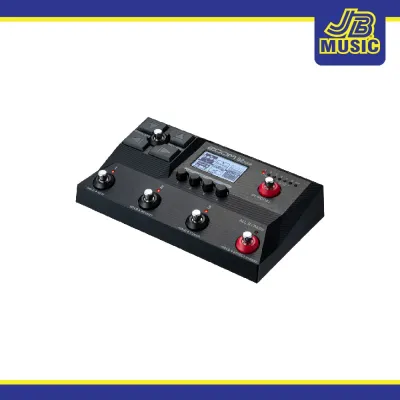
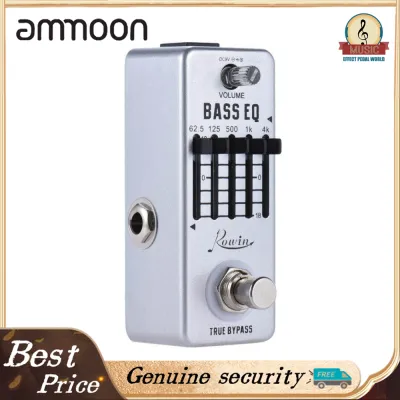
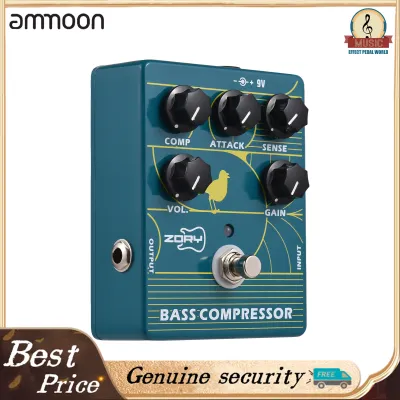
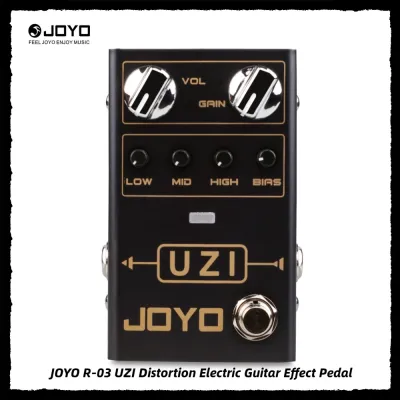
Prices are valid at publication and may change. Please refer to the product page for the latest price.
Bass-specific effects are engineered to preserve or even enhance frequencies below 100 Hz. They ensure that the fundamental pitch of your lowest strings remains powerful and clear, even when heavy processing is applied. This preservation of the low end is crucial for maintaining your role as the rhythmic and harmonic anchor of the band.
When starting out, it is helpful to divide effects into two main categories: tone-shaping utilities and experimental processors. Tone-shaping utilities include compressors, preamps, and equalizers, which work to refine, balance, and stabilize your core sound. Experimental processors, such as chorus, delay, and envelope filters, add creative textures and movement to your playing.
Your personal genre requirements should dictate your first purchase. If you are playing clean, groove-oriented music like reggae, R&B, or jazz, a high-quality compressor or preamp pedal is the most logical starting point. If you are diving into alternative rock, metal, or indie music, an overdrive or fuzz pedal with a clean blend will help you cut through the mix without losing your low-end punch.
Key Features to Check Before Buying
Before purchasing any pedal, you must evaluate its hardware specifications to ensure compatibility with your existing setup and long-term durability. The physical and electrical characteristics of a pedal determine how well it performs on stage and how long it survives daily use.

Power Supply Requirements Most effects pedals operate on 9V DC power, but their current draw, measured in milliamperes (mA), varies widely. Simple analog pedals like overdrives might only draw 10 mA to 20 mA, whereas digital multi-effects or delay pedals can require 300 mA or more. Always check the pedal’s power specifications and ensure your power supply can deliver the required current. In the Philippines, where power fluctuations can occur, using a regulated, isolated power adapter is highly recommended over cheap daisy-chain cables to prevent unwanted background hum and protect your pedal’s internal circuitry.
Bypass Type Pedals generally feature either true bypass or buffered bypass switching. True bypass routes your guitar signal directly from the input jack to the output jack when the pedal is turned off, ensuring zero coloration of your tone. However, if you run multiple true bypass pedals with long cables, you may experience a loss of high frequencies. Buffered bypass pedals actively boost the signal to drive it through long cable runs without signal degradation. A healthy mix of both bypass types on your pedalboard keeps your signal strong and clear.
Build Quality and Climate Resilience Look for pedals housed in rugged metal chassis, such as die-cast aluminum or steel, rather than plastic. The footswitch should feel solid and engage with a reassuring click or smooth resistance. In the tropical climate of the Philippines, high humidity and salt air can accelerate the oxidation of metal components. Opt for pedals with dust-sealed potentiometers (the control knobs) and high-quality jacks to prevent scratchy noises and intermittent signal loss over time.
Input and Output Configurations Standard pedals feature a single mono input and output. However, some advanced bass pedals offer stereo outputs or a Balanced Direct Output (DI Out) via an XLR connection. A DI output is incredibly valuable for gigging bassists, as it allows you to send a balanced signal directly to the venue’s mixing console. This ensures the audience hears your exact pedalboard tone, even if the venue’s house bass amplifier is sub-par or non-existent.
Essential Effect Types for Your First Pedalboard
Building your first pedalboard is an evolutionary process. Instead of buying a dozen pedals at once, starting with a few core units allows you to learn how each circuit interacts with your instrument and playing style. Combining a dynamics controller with a subtle drive and a spatial effect creates a highly versatile rig capable of handling almost any musical scenario.
Dynamics and Compression
Compression is the single most important effect for a beginner bassist, even if its impact is more felt than heard. A compressor narrows the dynamic range of your signal by softening loud peaks and boosting quiet notes. This results in a smooth, consistent volume level that sits perfectly in a band mix.
- When to Use It: You need a compressor if you notice your slap-bass notes are piercingly loud while your fingerstyle notes get lost, or if your sustained notes die out too quickly.
- Control Layouts: Look for pedals with controls for Threshold (when compression begins), Ratio (how much the volume is reduced), Attack (how fast the compressor reacts), and Release (how long the compression lasts).
- The Blend Control: A clean blend knob is highly desirable, as it lets you mix your uncompressed "dry" signal with the compressed "wet" signal, preserving your natural playing dynamics while adding sustain.
Overdrive and Fuzz
Dirt pedals add grit, sustain, and harmonic richness to your tone. Overdrive mimics a tube amplifier pushing its limits, offering a warm, organic growl. Distortion is more aggressive, while fuzz completely saturates the signal into a thick, buzzing wall of sound.
- Low-End Retention: The biggest challenge with dirt pedals on bass is the loss of low-end frequencies. When a signal distorts, the bass frequencies can become muddy or disappear entirely.
- Clean Blend Functionality: To combat this, look for pedals featuring a clean blend or dry-through control. This allows you to keep your clean, deep low-end intact while layering the distorted grit on top.
- Testing for Frequency Loss: When testing a dirt pedal, play your lowest notes and listen closely. If engaging the pedal makes your bass sound thin or like a standard guitar, it lacks the necessary low-end retention for a solid bass performance.
Modulation and Ambience
Modulation adds movement and space to your sound. A chorus pedal duplicates your signal, detunes it slightly, and modulates it to create a lush, watery texture. An octave pedal generates a pitch one octave below (or above) your original note, instantly thickening your sound for synth-like lines or heavy riffs.
- Chorus vs. Octave: Chorus is excellent for adding a shimmering, 80s-style texture to melodic lines, while an octave pedal is perfect for fattening up single-note riffs in funk, electronic, or rock music.
- Handling Time-Based Effects: Time-based effects like delay and reverb should be used with caution on bass. Low frequencies carry a lot of energy; repeating or echoing them can quickly turn a clean mix into a muddy wash.
- Signal Chain Placement: In your signal chain, modulation and time-based effects generally perform best when placed after your dynamics and dirt pedals, ensuring they modulate a stable, pre-shaped tone.
Sourcing and Budgeting for Gear in the Philippines
When shopping for gear in the Philippines, authenticity and reliability are key. Always verify authorized distributors and official brand stores when browsing online marketplaces. Look for badges indicating official mall status or authorized dealer certificates on the seller’s profile to avoid counterfeit products.
Be wary of counterfeit pedals. If a highly sought-after pedal is listed at a fraction of its standard retail price, it is likely a counterfeit or a low-quality clone. These often suffer from high noise floors, fragile jacks, and poor shielding, which will introduce unwanted hum into your signal chain.
Budgeting in ₱ requires a holistic approach. Do not spend your entire budget on the pedal itself. If you have ₱10,000, allocate around ₱6,000 to ₱7,000 for a quality pedal, ₱2,000 for a reliable, noise-free isolated power supply, and the remainder for high-quality shielded patch cables. Cheap, unshielded cables invite unwanted radio interference and hum.
Buying used gear is an excellent way to stretch your budget. When inspecting a secondhand pedal, check for physical defects. Bring a 9V battery and a patch cable to test the jacks for loose connections. Turn every knob slowly to listen for scratchy static, which indicates dirty or corroded potentiometers. Inspect the battery compartment for white powdery residue, a sign of battery acid leakage that can permanently damage the circuit board.
Frequently Asked Questions (FAQ)
Do I need a specific bass version of a guitar effects pedal?
Yes, in most cases, using a bass-specific pedal is highly recommended. Guitar pedals are voiced for mid-to-high frequencies and may filter out everything below 80 Hz, leaving your bass sounding thin. Bass-specific pedals are designed with wider frequency response ranges and higher headroom to handle the massive transient peaks of low notes. However, some guitar pedals work well if they feature a clean blend knob, allowing you to mix your unaffected bass signal back into the chain.
What is the correct order to connect multiple bass pedals?
A standard sequence starts with your tuner, followed by dynamics (compressor), filters/pitch (octave), dirt (overdrive/fuzz), modulation (chorus), and finally time-based effects (delay/reverb). The tuner needs a clean, unaltered signal to read pitch accurately. The compressor stabilizes the dynamics before the signal hits dirt pedals, which react heavily to input volume. Modulation and delay sound cleanest when processing a fully shaped and distorted tone.
Community discussion
Share your experience or ask a question. Comments are reviewed before publication.