
Evaluating a new instrument amplifier like the Audota AVE 100 requires a careful look at its technical specifications rather than relying solely on marketing claims. For musicians in the Philippines, finding the right balance between power, connectivity, and environmental durability is crucial for both home practice and live performances. By learning how to decode the official spec sheet and inspect the physical unit, you can confidently determine if this amplifier matches your specific instrument and performance venues.
Decoding Power and Output Ratings
To understand the true volume capabilities of the Audota AVE 100, you must first distinguish between RMS (Root Mean Square) and peak power ratings on its specification sheet. RMS represents the continuous power the amplifier can cleanly deliver over extended periods, which is the only reliable metric for assessing usable volume. Peak power, on the other hand, only indicates short-term bursts and does not reflect real-world performance during a long gig.
Next, inspect the rear panel or the user manual for the rated output impedance, typically measured in ohms (Ω). If you plan to connect the amplifier to an external speaker cabinet, matching the impedance is critical to prevent overheating or permanent circuitry damage. Running an incorrect load can quickly degrade the amplifier’s power stage, especially in warm, tropical environments.
Products mentioned in this guide
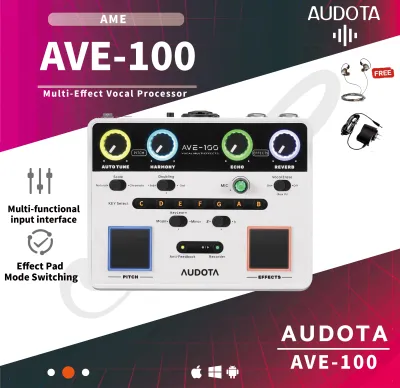
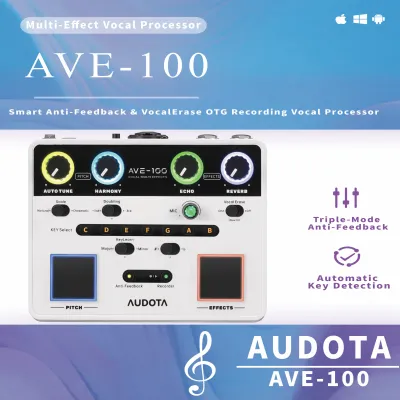
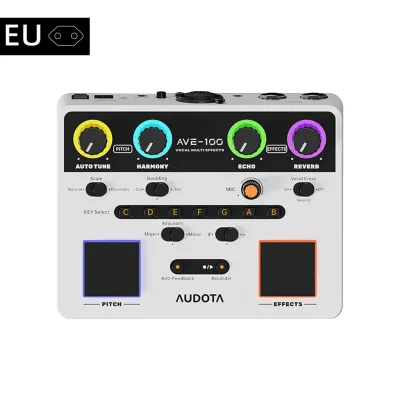
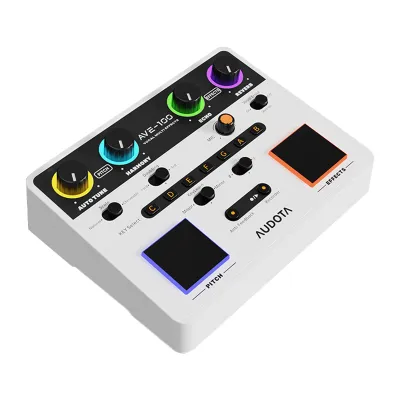
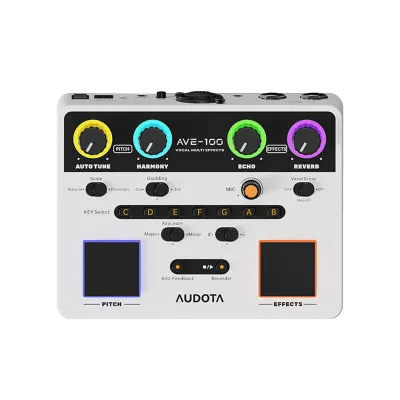
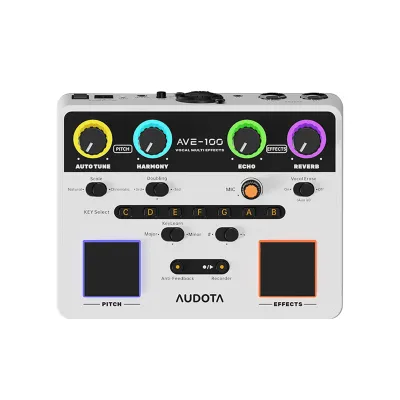
Prices are valid at publication and may change. Please refer to the product page for the latest price.
Finally, consider how the listed wattage translates into clean headroom for your specific instrument. Acoustic guitars and keyboards require significant headroom to reproduce clean, unclipped transient peaks without distorting. If you play electronic drums, you will need a higher continuous wattage rating to handle the sudden, high-energy low frequencies of a kick drum compared to a standard acoustic guitar setup.
Evaluating Input Channels and Connectivity
The input panel of the Audota AVE 100 dictates how versatile your setup can be, so you should physically verify the types of jacks available before purchasing. Look for high-impedance (Hi-Z) quarter-inch inputs, which are necessary for preserving the bright, natural tone of passive instrument pickups. If you plan to perform as a solo artist, check for a low-impedance XLR microphone input with an independent volume or gain control.

For players who rely on external modulation, delay, or reverb pedals, a dedicated effects loop is a highly desirable feature. Check the back of the chassis for ‘Send’ and ‘Return’ jacks, which allow you to insert your effects after the preamp stage. This routing keeps your time-based effects sounding clean and distinct, rather than muddying them through the front-end gain stage.
Additionally, look for a dedicated Line Out or Direct Injection (DI) XLR output on the unit. This feature is essential if you intend to connect the amplifier directly to a church PA system, a local bar’s mixing console, or a home recording interface. A balanced DI output ensures your signal remains free from hum and interference over long cable runs.
Understanding Tone Shaping and Speaker Design
An amplifier’s equalizer (EQ) section is your primary tool for sculpting your sound, making it important to check the specific frequency bands targeted by the controls. Review the manual to see if the EQ features a sweepable midrange control or fixed low, mid, and high bands. Knowing the exact crossover frequencies helps you determine if the amplifier can tame harsh piezo pickup frequencies or boost the warm low-end of a keyboard.
The physical speaker driver size and cabinet construction heavily influence how your sound projects across a room. Check the product label or specifications to see if the cabinet features an open-back or closed-back design. Open-back cabinets offer a wide, airy sound dispersion that fills a small stage beautifully, while closed-back designs provide a tighter, punchier bass response suitable for percussive playing styles.
If the Audota AVE 100 includes built-in digital effects like reverb or chorus, verify how much control you have over their parameters. Look for dedicated adjustment knobs rather than simple preset switches, allowing you to dial in the exact decay or depth you need. Ensure there is a clear physical bypass option or a way to completely dial out the effect when you want a completely dry signal.
Checking Portability and Physical Specifications
For gigging musicians in the Philippines, portability is often just as important as sound quality, requiring a close look at the physical dimensions and weight. Compare the official measurements against your vehicle’s trunk space or the dimensions of standard padded gig bags. A compact footprint makes commuting via local transit or navigating tight stage setups significantly easier.
The build quality of the chassis must be robust enough to withstand regular transport and high humidity levels. Inspect the cabinet material, looking for sturdy plywood or reinforced composite rather than thin particle board, which can warp when exposed to moisture. Heavy-duty metal corner protectors and a durable grille cloth are also essential for shielding the internal components from accidental impacts.
Pay close attention to the placement of the carrying handle and the control panel layout. A top-mounted handle should feel balanced when lifting the unit, preventing unnecessary strain on your wrist. Furthermore, recessed control knobs are highly beneficial because they are less likely to get sheared off or accidentally adjusted during transport or tight stage setups.
Matching the AVE 100 to Your Instrument Needs
To make your final decision, create a checklist matching the verified specifications of the Audota AVE 100 against your primary instrument’s demands. An acoustic guitarist needs an amplifier that prioritizes high-frequency clarity and feedback control, while a keyboardist requires a flat, full-range frequency response. Ensure the amplifier’s power rating matches your typical playing environment, whether that is bedroom practice or a noisy outdoor cafe.
Consider your practical constraints, such as budget and transport options, alongside the technical features. Protecting your musical investment of several thousand ₱ means choosing a unit that fits your lifestyle without requiring expensive additional gear. If any specification on the retail box conflicts with the printed manual, or if you are unsure about local voltage compatibility, pause your purchase.
Always consult the manufacturer’s official website or contact an authorized local distributor in the Philippines to clarify technical details. Verifying regional warranty coverage and power supply specifications (such as 220V compatibility) before buying ensures your amplifier operates safely and reliably for years to come.
Frequently Asked Questions (FAQ)
Can the Audota AVE 100 be used for both acoustic and electric instruments?
To determine if the amplifier supports both types, you must check the input impedance and the EQ voicing. Electric guitars generally require high-impedance inputs and specialized cabinet emulation to sound natural, whereas acoustic instruments need a flat, full-range response. Review the manual to see if the channels are voiced separately for acoustic and electric signals.
Where can I find the exact manual and spec sheet for my region?
The most reliable source for verified specifications is the official Audota website or the physical documentation included in the product packaging. Avoid relying on unverified third-party retail listings on online marketplaces. You can also contact authorized local music distributors in the Philippines to request the correct regional user manual.
Does the AVE 100 support external footswitches for effect control?
You can verify this by inspecting the rear or top panel of the amplifier for a jack labeled ‘Footswitch’ or ‘FS.’ If present, consult the manual to determine if it requires a latching or momentary footswitch, and whether it uses a standard quarter-inch mono or TRS connection. This prevents compatibility issues with third-party controllers.
Community discussion
Share your experience or ask a question. Comments are reviewed before publication.