
The Short Answer: Who Should Start With Pancake Drums?
A pancake drum—whether you are referring to the ultra-shallow, space-saving acoustic drums or the melodic steel tongue drums often called pancake drums due to their circular, flattened shape—is an excellent starter instrument if your primary goals are portability, immediate rhythmic exploration, and low-barrier creative play. If you want to quickly tap out rhythms, enjoy melodic tones, and practice without taking up an entire room, these instruments offer a highly rewarding entry point.
However, if your ultimate dream is to sit behind a massive acoustic drum kit and play high-energy rock beats, starting here has distinct limitations. A pancake-style drum will not teach you the complex four-limb coordination, heavy stick rebound control, or pedal techniques required for a traditional drum set.
The core trade-off lies in balancing instant gratification and physical convenience against long-term skill transfer. For casual hobbyists, acoustic-conscious apartment dwellers, and acoustic hand-percussion enthusiasts, the pancake drum is a fantastic fit. For aspiring kit drummers, it is best treated as a fun side instrument rather than a primary training tool.
Products mentioned in this guide
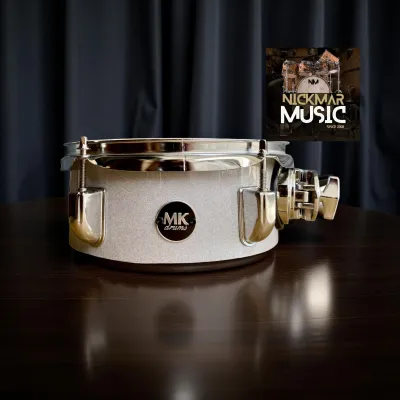
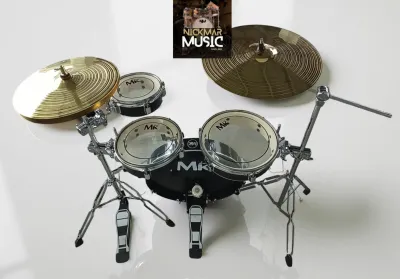
Prices are valid at publication and may change. Please refer to the product page for the latest price.
Aligning the Instrument With Your Learning Goals
Before purchasing any percussion instrument, you must define what success looks like for your musical journey. Traditional drum kit training focuses heavily on independence, requiring your hands and feet to execute completely different patterns simultaneously. This demands a multi-piece setup with foot pedals, hi-hats, and cymbals.

In contrast, playing a pancake drum—especially the melodic steel tongue variety—focuses on hand-eye coordination, basic timing, and melodic phrasing. Because these instruments are often tuned to a specific scale (such as a pentatonic scale), there are no wrong notes. This makes them incredibly forgiving for beginners who want to focus on the pure joy of rhythm and melody without getting bogged down in complex music theory or physical frustration.
If you are looking at the ultra-shallow acoustic pancake snare or travel kit, your goals will align more with portable rhythm practice. These flat acoustic drums allow you to practice basic stick work and rudiments, but they lack the deep resonance and physical rebound of standard, deep-shelled drums.
To help you decide if this instrument matches your musical path, consider this checklist of ideal scenarios:
- Melodic Focus: You want to play soothing, ambient, or meditative melodies rather than just keeping a dry beat.
- Hand Percussion Preference: You prefer using your bare hands, fingers, or lightweight mallets over heavy drumsticks.
- Acoustic Jamming: You plan to play along with acoustic guitars, ukuleles, or soft vocals in casual settings.
- Low-Stress Learning: You want an intuitive instrument that allows you to play pleasing sounds on day one without formal lessons.
Navigating Space, Portability, and Volume Limits
Living environments play a massive role in whether an instrument is practical to own. In the Philippines, many urban music enthusiasts live in high-density apartments, condominiums, or shared family homes where noise travel is a constant concern. A standard acoustic drum kit is notoriously loud and can easily disturb neighbors or sleeping family members.
Pancake drums offer a highly manageable alternative. Melodic steel tongue drums produce a warm, resonant sound that carries well in a room but rarely penetrates thick concrete walls or floors. If you are using an ultra-shallow acoustic pancake drum, the lack of a deep shell naturally limits the low-end projection and overall volume, making it significantly quieter than a standard snare or tom.
Physical footprint is another area where these compact instruments excel. A traditional drum set requires several square meters of dedicated floor space, heavy hardware stands, and a bulky throne. A pancake drum can be played comfortably on your lap, a small table, or a single lightweight snare stand, and it can be tucked away in a closet or under a bed when not in use.
Portability is a major advantage for those who love the outdoors or travel frequently. Whether you are heading to a beach outing in Batangas, a weekend retreat in Tagaytay, or a casual jam session at a friend’s house, a pancake drum fits easily into a backpack or a small gig bag. You do not need to worry about loading heavy hardware, multiple cases, or fragile electronic cables into a vehicle.
Budgeting for Your First Percussion Setup
When planning your financial investment in the Philippines, it is important to look beyond the initial price tag of the drum itself and calculate the total cost of ownership. While a pancake drum is generally much more affordable than a full electronic or acoustic drum kit, you should still budget for essential accessories to protect your investment and enhance your playing experience.
Your total budget in Philippine Pesos (₱) should ideally cover the drum, a padded carrying case to prevent scratches and dents, a set of compatible mallets, and potentially a lightweight stand if you prefer not to play with the instrument on your lap. Investing in a high-quality padded bag is especially crucial in tropical climates to shield the instrument from sudden rain showers and physical impacts during transport.
Material durability and tuning stability are critical factors that separate entry-level models from intermediate ones. For steel tongue pancake drums, look for models made from high-grade carbon steel or stainless steel with protective, rust-resistant coatings. In the humid tropical climate of the Philippines, moisture can quickly lead to rust if the metal is left untreated or if the protective finish is poorly applied.
When shopping at local music stores or authorized online retailers, always verify the product specifications and warranty terms. Look for sellers that offer clear return policies and warranties against manufacturing defects, such as poor welds or out-of-tune notes. Avoid unbranded, ultra-cheap options on generic online marketplaces that do not specify the tuning scale or the exact materials used, as these often suffer from poor tonal accuracy and rapid detuning.
When to Choose Alternative Starter Instruments
If your self-diagnosis reveals that a pancake drum does not quite align with your musical goals or physical constraints, several excellent alternative starter instruments are worth exploring. Choosing the right alternative depends on whether you want to build traditional drum kit skills, experience deep acoustic bass, or practice in near-silence.
For beginners whose ultimate goal is to transition to a standard acoustic drum set, a dedicated practice pad paired with a pair of drumsticks is the absolute best starting point. Practice pads are inexpensive, highly portable, and specifically engineered to mimic the rebound of a real drumhead, allowing you to build wrist strength, stick control, and hand speed quietly. If budget permits, a compact electronic drum module with mesh heads offers a realistic playing feel and headphone compatibility for silent practice.
If you crave a traditional hand-drumming experience with deep, resonant bass tones and sharp slaps, a cajon or a djembe is an outstanding alternative. A cajon doubles as a seat, takes up very little floor space, and provides a distinct bass-and-snare sound profile that fits perfectly into acoustic band setups.
To help you navigate these choices, consider this decision matrix based on common beginner constraints:
- Goal: Build drum kit stick technique
- Best Option: Practice pad or entry-level electronic drum kit
- Key Advantage: Realistic stick rebound and physical layout
- Space Needed: Minimal (practice pad) to moderate (electronic kit)
- Goal: Portable hand drumming with deep bass
- Best Option: Cajon or djembe
- Key Advantage: Rich acoustic low-end and organic feel
- Space Needed: Small footprint, easy to store
- Goal: Melodic relaxation and easy learning
- Best Option: Melodic pancake drum (steel tongue drum)
- Key Advantage: Intuitive scale, soothing tones, no wrong notes
- Space Needed: Extremely compact, fits on your lap
Frequently Asked Questions (FAQ)
Do I need prior musical experience to play a pancake drum?
No, you do not need any prior musical experience or formal training to start playing a melodic pancake drum. Because these instruments are typically tuned to a specific harmonic scale, any combination of notes you strike will naturally sound pleasant together. This intuitive layout provides immediate gratification, allowing you to focus on developing your internal sense of rhythm and hand coordination without the frustration of learning complex music theory first. However, mastering advanced hand techniques, precise dampening, and complex rhythmic patterns will still require consistent, mindful practice over time.
Will playing a pancake drum help me learn the standard drum set later?
Playing a pancake drum will help you develop fundamental musical skills like timing, rhythm, and hand-eye coordination, which are valuable for any percussionist. However, it will not prepare you for the specific physical demands of a standard drum set. You will not build the four-limb independence required to operate foot pedals, nor will you practice the stick rebound control and movement patterns needed to navigate multiple drums and cymbals. If your long-term goal is to play a traditional drum kit, you should supplement your practice with a drum kit practice pad and stick control exercises.
How do I maintain and clean a pancake drum?
To keep your pancake drum in optimal condition, wipe it down with a clean, dry microfiber cloth after every playing session to remove oils and moisture from your hands. This is especially important in the humid climate of the Philippines, where sweat and ambient moisture can accelerate rust on steel models or degrade the finish on wood-framed drums. Avoid using harsh chemical cleaners, abrasive pads, or excessive water. Store the instrument in its padded gig bag in a cool, dry place away from direct sunlight, extreme heat, and high humidity, and always consult the manufacturer’s specific care guidelines for your exact model’s materials and coatings.
Community discussion
Share your experience or ask a question. Comments are reviewed before publication.