
Quick Answer: Which Keyboard Brand Should You Choose?
Choosing the right keyboard brand in the Philippines depends on your musical goals, budget, and setup. If you are focused on music production, home recording, or need an affordable MIDI controller to connect to a computer, Alesis is the premier choice. For classical students, serious pianists, or anyone prioritizing an authentic acoustic piano feel with premium, high-fidelity sound engines, Yamaha remains the industry benchmark. If you need a highly portable, slim instrument with built-in educational features that fits comfortably into a tight Metro Manila condo, Casio offers the best balance of space-saving design and beginner-friendly tools. Each brand approaches keyboard design from a distinct angle, meaning the “best” option is conditional on your specific use case.
Brand Positioning: How Alesis, Yamaha, and Casio Compare
Alesis has carved out a unique position in the modern music landscape by focusing heavily on digital integration and accessible technology. Emerging from the electronic music and studio production boom, the brand specializes in creating highly functional MIDI controllers, electronic drum kits, and budget-friendly digital pianos. Their design philosophy prioritizes seamless software compatibility, making them a favorite among home studio producers and electronic musicians who rely on computer-based workflows.

Yamaha, by contrast, carries a legendary heritage in acoustic instrument manufacturing. Having built world-class grand pianos for over a century, Yamaha translates this deep mechanical and acoustic expertise directly into their digital keyboards. Their philosophy centers on preserving the physical realism of a real piano, from the graded resistance of the keys to the complex resonance of the soundboards. This dedication makes Yamaha the traditional choice for music schools, classical students, and professional stage performers.
Products mentioned in this guide
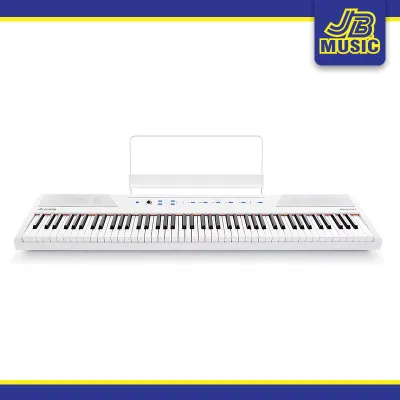
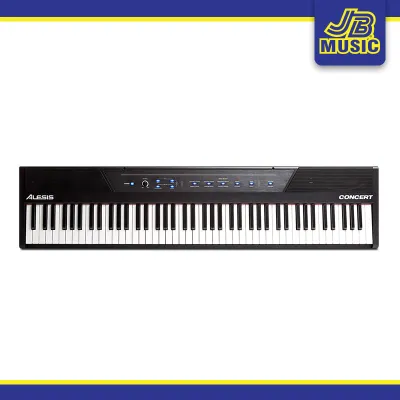
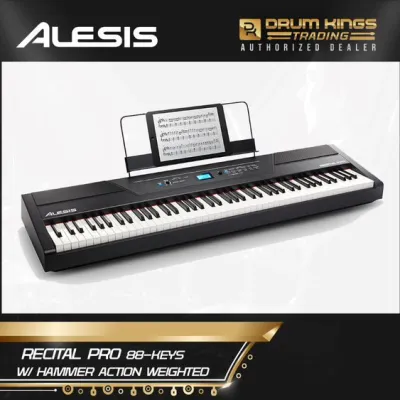
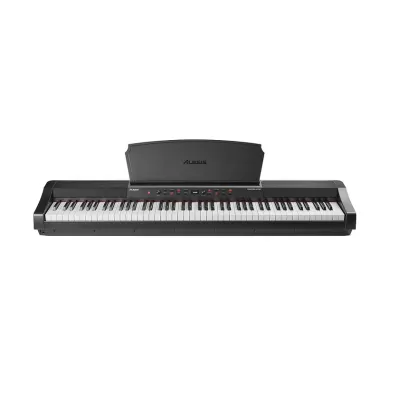
Prices are valid at publication and may change. Please refer to the product page for the latest price.
Casio has undergone a massive evolution from its early days of producing basic electronic novelties. Today, Casio is a major innovator in the digital piano market, particularly renowned for their ultra-slim profiles and highly accessible educational technology. Their design philosophy focuses on making music education approachable and adapting instruments to modern, compact living spaces. By packing advanced sound engines into incredibly lightweight frames, Casio appeals directly to casual players, mobile musicians, and families looking for space-efficient instruments.
Key Comparison Dimensions for Keyboard Buyers
When comparing Alesis, Yamaha, and Casio, looking at the brand logo is not enough to guarantee a model will suit your needs. You must evaluate specific technical specifications against your playing goals, setup requirements, and physical environment.
Sound Quality and Key Action
Key action is the single most critical factor determining how a keyboard feels to play. Traditional acoustic pianos use a system of hammers and gravity, creating a distinct weight and resistance. Digital keyboards attempt to replicate this through various mechanisms. Yamaha is highly regarded for its Graded Hammer Standard (GHS) and higher-end linear graded actions, which mimic the natural weight distribution of an acoustic piano—heavier in the lower register and lighter in the treble. Casio counters with its Smart Scaled Hammer Action, engineered specifically to deliver a realistic, tactile response within an exceptionally slim chassis. Alesis offers fully weighted, hammer-action keys on dedicated digital pianos like the Recital series, but their primary focus remains on semi-weighted or synth-action keys, which are optimized for fast synth lines and drum triggering rather than classical piano practice.
Sound generation technology also differs significantly across these brands. Yamaha relies on its proprietary sound engines, featuring meticulous high-definition samples of their flagship CFX concert grand piano, capturing subtle acoustic nuances and key-off resonances. Casio utilizes its Multi-dimensional Morphing AiR (Acoustic and Intelligent Resonator) sound source, which simulates the complex sympathetic string resonance that occurs when multiple keys are pressed simultaneously. Alesis provides clean, robust onboard digital voices, but their instruments are fundamentally designed to integrate with external software. Instead of relying solely on built-in chips, Alesis keyboards are built to trigger high-end virtual instrument software (VSTs) on your computer, offering an infinite palette of modern sounds.
Built-in Features and Connectivity
The built-in features and connectivity options of a keyboard dictate how easily it integrates into your daily routine. Casio and Yamaha excel in standalone educational features. Casio’s keyboards frequently feature built-in step-up lesson systems, chord guides, and seamless compatibility with mobile learning apps. Yamaha offers robust accompaniment styles, onboard recording functions, and compatibility with their Smart Pianist app, which can analyze songs in your music library and display chord charts automatically.
Alesis takes a different route, prioritizing professional studio connectivity and software integration. Their keyboards and controllers are packed with physical controls like assignable faders, velocity-sensitive drum pads, and pitch/modulation wheels designed to map directly to Digital Audio Workstations (DAWs). When evaluating connectivity, always check the physical port specifications on the back of the instrument. If you plan to record or use virtual instruments, a USB-MIDI port is essential. For live performance or connecting to external amplifiers in local churches or venues, verify if the keyboard has dedicated left and right 1/4-inch line outputs. Many entry-level models only feature a single headphone jack, which requires specialized adapters to connect to external sound systems without degrading audio quality.
Portability and Build Quality
In the Philippines, environmental factors such as high relative humidity and dust can impact the longevity of electronic instruments. Keyboards must be physically durable and suited to your living space. Casio is the clear leader in space efficiency, offering slim, lightweight digital pianos that can easily be tucked away under a bed, placed in a closet, or carried on public transit to a gig. Their composite chassis designs are highly resistant to temperature and humidity fluctuations.
Yamaha offers a wider spectrum of builds, ranging from highly portable, lightweight beginner keyboards to heavy, furniture-style wooden consoles. While these wooden consoles provide an authentic aesthetic and stable playing platform, they are highly sensitive to moisture and require a permanent, climate-controlled space in your home. Alesis focuses on utilitarian, compact studio designs. Their controllers and portable pianos are built with sturdy, impact-resistant plastics designed to withstand the rigors of being moved around a home studio or desk setup, making them a practical choice for space-conscious creators.
Matching the Brand to Your Skill Level
To get the most value out of your investment, it is crucial to match the keyboard’s complexity, key action, and features to your current playing level and long-term musical aspirations.
Beginners and Casual Players
For absolute beginners, especially children or casual hobbyists, Casio and Yamaha offer highly encouraging entry points. Casio’s light-up key models provide instant gratification, allowing beginners to play simple melodies immediately without feeling overwhelmed by sheet music. Yamaha’s entry-level PSR-E series features intuitive interfaces, high-quality built-in lesson suites, and realistic basic piano tones that help train the ear.
However, if you are a beginner whose primary interest is electronic music, hip-hop production, or songwriting, starting with an Alesis keyboard or MIDI controller is often a more efficient path. Instead of learning traditional classical techniques on a heavy digital piano, an Alesis setup allows you to dive straight into music production software, learning how to build beats, arrange tracks, and manipulate virtual instruments from your very first lesson.
Intermediate and Gigging Musicians
As you progress to intermediate playing, touch-sensitive keys become absolutely mandatory. Touch sensitivity allows you to control the volume and timbre of the notes based on how hard you strike the keys, which is essential for expressive playing. Yamaha’s mid-range portable keyboards offer exceptional dynamic control and reliable sound quality, making them excellent for student recitals and local band practices.
For gigging musicians playing in local venues or accompanying church choirs, physical controls and portability are paramount. Casio’s stage-focused lines offer lightweight bodies and quick-access buttons for layering sounds, such as combining acoustic piano with warm synth strings. Alesis provides highly cost-effective 88-key options with semi-weighted or fully weighted keys, serving as reliable, budget-friendly stage pianos when paired with an external keyboard amplifier or PA system.
Advanced Players and Producers
Advanced classical pianists require an instrument that can replicate the subtle mechanical behaviors of an acoustic grand piano, such as key escapement, damper resonance, and variable key weight. Yamaha’s high-end digital pianos and professional synthesizer workstations excel in this category, offering sophisticated triple-sensor key beds that can capture rapid note repetitions and delicate, expressive phrasing with absolute precision.
For advanced music producers and sound designers, physical acoustic emulation is often secondary to software control. Alesis dominates this workspace with their premium MIDI controllers, which feature extensive grids of velocity-sensitive pads, assignable control knobs, and deep integration with industry-standard production software. These controllers allow producers to manipulate complex virtual synthesizers and mix multi-track projects entirely from the keyboard, maximizing workflow efficiency in a professional studio environment.
Budget and Value Considerations in the Philippines
Evaluating the true value of a keyboard in the Philippine market requires looking beyond the initial price tag. When budgeting for your instrument, you must factor in the cost of essential accessories. A heavy 88-key digital piano requires a sturdy, double-braced X-stand or a dedicated wooden stand to prevent wobbling during intense play. You will also need a reliable sustain pedal, a comfortable bench, and a high-quality dust cover to protect the sensitive electronic key contacts from the tropical dust and humidity common in local households.
To protect your investment, always purchase through authorized local music retailers or official online brand stores in the Philippines. Buying from authorized dealers ensures that your keyboard comes with a valid manufacturer’s warranty and access to reliable local after-sales service. Beware of gray market imports sold on unregulated online platforms; these units often lack local warranty coverage, may feature incorrect voltage configurations (such as 110V power adapters that will fail or cause damage when plugged directly into a standard Philippine 220V outlet), and may not include localized power plugs.
Additionally, compare the overall software bundles included with your purchase. Alesis keyboards frequently include generous software packages, including introductory versions of popular DAWs, high-quality virtual instrument plugins, and extended trial subscriptions to interactive learning platforms. This software bundle adds massive value if you already own a compatible computer or tablet. Conversely, Yamaha and Casio focus their value on physical build quality, onboard sound chips, and long-term structural durability, making them the better standalone value if you do not plan to connect your keyboard to a computer.
Final Decision Framework: Choose Alesis, Yamaha, or Casio?
To finalize your decision, match your primary musical needs to the core strengths of each brand:
- Choose Alesis if: You want an affordable entry into music production, need a highly functional MIDI controller for your DAW, or want a budget-friendly digital piano for a home studio setup. It is the ideal choice for modern creators who prioritize software integration and digital versatility.
- Choose Yamaha if: You prioritize an authentic acoustic piano feel, premium sound engines, and long-term physical reliability for classical practice, traditional music lessons, or serious performance. It is the standard for acoustic realism and durability.
- Choose Casio if: You need maximum portability, excellent beginner-friendly educational features, or a slim, modern digital piano that easily fits into tight living spaces or can be easily transported to gigs and practices.
- Verify first if: You have specific software compatibility requirements, need dedicated physical audio outputs for external sound systems, or need to confirm the exact key action type (weighted versus unweighted) of the specific model you are considering before making your final purchase.
Community discussion
Share your experience or ask a question. Comments are reviewed before publication.