
Selecting your first full-sized digital piano is a major milestone, but navigating the technical specifications of entry-level instruments can feel overwhelming. The Alesis Recital Pro, Yamaha P-45, and Roland FP-10 are three of the most popular 88-key digital pianos on the market, each offering a distinct balance of tactile realism, acoustic authenticity, and digital features. Choosing the right one depends heavily on your current playing level, your primary learning goals, and how much you prioritize a realistic key action over extra instrument sounds or physical portability.
To make an informed purchase, you must evaluate how each model handles keybed resistance, sound projection, and modern connectivity. While all three instruments feature 88 weighted keys, they target different types of players. By analyzing their actions, sound engines, and physical designs, you can identify which model aligns with your practice environment and budget.
Quick Answer: Which 88-Key Digital Piano Fits Your Needs?
The ideal digital piano for your home depends on what you want to experience every time you sit down to play. Each of these three models excels in a specific area, making the decision straightforward once you clarify your personal priorities.
Products mentioned in this guide
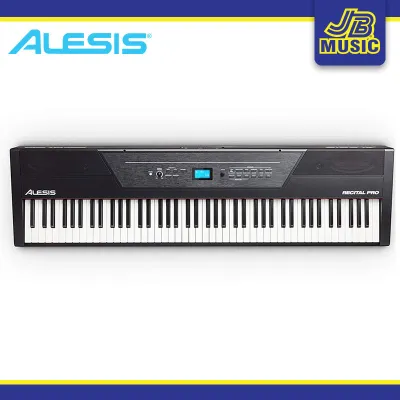
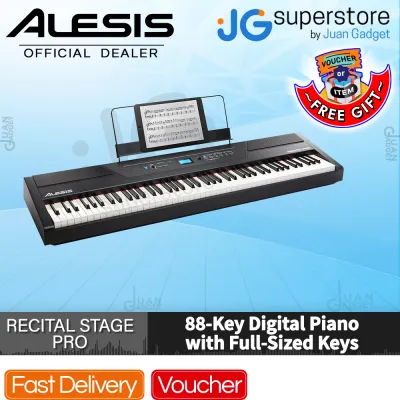
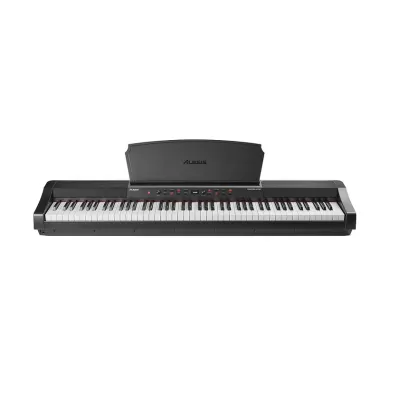
Prices are valid at publication and may change. Please refer to the product page for the latest price.
- Choose the Alesis Recital Pro if: You are seeking a highly budget-friendly entry point that does not compromise on basic physical key weight. This model is excellent for beginners who want an intuitive physical interface with dedicated buttons, a built-in LCD screen, a wide variety of onboard instrument voices, and powerful upward-firing speakers that easily fill a room without external amplification.
- Choose the Yamaha P-45 if: You want a reliable, no-nonsense instrument with a traditional, warm acoustic grand piano sound. It is designed for players who prefer a minimalist, distraction-free control layout and want a highly dependable instrument backed by a brand ecosystem renowned for long-term durability and high resale value.
- Choose the Roland FP-10 if: Your highest priority is a highly realistic, heavy key action that closely mimics the physical feel of an acoustic grand piano. This model is the best fit for students taking formal classical lessons, players who require Bluetooth MIDI connectivity for wireless educational apps, and anyone with limited floor space who needs a highly compact chassis.
Before making your final choice, keep in mind that retail pricing, bundled accessories (such as sustain pedals, stands, and benches), and local stock availability fluctuate. It is always highly recommended to verify current packages and warranty terms with authorized music retailers in the Philippines to ensure you receive official after-sales support and the correct power adapter for your home.
Key Action and Playability: How the Keys Actually Feel
The physical mechanism underneath the keys is the single most critical component of any digital piano. This mechanism, known as the keybed or key action, determines how closely the digital instrument mimics the physical resistance, weight, and rebound of an acoustic piano. Developing proper finger strength, control, and expressive dynamics depends entirely on how the keys respond to your touch.

Each manufacturer employs a proprietary hammer-action design to simulate the physical hammers of an acoustic piano. The Alesis Recital Pro features a fully weighted hammer-action keybed that provides uniform resistance across all 88 keys. While it offers a solid physical weight that is far superior to semi-weighted or spring-loaded keyboards, it lacks the progressive grading found in more advanced keybeds. This means the keys in the higher treble register feel exactly as heavy as the keys in the lower bass register, which differs slightly from a traditional acoustic piano.
In contrast, the Yamaha P-45 utilizes Yamaha’s Graded Hammer Standard (GHS) keybed. This design successfully replicates the natural characteristics of an acoustic grand piano, where the keys in the lower register require a heavier touch and gradually become lighter as you play up into the treble notes. The GHS action is widely regarded as a highly reliable, industry-standard training tool for beginning and intermediate students, offering a smooth, predictable response that helps build correct finger technique.
Roland takes tactile realism a step further with its Progressive Hammer Action (PHA-4) Standard keyboard, featured in the FP-10. The PHA-4 action is highly praised for its high-resolution touch sensing and its simulated ivory-feel key surfaces, which absorb finger moisture during long practice sessions. It also features an escapement mechanism, which reproduces the subtle “let-off” click felt when gently pressing an acoustic piano key. This makes the Roland FP-10 feel noticeably heavier and more physically expressive than both the Yamaha P-45 and the Alesis Recital Pro, though some beginners may find the heavier action slightly more fatiguing during extended initial practice sessions.
Another practical factor to consider is mechanical key noise, which is the physical “thump” or clack the keys make when they bottom out and rebound. In shared living spaces, townhouses, or apartments, this physical noise can easily travel through floors and walls, even if you are practicing with headphones on. The Roland PHA-4 action tends to have a solid, dampened thud, while the Yamaha GHS is relatively quiet but can develop a slight springy sound over years of heavy use. The Alesis Recital Pro’s keys have a slightly louder mechanical click upon release. If you plan to practice late at night in a quiet household, visiting a local showroom to physically play the keys with the volume turned off is an excellent way to judge this acoustic footprint for yourself.
Sound Quality and Speaker Projection
A digital piano’s sound engine translates your physical key strikes into the acoustic tones you hear. The complexity of the sampling technology, the maximum polyphony, and the physical design of the built-in speakers all play vital roles in creating an immersive, realistic listening experience.
Yamaha and Alesis rely on stereo sampling, which involves recording high-quality audio files of real acoustic grand pianos at various volume levels and playing them back when you press the keys. The Yamaha P-45 uses Advanced Wave Memory (AWM) stereo sampling, delivering a classic, bright, and warm acoustic piano tone that sits beautifully in both classical and modern pop mixes. The Alesis Recital Pro offers a clean, present grand piano sample alongside a generous selection of secondary voices, such as electric pianos, organs, and synths, which are easily selectable via its dedicated physical buttons.
Roland takes a different technological approach with its SuperNATURAL sound engine. Instead of relying solely on static audio samples, the SuperNATURAL system uses physical modeling algorithms to calculate how the strings, soundboard, and cabinet of an acoustic piano interact in real time. This results in a highly dynamic, organic sound with smooth tonal transitions from the softest pianissimo to the loudest fortissimo. The decay of the notes sounds incredibly natural, avoiding the artificial looping sometimes audible in simpler sample-based engines.
To prevent notes from cutting off abruptly during complex classical pieces or when holding down the sustain pedal, you must look at the instrument’s maximum polyphony. The Yamaha P-45 offers 64-note polyphony, which is sufficient for beginners but can be pushed to its limits when layering sounds or playing fast, note-heavy passages with heavy sustain. The Roland FP-10 increases this ceiling to 96-note polyphony, while the Alesis Recital Pro leads this trio with a generous 128-note polyphony, ensuring that no notes are prematurely dropped, regardless of how complex your performance becomes.
Speaker configuration and placement also dictate how the sound projects into your living space. The Alesis Recital Pro is equipped with a robust 20-watt speaker system (two 10-watt speakers) mounted on the top of the chassis, directing the sound straight toward the player’s ears. This results in a loud, clear, and punchy sound that does not get muffled when the piano is placed on a flat tabletop. The Yamaha P-45 and Roland FP-10 both utilize 12-watt speaker systems (two 6-watt speakers) that are downward-firing. While these systems provide a warm, ambient sound, they can sound slightly muffled if the piano is placed directly on a desk or a solid wooden surface rather than an open keyboard stand.
For those who plan to utilize silent practice, headphone audio quality is incredibly important. All three models feature dedicated headphone outputs that automatically mute the built-in speakers. Roland’s SuperNATURAL engine provides a pleasing sense of spatial depth through headphones, making it feel as though the sound is projecting from the instrument itself rather than directly into your ears. This spatial realism helps reduce ear fatigue during long, quiet practice sessions.
Connectivity, Features, and Physical Footprint
Beyond key feel and sound, a digital piano must integrate smoothly into your physical living space and your digital workflow. Modern connectivity options can transform a basic digital piano into a powerful learning tool or a versatile MIDI controller for home recording.
All three models feature a USB-to-Host port, allowing you to connect the piano to a computer, tablet, or smartphone to control virtual instruments or use interactive learning software. However, the Roland FP-10 stands out by offering built-in Bluetooth MIDI connectivity. This allows you to connect wirelessly to compatible smart devices, enabling seamless integration with Roland’s companion apps for interactive lessons, remote control of the piano’s internal settings, and digital sheet music page-turning without messy cables cluttering your practice space.
In terms of user interface, the Alesis Recital Pro is the most user-friendly for those who dislike complicated menus. It features a blue backlit physical LCD screen and dedicated buttons for selecting voices, setting the metronome, and enabling lesson modes. The Yamaha P-45 and Roland FP-10 opt for a highly minimalist aesthetic, featuring only a power button and a master volume slider. To change voices, adjust touch sensitivity, or set the metronome on these models, you must hold down a function button while pressing a specific key on the keyboard. While this keeps the top panel clean and elegant, it requires referencing the user manual until you memorize the key combinations.
Physical footprint and weight are crucial considerations, especially if you live in a space-constrained apartment or need to transport your keyboard to gigs or rehearsals. The Roland FP-10 is the most compact of the three, featuring a slim chassis that easily fits onto narrow desks or tight corners. The Yamaha P-45 is also highly portable and lightweight, making it easy to pack away when not in use. The Alesis Recital Pro is slightly deeper and bulkier due to its top-firing speaker design and physical control panel, but it remains highly manageable for a fully weighted 88-key instrument.
When purchasing, always verify exactly what accessories are included in the box. Most standard retail packages include a basic plastic footswitch sustain pedal, a music rest, and a power adapter. However, these basic plastic footswitches tend to slide around easily on smooth tile or hardwood floors. Upgrading to a more substantial, metal, piano-style sustain pedal with a rubberized base is highly recommended for a more authentic pedaling experience. Additionally, ensure that your chosen keyboard stand (whether a portable double-braced X-stand, a heavy-duty Z-stand, or a matching wooden furniture stand) is rated to safely support the physical weight of your selected digital piano.
Side-by-Side Specification Comparison
To help you quickly compare the technical differences between these three models, the table below outlines their core manufacturer-stated specifications.
| Feature | Alesis Recital Pro | Yamaha P-45 | Roland FP-10 |
|---|---|---|---|
| Number of Keys | 88 | 88 | 88 |
| Key Action Type | Fully Weighted Hammer Action | Graded Hammer Standard (GHS) | PHA-4 Standard with Escapement |
| Sound Engine | Stereo Samples | AWM Stereo Sampling | SuperNATURAL Piano Sound |
| Max Polyphony | 128 Notes | 64 Notes | 96 Notes |
| Speaker Output | 20 Watts (2 x 10W) | 12 Watts (2 x 6W) | 12 Watts (2 x 6W) |
| Speaker Placement | Top-Firing | Downward/Rear-Firing | Downward-Firing |
| Connectivity | USB-MIDI, Line Out, Phones | USB-MIDI, Phones | USB-MIDI, Bluetooth MIDI, Phones |
| Physical Controls | LCD Screen & Dedicated Buttons | Minimalist (Button + Key Combo) | Minimalist (Button + Key Combo) |
| Approximate Weight | 11.8 kg | 11.5 kg | 12.3 kg |
Note: Specifications, hardware revisions, and bundled accessories can vary by region and production batch. Always confirm the exact product specifications, model numbers, and package inclusions with your local authorized retailer before completing your purchase.
Final Verdict: How to Make Your Final Decision
To choose the perfect 88-key digital piano, you must match the strengths of each instrument with your personal goals, budget, and living environment. Use this clear decision framework to guide your final choice:
- The Alesis Recital Pro is your best match if: You are working with a strict budget, want a straightforward interface with a screen, and prefer powerful built-in speakers that do not require external amplification. It is an excellent, highly accessible instrument for casual players and beginners who want to explore a wide variety of sounds without navigating complex key combinations.
- The Yamaha P-45 is your best match if: You want a reliable, traditional practicing experience with a highly respected acoustic grand piano tone. Its graded key action provides a natural transition to real acoustic pianos, making it a safe, durable investment for classical students and home hobbyists alike.
- The Roland FP-10 is your best match if: You are serious about developing authentic piano technique and want the most realistic, expressive key feel available in this price class. Its heavy, textured keys, physical modeling sound engine, and Bluetooth connectivity make it an outstanding choice for dedicated students and home studio producers.
Before you finalize your purchase, run through this quick verification checklist to ensure a smooth setup:
- Verify local warranty terms: Ensure your purchase is covered by an official manufacturer's warranty through an authorized local distributor, protecting your investment against any potential electronic or mechanical defects.
- Check power compatibility: Confirm that the included power adapter is compatible with the standard 220V, 60Hz electrical outlets used in the Philippines. If you are purchasing an imported unit, you may need a step-down transformer or a compatible local adapter.
- Review the retailer's return policy: If you are purchasing online, make sure the seller offers a clear return or exchange policy in case the physical key weight or sound profile does not match your expectations once set up in your home.
- Plan for the future: If you plan to progress quickly from a beginner to an intermediate level, investing slightly more upfront in an advanced keybed like Roland's PHA-4 can save you money in the long run, as you will not outgrow the physical capabilities of the keybed as quickly.
To take the next step, visit the official websites of Alesis, Yamaha, and Roland to listen to high-quality audio demo tracks of their default grand piano sounds. If possible, visit an authorized local music showroom to physically press the keys, feel the resistance of the keybeds, and hear how the speakers project in person before making your decision.
Frequently Asked Questions (FAQ)
Do I need to buy a separate stand and bench for these digital pianos?
Yes, unless you purchase a specific retail bundle that explicitly includes these items, standalone digital pianos typically ship with only the keyboard unit, a music rest, a basic power adapter, and a simple sustain pedal. To practice with correct, ergonomic posture, you will need to purchase a sturdy keyboard stand and a padded bench separately. When choosing a stand, verify its physical weight capacity to ensure it can safely support your digital piano, which typically weighs between 11 and 13 kilograms. A double-braced X-stand or a heavy-duty Z-stand offers excellent stability and height adjustment.
Can I use these digital pianos as MIDI controllers for music production?
All three of these digital pianos feature USB-to-Host connectivity, allowing them to function as fully weighted 88-key MIDI controllers when connected to a computer or mobile device running a Digital Audio Workstation (DAW). This makes them excellent tools for recording realistic piano performances in a home studio. However, because they are designed primarily as digital pianos rather than dedicated MIDI controllers, they lack physical modulation wheels, pitch-bend wheels, assignable faders, and drum pads. If your music production workflow relies heavily on manipulating synth parameters in real time, you may need to pair these pianos with a secondary, compact MIDI controller.
How do I maintain the keys and finish of an 88-key digital piano?
To protect the internal electronics and maintain the physical feel of the keys, dust the instrument regularly using a clean, dry microfiber cloth. Avoid using harsh chemical solvents, abrasive cleaning pads, or excessive moisture, which can seep between the keys and permanently damage the sensitive optical or physical sensors underneath the keybed. In the tropical climate of the Philippines, high humidity and dust can accelerate wear on internal contacts; using a fitted fabric dust cover when the piano is not in use is highly recommended. Additionally, keep the instrument out of direct sunlight and away from open windows to prevent the plastic chassis from warping or discoloring over time.
Community discussion
Share your experience or ask a question. Comments are reviewed before publication.