
Choosing your first guitar stand is just as important as selecting the instrument itself. A reliable stand keeps your guitar safe from accidental falls, preserves its finish, and ensures it remains easily accessible for daily practice. In the Philippines, where tropical humidity and space constraints in typical households can affect instrument care, finding an affordable yet sturdy stand requires looking closely at structural design, padding materials, and base stability. By investing a small amount in a dedicated support system, you protect your musical investment and build a more consistent, friction-free practice routine.
Many beginners underestimate how easily a guitar can be damaged when left unsupported. A quality stand provides a secure, designated home for your instrument, balancing cost-effectiveness with robust physical protection. Whether you play an acoustic, classical, or electric guitar, understanding what makes a stand reliable will help you avoid common purchasing pitfalls and keep your instrument in peak playing condition.
Why a Dedicated Guitar Stand Matters for Beginners
Leaving your guitar leaning against a wall, propped up on a chair, or resting on a bed is a recipe for costly repairs. Guitars are top-heavy instruments, and even a minor bump can cause them to slide and fall. When a guitar slips from a wall, the impact often concentrates on the headstock and neck, leading to severe structural fractures that are expensive to repair. A dedicated stand eliminates this risk by cradling the instrument at its strongest points and lowering its overall center of gravity.
Products mentioned in this guide
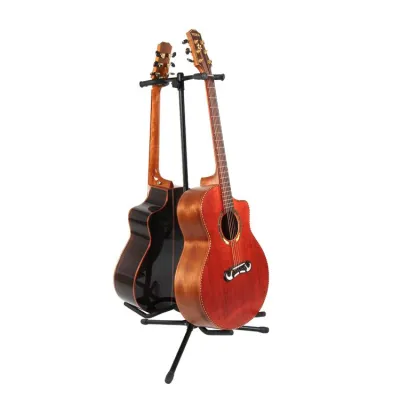
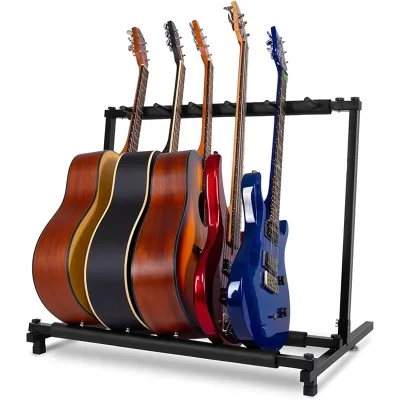

Prices are valid at publication and may change. Please refer to the product page for the latest price.
Beyond physical safety, a dedicated stand plays a psychological role in your learning journey. When your guitar is packed away in a gig bag or stored in a closet, the extra steps required to retrieve it can discourage spontaneous practice. Keeping your instrument visible and ready to play on a secure stand significantly increases your daily practice frequency. You are much more likely to pick up the guitar for a quick ten-minute session if all you have to do is lift it off its cradle.
Furthermore, temporary storage spots expose your guitar to environmental hazards. In Philippine households, leaning a guitar against a concrete wall can expose the wood to dampness, which can seep through the finish and cause warping or mold growth. Placing it on a bed or sofa increases the risk of someone accidentally sitting on it or a pet knocking it over. A stand keeps the instrument elevated, allowing air to circulate freely around the body and neck while keeping it out of the path of foot traffic.
Essential Features of a Reliable Budget Guitar Stand
When shopping for an affordable guitar stand, you must evaluate its structural integrity to ensure it can support your instrument safely. The first feature to examine is the base stability and center of gravity. A reliable stand must have a wide, balanced footprint that resists tipping when lightly bumped. Look for designs where the weight of the guitar is directed downward through the center of the base rather than pulling the stand forward or backward.

Contact point protection is another critical factor. The parts of the stand that touch your guitar’s neck and body must be covered in soft, protective padding. In warm, humid climates, low-quality rubber padding can degrade quickly, becoming sticky and chemically reacting with your guitar’s finish. Look for stands that use high-density EVA (ethylene-vinyl acetate) foam or non-reactive silicone padding, which protect the wood from scratches without deteriorating or leaving black marks on the instrument.
The quality of the structural materials determines the stand’s longevity and weight capacity. Even budget-friendly stands should be constructed from tubular steel rather than thin, flexible sheet metal. Examine the thickness of the metal tubes and the quality of the welds at the joints. Clean, smooth welds indicate better manufacturing standards and a lower risk of structural failure under the weight of a heavy electric guitar or bass.
Finally, consider the folding mechanisms and portability of the stand. As a beginner, you may need to transport your stand to music lessons, school events, or jam sessions. A good budget stand should fold down into a compact shape without requiring complex tools. The locking pins, tension knobs, or hinges must operate smoothly and hold their positions securely, ensuring the stand does not collapse unexpectedly during use.
Common Types of Guitar Stands for Beginners
Different guitar stand designs balance floor footprint, stability, and capacity in unique ways. Understanding these variations allows you to choose a model that fits your specific practice space and lifestyle.
A-Frame and Tripod Stands
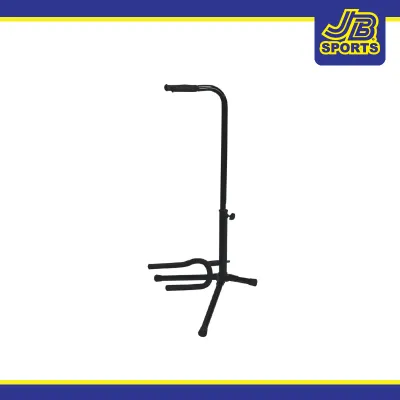
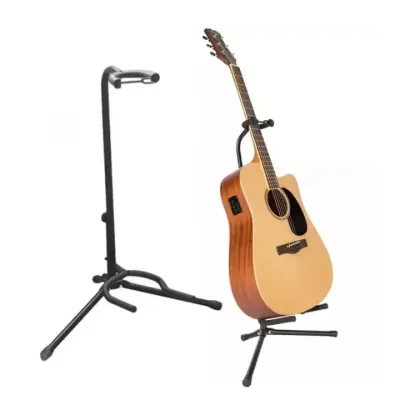
Tripod stands are the traditional choice for single instruments, featuring a three-legged base, a lower body cradle, and an upper neck support yoke. The neck yoke usually includes a security strap or an auto-locking gate that prevents the guitar from falling forward. This design offers excellent vertical stability and is highly recommended for households with pets or active children, as the neck support makes it very difficult to knock the guitar over sideways. However, tripod stands have a larger floor footprint, which can be a drawback in smaller rooms.
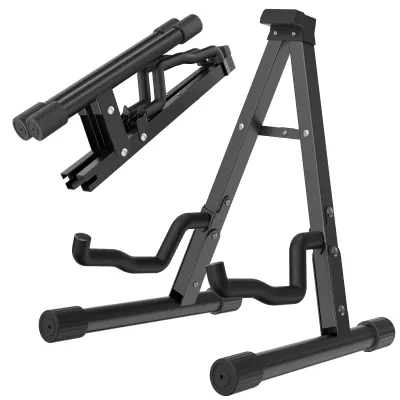
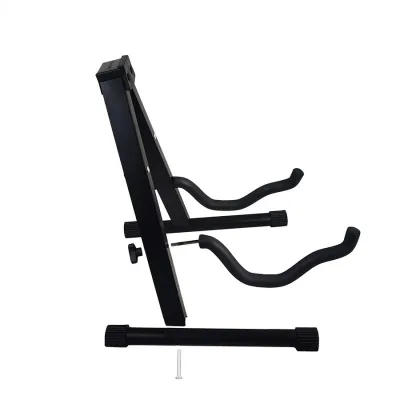
A-frame stands, by contrast, are low-profile, compact, and lack an upper neck support column. They support the guitar solely from the bottom of the body, leaning it back against a small padded rear bar. This design is incredibly portable and takes up very little floor space, making it ideal for tight corners or temporary setups. The trade-off is lateral stability; because there is no neck cradle to secure the upper half of the instrument, an A-frame stand is more vulnerable to side-to-side tipping if bumped from the side.
Multi-Guitar Stands and Racks
If you plan to expand your collection or already own both an acoustic and an electric guitar, a multi-guitar stand or rack is a highly efficient solution. These stands hold multiple instruments side-by-side in a row, distributing the weight evenly across a long, rectangular base. They offer excellent stability because the low, wide frame is very difficult to tip over, even when fully loaded.
However, using a multi-guitar rack requires careful handling. You must ensure there is sufficient spacing between the slots to prevent the tuning pegs or bodies of adjacent guitars from knocking against each other when you retrieve or replace an instrument. Look for racks with adjustable dividers or thick foam padding along the entire support bar to minimize the risk of accidental scratches during quick transitions.
Wall Hangers and Display Stands
Wall hangers are an excellent space-saving alternative that keeps your guitar completely off the floor. By mounting the instrument on the wall, you protect it from vacuum cleaners, pets, and accidental kicks while turning your guitar into a piece of wall art. This setup is highly effective in small apartments or bedrooms where floor space is at a premium.
The primary limitation of wall hangers is the installation process. In the Philippines, residential walls are commonly made of concrete, hollow blocks, or drywall. Mounting a hanger securely requires using the correct masonry drill bits, heavy-duty wall anchors (tox plugs), and sturdy screws. If installed incorrectly, the hanger can pull out of the wall, causing catastrophic damage to your instrument. Additionally, because the guitar is mounted high up, it may not be as quickly accessible for rapid, spontaneous practice sessions compared to a floor stand.
Compatibility and Safety Checks Before Purchase
Before purchasing a guitar stand, you must verify that its physical dimensions and materials are compatible with your specific instrument. Start by matching the stand’s yoke to your guitar’s neck shape. Classical guitars have wide, flat fingerboards and thick necks that may not fit comfortably into narrow tripod neck cradles. Conversely, electric guitars with asymmetrical headstocks or narrow necks might slip or sit crookedly in standard hangers, requiring a self-adjusting yoke that conforms to the headstock’s shape.
Verify the safety of the padding materials against your guitar’s finish. Most modern beginner guitars feature durable polyurethane or polyester finishes, which are highly resistant to chemical reactions. However, if you own a guitar with a nitrocellulose lacquer finish—often found on vintage-style or premium instruments—you must be extremely cautious. Nitrocellulose is highly reactive and can melt or discolor when it comes into contact with the plasticizers used in cheap rubber padding. Always check the manufacturer’s specifications to confirm if the stand is labeled as safe for nitrocellulose finishes.
Confirm the weight and dimension limits of the stand against your instrument’s physical profile. Acoustic guitars have deep, hollow bodies that require a wider bottom cradle to sit securely without sliding forward. Electric guitars and basses are much heavier than acoustics, often weighing between 3.5 to 5 kilograms. Ensure the stand’s maximum weight capacity comfortably exceeds your instrument’s weight to prevent the metal frame from bending or sagging over time.
Special body shapes require dedicated support considerations. If you play an offset electric guitar, a Flying V, an Explorer, or a headless instrument, a standard bottom-supporting stand will not work. These asymmetrical or bottomless shapes cannot rest evenly on a traditional two-point lower cradle. For these instruments, you should look for a hanging-style stand that supports the guitar by its headstock, allowing the body to hang freely and naturally find its own center of gravity.
Buying Channels and Post-Delivery Inspection
When purchasing a budget guitar stand, sourcing from reputable online marketplaces or official brand stores is crucial. Avoid generic, unbranded listings that lack detailed specifications or customer feedback. When browsing online, read user reviews carefully, paying close attention to comments regarding the stand’s stability, the quality of the hardware, and whether the padding has a strong, unpleasant chemical odor, which often indicates low-grade, volatile rubber.
Once your stand is delivered, perform a thorough post-delivery inspection before placing your instrument on it. Begin by unboxing the stand and checking the metal frame for any signs of damage during transit, such as bent tubes or cracked welds. Run your fingers along the metal edges and joints to ensure there are no sharp burrs that could scratch your guitar’s finish or cut your hands during assembly.
Next, check all the hardware connections. Tighten any loose screws, bolts, or locking collars. If the stand uses a folding mechanism, test it several times to ensure the joints lock firmly into place without slipping. Inspect the foam or silicone padding to verify that it is glued securely to the metal arms and does not slide off easily when friction is applied.
Before leaving your guitar unattended, perform a physical stability test. Place the assembled stand on the flat surface where it will permanently reside. Give the empty stand a gentle push from different angles to observe how it handles lateral force. Next, place your guitar on the stand and repeat the test with a very light nudge. A reliable stand should absorb the movement and settle back into a stable position quickly without lifting its legs or wobbling excessively. If the stand feels top-heavy, sways easily, or fails to sit flat on the floor, do not use it.
Finally, verify the seller’s return policy immediately upon receipt. Keep the original packaging intact for the first few days. If you discover any structural defects, missing parts, or stability issues during your initial inspection, initiate a return or exchange promptly to ensure you receive a safe, fully functional product.
Frequently Asked Questions (FAQ)
Can I use a standard guitar stand for a ukulele or bass?
You can generally use a standard guitar stand for an electric or acoustic bass, provided the stand’s weight capacity and base width can accommodate the longer neck and heavier body of the bass. However, standard guitar stands are usually too large for a ukulele. A ukulele placed on a standard stand will easily slip through the neck yoke and bottom cradle, risking a fall. For ukuleles, you should purchase a dedicated ukulele stand or an adjustable universal stand designed with a narrower yoke and a smaller base footprint to ensure a secure fit.
How do I clean the foam padding on my guitar stand?
To clean the foam or rubber padding on your guitar stand, use a soft microfiber cloth slightly dampened with water and a tiny drop of mild dish soap. Gently wipe down the contact points to remove dust, sweat, and oils transferred from your hands and instrument. Avoid using harsh chemical solvents, alcohol, or acetone, as these substances can dissolve the foam, strip away the adhesive holding the padding to the metal, or leave a chemical residue that could damage your guitar’s finish. Always allow the padding to dry completely in a well-ventilated area before placing your guitar back on the stand.
Community discussion
Share your experience or ask a question. Comments are reviewed before publication.