
Quick Answer: Adjustable vs Fixed Piano Chairs
Choosing between an adjustable piano chair and a fixed piano bench depends on who is playing, the type of instrument in your home, and your space constraints.
An adjustable piano chair is the superior option if you have growing children, share your instrument with multiple family members of varying heights, or use a portable digital keyboard with a stand that requires precise height calibration. The ability to raise or lower the seat ensures that every player can maintain an ergonomically correct posture, preventing physical strain during long practice sessions.
Conversely, a fixed piano bench is ideal for a dedicated adult player with a permanent acoustic or console digital piano. These benches prioritize absolute structural stability, offer a classic aesthetic that matches traditional wooden instruments, and almost always include built-in storage under the seat for sheet music and books.
Products mentioned in this guide
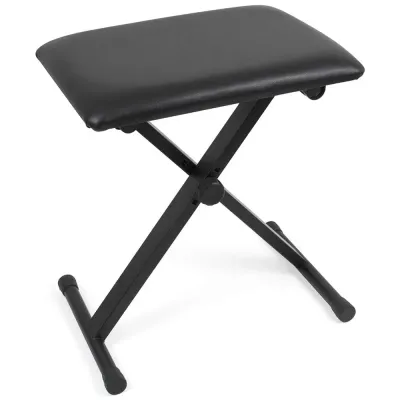
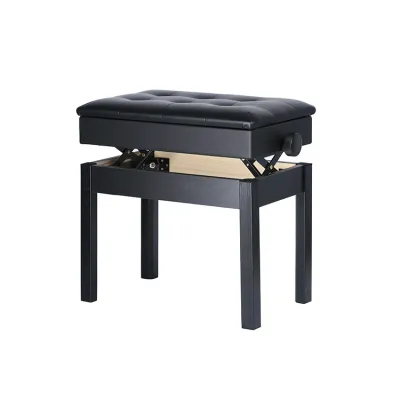
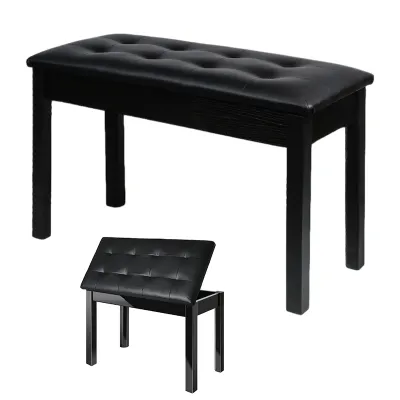
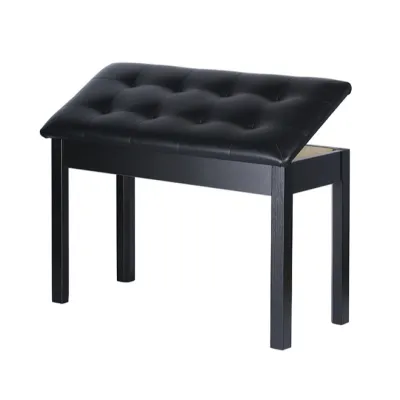
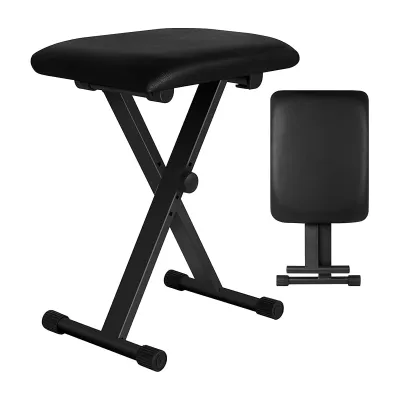
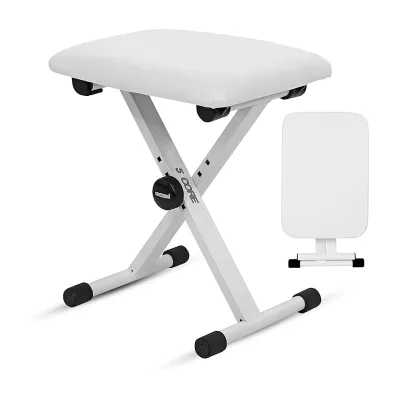
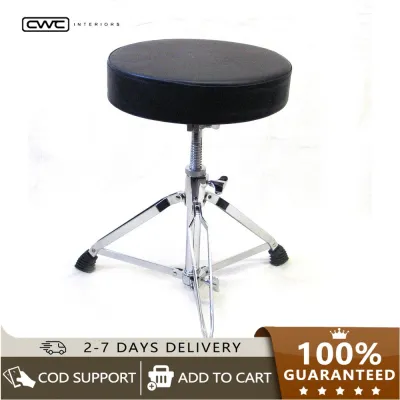
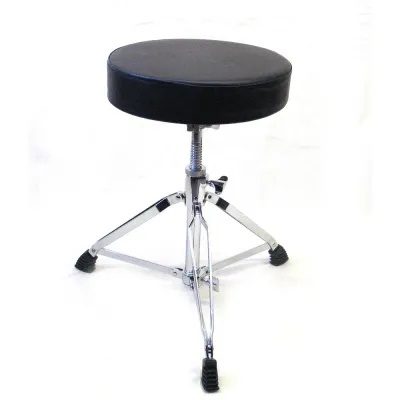
Prices are valid at publication and may change. Please refer to the product page for the latest price.
Ultimately, your decision should align with your physical comfort, the permanence of your music setup, and whether you need a highly portable tool or a stable piece of furniture.
Key Differences Between Adjustable and Fixed Piano Benches
While both seating options serve the same basic purpose, they differ significantly in construction, mechanical complexity, and physical footprint. Understanding these core differences will help you evaluate how each style integrates into your daily practice routine and your home environment.

Height Adjustability and Ergonomics
The primary distinction lies in how each bench addresses player height. Adjustable piano chairs utilize a variety of mechanisms to alter the seat height. Manual models typically feature dual side-knobs connected to a threaded metal rod or steel scissor-lift mechanism, allowing you to raise or lower the seat incrementally. More advanced models may use hydraulic or pneumatic gas-assist lifts, which adjust instantly with the pull of a lever. On the other end of the spectrum, folding X-style benches offer a few pre-set height slots secured by a metal pin.
In contrast, fixed piano benches feature a static height, typically set between 19 and 20 inches (48 to 51 centimeters) from the floor. This height is designed to align with the standard key height of an acoustic upright or grand piano, which sits approximately 28 to 29 inches (71 to 74 centimeters) high.
From an ergonomic standpoint, your seating height dictates your entire playing posture. The baseline for healthy piano technique requires your forearms to be parallel to the floor, with your elbows resting slightly above the keys. Your shoulders should remain relaxed, and your feet must rest flat on the floor to provide leverage and control over the sustain pedal. A fixed bench only provides this ideal alignment if your torso length and arm span perfectly match the standard bench-to-keyboard ratio. If you fall outside this average height range, a fixed bench can force you to hunch forward or overextend your wrists, leading to repetitive strain. An adjustable chair eliminates this risk by letting you customize the distance between your elbows and the keyboard.
Stability and Build Quality
Stability is a critical factor during expressive or energetic playing. When you perform fast scales, heavy chords, or dramatic fortissimo passages, your body weight shifts actively across the seat. A high-quality fixed wooden bench is naturally rigid. Because it is constructed with solid wood legs bolted directly into a heavy wooden frame, there are no moving parts to loosen, squeak, or sway. This creates a rock-solid foundation that allows you to focus entirely on your performance.
Adjustable benches, by design, contain moving mechanical parts. Over time, the joints, bolts, and scissor mechanisms in adjustable models can develop slight play, resulting in a minor wobble or squeak. While premium adjustable benches made with heavy-duty steel or solid hardwood frames offer excellent stability, budget-friendly adjustable models are more prone to mechanical wear.
When evaluating an adjustable bench, it is essential to check the manufacturer’s stated weight capacity and joint construction. Look for welded steel frames, thick adjustment bolts, and robust locking pins. In tropical environments where humidity can affect materials, metal mechanisms require occasional inspection to ensure they remain free of rust and operate smoothly.
Portability, Storage, and Space
Your living space and lifestyle should also dictate your choice of seating. Fixed piano benches are designed as permanent pieces of furniture. They are relatively heavy, difficult to disassemble, and take up a constant footprint in your room. However, they compensate for this lack of mobility by offering excellent utility: almost all traditional fixed benches feature a hinged seat cushion that opens to reveal a spacious storage compartment. This under-seat storage is perfect for keeping sheet music, exercise books, metronomes, and cleaning cloths organized and dust-free.
Adjustable chairs generally offer less storage space because the lifting mechanism occupies the area directly beneath the seat cushion. While some high-end adjustable benches feature a shallow storage compartment, most prioritize mechanical function over storage.
On the other hand, adjustable models—especially folding or X-style keyboard benches—excel in portability and space-saving design. If you live in a compact apartment or condominium where space is limited, an X-style bench can be folded flat in seconds and tucked under a bed or inside a closet when not in use. This portability is also indispensable for gigging keyboardists, music teachers who travel between studios, or bands that need to transport their gear to different venues.
When an Adjustable Piano Chair is the Right Choice
An adjustable piano chair is not just a luxury; for many players, it is an absolute necessity for maintaining physical health and developing proper playing technique.
An adjustable chair is highly recommended for households where multiple family members share a single piano or digital keyboard. If an adult and a young child practice on the same instrument, a fixed bench will inevitably force one of them into an uncomfortable and anatomically incorrect position. A child sitting too low will compensate by raising their shoulders and dropping their wrists, which leads to tension and limits finger agility. By using an adjustable bench, each player can quickly dial in their specific height before starting their practice session, ensuring a safe and comfortable experience for everyone.
For young, growing students, an adjustable chair is a crucial investment in their musical development. As a child grows, their ergonomic requirements change. An adjustable bench can be lowered gradually over the years, keeping their posture perfectly aligned with the keyboard throughout their physical development. This eliminates the need to purchase multiple benches of different heights as they grow.
Digital keyboard players also benefit immensely from height adjustability. Unlike acoustic pianos, which have a fixed, standardized keyboard height, digital keyboards are often placed on portable stands, such as X-stands, Z-stands, or table-style stands. These stands can vary in height depending on how they are set up. If you place your keyboard on a desk or an unstandardized table, a fixed bench may leave you sitting too high or too low. An adjustable piano chair allows you to compensate for these variations, ensuring you can achieve the perfect elbow-to-key relationship regardless of your keyboard stand setup.
Finally, players who suffer from chronic back pain, neck tension, or wrist fatigue will find that the fine-tuning capabilities of an adjustable chair make a significant difference. Even a half-inch adjustment in seat height can relieve pressure on your lower back and shoulders, allowing you to practice for longer periods without discomfort.
When a Fixed Piano Bench is the Better Option
A traditional fixed piano bench remains the gold standard for many classical pianists and permanent home setups for several compelling reasons.
If you are an adult player and the sole user of a permanent acoustic upright, grand piano, or console digital piano, a fixed bench is often the most practical choice. Since your height does not change and the instrument is at a standardized height, you only need to establish your ideal seating position once. A fixed bench provides a reliable, unchanging reference point every time you sit down to play, helping you develop consistent muscle memory for pedal reach and keyboard navigation.
For musicians who prioritize absolute stability, a fixed bench is unmatched. Advanced classical pieces often require intense physical engagement, rapid weight shifts, and powerful arm-weight delivery. Any movement, sway, or creaking from your seat can be highly distracting and can disrupt your balance. A solid wooden fixed bench offers a completely static, rigid platform that absorbs the energy of your playing without shifting, giving you the confidence to perform demanding passages.
From an aesthetic standpoint, fixed benches are designed to complement the beauty of traditional pianos. They are often crafted from matching hardwoods—such as mahogany, walnut, or polished ebony—and feature classic leg designs that blend seamlessly with the instrument’s cabinetry. If your piano is a centerpiece in your living room, a matching fixed bench creates a cohesive, elegant look that utility-focused adjustable chairs rarely match.
Additionally, the practical value of built-in storage cannot be overlooked. Sheet music books, classical anthologies, and manuscript papers can quickly accumulate and clutter your music space. The hinged compartment of a fixed bench keeps your essential materials within arm’s reach while keeping them organized and protected from environmental dust and humidity.
Feature Comparison Matrix
The following table summarizes the core differences between adjustable piano chairs and fixed piano benches to help you quickly identify which option aligns with your priorities:
| Feature | Adjustable Piano Chair | Fixed Piano Bench |
|---|---|---|
| Height Customization | High (Variable/Continuous or Pre-set Slots) | None (Static Standard Height) |
| Structural Stability | Moderate to High (Depends on mechanism quality) | Excellent (Solid wood, no moving parts) |
| Storage Capacity | Minimal to None | High (Spacious under-seat compartment) |
| Portability | High (Especially folding or X-style models) | Low (Heavy, solid wood construction) |
| Aesthetic Style | Modern, utilitarian, or functional | Traditional, elegant, matches piano finish |
| Maintenance Needs | Lubricating metal joints, checking for loose bolts | Dusting wood, conditioning padding |
| Ideal User Profile | Growing children, shared households, gigging musicians | Solo adult players, acoustic piano owners |
How to Verify the Right Fit for Your Setup
Before purchasing any piano seating, it is essential to measure your current setup and verify that the bench will support healthy ergonomics in your home.
First, measure the height of your current keyboard. Take a measuring tape and measure from the floor to the top surface of the white keys. If you are using an acoustic piano or a console digital piano, this measurement should be close to 28 or 29 inches. If you are using a portable keyboard on a stand, adjust the stand so that the keys sit within this standard range.
Next, test your sitting posture using your current household chairs to determine your ideal seat height. Sit with your spine straight but relaxed, and place your hands on the keys. Have someone take a photo of you from the side, or look at your reflection in a mirror. Check if your forearms are parallel to the floor and if your elbows are slightly higher than the keybed. Measure the distance from the top of the seat you are using to the floor. This measurement represents your target bench height. If this height differs significantly from the standard 19 to 20 inches, you will need an adjustable piano chair to play comfortably.
Additionally, consider the physical space in your room. Measure the floor area around your piano, ensuring there is enough clearance to push the bench back when you stand up. A standard fixed bench is typically 30 inches wide, which easily accommodates duet playing but requires a larger permanent footprint. If you have limited space, a narrower adjustable chair or a folding model may be easier to integrate.
Finally, account for environmental factors, especially if you live in a warm or humid climate. High humidity can cause wooden joints to swell or warp, and it can cause low-quality metal mechanisms to rust. Furthermore, synthetic padding materials like cheap polyurethane (PU) faux leather can degrade, peel, or crack quickly when exposed to sweat and ambient humidity. When selecting a bench, check the product specifications for durable materials. Look for solid wood frames with moisture-resistant finishes, breathable fabric cushions, or high-grade genuine leather upholstery that holds up well over time. If you choose an adjustable model with metal parts, ensure the joints are well-machined and can be easily maintained with light lubrication.
Final Decision Framework: Which Bench Should You Buy?
To make your final decision, use this clear, conditional framework to determine which piano seating option best fits your specific circumstances:
Choose an Adjustable Piano Chair if:
- You share the instrument: Multiple family members of different heights use the piano daily.
- You are buying for a child: You want a seat that grows with your young student to maintain correct posture over the years.
- You use a portable keyboard: Your keyboard stand height varies, or you perform at gigs and need a portable, folding seat.
- You experience physical discomfort: You need to fine-tune your seating height to relieve strain on your neck, shoulders, or lower back.
Choose a Fixed Piano Bench if:
- You are the sole player: You are an adult of average height, and your seating requirements never change.
- You own a permanent acoustic piano: You want a bench that matches the elegant wood finish and traditional style of your instrument.
- You demand absolute stability: You play expressive, physically demanding music and dislike any mechanical movement or noise from your seat.
- You need storage: You want a built-in, out-of-sight compartment to organize your sheet music and books.
Verify first if you are buying a budget model:
If you decide on a budget-friendly adjustable chair (typically priced under ₱2,000), read user feedback carefully to check for complaints regarding wobbling, squeaking, or rapid wear of the adjustment threads. For long-term durability, it is often wiser to invest in a mid-range adjustable bench (ranging from ₱2,000 to ₱6,000) or a solid wooden fixed bench, as these offer better materials, sturdier joints, and superior resistance to daily wear and tropical humidity.
Ultimately, the best piano chair is the one that supports your physical health, fits comfortably within your living space, and allows you to focus entirely on the joy of making music.
Frequently Asked Questions (FAQ)
Finding the right seating setup often brings up practical questions about alternative chairs and long-term durability. Below are answers to some of the most common queries regarding piano seating.
Can I use a regular office chair instead of a piano bench?
Using a standard office chair for piano practice is generally not recommended because it hinders the development of proper playing technique. Most office chairs feature wheels, which cause instability and prevent you from planting your feet firmly on the floor for leverage. The swiveling action of an office chair also forces your core muscles to constantly adjust, distracting you from your playing.
Furthermore, office chairs often have sloped or contoured seats that alter your pelvic tilt, and they typically include armrests that restrict your elbow movement and interfere with your arms when playing at the upper or lower ends of the keyboard. Finally, the rolling base makes it difficult to use the sustain pedal consistently without sliding backward.
Do adjustable piano benches wobble while playing?
Whether an adjustable piano bench wobbles depends entirely on its build quality and design. High-quality adjustable benches constructed with heavy-duty steel scissor mechanisms, solid hardwood frames, and dual-knob tension systems are incredibly stable and exhibit virtually no movement during vigorous playing.
However, budget-friendly adjustable benches—particularly lightweight, single-knob models or cheap folding X-benches—are more prone to wobbling. Over time, the bolts and joints on these cheaper models can loosen under your shifting body weight. To prevent wobbling, look for benches with wide, sturdy bases, rubber feet to prevent slipping, and robust locking mechanisms. Regularly checking and tightening the bolts will also help maintain stability.
Community discussion
Share your experience or ask a question. Comments are reviewed before publication.