
Choosing your first drum kit is an exciting milestone, but for an adult beginner, the decision often comes down to a practical debate: acoustic versus electronic. There is no single best drum set for every adult learner; the right choice depends entirely on your living situation, budget, and musical goals. If you live in an apartment or need to practice quietly during late-night hours, an electronic drum set is usually the only practical option. However, if you have a dedicated space, tolerate higher noise levels, and prioritize authentic physical feedback, an acoustic kit offers an unmatched playing experience.
As an adult, your practice time is likely structured around work schedules, family commitments, and community quiet hours. Choosing a kit that aligns with these daily realities ensures you will actually sit down and practice rather than letting the instrument gather dust. By evaluating the physical, financial, and practical differences between these two setups, you can confidently invest in a drums set for adult beginners that fits your lifestyle.
Understanding the Physical and Auditory Differences
Acoustic drums are acoustic instruments that rely on physical vibration to produce sound. When you strike a drumhead with a drumstick, the energy transfers through the head, vibrates the air inside the wooden shell, and resonates outward. This process creates a complex, rich sound wave that you feel in your chest as much as you hear with your ears. The cymbals, made of metal alloys, produce bright, high-frequency sounds that decay naturally over several seconds. This physical interaction provides an authentic stick rebound, where the stick bounces off the tensioned drumhead in a highly predictable, organic manner.
Products mentioned in this guide
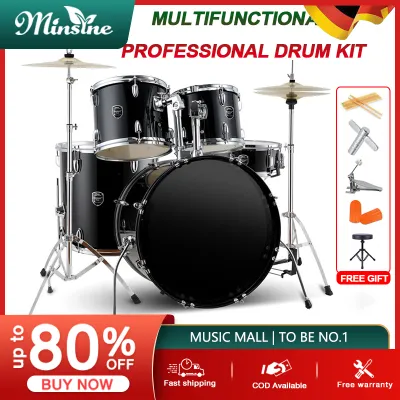
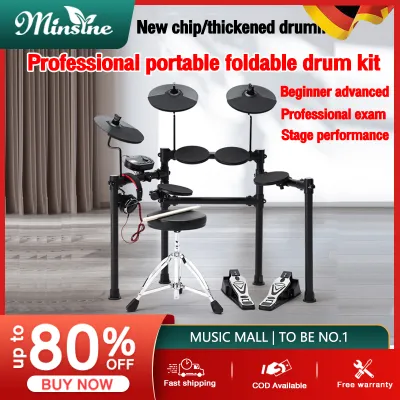

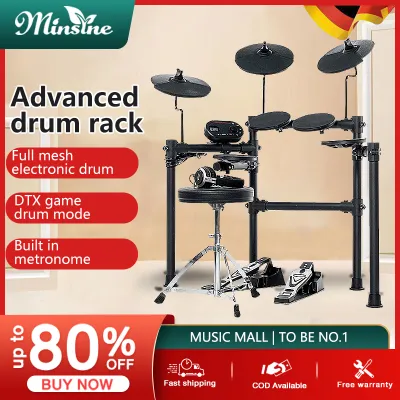
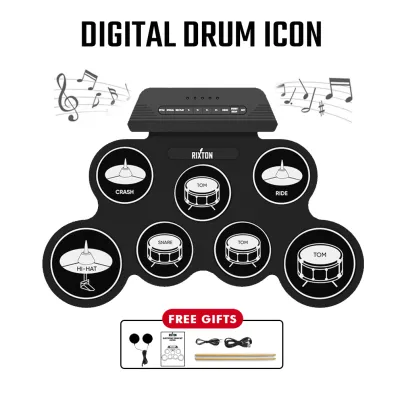
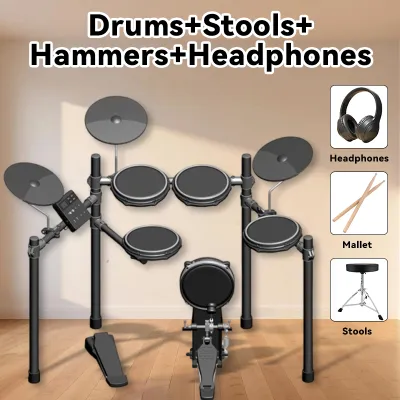
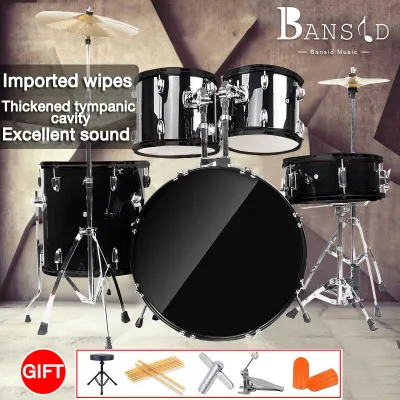
Prices are valid at publication and may change. Please refer to the product page for the latest price.
Electronic drums, on the other hand, are digital controllers that trigger pre-recorded or synthesized drum samples. Instead of hollow wooden shells and metal cymbals, an electronic kit consists of rubber or mesh pads mounted on a compact rack system. When you strike a pad, a sensor detects the velocity of the hit and sends a signal to a digital sound module, often called the “brain.” The module then translates this signal into a digital drum sound, which you hear through connected headphones or an external speaker.
These physical differences have a profound impact on how an adult beginner develops muscle memory and stick control. On an acoustic kit, the way you strike the drumhead—the angle, the force, and the location of the hit—directly alters the tone and volume. This teaches your hands to manage subtle dynamics and tonal variations from day one. On an electronic kit, especially entry-level models, the sound module may have limited velocity layers, meaning a soft hit and a hard hit might sound similar in tone, just different in volume. Additionally, the rebound of mesh or rubber pads differs from real drumheads, requiring a slight physical adjustment when transitioning between the two formats.
Evaluating Your Space, Noise Limits, and Living Situation
Before purchasing a drums set for adult learners, you must realistically assess your physical environment. In the Philippines, urban living often means sharing walls in condominiums, apartments, or densely packed residential subdivisions. An acoustic drum set is incredibly loud, often exceeding 100 decibels during normal play. This level of noise easily penetrates concrete walls, windows, and floors, which can quickly lead to complaints from family members or neighbors. If you cannot play at high volumes during your free hours—which for many adults are early mornings or late evenings—an acoustic kit may sit unused.

Electronic drum sets offer a highly effective solution to noise constraints because they allow for headphone practice. When wearing headphones, the only sound audible to others in the room is the physical “thump” of the sticks hitting the mesh or rubber pads. However, beginners often overlook vibration transfer, particularly from the kick pedal. Every time your foot strikes the bass drum pedal, a low-frequency vibration travels down through the pedal, into the floor, and through the building’s structure. In multi-story buildings or homes with wooden floors, this structural vibration can sound like a heavy hammer to neighbors living directly below you. To mitigate this, many players use a thick drum rug or construct a DIY vibration-absorbing platform.
The physical footprint of the kit is another critical consideration. Acoustic drum sets require a significant amount of dedicated floor space, typically requiring an area of at least 1.5 meters by 1.5 meters to accommodate the drums, cymbals, hardware stands, and your throne. They are also heavy and difficult to move once assembled. Electronic drum sets are much more compact and highly portable. Many electronic racks can be folded or tucked into a corner when not in use, making them ideal for smaller bedrooms, home offices, or shared living spaces where space is at a premium.
Comparing Initial Prices and Long-Term Ownership Costs
When budgeting for a drums set for adult beginners, it is essential to look beyond the initial sticker price and consider the total cost of ownership. Entry-level acoustic kits are widely available in the Philippines, but they often do not include everything you need to start playing. A basic acoustic shell pack typically requires you to purchase cymbals, hardware stands, a bass drum pedal, and a drum throne separately. Over time, you will also face recurring maintenance costs, such as replacing worn-out drumheads, purchasing tuning keys, and buying dampening accessories to control the volume and ring of the drums.
Electronic drum sets are generally sold as complete, all-in-one bundles that include the pads, rack, sound module, and necessary cabling. However, they also come with hidden startup costs. Most electronic kits do not include a drum throne, a bass drum pedal, or headphones in the standard box. To hear your playing, you will need to invest in a pair of high-quality, closed-back studio headphones that can handle the wide dynamic range of drum sounds. If you want to play without headphones, you will also need to purchase a dedicated electronic drum amplifier or an active personal monitor speaker, as standard home audio speakers or computer monitors can easily blow out under the pressure of low-frequency drum transients.
Durability and resale value also differ significantly between the two types. A well-maintained acoustic drum set can last for decades, as wood and metal hardware do not become obsolete. If you decide to upgrade or stop playing, quality acoustic drums and cymbals tend to retain a reasonable portion of their resale value on the local secondhand market. Electronic drum sets, being electronic devices, are subject to technological obsolescence and physical wear on the internal sensors. While high-quality mesh heads are durable, the rubber pads and trigger cables can degrade over years of heavy use, and older sound modules may lose value as newer, more realistic sampling technology enters the market.
Aligning the Kit With Your Learning Goals and Practice Habits
Your musical aspirations and preferred genres should play a major role in your decision. If your ultimate goal is to play in a traditional rock band, perform at local community events, or explore acoustic jazz, learning on an acoustic kit is highly advantageous. The physical feedback of real cymbals and the ability to practice subtle techniques like rimshots, cross-sticks, and brushwork are essential for these genres. Developing the physical endurance and hand strength required to draw a rich tone out of a real drum shell is a skill that can only be fully mastered on an acoustic instrument.
If your interests lean toward modern pop, electronic dance music (EDM), hip-hop, or music production, an electronic drum set offers distinct advantages. The sound module allows you to instantly switch between hundreds of pre-loaded drum kits, ranging from classic studio acoustic sounds to vintage drum machines and futuristic electronic beats. Furthermore, electronic kits make home recording incredibly simple. You can connect the module directly to a computer via USB or MIDI to record your practice sessions, play along with online tutorials, or trigger high-end virtual drum instruments in a digital audio workstation (DAW) without needing expensive microphones or acoustic room treatment.
For an adult beginner, the built-in learning tools of an electronic drum module can accelerate your progress. Most modern modules feature integrated metronomes, coaching programs that grade your timing accuracy, and auxiliary inputs or Bluetooth connectivity to stream play-along tracks directly into your headphones. These interactive features make solo practice engaging and structured, helping you build solid timing and rhythm habits even when practicing late at night after a long workday.
Final Decision Framework: Which Drum Set Fits Your Setup?
To make your final decision, evaluate your personal circumstances against this practical framework. You should choose an acoustic drum set if you have a dedicated ground-floor room, garage, or soundproofed space where high volume will not disturb others. This option is best if you prioritize the authentic physical feel of real drumheads, want to develop traditional acoustic playing techniques, and plan to play with other musicians in live, unamplified settings.
You should choose an electronic drum set if you live in an apartment, condominium, or shared household where quiet practice is mandatory. This setup is ideal if you have limited floor space, want the convenience of built-in practice tools and diverse sound libraries, or plan to record your playing directly into a computer.
Before making any purchase, always verify your constraints. Measure your designated practice area to ensure the kit will fit comfortably alongside your drum throne. Check your housing association or family guidelines regarding noise and quiet hours to avoid conflicts. If possible, visit a local music store in the Philippines to physically test both types of kits, paying close attention to the stick rebound of mesh pads versus acoustic drumheads to see which feel you prefer.
Frequently Asked Questions (FAQ)
Can I learn on an electronic kit and later switch to acoustic?
Yes, you can absolutely start your drumming journey on an electronic kit and transition to an acoustic set later. The fundamental patterns, limb coordination, rhythm, and stick grips are identical on both instruments. However, when you make the switch, you will need to adjust to the physical differences in stick rebound, as real drumheads and metal cymbals respond differently than rubber or mesh pads. You will also need to practice controlling your dynamics, as acoustic drums require more physical control to play quietly and can produce a much wider range of volume and tone based on how hard you strike them.
Do electronic drums need an amplifier?
Electronic drums do not require an amplifier if you plan to practice privately using headphones. Most drum modules feature a dedicated headphone jack that provides a clear, stereo mix of your drum sounds. However, if you want to play along with other musicians, perform in a live setting, or practice without wearing headphones, you will need to connect the module’s audio output to an external amplifier. For the best sound quality, it is recommended to use a dedicated electronic drum monitor or a keyboard amplifier, as these are designed to handle both the deep bass of the kick drum and the high-frequency crispness of the cymbals.
Community discussion
Share your experience or ask a question. Comments are reviewed before publication.