
Choosing your first drum set is an exciting milestone, but it immediately presents a classic crossroads: should you go with a traditional acoustic kit or a modern electronic one? The answer is not universal. It depends on where you live, how much noise your surroundings can tolerate, your budget, and your long-term musical goals. By analyzing your personal environment and learning style, you can select an instrument that encourages daily practice rather than sitting unused due to noise complaints or maintenance frustrations.
Both options offer distinct paths for developing your rhythm, coordination, and musicality. While acoustic drums provide the raw, physical feedback of vibrating wood and metal, electronic drums offer unparalleled convenience and digital versatility. Understanding how these differences translate to your daily life in the Philippines will help you make an informed investment that keeps you motivated to play.
Assess Your Space and Noise Constraints
Before purchasing any instrument, you must evaluate the physical space available in your home. A standard five-piece acoustic drum set requires a significant footprint, typically needing an area of at least 1.5 meters by 2 meters to accommodate the drums, cymbal stands, hardware, and your drum throne. You also need extra clearance around the perimeter to move your arms and legs freely without hitting walls or furniture. In contrast, electronic drum sets are highly compact, with most models mounted on a single, lightweight rack that easily fits into a 1.2-meter by 1.2-meter corner.
Products mentioned in this guide
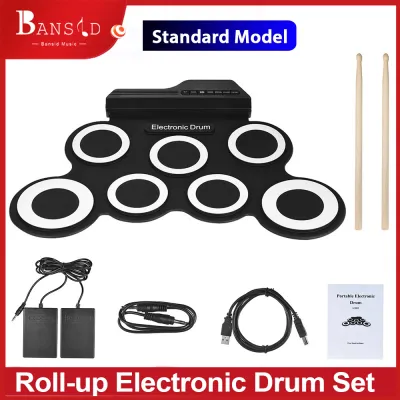
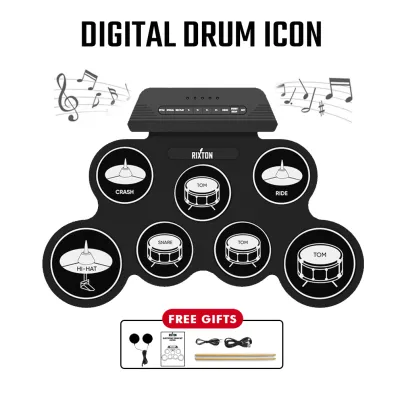
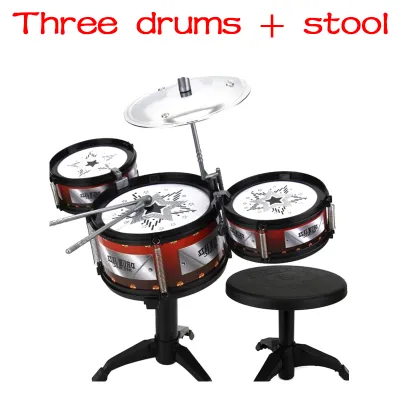
Prices are valid at publication and may change. Please refer to the product page for the latest price.
Noise is often the single biggest deciding factor for aspiring drummers. Acoustic drums are incredibly loud, easily exceeding 100 decibels during normal play, which is comparable to the sound of a lawnmower or a power tool. In dense residential areas, subdivisions, or condominiums in the Philippines, where houses are built close together and walls are often shared, this level of volume can quickly lead to neighborhood disputes. The sound of an acoustic snare or crash cymbal can easily penetrate standard concrete walls and glass windows, making daytime practice difficult and nighttime practice virtually impossible.
While electronic drums are designed for silent practice using headphones, they are not completely silent. Striking rubber or mesh pads still produces a physical tapping sound that can be heard in adjacent rooms. More importantly, the physical impact of your foot hitting the bass drum pedal creates low-frequency vibrations that travel directly through the floor. In multi-story homes or apartment buildings, this structural vibration can sound like a heavy hammer striking the ceiling of the room below.
To manage these noise issues, you can implement various sound-reduction strategies. For acoustic kits, this might involve purchasing rubber mute pads, swapping out standard mylar heads for mesh heads, or using specialized low-volume cymbals, though these modifications add to your initial expenses. For electronic kits, you can minimize floor vibrations by placing a thick rubber gym mat under the rack or building a simple DIY isolation platform using tennis balls sandwiched between wooden boards to absorb the physical impact of the pedals.
Evaluate Your Budget and Hidden Costs
Your initial budget is another critical factor when choosing your first kit. Entry-level acoustic drum sets designed for beginners generally range from ₱15,000 to ₱30,000 for complete packages that include the shells, basic hardware, and starter cymbals. Beginner electronic drum sets fall into a very similar price bracket, typically starting around ₱12,000 and going up to ₱28,000 for models featuring mesh heads. However, the sticker price of the drum kit itself is rarely the final amount you will spend, as both options come with distinct hidden costs.

For an acoustic kit, budget-friendly packages often include low-quality brass cymbals that bend easily and produce a harsh, metallic clang. You will likely want to upgrade to entry-level bronze cymbals relatively quickly to improve your playing experience. Additionally, acoustic drumheads are consumable items that stretch, dent, and lose their tone over time, requiring regular replacement. You must also budget for high-quality hearing protection, such as musician’s earplugs or isolation headphones, to protect your ears from the high decibel levels of acoustic play.
Electronic kits have their own set of secondary expenses that you must consider. While they usually include all the pads and cables you need, they rarely come with high-quality headphones. Standard phone earbuds often lack the frequency range required to reproduce the deep bass of a kick drum, meaning you will need to invest in a dedicated pair of studio monitor headphones. Furthermore, if you want to play out loud for family or practice with other musicians, you cannot use a standard guitar amplifier, which can easily blow out from the low frequencies; instead, you must purchase a dedicated drum amplifier or a portable PA system.
You should also consider the long-term value and durability of your investment. Acoustic hardware, such as metal stands and pedals, can last for decades if kept dry and clean, and individual drums can be easily repaired or upgraded over time. Electronic kits, however, rely on digital sensors, rubber pads, and internal wiring that can wear out or fail. When an electronic module or pad stops working, finding replacement parts for older or budget-friendly models can sometimes be difficult, occasionally requiring you to replace the entire component.
Align the Kit With Your Learning Goals
Your choice of instrument should align closely with how you want to develop as a musician. Acoustic drums offer an organic, tactile experience that is essential for mastering the nuances of drum dynamics. When you play a real drum, the volume, tone, and resonance change depending on how hard you strike the head, where you hit it, and the angle of your drumstick. This physical feedback teaches you stick control, rebound management, and how to draw a warm, musical tone out of the instrument, which are foundational skills for any serious drummer.
Electronic drums, on the other hand, are exceptional tools for building solid timing and rhythm in a controlled environment. Most electronic drum modules come equipped with built-in metronomes, coaching programs, and timing exercises that give you instant visual feedback on whether you are playing ahead of or behind the beat. The ability to plug in your phone or connect via Bluetooth allows you to play along with your favorite songs or backing tracks silently, making your practice sessions highly engaging and less intimidating for a complete beginner.
The genres of music you wish to play should also influence your decision. If your heart is set on playing traditional rock, jazz, blues, or orchestral percussion, starting on an acoustic kit is highly beneficial because these styles rely heavily on subtle dynamic variations, rimshots, and cymbal swells that electronic pads struggle to replicate realistically. Conversely, if you are interested in modern pop, hip-hop, electronic dance music, or digital music production, an electronic kit is incredibly versatile, allowing you to switch between hundreds of pre-loaded drum machine sounds, hand percussion, and sound effects at the touch of a button.
Ultimately, both kits can help you build the core physical coordination required to play the drums. Limb independence, rudiment practice, and song structures can be learned effectively on either setup. The key is choosing the instrument that allows you to practice consistently without feeling self-conscious about making mistakes or disturbing those around you.
Compare Setup, Maintenance, and Playability
The day-to-day maintenance of your drum set can significantly impact your willingness to practice. Acoustic drums are made of wood and metal, making them highly sensitive to environmental factors like the high humidity and tropical heat of the Philippines. Wood can warp, metal hardware can rust, and drumheads will stretch and detune with temperature changes. Learning to tune acoustic drums is an art form in itself, requiring you to adjust the tension rods regularly to keep the kit sounding pleasant and resonant.
Electronic kits are virtually maintenance-free in comparison. Once you assemble the rack and plug in the cables, the kit is ready to play and is always perfectly in tune. The synthetic mesh or rubber pads are unaffected by humidity, and you do not have to worry about wood warping or metal hardware corroding from moisture in the air. This plug-and-play nature makes electronic drums highly appealing for beginners who want to focus entirely on practicing rather than spending time adjusting tension rods or polishing chrome hardware.
Portability is another area where the two types of kits diverge sharply. Moving an acoustic drum set is a labor-intensive process that involves breaking down heavy cymbal stands, packing fragile cymbals into protective bags, and loading bulky wooden shells into a vehicle. If you plan to take your kit to rehearsals, church services, or local gigs, you will need a vehicle with ample cargo space. Electronic kits are lightweight, and many models feature folding frames that allow you to pack the entire set into a car trunk or store it in a closet in just a few minutes.
The physical feel of the drumheads also affects your playability and comfort. Traditional acoustic mylar heads have a natural, lively rebound that helps you develop proper wrist and finger control. Budget electronic kits often use hard rubber pads, which can feel stiff and transfer a lot of shock to your wrists and elbows, potentially causing fatigue during long practice sessions. Opting for an electronic kit with mesh heads provides a much softer, more realistic rebound that is gentler on your joints and closely mimics the feel of a real acoustic drum.
Final Checklist: Which Path Should You Take?
To make your final decision, review this quick checklist to see which profile matches your current living situation and musical aspirations.
You should choose an acoustic drum set if you:
- Have a dedicated, ground-floor practice space where high volume will not disturb family members or neighbors.
- Prioritize learning authentic stick rebound, dynamic control, and acoustic tone development from day one.
- Are willing to spend time learning how to tune, maintain, and care for physical drumheads and wooden shells.
- Plan to play in traditional live settings, such as garage bands, church groups, or local music venues, where acoustic volume is expected.
You should choose an electronic drum set if you:
- Live in an apartment, condominium, or a closely built neighborhood with strict noise limits.
- Need a compact, space-saving instrument that can be easily folded and stored away when not in use.
- Want the ability to practice silently at any hour of the day or night using headphones.
- Enjoy using digital learning tools, playing along with backing tracks, or connecting your drums to a computer for recording.
If you find yourself caught in the middle, consider a hybrid approach. You can enroll in weekly drum lessons at a local music school or studio to practice on a real acoustic kit under the guidance of an instructor, while using a compact electronic kit or a simple practice pad at home to build your muscle memory, timing, and coordination between lessons.
Frequently Asked Questions (FAQ)
Can I learn on electronic drums and later switch to acoustic?
Yes, you can absolutely start your drumming journey on an electronic kit and transition to an acoustic set later. The fundamental skills of drumming—such as hand-foot coordination, stick rudiments, timing, and limb independence—transfer perfectly between both instruments.
However, when you make the switch, you will need to undergo a brief adjustment period. You will need to adapt to the physical size of an acoustic kit, which is typically larger and spaced further apart than a compact electronic rack. You will also need to practice controlling your physical dynamics, as acoustic drums are far more sensitive to how hard you strike them, and you cannot simply turn down a volume knob to hide uneven strokes.
Do I need an amplifier for an electronic drum set?
You do not need an amplifier if you plan to practice privately. A high-quality pair of headphones plugged directly into the drum module is all you need to hear your playing clearly while keeping the environment quiet for others.
An amplifier only becomes necessary if you want to play without headphones, perform for family and friends, or jam with other musicians like guitarists or keyboard players. If you decide to buy an amplifier, make sure to choose a dedicated drum monitor or a keyboard amplifier that is designed to handle the wide frequency range and heavy bass transients of electronic percussion.
Community discussion
Share your experience or ask a question. Comments are reviewed before publication.