
To choose the right acoustic guitar pickup, you must match the technology to your playing style, venue volume, and willingness to modify your instrument. If you want a warm, feedback-resistant tone without modifying your guitar, a soundhole pickup is your best option. For high-volume band settings where feedback control is paramount, an undersaddle piezo pickup is the industry standard. If you are a percussive fingerstyle player seeking the most organic, wood-resonant sound, a contact pickup (soundboard transducer) will capture those delicate physical nuances.
Finding the Best Acoustic Guitar Pickup: A Quick Guide
An acoustic guitar pickup converts the physical vibrations of your strings or soundboard into an electrical signal that can be amplified by a PA system or acoustic amplifier. Because acoustic guitars rely on their hollow bodies to project sound naturally, capturing this complex resonance electronically is a significant engineering challenge. The three primary pickup technologies approach this challenge from different physical locations on the instrument.
Soundhole pickups slide directly across the soundhole, capturing string movement magnetically or via small internal microphones. Undersaddle pickups sit directly beneath the bridge saddle, registering the direct downward pressure of the strings. Contact pickups, or soundboard transducers, adhere to the inside or outside of the guitar’s top wood, capturing the physical vibrations of the soundboard itself. Balancing your priorities between installation invasiveness, feedback resistance, and tonal warmth is the key to finding your ideal setup. Budget is also a factor, with basic passive pickups starting around ₱1,500 and professional multi-source systems exceeding ₱15,000.
Products mentioned in this guide
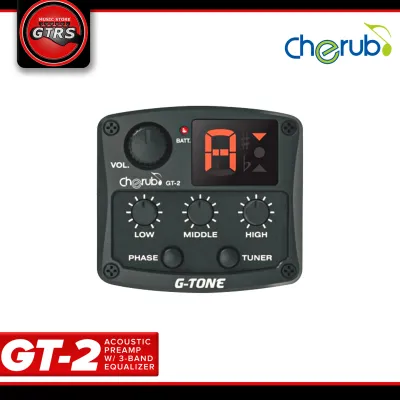
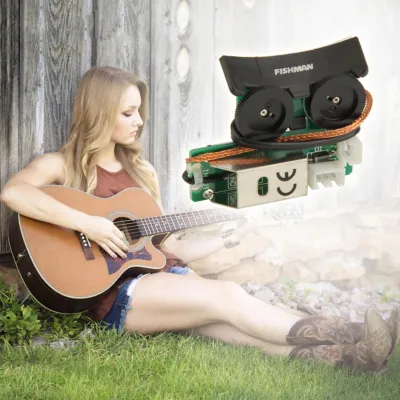
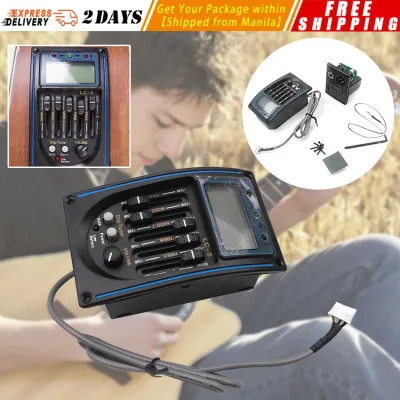

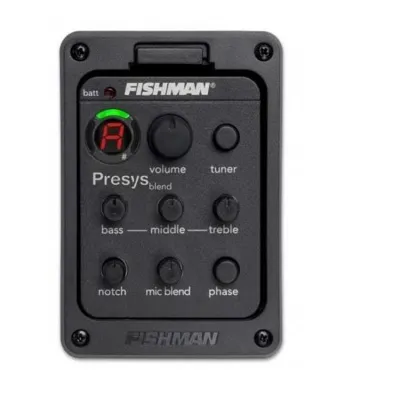
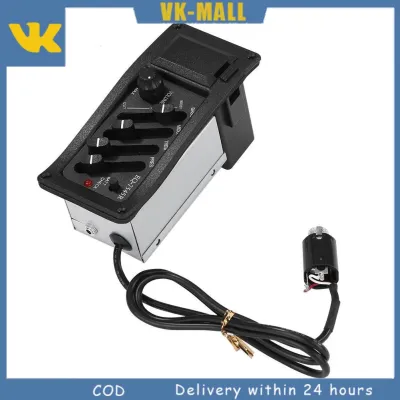
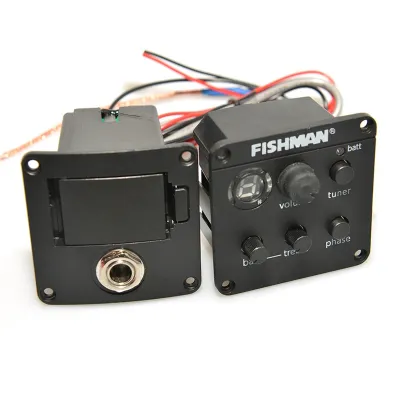
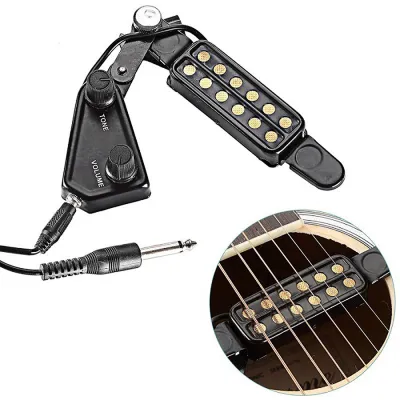
Prices are valid at publication and may change. Please refer to the product page for the latest price.
Soundhole Pickups: Magnetic and Internal Mic Designs
Soundhole pickups are highly popular because they are incredibly easy to mount and remove. These devices slide directly into the soundhole of your acoustic guitar, clamping gently onto the edges of the top wood. They generally fall into two categories: magnetic sensors and internal microphones.

How They Work: Magnetic soundhole pickups operate similarly to electric guitar pickups. They feature copper coils wrapped around magnets that create a magnetic field, detecting the physical movement of steel strings. Because they rely on magnetic fields, they only work with steel-string acoustic guitars and will not function on nylon-string classical guitars. Some advanced models also include a tiny, built-in internal microphone to capture the air movement inside the guitar body, blending the magnetic signal with acoustic airiness.
Tonal Characteristics: Magnetic soundhole pickups deliver a warm, clear, and highly articulate sound. While they can sometimes sound slightly magnetic in character, dual-source models that incorporate an internal microphone provide a much more natural, mic-like acoustic resonance. They excel at capturing clean mid-range frequencies and defined single-note lines.
Pros and Cons: The biggest advantage of a soundhole pickup is its non-invasive installation. You can easily pop it in for a gig and remove it afterward without altering your instrument. However, they can be bulky and visually obtrusive across your soundhole. Additionally, models featuring internal microphones are highly susceptible to feedback when performing at high stage volumes.
Best Suited For: These pickups are ideal for fingerstyle players, casual gigging musicians, and owners of vintage or high-end guitars who want to avoid making permanent physical modifications to their instruments.
Undersaddle Pickups: The Piezo Standard
If you walk into a live music venue or a church in the Philippines, chances are the acoustic guitarist on stage is using an undersaddle piezo pickup. This technology is the undisputed industry standard for live, plug-and-play performance due to its reliability and high output.
How They Work: An undersaddle pickup consists of a thin strip containing piezoelectric crystals placed directly beneath the guitar’s bridge saddle. When you pluck a string, the physical vibration exerts direct pressure on the saddle, which compresses the piezo crystals. This mechanical pressure is instantly converted into an electrical signal.
Tonal Characteristics: Undersaddle pickups produce a highly defined, bright, and articulate sound that easily cuts through a dense band mix. However, they are prone to a common tonal artifact known as “piezo quack”—a harsh, sterile, or overly bright transient sound that occurs during heavy strumming. This quack can be mitigated using acoustic preamps, dedicated EQ pedals, or digital acoustic imaging processors.
Pros and Cons: The primary advantage of an undersaddle pickup is its exceptional feedback resistance. Because the sensor is sealed under the saddle and shielded from airborne sound waves, you can perform at high volumes alongside loud drums and bass without feedback. The downside is the invasive installation process, which requires drilling a small hole through the bridge slot and routing the wiring inside the body.
Best Suited For: This setup is best suited for heavy strummers, musicians performing in loud bands, and touring professionals who require consistent, feedback-free performance across diverse live venues.
Contact Pickups: Soundboard Transducers
For musicians who view the entire body of the guitar as an instrument, contact pickups—often called soundboard transducers (SBTs)—offer an incredibly expressive and natural sound. These sensors attach directly to the wood of your guitar, turning the top soundboard into a giant microphone.
How They Work: Contact pickups consist of small, flat discs containing piezo elements that are glued or taped directly to the guitar’s soundboard, typically on the bridge plate inside the guitar body. Instead of measuring direct string pressure, they capture the physical, three-dimensional vibrations of the top wood as it resonates.
Tonal Characteristics: The sound of a contact pickup is remarkably organic, woody, and faithful to the natural acoustic voice of your specific guitar. It captures the complex overtones, body resonance, and subtle dynamics of your playing with stunning realism.
Pros and Cons: Because they monitor the soundboard’s movement, contact pickups are highly responsive to percussive techniques, such as tapping or slapping the guitar body. However, this extreme sensitivity is a double-edged sword. They are highly prone to handling noise—such as your sleeve rubbing against the body—and are exceptionally susceptible to low-frequency feedback at moderate to high stage volumes.
Best Suited For: Contact pickups are the perfect choice for percussive fingerstyle players, solo acoustic performers, and singer-songwriters playing in intimate, quiet settings where natural acoustic tone is valued above absolute volume.
Matching the Pickup to Your Playing Style and Gear
Selecting the right acoustic guitar pickup requires analyzing your specific playing techniques, your typical performance environments, and the external gear you plan to use.
Playing Style Matrix:
- Heavy Strumming: Undersaddle piezo pickups are highly recommended to maintain clarity and avoid feedback.
- Flatpicking and Bluegrass: Soundhole pickups offer the mid-range punch and articulation needed for fast flatpicking runs.
- Standard Fingerstyle: Soundhole pickups (especially dual-source magnetic/mic models) or contact pickups provide the warmth and detail required for delicate fingerpicking.
- Percussive Fingerstyle: Contact pickups are essential for capturing body taps, slaps, and percussive rhythms.
The Role of Preamps: Many acoustic guitar pickups are passive, meaning they do not have an onboard battery-powered preamp to boost the signal. Passive undersaddle and contact pickups produce a high-impedance signal that degrades quickly over long cable runs, resulting in a thin, tinny sound. To prevent signal loss and tone degradation, pairing your passive pickup with an external acoustic preamp or active Direct Input (DI) box is highly critical. Active pickups, which feature an internal battery (usually a 9V battery inside the guitar body), pre-amplify the signal internally, allowing you to plug directly into a mixer or amplifier with minimal signal loss.
Venue and Volume Considerations: Your typical gigging environment plays a massive role in your decision. If you perform in quiet coffee shops, intimate acoustic lounges, or air-conditioned indoor chapels, a contact pickup or a dual-source soundhole microphone will deliver a breathtakingly natural sound. However, if you are performing on outdoor stages in humid tropical conditions, or in loud bars with floor monitors blasting back at you, the high feedback resistance of an active undersaddle piezo pickup is indispensable.
Installation and Compatibility Checks
Before purchasing an acoustic guitar pickup, you must evaluate the installation requirements and verify compatibility with your specific instrument.
Non-Invasive Options: If you want a temporary setup, look for temporary soundhole pickups or external contact sensors that use non-marring adhesive putty. These can be installed in minutes without any specialized tools and can be easily transferred between different guitars.
Invasive Procedures: Permanent installations—such as undersaddle piezos and internal soundboard transducers—require permanent modifications to your guitar. This process typically involves drilling a small hole through the bridge slot for the pickup wire, widening the endpin hole to accommodate a 1/4-inch output jack, and potentially sanding down the bottom of your saddle to maintain proper string action.
Professional Help: Always check the pickup manufacturer’s installation manual and your guitar’s warranty guidelines before proceeding. If you are uncomfortable using a drill or precision files on your instrument, we strongly advise consulting a qualified luthier or guitar technician. In the Philippines, high humidity levels can cause acoustic guitar wood to swell or shrink; a professional luthier can ensure that the saddle slot is perfectly flat and that the endpin jack is routed safely without splitting the wood or tail block.
Frequently Asked Questions (FAQ)
Can I use an electric guitar amp with an acoustic pickup?
You can physically plug an acoustic guitar pickup into an electric guitar amplifier, but the tonal results are generally unsatisfactory. Electric guitar amps are voiced to color the sound, emphasizing mid-range frequencies and rolling off high frequencies to suit magnetic electric pickups. When paired with an acoustic pickup, this voicing results in a boxy, unnatural tone that lacks acoustic shimmer. For a natural, full-range sound, it is highly recommended to use a dedicated acoustic guitar amplifier, a portable PA system, or a high-quality DI box connected directly to a mixing console.
Do I need a preamp for my acoustic guitar pickup?
Whether you need an external preamp depends entirely on whether your pickup is active or passive. Active pickups have an onboard preamp powered by an internal battery, meaning they output a strong, low-impedance signal ready for any amplifier or PA system. Passive pickups do not have an internal power source and output a weak, high-impedance signal. If you use a passive pickup, an external preamp is highly necessary to match impedance, boost the signal strength, and provide essential EQ controls to shape your tone before it reaches the speakers.
Community discussion
Share your experience or ask a question. Comments are reviewed before publication.