
Keeping your first guitar on a stand instead of tucked away in a gig bag is one of the best ways to encourage daily practice. When an instrument is easily accessible, you are far more likely to pick it up for a quick ten-minute session. However, leaving an instrument out means you need a reliable way to support it. Choosing the right guitar stand rack depends on your space, how many instruments you plan to own, and how often you need to travel with your gear.
Diagnose Your Space, Capacity, and Portability Needs
Start by taking an honest inventory of your current instruments and your immediate musical goals. If you only have one acoustic guitar today but plan to buy an electric guitar or a ukulele within the next few months, a single-instrument stand might quickly become obsolete. Planning ahead prevents you from buying multiple individual stands that clutter your floor.
Next, evaluate your physical environment. In many homes, space is at a premium, and rooms serve multiple purposes. Identify where your practice corner will be and look for potential hazards. High-traffic areas near doorways, hallways, or close to oscillating electric fans pose a constant tipping risk. If you share your space with active pets or family members, stability must be your top priority.
Products mentioned in this guide

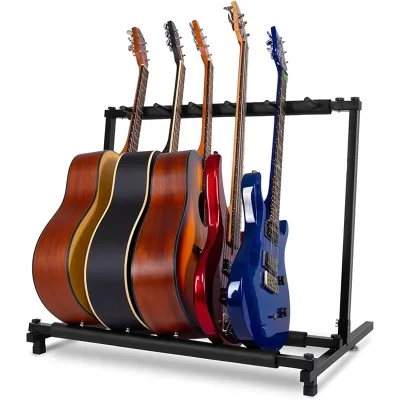
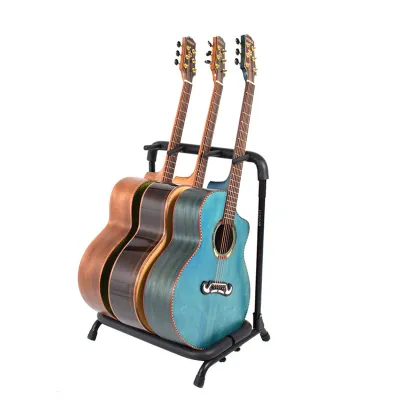
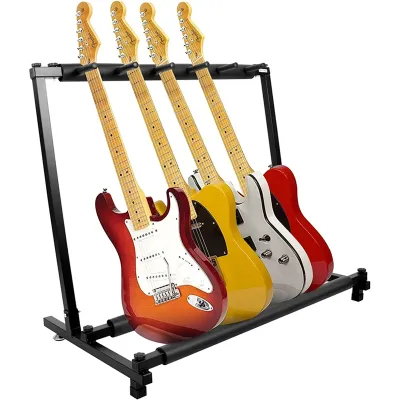
Prices are valid at publication and may change. Please refer to the product page for the latest price.
Finally, consider your mobility. Will your stand remain permanently in a quiet corner of your bedroom, or will you need to pack it up for weekly lessons, church services, or band rehearsals? A heavy, rigid stand is excellent for home security but becomes a burden if you have to carry it on public transport or pack it into a crowded vehicle.
Comparing the Three Main Guitar Stand Styles
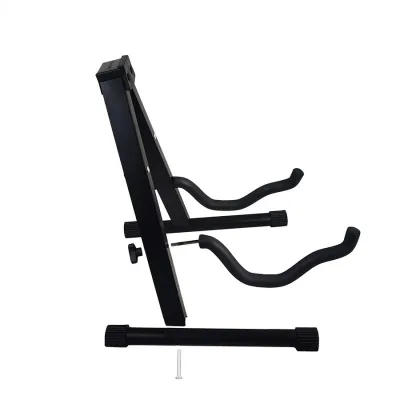
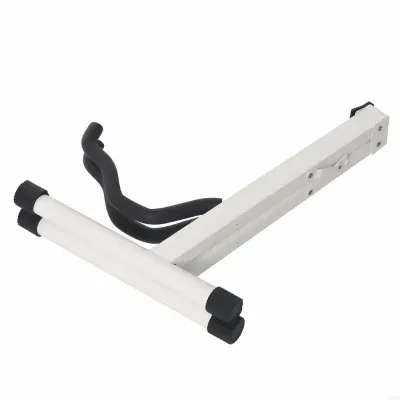
A-Frame stands are characterized by their simple, low-profile design that resembles the letter “A” when deployed. These stands are incredibly compact and fold almost completely flat, making them easy to slide under a bed or tuck into a closet when not in use. Because they lack a neck support column, they keep your room looking clean and uncluttered. However, the lack of neck support means the guitar relies entirely on its body resting against the base. If bumped from the side, a guitar on an A-frame stand can pivot and slip out of the cradle relatively easily.

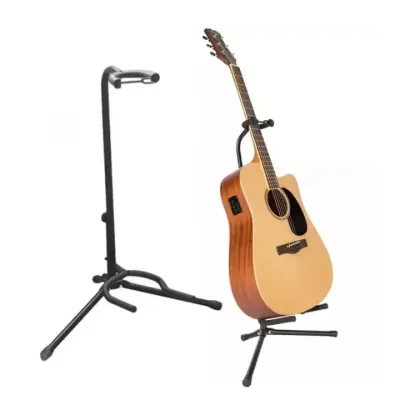
Tripod stands feature a vertical neck column supported by three sprawling legs at the base. This design offers a much wider physical footprint, which translates to superior physical stability on uneven floors. The key advantage of a tripod stand is the neck yoke, which cradles the guitar just below the headstock. Many tripod models include a rubber security strap or an automatic gravity-activated gate that locks the neck in place when you set the guitar down. While highly secure, tripods take up more floor space and can look visually bulky in a small room.
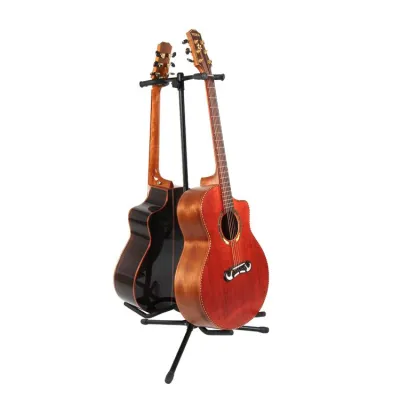
Multi-guitar racks are rectangular, frame-like structures designed to hold three, five, or seven guitars side-by-side. Instead of facing forward, the instruments sit at an angle, resting their necks against a padded upper rail. This configuration is incredibly space-efficient, allowing you to store a whole collection in the space normally occupied by two individual tripod stands. Because the base is wide and rectangular, these racks are exceptionally stable and virtually impossible to tip over. They are the ideal choice if you are committed to building a multi-instrument collection and have a dedicated practice area.
Key Stability and Safety Checks for Beginners
When shopping for a guitar stand rack, the material covering the contact points is critical. Most budget stands use foam or rubber padding to cushion the instrument. If you own a guitar with a nitrocellulose lacquer finish—common on vintage instruments and certain premium models—standard rubber can chemically react with the finish, leaving permanent, cloudy burns on the wood. For polyurethane or polyester finishes, which are standard on most beginner guitars, basic foam is generally safe, but it is still wise to verify that the padding is non-reactive and soft.
Weight distribution is another vital factor. Electric guitars, especially solid-body models, are significantly heavier than acoustic guitars. A lightweight, flimsy stand can easily buckle or tip under the weight of a heavy electric instrument. Ensure the stand you choose has a low center of gravity and a sturdy metal frame that won’t flex when holding your heaviest instrument.
Lastly, inspect the locking mechanisms and joints. A reliable stand should feature secure locking pins, robust metal hinges, or heavy-duty clutches. Avoid stands that rely solely on cheap plastic friction knobs to hold the vertical neck column in place, as these can slip over time, causing the stand to collapse unexpectedly and damage your instrument.
Portability and Storage Considerations
If you plan to take your guitar to lessons, jam sessions, or gigs, portability is a major factor. Evaluate the folded dimensions and the overall weight of the stand before purchasing. A stand that is lightweight and folds down into a slim, linear shape will easily fit into a backpack pocket or alongside your guitar gig bag.
Look for user-friendly folding mechanisms. High-quality portable stands often feature quick-release pins or spring-loaded hinges that allow you to set up or pack down in seconds without needing any tools. Avoid designs with loose screws or detachable parts that can easily get lost in transit.
For musicians who travel frequently, some manufacturers offer specialized travel stands that come with their own carrying bags or integrated shoulder straps. Protecting the stand during transport not only keeps it from scratching your other gear but also prevents the metal joints from getting bent or damaged in transit.
Finalize Your Choice and Verify the Fit
To make your final decision, match your diagnosed space and instrument count against the strengths of each stand type. If you have a single guitar and limited floor space in a quiet room, a compact A-frame is a convenient choice. If you live in a busy household where the instrument might get bumped, a tripod stand with a locking neck yoke offers the peace of mind you need. For those with two or more instruments, investing in a multi-guitar rack is the most practical and secure way to organize your gear.
Budget is also an important consideration. Basic entry-level A-frame and tripod stands typically range from ₱300 to ₱800. These are perfectly adequate for home use in low-traffic areas. If you require heavy-duty construction, premium non-reactive padding, or a multi-guitar rack, expect to spend between ₱1,500 and ₱4,000. Investing slightly more upfront can save you from costly instrument repairs later.
Once your stand arrives, perform a thorough physical check. Place your guitar on the stand and gently nudge it from different angles to test its balance. Ensure the padding fully supports the instrument without letting any metal parts touch the wood. Taking a few minutes to verify the fit ensures your guitar remains safe, secure, and ready to play whenever inspiration strikes.
Frequently Asked Questions (FAQ)
Can I use the same stand for both acoustic and electric guitars?
Yes, many modern stands are designed to be universal, but you must pay attention to the body depth. Acoustic guitars have deep, hollow bodies, while electric guitars are thin and solid. A universal stand typically features adjustable lower cradles or a stepped design that can securely hold both thick and thin instruments without letting them slide or lean precariously.
How do I clean the rubber padding on my guitar stand?
To clean the padding, use a soft microfiber cloth slightly dampened with warm water and a drop of mild dish soap. Gently wipe away accumulated dust, sweat, and oils, then dry the surface thoroughly with a clean towel. Never use harsh chemical solvents, rubbing alcohol, or petroleum-based cleaners, as these substances can degrade the rubber, making it sticky and prone to damaging your guitar’s finish.
Community discussion
Share your experience or ask a question. Comments are reviewed before publication.