
The best Fishman acoustic pickup for a beginner guitarist is one that matches their specific guitar type, installation comfort level, and performance environment, with magnetic soundhole pickups offering the easiest plug-and-play setup and undersaddle piezos providing the most reliable performance for live stages. For most beginners who want a quick, non-invasive way to amplify their steel-string guitar at home or in small venues, a magnetic soundhole pickup is highly practical because it requires no permanent modifications to the instrument. However, if you are playing classical guitar or need a permanent, feedback-resistant setup for school performances or church services, an undersaddle piezo or soundboard transducer is a more appropriate choice.
Choosing your first pickup is a major milestone in your musical journey. It transitions your instrument from a purely acoustic tool to a versatile performance machine capable of filling a room with sound. By understanding how different pickup technologies interact with your guitar’s body and your playing style, you can avoid costly installation mistakes and select a system that grows with your skills.
Identifying Your Amplification Goals and Guitar Type
Before browsing specific pickup models, you must define where and how you plan to play. A beginner practicing alone in a bedroom has vastly different amplification needs than someone performing in an open-air barangay hall, a local cafe, or a school auditorium. If your primary goal is casual home practice or recording basic tracks on a computer, a low-output, highly natural-sounding pickup is ideal. For live performances where you must compete with ambient crowd noise or other instruments, feedback resistance and high output volume become your top priorities.
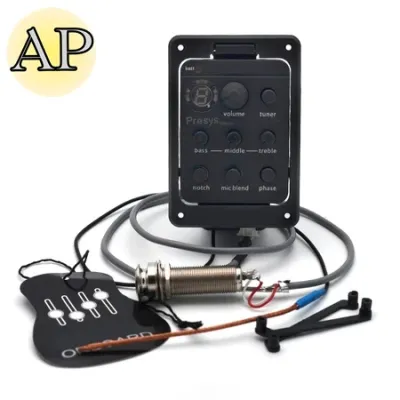
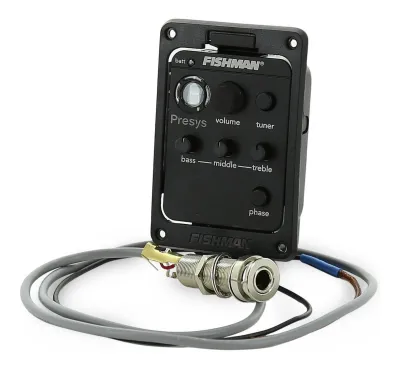
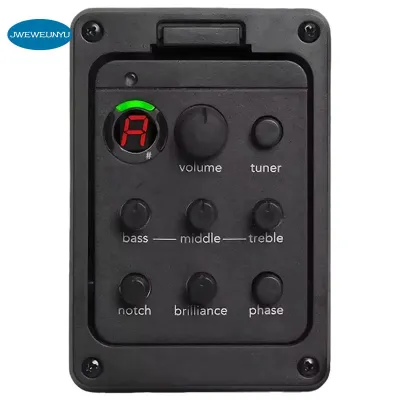
Products mentioned in this guide
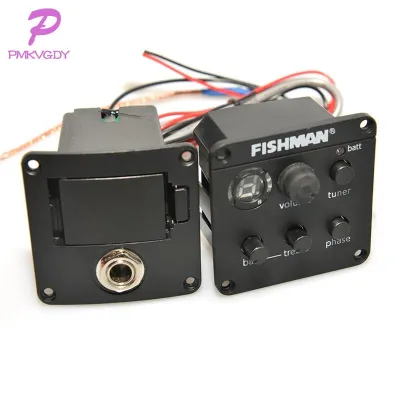
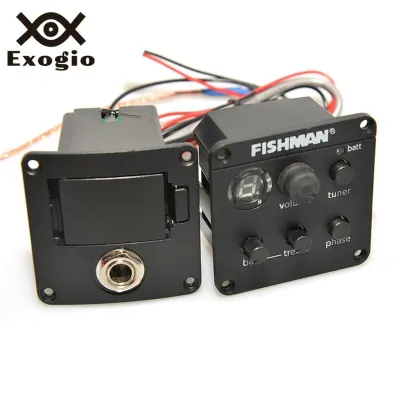
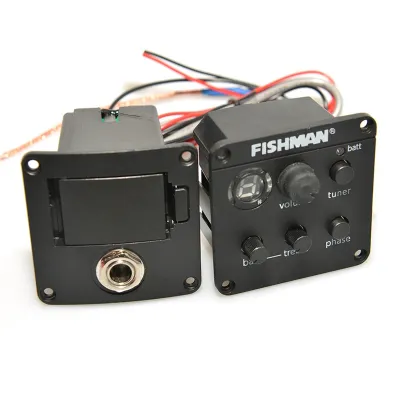
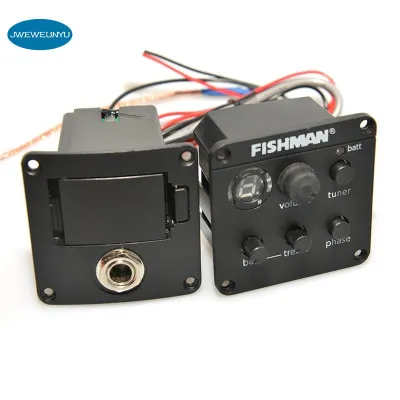
Prices are valid at publication and may change. Please refer to the product page for the latest price.
Your guitar’s physical construction dictates which pickup formats will actually fit and function. Standard steel-string acoustic guitars, such as dreadnoughts or concert shapes, have large soundholes and internal bracing that accommodate almost any pickup type. Smaller parlor or travel guitars, however, may have narrow soundholes that cannot fit standard magnetic pickups. If you play a classical guitar with nylon strings, your options are even more specific because nylon does not interact with magnetic fields, and the traditional tie-block bridge requires specialized installation methods.
Another critical decision is choosing between an active and a passive pickup system. Active systems feature a built-in preamp powered by an onboard battery, delivering a strong, consistent signal with integrated volume and tone controls directly on the guitar. Passive systems do not require a battery, making them lighter and less complex, but they output a weaker, high-impedance signal. This passive signal requires an external preamp, an acoustic amplifier, or a dedicated direct input (DI) box to achieve a full, balanced tone without sounding thin or noisy.
Core Selection Criteria for Fishman Acoustic Pickups
When evaluating different Fishman options, the level of installation invasiveness should be your first consideration. Non-invasive pickups, such as temporary soundhole models, clip directly into the soundhole with a cable running out of the front of the guitar. This setup allows you to install and remove the pickup in seconds without altering your instrument. Permanent installations require drilling a hole through the endpin block to mount an internal output jack, routing wires inside the body, and sometimes drilling through the bridge slot, which permanently alters the guitar but provides a clean, cable-free exterior.

Each pickup category also possesses distinct tonal characteristics that suit different playing styles. Piezoelectric pickups, which sit directly under the bridge saddle, capture the physical pressure of the strings, producing a bright, highly articulate, and punchy sound that cuts through a mix but can sometimes sound slightly metallic or harsh if played with a heavy hand. Magnetic pickups capture string vibrations electromagnetically, yielding a warmer, rounder tone reminiscent of an electric guitar. Soundboard transducers attach to the inside of the guitar’s top board, capturing the natural, woody resonance of the wood for a highly realistic acoustic voice.
Power management is another practical factor that beginners often overlook. Active pickups rely on batteries, typically a 9-volt battery or small button cells, which must be replaced periodically to maintain signal strength and prevent audio distortion. In tropical climates with high relative humidity, battery compartments are susceptible to moisture buildup, which can accelerate corrosion. You should consider how easy it is to access the battery compartment on a given model; some require loosening all the strings to reach an internal battery bag, while others feature an easily accessible external compartment near the endpin jack.
Matching Pickup Categories to Beginner Needs
Soundhole magnetic pickups are highly recommended for beginners who own steel-string guitars and prefer a straightforward, user-friendly setup. These pickups slide directly into the soundhole and clamp onto the edges using padded screws, ensuring your guitar’s finish remains undamaged. They are exceptionally resistant to feedback, making them highly reliable for loud environments. However, you must verify that your guitar’s soundhole diameter meets the pickup’s minimum clearance specifications, and keep in mind that these models will not function on nylon-string classical guitars.
Undersaddle piezo pickups are the industry standard for live performance due to their exceptional feedback resistance and high output consistency. Because they are tucked away beneath the saddle, they are completely invisible, preserving the traditional aesthetic of your acoustic guitar. The trade-off is that undersaddle piezos require a highly precise installation; the bottom of the saddle slot and the saddle itself must be perfectly flat to ensure even pressure across all strings. Any unevenness will result in some strings sounding significantly louder or quieter than others, which is why professional installation is highly recommended.
Soundboard transducers offer an incredibly natural, woody tone that faithfully reproduces the acoustic character of your specific guitar. They are highly favored by fingerstyle players who want to capture the delicate nuances of their performance, including body percussion and light string taps. However, because these transducers make the entire top board of the guitar highly microphonic, they are prone to feedback at higher stage volumes. They require careful placement during installation, as moving the transducer even a few millimeters can dramatically alter the bass response and overall tonal balance.
Installation, Setup, and Maintenance Realities
While some pickup models are marketed as DIY-friendly, you must realistically assess your tools and comfort level before attempting an installation. Clipping a magnetic pickup into a soundhole is simple, but drilling a half-inch hole through your guitar’s endpin block to install an output jack carries a risk of cracking the wood or damaging the finish if done incorrectly. In local workshops, professional luthier services for installing an acoustic pickup typically range from ₱1,000 to ₱3,000. Paying for professional installation ensures the structural integrity of your guitar is preserved and the pickup is positioned for optimal string balance.
If you choose to install a surface-mount or soundboard transducer yourself, always follow the manufacturer’s instructions regarding adhesive application and curing times. Using the wrong type of glue can permanently damage your guitar’s internal wood fibers or finish, while using insufficient adhesive can cause the pickup to vibrate loose over time, creating annoying rattling noises inside the body. If you encounter any resistance while drilling or if you are unsure about your guitar’s internal bracing layout, stop immediately and consult a qualified professional.
Maintaining your pickup system is essential for long-term reliability, especially in humid tropical environments. High humidity can cause metal jacks and battery contacts to oxidize, leading to crackling noises or intermittent signal loss. Store your guitar in a padded gig bag or hard case with silica gel packets to manage moisture levels. Always unplug your instrument cable from the guitar’s jack when you are finished playing, as leaving the cable plugged in keeps the active preamp circuit turned on and will quickly drain your battery. Inspect the battery compartment every few months for any signs of white powdery corrosion, and replace old batteries promptly to prevent leakage.
Frequently Asked Questions (FAQ)
Can I use a steel-string acoustic pickup on a classical nylon-string guitar?
No, you cannot use a magnetic soundhole pickup on a classical nylon-string guitar. Magnetic pickups function by detecting changes in a magnetic field caused by the movement of steel strings; because nylon is non-magnetic, these pickups will produce absolutely no sound when installed on a classical guitar. If you want to amplify a classical guitar, you must use an undersaddle piezo pickup, a soundboard transducer, or an internal microphone system. These technologies rely on physical vibrations and acoustic resonance rather than electromagnetism, making them fully compatible with nylon strings and traditional tie-block bridges.
Do I need a separate preamp or DI box if my pickup has a built-in preamp?
If your Fishman pickup is an active system with a built-in preamp, you do not strictly need an external preamp to get a clear sound; you can plug directly into an acoustic guitar amplifier or a portable PA system. However, using an external acoustic DI (Direct Input) box is highly recommended when performing on larger stages. A DI box converts your guitar’s high-impedance instrument signal into a low-impedance balanced signal, allowing you to run long cables to a mixing console without losing high-frequency clarity or introducing unwanted hum and noise. Additionally, many DI boxes feature ground-lift switches and dedicated equalization controls to help you fine-tune your tone and eliminate feedback on stage.
Community discussion
Share your experience or ask a question. Comments are reviewed before publication.