
Navigating your first job in the Philippines brings many exciting milestones, but decoding your first payslip is rarely one of them. Transitioning from a simple student allowance to a professional salary package means taking on new civic responsibilities, with income tax being the most significant.
When you look at your monthly payslip, you will notice several deductions alongside your basic salary. These typically include mandatory contributions to the Social Security System (SSS), PhilHealth, and the Pag-IBIG Fund, as well as a substantial chunk labeled as withholding tax. Understanding how these numbers are calculated is the first step toward financial independence.
While employers generally handle the administrative task of withholding and remitting your taxes to the Bureau of Internal Revenue (BIR), relying entirely on automated payroll systems can leave you in the dark. Learning the fundamentals of income tax allows you to verify that your deductions are accurate, prepare for annual filings, and plan your personal budget effectively.
Products mentioned in this guide
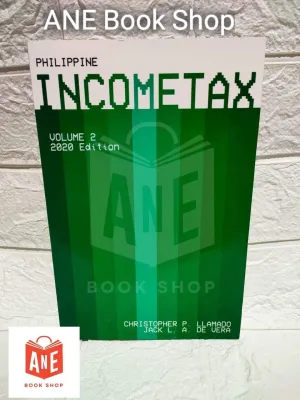
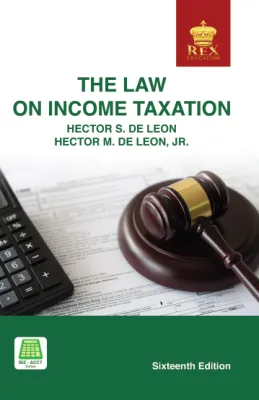
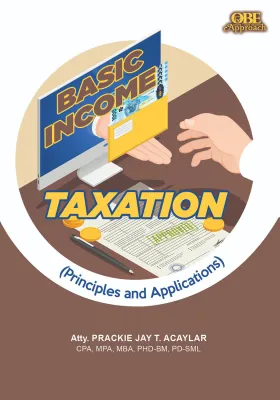
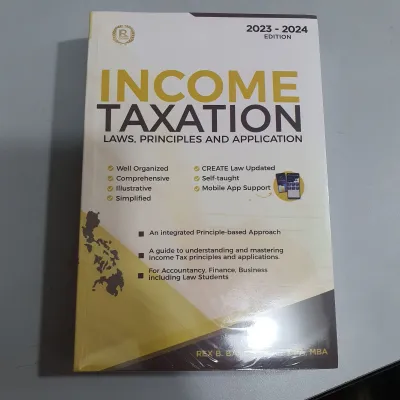
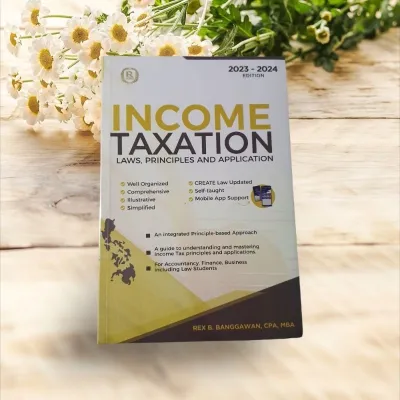
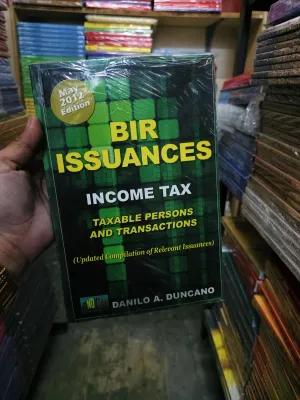
Prices are valid at publication and may change. Please refer to the product page for the latest price.
A dedicated tax guide written specifically for the Philippine context acts as a roadmap through this complex landscape. Reading a well-structured book can demystify tax brackets, explain your rights and obligations, and help you avoid costly compliance errors or penalties without requiring an accounting degree.
Essential Features of a Beginner-Friendly Philippine Tax Book
Not all tax books are created equal, and choosing the wrong one can lead to more confusion rather than clarity. To ensure a book is suitable for a beginner, you should look for specific structural features that make dense regulatory information digestible.
Plain Language Explanations: The primary barrier to understanding tax laws is the dense, legalistic jargon used in official administrative issuances. A beginner-friendly book should translate complex BIR terminology into everyday English or conversational Filipino. Look for authors who explain concepts like “taxable income” or “substituted filing” using straightforward, accessible language rather than quoting tax codes verbatim.
Visual Aids and Flowcharts: Tax calculations and procedural steps are highly logical, making them ideal candidates for visual representation. High-quality guides utilize diagrams, flowcharts, and tables to illustrate how tax brackets work, how different deductions are applied, and the chronological path of tax filing. These visual aids help break up long blocks of text and make it easier to grasp the relationship between different financial components.
Real-World Examples: Abstract rules are difficult to internalize without practical context. A good introductory book must feature step-by-step sample computations based on realistic scenarios that young professionals encounter. For instance, it should demonstrate how to calculate the withholding tax for a single corporate employee earning ₱35,000 per month, showing exactly how mandatory contributions and tax-exempt benefits are subtracted.
BIR Form Walkthroughs: Eventually, you will need to interact with actual tax documents, whether you are verifying your employer’s annual certificate or filing independently. Look for books that include annotated screenshots or clear replicas of common forms, such as BIR Form 1700 (for compensation earners) or Form 1701 (for mixed-income earners). These walkthroughs should explain the exact purpose of key line items so you can fill them out or review them with confidence.
Glossary of Terms: A dedicated reference section is invaluable when you encounter unfamiliar terms mid-chapter. A comprehensive glossary should clearly define essential concepts such as “gross compensation,” “de minimis benefits,” “fringe benefits,” and “tax exemptions.” Having these definitions readily accessible saves you from constantly flipping through pages or searching online for basic terminology.
Which Type of Tax Book Matches Your Learning Style?
Identifying your personal learning style and professional needs will help you narrow down the type of tax book that will serve you best. Philippine tax literature generally falls into two distinct categories, each serving a different purpose and audience.

Comprehensive Textbooks and CPA Review Materials
These academic volumes are typically written by certified public accountants (CPAs) or tax attorneys and are primarily designed for accounting students, law students, or candidates preparing for the CPA board examinations. They offer an exhaustive look at the entire National Internal Revenue Code, detailing not only income tax but also value-added tax (VAT), donor’s tax, estate tax, and local business taxes.
- Pros: These books are incredibly thorough and provide deep legal and theoretical context, complete with citations of supreme court rulings and historical tax amendments. They are excellent if you want to understand the foundational "why" behind every tax regulation.
- Cons: The sheer volume of information can be overwhelming for a non-accountant. The language is highly technical, the print is often dense, and you will have to wade through hundreds of pages of corporate and estate tax laws that have no relevance to your personal compensation income.
- Verdict: This category is best reserved for readers who want an absolute deep dive into the legal mechanics of taxation, or those who are considering a career transition into corporate finance, law, or professional consulting.
Practical Form Guides and Quick Reference Manuals
These publications are highly focused, action-oriented workbooks designed for self-employed individuals, freelancers, and everyday employees. Rather than focusing on the academic theory of tax law, these guides prioritize compliance, practical execution, and step-by-step filing procedures.
- Pros: They are highly digestible, written in conversational tones, and organized around specific tasks, such as registering a business or filing an annual income tax return. They often feature checklists, practice sheets, and direct answers to common filing dilemmas.
- Cons: These guides may omit the deeper historical or theoretical context of tax legislation, focusing instead on the immediate rules and procedures.
- Verdict: This is the ideal choice for young professionals who want to understand their payslips, ensure they are in full compliance with the BIR, and learn how to manage their personal tax obligations without getting bogged down in academic theory.
How to Verify if a Tax Book Reflects Current BIR Regulations
Tax laws are dynamic and subject to frequent legislative updates, administrative amendments, and court rulings. Using an outdated tax book can lead to incorrect calculations, missed deadlines, or compliance errors, making it critical to verify the currency of any material before purchasing.
Check the Copyright and Edition Year: Always turn to the copyright page first to check the publication or revision date. Because major tax overhauls occur periodically, a book published more than three to four years ago may contain obsolete tax tables or outdated exemption limits. Ensure you are purchasing the most recent edition available.
Verify Edition and Content Completeness: Before buying, always verify the specific edition, language, medium, and table of contents to ensure the book covers the exact topics you need. Never assume a book’s contents solely from its cover or title, as introductory guides can vary widely in their scope and depth.
Verify Coverage of Major Tax Reforms: The book must explicitly state that it covers the Tax Reform for Acceleration and Inclusion (TRAIN) Law, which went into effect in 2018 and established the current individual income tax brackets. Additionally, check if the text references the Corporate Recovery and Tax Incentives for Enterprises (CREATE) Law, as these legislative acts fundamentally restructured the Philippine tax landscape.
Look for Recent BIR Revenue Regulations (RR): Reliable tax books will cite specific BIR Revenue Regulations, which are the administrative rules that implement the laws. For example, verify if the book reflects the updated rules on de minimis benefits and the ₱90,000 tax-exempt threshold for the 13th-month pay and other bonuses. A book that still references older, lower exemption thresholds will cause you to overcalculate your taxable income.
Evaluate Author Credentials: The credibility of a tax book relies heavily on the author’s professional background. Look for books written by active CPAs, practicing tax lawyers, or established business professors who regularly conduct seminars or consult on tax matters in the Philippines. Their real-world experience ensures that the interpretations of BIR rules are practical and legally sound.
Avoid Outdated Second-Hand Copies: While buying used books is an excellent way to save money on general literature, it is highly discouraged for tax guides. Heavy discounts on older editions usually mean the content does not reflect current laws. Investing in a brand-new, up-to-date edition is far cheaper than paying the interest and penalties associated with an incorrect tax filing based on outdated information.
Where to Safely Buy Authentic Tax Books in the Philippines
To ensure you are getting accurate, complete, and high-quality information, it is important to purchase your tax books from authorized and reputable sellers. Pirated copies of academic and professional books are common, but they often contain critical printing errors, missing pages, or misaligned tax tables that can ruin your calculations.
Major Brick-and-Mortar Bookstores: Established national bookstore chains like National Book Store and Fully Booked are reliable sources for professional and business literature. They regularly stock verified tax guides, local accounting textbooks, and personal finance manuals in their business or academic sections, allowing you to physically inspect the book’s layout and edition details before buying.
University Presses and Academic Bookstores: Many of the most authoritative tax textbooks are published by university presses, such as those of the University of the Philippines (UP), De La Salle University (DLSU), or the University of Santo Tomas (UST). Visiting campus bookstores or their official online portals is an excellent way to find peer-reviewed, highly detailed tax literature that is widely respected in the professional community.
Official Online Channels: If you prefer shopping online, always purchase from the official virtual storefronts of established publishers or the authors themselves on reputable e-commerce platforms. Avoid purchasing from unauthorized third-party sellers offering heavily discounted PDFs or low-quality photocopies, as these are often illegal and prone to formatting errors.
Physical Verification Tips: When purchasing a physical book, check for official publisher holograms, crisp text printing, and robust binding. Pirated books often feature blurred text, uneven margins, and poorly reproduced tables, which can make reading complex tax formulas and numbers incredibly difficult and frustrating.
Free Official Resources to Supplement Your Reading
While a well-written book provides the foundational framework for understanding taxation, no printed volume can instantly update itself when the BIR issues a new administrative memo. To keep your financial knowledge current, you should use your tax book as a base and supplement it with official, free digital resources.
The BIR Official Website: The Bureau of Internal Revenue website serves as the ultimate source of truth for tax compliance in the Philippines. You can use it to download the latest versions of BIR forms, read newly issued Revenue Regulations, and access official interactive tax calculators that help verify your manual computations.
BIR YouTube Channel and Public Webinars: The BIR regularly hosts free online seminars and uploads video tutorials aimed at educating the public, particularly compensation income earners and first-time tax filers. These webinars break down complex filing procedures, explain how to use electronic filing systems like eBIRForms, and answer common questions in real-time.
Reputable Financial Blogs and CPA Channels: Many licensed CPAs and financial literacy advocates in the Philippines run verified blogs, podcasts, and social media channels dedicated to simplifying tax concepts. Following these independent professionals provides you with timely updates on filing deadlines, step-by-step digital filing guides, and practical tips for managing your personal finances.
Integrating Print and Digital Resources: The most effective way to master your taxes is to use your purchased book to build a strong conceptual foundation—understanding how tax brackets, deductions, and exemptions work. Once you have that structural knowledge, you can easily interpret new BIR circulars or deadline extensions published online, ensuring your tax practices remain both compliant and up to date.
Frequently Asked Questions (FAQ)
Do I need to buy a new tax book every year?
You do not need to purchase a new book every year unless there has been a major legislative overhaul that alters the core tax brackets or filing systems. However, you must remain vigilant and manually cross-reference your book’s tax tables, deduction limits, and compliance deadlines with the latest annual BIR issuances to ensure no minor adjustments have been made for the current taxable year.
Are free BIR PDFs enough, or do I need a published book?
While official BIR PDFs and Revenue Regulations are the absolute legal authority, they are written in dense, formal legal language that can be highly intimidating for beginners. A published, beginner-friendly book serves as an essential translator, turning raw legal codes into practical explanations, visual flowcharts, and relatable real-world examples that help you confidently apply the rules to your own financial life.
Community discussion
Share your experience or ask a question. Comments are reviewed before publication.