
Starting your journey into financial accounting can feel like learning a completely new language. The market is flooded with accounting books, ranging from dense academic volumes to simplified guides for entrepreneurs. For an absolute beginner, the most effective book is not necessarily the most popular or the most advanced; rather, it is the one that matches your current knowledge level, aligns with your specific learning objectives, and presents complex concepts in a style you can easily digest. By focusing on structured selection criteria, you can avoid the frustration of buying a book that is either too simplistic for your career goals or too complex for a self-paced beginner.
Identifying Your Financial Accounting Learning Goals
Before browsing online marketplaces or local bookstores, you must define exactly why you want to learn financial accounting. Your primary motivation will dictate the depth of material you need and the specific type of book that will serve you best. For instance, if your goal is personal financial literacy or managing a small household budget, you will require a very different resource than someone preparing for a career transition or an academic exam.
If you are an aspiring entrepreneur or a small business owner, your focus will likely be on practical bookkeeping, tracking cash flow, and understanding basic financial statements like the balance sheet and income statement. You need a book that translates theoretical accounting principles into daily business operations. On the other hand, if you are preparing for formal academic courses or professional certifications, such as a certified public accountant pathway, you will need a comprehensive textbook that covers rigorous accounting standards, detailed journal entries, and complex regulatory frameworks.
Products mentioned in this guide
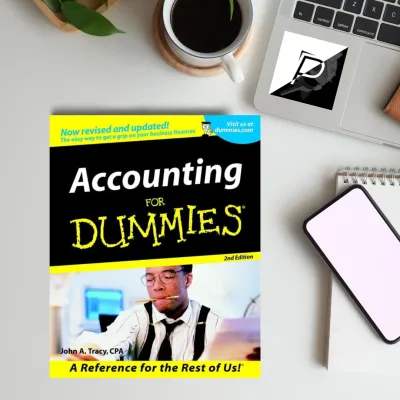
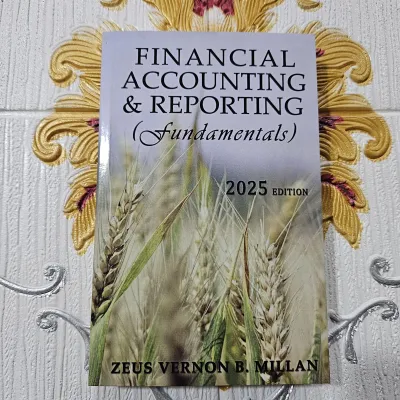
32 Lazada user ratings
Clear explanations for beginners, Up-to-date accounting standards, Includes real-world examples, 2024 edition with latest updates,
Ambilis dumating!. Clear explanations for beginners, Written by expert author Millan, Excellent reference for exams,
Clear explanations for beginners, Excellent reference for exams, 2024 edition with latest updates,
Clear explanations for beginners, Comprehensive coverage of financial reporting,
Well-structured textbook format,
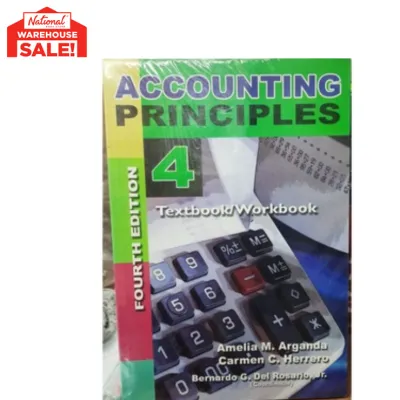
8 Lazada user ratings
fast delivery.. its ok though not written in the cover that the topic is for Corporation.. I thought it will tackle yopic like basic account…Read full reviewShow less
fast delivery.. its ok though not written in the cover that the topic is for Corporation.. I thought it will tackle yopic like basic accounting for starters.. thanks delivery guy
Price:Foxing and yellowing, Content Quality:Study and learning tool,
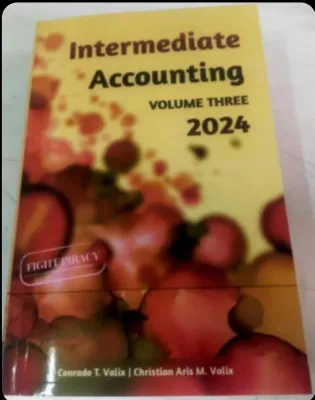
43 Lazada user ratings
Well-organized chapters, Ideal for intermediate learners, Accounting principles explained, Useful for exam preparation,
Content Quality:lot of examples. easy to understand. worth the price. highly recommended for student
Useful for exam preparation, Well-organized chapters, Clear and structured content, very good
I received the book in good condition: Price:good Content Quality:good Language:good
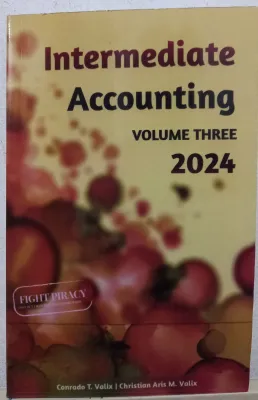
37 Lazada user ratings
Professional educational resource, Standard textbook format, Standard textbook format, Comprehensive coverage of topics, Comprehensive cover…Read full reviewShow less
Professional educational resource, Standard textbook format, Standard textbook format, Comprehensive coverage of topics, Comprehensive coverage of topics, Comprehensive coverage of topics, Ideal for intermediate learners,
Item was packaged with care and it arrived with only minor dents. Item also arrived shortly after I ordered and the seller sent me a picture…Read full reviewShow less
Item was packaged with care and it arrived with only minor dents. Item also arrived shortly after I ordered and the seller sent me a picture of the item before they shipped it out. Thank you!!!
Comprehensive coverage of topics, Standard textbook format, Great reference material,
Prices are valid at publication and may change. Please refer to the product page for the latest price.
Additionally, consider the regional context of your learning. Financial accounting is governed by different standards depending on where you plan to apply your knowledge. For example, many international markets, including the Philippines, primarily follow International Financial Reporting Standards (IFRS), whereas books published in the United States typically focus on Generally Accepted Accounting Principles (US GAAP). Clarifying whether you need a global perspective or a country-specific framework will prevent you from studying rules that do not apply to your local business environment.
Finally, assess your preferred learning style. Some readers thrive on visual explanations, diagrams, and step-by-step illustrations, while others prefer text-heavy, theoretical discussions that explain the underlying philosophy of accounting. Determining whether you need a hands-on workbook with plenty of practice problems or a conceptual guide will help narrow down your options significantly.
Key Features to Look for in Beginner Accounting Books
A high-quality beginner’s accounting book must bridge the gap between complex financial theory and a reader’s lack of prior experience. When evaluating potential books, look for specific structural features that facilitate self-paced learning.

First and foremost, the book should use plain, accessible language. Accounting is notorious for its jargon—terms like “debits,” “credits,” “depreciation,” “accruals,” and “amortization” can quickly overwhelm a beginner. A well-written introductory book will define these terms clearly upon their first appearance, using relatable, real-world analogies rather than circular technical definitions. Look for books that explain the “why” behind the rules, helping you understand the logic of the double-entry system rather than forcing you to memorize procedures.
Visual aids are another critical feature to look for. The human brain processes visual information much faster than dense blocks of text. Excellent beginner books utilize clear diagrams, flowcharts, and T-accounts to illustrate how transactions flow through a business. For example, a visual representation of the fundamental accounting equation (Assets = Liabilities + Equity) showing how a single transaction affects both sides of the balance sheet is far more effective than a purely textual explanation. Look for annotated examples of actual financial statements, where arrows and callout boxes explain what each line item means and how it was calculated.
Furthermore, robust structural learning tools are indispensable for self-study. Ensure the book includes concise chapter summaries that reinforce key takeaways before you move on to more complex topics. A comprehensive glossary at the back of the book is also highly valuable for quick reference when you encounter unfamiliar terms in later chapters. Most importantly, look for books that feature practice exercises, review questions, and practical problems at the end of each chapter. Crucially, verify that these exercises come with a detailed answer key—ideally one that explains the step-by-step solution rather than just providing the final number—so you can independently assess your progress and correct your mistakes.
Comparing Common Types of Beginner Accounting Books
To make an informed decision, it is helpful to understand the three primary categories of beginner accounting books available on the market. Each category serves a distinct purpose and suits a different type of learner.
Visual and Simplified Guides: These books are designed for absolute beginners who want a high-level, non-intimidating introduction to the subject. They rely heavily on illustrations, infographics, and minimal text to explain core concepts. If you have zero business background and feel anxious about numbers, a visual guide can help you build confidence by demystifying the basic structure of financial statements and the double-entry system. While these books are excellent for establishing a conceptual foundation, they generally lack the depth required for practical bookkeeping or academic preparation.
Practical and Small Business Workbooks: These resources focus on the day-to-day application of accounting principles. They are highly action-oriented, guiding you through the mechanics of recording transactions, managing accounts receivable and payable, reconciling bank statements, and preparing basic financial reports. Workbooks often include templates, fill-in-the-blank exercises, and real-world scenarios that mimic the operations of a small retail shop or service business. This type of book is ideal for entrepreneurs, freelancers, and office administrators who need to apply accounting skills immediately to their daily work.
Comprehensive Academic Textbooks: These are the standard volumes used in university-level introductory courses. They offer a deep, rigorous exploration of financial accounting theory, detailed transaction analysis, and complex reporting standards. Textbooks are highly structured, moving systematically from basic concepts to advanced topics like inventory valuation, depreciation methods, and cash flow analysis. While they can be dry and expensive, they provide the most thorough preparation for professional exams or career advancement. If you choose this route, look for introductory or “principles of accounting” editions, which are specifically designed for students with no prior accounting background.
Verifying Book Editions, Formats, and Regional Standards
Before finalizing your purchase, you must verify several technical specifications to ensure the book is relevant, accurate, and compatible with your study setup.
First, check the publication year and the edition number. Financial accounting standards, tax laws, and reporting regulations are subject to frequent updates. Using an outdated textbook can lead to learning obsolete rules or incorrect tax treatments. While the core principles of double-entry bookkeeping rarely change, the specific presentation of financial statements and regulatory compliance guidelines do. Aim for a book published within the last three to five years, or verify that you are purchasing the most recent edition recommended by educational institutions.
Second, carefully consider the physical format or digital file type. If you prefer physical books, keep in mind that thick, heavy textbooks can be difficult to transport. In tropical climates with high humidity, such as the Philippines, physical books require proper storage to prevent paper degradation, mold, and page warping. If you opt for an e-book, verify the file format and device compatibility. Some digital textbooks contain complex tables, multi-column financial statements, and detailed diagrams that do not render well on small e-reader screens or mobile phones. Ensure you have access to a tablet or computer screen that can display these elements clearly. Additionally, check for digital rights management (DRM) restrictions, as some publishers limit the number of devices you can use or restrict your ability to print pages or copy text for study notes.
Third, confirm the accounting framework used in the book. As mentioned earlier, different regions adhere to different standards. If you are studying in the Philippines, a book based on International Financial Reporting Standards (IFRS) or the local Philippine Financial Reporting Standards (PFRS) will be far more practical than one strictly aligned with US GAAP. While the fundamental concepts are similar, differences in terminology (such as “turnover” versus “revenue” or “debtors” versus “accounts receivable”) and specific measurement rules can cause confusion if your study material does not match your local professional environment.
Where to Buy and What to Check Before Purchasing
Acquiring your study materials from legitimate, authorized sources is essential to ensure you receive complete, high-quality content.
When shopping online, prioritize official publisher websites, authorized university bookstores, or reputable local physical bookshops. Be cautious when purchasing from third-party sellers on online marketplaces, as counterfeit textbooks are common. These unauthorized copies often suffer from missing pages, low-quality printing that makes numbers illegible, or omitted access codes for online study portals and practice software. If a deal seems too good to be true, or if the price is significantly lower than the publisher’s retail price, verify the seller’s credentials.
Before clicking the purchase button, take advantage of “look inside” features or sample pages provided by online retailers. Review the table of contents to confirm that the book covers the specific topics you need, such as the accounting cycle, journal entries, and the preparation of the three primary financial statements. Read verified reader feedback, focusing on reviews written by other self-taught beginners. Look for comments regarding the clarity of the explanations, the usefulness of the practice exercises, and whether the book successfully maintains an engaging tone.
Finally, review the return policies and licensing terms. For physical books, ensure you can return the item if it arrives damaged or with printing defects. For digital versions, understand the licensing duration—some e-textbooks are sold as rentals that expire after a set number of months, which may not give you enough time if you plan to study at a slower, self-paced rate.
Frequently Asked Questions (FAQ)
Do I need a background in math to understand beginner accounting books?
Many people avoid learning accounting because they assume it requires advanced mathematical skills. In reality, financial accounting relies almost entirely on basic arithmetic: addition, subtraction, multiplication, and division. You do not need to know calculus, algebra, or complex statistics to understand introductory accounting books.
Instead of advanced math, financial accounting requires logical reasoning, attention to detail, and an understanding of relationships between numbers. The core of accounting is the fundamental accounting equation, which is a simple balance of assets, liabilities, and equity. If you can comfortably use a basic calculator to add up expenses, calculate percentages, and balance a simple budget, you have all the mathematical skills necessary to master beginner financial accounting.
Should I buy a physical book or an e-book for learning accounting?
The choice between a physical book and an e-book depends largely on your study habits and how you plan to interact with the material. Physical books are highly advantageous for active learning. They allow you to easily flip back and forth between a chapter’s text, its illustrative diagrams, and the practice exercises at the end of the section. You can also write directly on the pages, highlight key concepts, and manually draw T-accounts and journal entries, which helps reinforce muscle memory and conceptual retention.
E-books, on the other hand, offer unmatched portability and convenience. You can carry multiple heavy textbooks on a single lightweight device, and the built-in search function allows you to find specific terms or concepts instantly. However, reading complex financial statements, multi-column ledger tables, and wide spreadsheets can be challenging on standard e-readers. If you choose a digital format, it is best to read on a larger tablet or computer monitor where you can view full-page layouts without constant zooming and scrolling.

Community discussion
Share your experience or ask a question. Comments are reviewed before publication.