
Finding an affordable, reliable tremolo pedal in the Philippines requires balancing cost with functional reliability. Beginners often face a dizzying array of options on local online marketplaces, where prices can be highly appealing but quality varies. To make a smart purchase, you must focus on verifying the physical build, power requirements, and basic circuit design rather than relying on brand names alone. In tropical climates where high humidity can affect electronic components over time, choosing a pedal with a sealed enclosure and robust jacks is essential for long-term practice. This guide will walk you through the essential technical specifications, budget trade-offs, and signal chain placements to help you select a durable first pedal that fits your budget without compromising your tone.
Understanding Tremolo Basics to Avoid the Wrong Effect
Before purchasing your first effects pedal, it is crucial to understand exactly what tremolo does to avoid buying the wrong type of modulation. Tremolo is the rapid, rhythmic modulation of volume. It creates a pulsing, watery, or stuttering effect by turning your guitar’s signal up and down at a set rate. This is distinct from vibrato, which modulates the pitch of your notes rather than their volume. Many beginners confuse the two because vintage amplifier manufacturers historically mislabeled their built-in tremolo circuits as vibrato. Buying a vibrato pedal when you want the classic surf-rock pulse of a tremolo is a common and frustrating mistake.
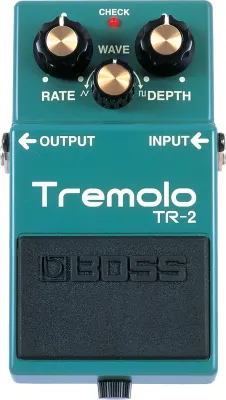
To control this volume modulation, standard tremolo pedals feature three essential control knobs. The Rate knob, sometimes labeled Speed, dictates how fast the volume fluctuates from slow swells to rapid pulses. The Depth knob, also known as Intensity, controls how quiet the signal gets at the bottom of each wave, ranging from a subtle shimmer to a complete volume drop. Finally, the Waveform or Shape knob alters the character of the modulation, allowing you to transition from a smooth, vintage-style sine wave to a sharp, modern square wave that chops the sound abruptly.
Products mentioned in this guide
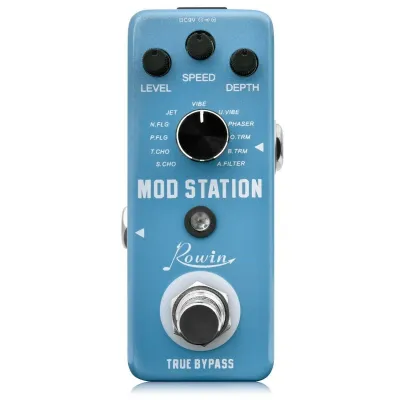
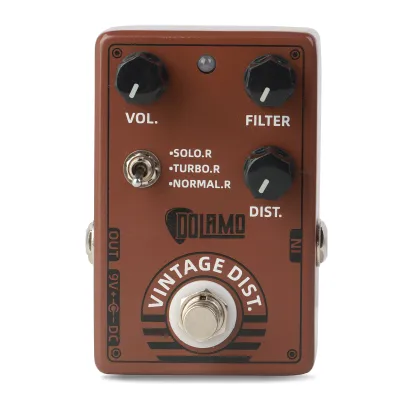

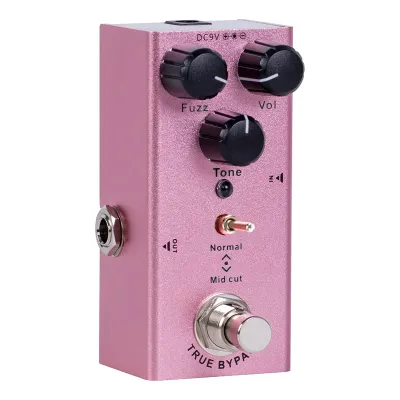
Prices are valid at publication and may change. Please refer to the product page for the latest price.
Additionally, you should recognize the standard physical layout of these pedals before making a purchase. Most compact pedals feature a 1/4-inch input jack on the right side for your guitar cable and a 1/4-inch output jack on the left side to connect to your amplifier. The power input, typically a barrel jack, is usually located at the top or side of the enclosure. Understanding this layout helps you plan how the pedal will sit next to your other gear.
Setting Realistic Budget Priorities for Your First Pedal
When shopping for your first effects pedal, setting realistic expectations for a budget-friendly price point will save you from disappointment. At an entry-level price, you are paying for a straightforward, functional circuit rather than advanced features. Do not expect complex additions like tap tempo, stereo outputs, or MIDI presets. A reliable budget tremolo should focus on doing one thing well: delivering a clean, consistent volume pulse without introducing excessive background noise or signal degradation.

To keep manufacturing costs low, brands must make certain design trade-offs, and understanding these will help you choose the right model. Plastic enclosures are common in ultra-budget options; while lightweight and highly portable, they are more susceptible to physical damage if stepped on aggressively during practice. Metal enclosures, usually made of cast aluminum, offer superior shielding against electromagnetic interference and better physical durability. Another trade-off is the bypass type. Budget pedals may use simple buffered bypass circuits which can slightly alter your guitar’s high-end tone when turned off, whereas true bypass preserves the dry signal completely but can sometimes cause an audible click when switched on.
Finally, remember to calculate the hidden costs that do not appear on the initial product listing. Most budget pedals do not include a power supply in the box, meaning you will need to purchase a compatible 9V adapter separately, which can add several hundred pesos to your total. You will also need at least one short patch cable to connect the pedal to your guitar or other effects. Additionally, local shipping fees across the Philippines can vary depending on your distance from major distribution hubs, so always verify the final checkout total before making your decision.
Essential Specifications to Verify Before Checkout
Before clicking the purchase button on an online marketplace, you must verify several technical specifications to ensure compatibility with your current setup. The most critical specification is the power requirement. Most guitar pedals, including budget tremolos, require a 9V DC power supply with a center-negative polarity. Using a center-positive adapter or an incorrect voltage, such as 12V or 18V, can instantly burn out the internal components, rendering the pedal useless. Always check the product description or the graphic printed near the power jack—a diagram showing a minus sign inside a C-shape pointing to a center dot—before plugging it in.
Another key specification to evaluate is the bypass type and how it affects your signal chain. In a simple beginner setup consisting of just a guitar, one pedal, and a short cable to a practice amp, the difference between true bypass and buffered bypass is minimal. However, if you plan to expand your setup later, understanding how these bypass types interact is crucial. True bypass acts as a direct wire when the pedal is off, preserving your tone but offering no signal boost over long cable runs. A buffered bypass actively strengthens the signal, which helps prevent high-frequency loss if you use cables longer than five meters.
Lastly, measure the physical footprint of the pedal to ensure it fits comfortably in your practice space. Space is a premium, whether you are practicing on a small bedroom desk or setting up your first compact pedalboard. Mini pedals save significant space but can easily tip over if not secured with hook-and-loop tape. Standard-sized enclosures are more stable on the floor but require more room in your gig bag. Choose a size that matches your physical setup and storage limitations.
Spotting Build Quality and Reliability in Affordable Options
Assessing the physical durability of a low-cost pedal before buying it requires looking closely at the hardware components. The footswitch takes the most physical abuse, so its mechanism is a primary indicator of longevity. Mechanical latching switches make a distinct, physical click when pressed. While satisfying, they have moving internal parts that can wear out over thousands of stomps. Soft-touch relay switches feel smooth and silent, relying on an internal electronic relay to engage the effect. For budget pedals, a sturdy mechanical switch is standard, but you should verify that it feels solid and does not wobble in its housing.
You should also inspect the stability of the control knobs and the placement of the audio jacks. Loose control knobs can shift during transport, ruining your carefully dialed-in settings. Look for potentiometers that offer some resistance when turned, rather than spinning freely. Jack placement also affects durability; side-mounted jacks are common but put lateral stress on patch cables, while top-mounted jacks keep the cables tucked away neatly, reducing the risk of accidentally stepping on a plug and cracking the internal circuit board.
Finally, review the manufacturer’s warranty terms and the seller’s return policy to protect your investment. In the local market, look for sellers offering at least a 7-day replacement window for defective units. Verify if there is an official local distributor who can handle warranty claims, as shipping a broken pedal back overseas for repairs is often more expensive than buying a new one.
Placing the Tremolo in Your Beginner Signal Chain
The order of your pedals dramatically changes your overall sound, making proper signal chain placement essential for achieving the best results. As a general rule, modulation effects like tremolo should be placed after your gain stages, such as overdrive, distortion, or fuzz, but before time-based effects like delay and reverb. Placing tremolo after distortion ensures that the pedal modulates the fully distorted tone, resulting in a clean, rhythmic pulse. If you place it before distortion, the high gain of the distortion pedal will compress the volume fluctuations, flattening out the tremolo effect.
Another common issue with older or poorly designed tremolo circuits is a perceived drop in volume when the pedal is switched on. Because tremolo works by cutting volume, your ears naturally perceive the overall signal as quieter. Some modern budget pedals include an internal trim pot or an external volume control to boost the signal slightly when engaged. If your chosen pedal lacks this, you may need to adjust your amplifier’s gain or volume settings to compensate during performance.
Once connected, spend time experimenting with how the pedal interacts with your specific guitar and amplifier. A bright single-coil pickup on a Stratocaster-style guitar will react differently to volume modulation than a dark, high-output humbucker on a Les Paul-style instrument. Start with the Depth at 12 o’clock and the Rate at a slow tempo, then gradually increase both to find the sweet spot where the effect enhances your playing without overpowering the natural tone of your instrument.
Frequently Asked Questions (FAQ)
Do I need a specific power supply for a budget tremolo pedal?
Yes, you must use a regulated 9V DC power supply with a center-negative plug configuration. Standard household adapters or unregulated power supplies can introduce a loud, annoying hum into your signal chain or deliver unstable voltage that damages the pedal’s sensitive analog or digital components. While some budget pedals allow the use of an internal 9V battery, these tend to drain quickly if you leave your guitar cables plugged into the input jack when not playing. For consistent, noise-free practice sessions, investing in a dedicated, isolated power supply or a high-quality daisy-chain adapter designed specifically for musical instruments is highly recommended.
Can I use a tremolo pedal with an acoustic guitar or ukulele?
Yes, you can use a tremolo pedal with acoustic-electric guitars or ukuleles, provided your instrument has an active pickup system or an external preamp to boost the signal before it reaches the pedal. Passive piezo pickups often produce a weak, high-impedance signal that can sound thin or muddy when passed directly through electric guitar effects. When using tremolo with acoustic instruments, the volume modulation interacts with the natural resonance of the hollow body, which can sometimes lead to feedback at high volumes. To keep your tone sounding natural, start with a low Depth setting to add a subtle, organic movement to your chords rather than a harsh, choppy square-wave effect.
Community discussion
Share your experience or ask a question. Comments are reviewed before publication.