
The 100 Deadly Skills book by Clint Emerson has captured the attention of self-help and survival enthusiasts worldwide. If you are looking to enhance your personal safety, situational awareness, and emergency preparedness, this book offers a unique, highly visual approach. However, deciding whether to invest your time and money requires understanding what the book actually delivers versus what it leaves out. For readers navigating busy urban centers and unpredictable tropical weather, the practical value of this guide depends heavily on how you filter its tactical advice.
Ultimately, the book is worth reading if you treat it as an engaging primer on situational awareness and a tool to shift your mindset toward active preparedness. It is less suitable if you are looking for a literal, step-by-step instruction manual for daily civilian life. To make an informed purchase, you must weigh its highly specialized military concepts against your actual daily safety needs.
Quick Verdict: Who Should Read the 100 Deadly Skills Book?
This book is primarily designed for readers who learn best through visual diagrams and concise, actionable bullet points. If you are an emergency preparedness enthusiast, a frequent traveler, or someone looking to sharpen your situational awareness in crowded public spaces, you will find immediate value in its core concepts. The book excels at teaching you how to observe your surroundings, identify potential threats, and adopt a proactive mindset.
Products mentioned in this guide
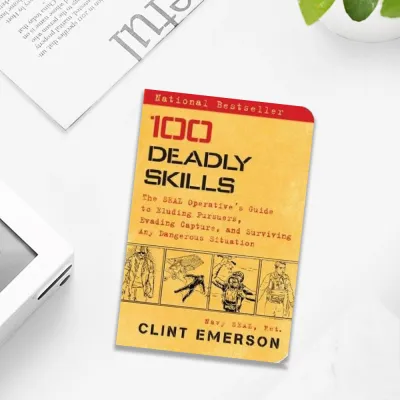
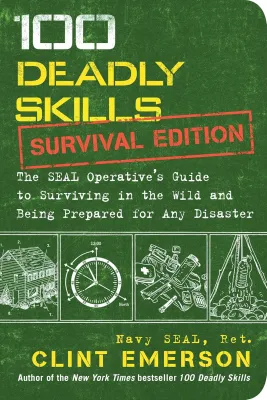
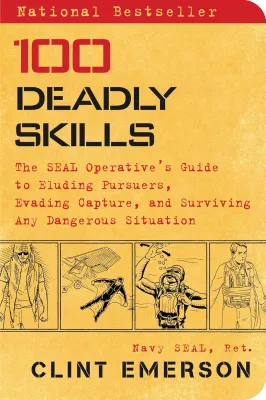
Prices are valid at publication and may change. Please refer to the product page for the latest price.
Conversely, this title is not a good fit for readers seeking traditional self-help, emotional resilience, or deep philosophical personal development. It does not focus on psychological growth or career motivation. Instead, it deals with physical security and crisis management.
Before committing to a purchase, consider whether you are willing to filter the content. A significant portion of the book covers extreme, military-grade scenarios that the average civilian will never encounter. If you can appreciate these sections as fascinating theory while focusing your energy on the practical safety habits, the book is a worthwhile addition to your library.
What to Expect: Content Scope and Edition Checks
The book is structured as a series of short, illustrated lessons covering a wide range of security and survival topics. You can expect to find chapters on home security, cyber safety, travel security, and active threat response. The author uses a highly visual format, pairing each skill with a step-by-step diagram to illustrate the concepts clearly.

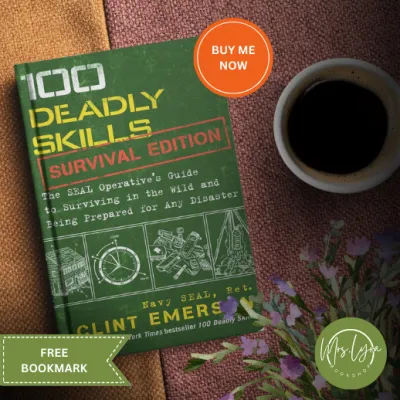
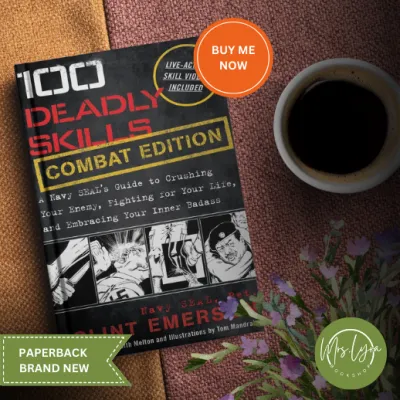
Before buying, it is essential to verify which edition you are purchasing. The original volume focuses heavily on tactical skills and escape-and-evasion techniques. The follow-up edition, often subtitled as the “Survival Edition,” shifts the focus toward natural disasters, wilderness survival, and everyday emergencies. Depending on your goals, one may be significantly more relevant to your needs than the other.
You should also check the physical and digital specifications of the book on your preferred online marketplace or at a local bookstore. The print quality of the paperback edition is crucial because the illustrations contain fine details and small text labels. If you prefer digital reading, ensure your e-reader or tablet displays high-resolution images clearly, as a low-quality digital scan can render the diagrams unreadable.
Finally, confirm the language and completeness of the edition. Stick to authorized publishers to ensure you receive the complete, unabridged text with all original illustrations intact. Unauthorized reprints often suffer from poor ink quality, missing pages, or distorted diagrams, which can severely compromise the book’s utility as a reference guide.
Evaluating Practical Value for Everyday Scenarios
To determine if this book is worth your investment, you must evaluate how its skills translate to your local environment. For instance, navigating a dense urban area during a sudden tropical storm or a prolonged power outage requires a specific set of survival skills. While the book’s tactical advice is rooted in military operations, many of the underlying principles can be adapted for civilian safety.
When reading, focus on adapting specialized concepts to everyday emergencies. A lesson on securing a perimeter can be translated into simple, effective home security upgrades for your house or apartment. Similarly, advice on maintaining a low profile while traveling can help you stay safe during your daily commute on public transit or while walking through unfamiliar neighborhoods.
However, it is vital to distinguish between skills that are safe for self-study and those that require professional, in-person training. Reading about self-defense, water rescue, or advanced first aid is excellent for building theoretical knowledge, but attempting to execute these skills without hands-on instruction can be highly dangerous. Use the book to build awareness, but seek out certified local instructors for physical skills.
Ultimately, the practical value of the book lies in its ability to change how you view your environment. It encourages you to look for exit routes in public buildings, keep emergency supplies in your vehicle, and secure your digital data. These simple, observable habits offer far more daily protection than the book’s more extreme tactical scenarios.
Assessing the Investment: Reading Time and Cost
To assess the cost-to-value ratio, compare the price on authorized online marketplaces or local bookstores against your budget for educational materials. Consider how often you plan to refer back to the material. If you only read it once for entertainment, the price point might feel high compared to standard self-help paperbacks.
The reading time investment is relatively low because of the book’s highly visual, modular layout. You can easily finish the book in a few sittings, or read a few independent skills at a time. This format makes it highly accessible for busy individuals who do not have the time to wade through dense, academic survival manuals.
To determine if the book offers long-term reference value for your home library, look for signs of ongoing utility. A good reference book is one you can pull off the shelf to review before a long trip, or use to create a family emergency checklist. If you find yourself returning to the diagrams to explain safety concepts to your family, the physical copy will easily justify its shelf space and cost.
If you are on a tight budget, consider starting with the digital version, which is often more affordable and eliminates local shipping costs. However, keep in mind that a physical book remains accessible even when your devices run out of battery during a power outage or natural disaster, making the printed copy a more reliable choice for emergency kits.
When to Look for Alternatives in Personal Development
If your primary goal is to build mental resilience, manage stress, or improve your decision-making under pressure, this tactical guide may not meet your needs. In these cases, you should pivot toward books focused on cognitive behavioral strategies, mindfulness, or psychological resilience. These resources address the internal mindset required to handle crises, which is a crucial foundation for physical survival.
For those seeking practical, everyday emergency skills, a specialized first-aid manual or a local disaster preparedness guide may be a better starting point. These publications focus on realistic scenarios like treating minor injuries, preparing for floods, and organizing emergency food supplies. They provide highly relevant, localized advice without the military framing.
When building a well-rounded home library, look for complementary resources that balance tactical awareness with practical utility. Combine a visual guide like this one with a certified first-aid book and a guide to local emergency services. This approach ensures you have both the high-level situational awareness and the practical, hands-on knowledge needed to protect yourself and your family.
Frequently Asked Questions (FAQ)
Is the 100 Deadly Skills book suitable for beginners in emergency prep?
Yes, the book is highly accessible for beginners because it avoids dense, academic jargon in favor of clear illustrations and straightforward bullet points. However, beginners should focus on the foundational lessons, such as situational awareness and home security, rather than the advanced tactical scenarios. If you find the military concepts overwhelming, consider pairing this book with a basic, civilian-focused disaster preparedness guide to build your confidence.
How can I verify if I am buying the correct edition or translation?
To ensure you are purchasing an authentic and complete edition, always check the ISBN, publisher details, and publication date listed on the product page. Compare these details with the official publisher’s website to confirm you are not buying an unauthorized reprint. Additionally, read customer reviews on the online marketplace to check for complaints about poor print quality, missing pages, or low-resolution illustrations before finalizing your purchase.
Should I buy the physical copy or the digital version?
The choice depends on your primary use case and reading habits. A physical copy is highly recommended if you plan to keep the book in an emergency kit or use it as a reference during power outages, as it does not rely on battery power or internet access. A digital version is ideal if you prioritize portability, instant delivery, and the ability to search for specific keywords quickly while traveling.
Community discussion
Share your experience or ask a question. Comments are reviewed before publication.